Wholesale Golf Head Covers: The Bulk Buying Guide for Retailers and Distributors
Wholesale golf head cover buying works on three numbers: MOQ (200 pieces per design at factory level, 100 for trials), ex-works price ($2.5-20 by tier), and lead time (6–10 day samples, 35–50 day bulk). The buyers who profit treat covers as a specced product line — materials, closures and QC documented — not a commodity. This guide covers MOQ structures, tier pricing, supplier auditing and the programme shapes that move covers at retail, from a plant supplying 200+ brands in 100+ countries. The range is at our head cover hub.
QUANZHOU JUNYUAN BAGS, established 2014 in Quanzhou, Fujian, manufactures through an affiliated factory of 4,950 m², 7 production lines, 149 machines (126 sewing stations) and 137 staff — rated at 200,000 pieces per month, actual output around 150,000. Every order runs AQL 2.5 inspection, MOQ 200 (100-piece trial), sampling 6–10 days, bulk 35–50 days, with BSCI, ISO 9001:2015, CE, CPC and RoHS certifications (SGS audit, March 2026). We serve 200+ brands in 100+ countries.
The Wholesale Cover Market: Structure and Opportunity
Head covers occupy the best structural position in golf accessories: high purchase frequency (they are lost, gifted and collected), low price sensitivity at retail, tiny logistics footprint, and year-round demand with Q4 and pre-Father’s-Day peaks. For retailers and distributors, they are the rare category where basket-building economics and gift economics overlap — a $30 cover set attaches to a $500 bag sale with zero friction.
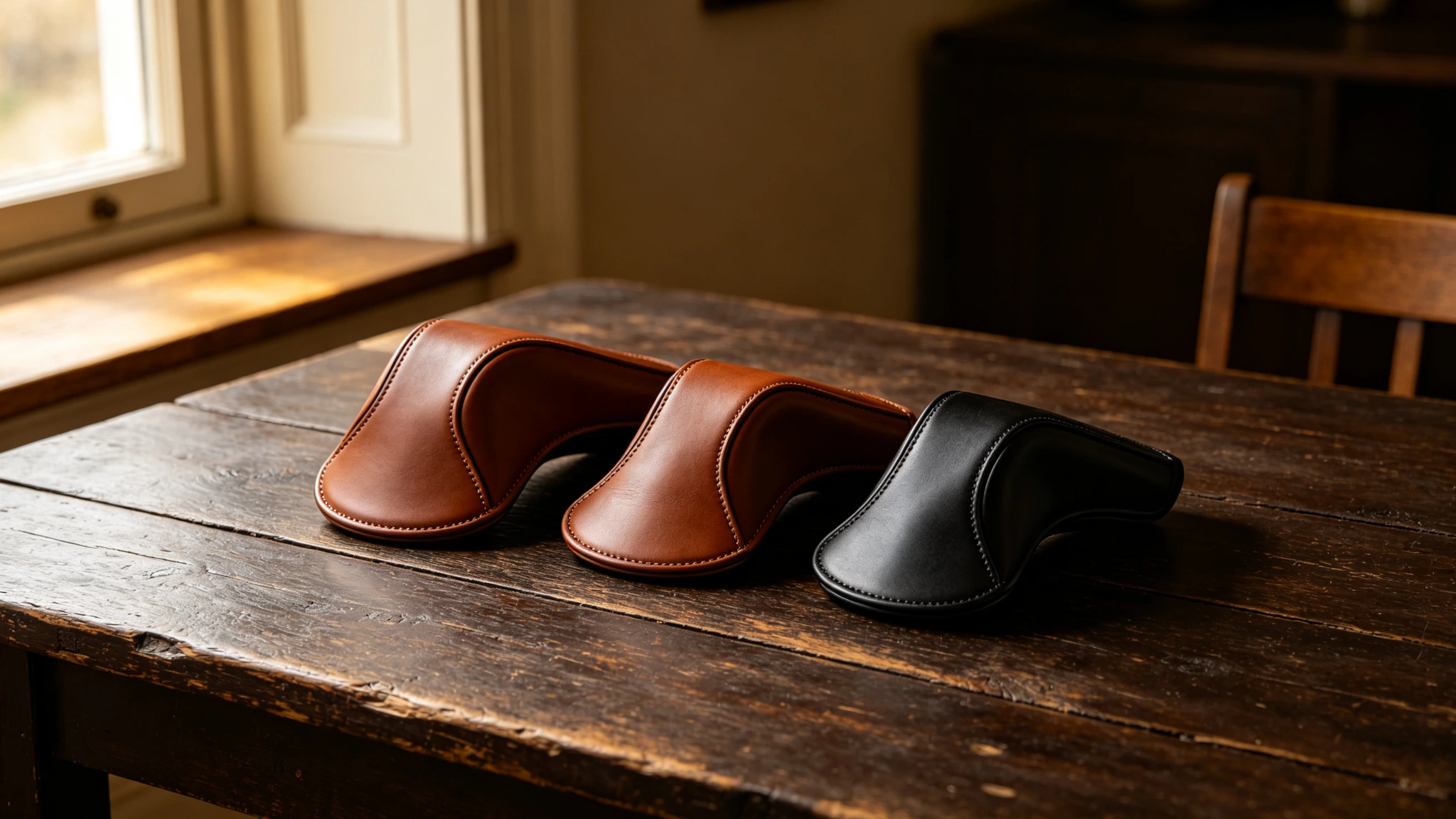
The supply side splits into three channels: factory-direct OEM (custom branding, MOQ 200, best unit economics), trading-company wholesale (stock designs, lower MOQs, margin stacked), and liquidation/job-lot (no spec control, no reorder security). This guide is written from the factory-direct side because that is where the sustainable margin lives — own branding, own specs, and reorders that compound instead of starting over.
The macro trend favours the prepared buyer. Accessory tracking shows covers holding share through equipment cycles because they sell to the installed base, not just new-club buyers — every golfer already owns clubs that need covering. NGF participation growth since 2020 has expanded that base by millions of newer golfers who accessorise at higher rates than the generation before them.
MOQ Structures: What the Numbers Really Mean
Minimum order quantity is the first number every buyer asks and the least understood. Factory-level MOQ for custom head covers is 200 pieces per design — the point at which die-cutting, line setup and branding amortise sensibly. First-time buyers get a 100-piece trial tier, which exists to de-risk the relationship, not to serve as a permanent order size.
What MOQ is not: it is not per-colourway unless colour requires a separate material lot (it usually does — plan colourways against MOQ arithmetic); it is not negotiable downward without unit-cost penalty (a 100-piece order at 200-piece pricing logic costs more per unit, and any factory waiving MOQ entirely is recovering the setup cost somewhere else); and it is not a barrier for serious retail — 200 covers is a modest stock commitment for any channel that actually sells them.
The MOQ arithmetic that works: hero design at 200-500, proven sellers at 1,000-2,000 (where unit cost drops 20-35% versus the 200 tier), limited editions at exactly 200 (scarcity is the point). Reorders of proven designs compress to 5-7 weeks because dies, material lots and golden samples are locked — the reorder is where cover economics genuinely compound.
One nuance for distributors serving multiple retail accounts: MOQ counts per design, not per order. A distributor consolidating three pro-shop accounts onto one 600-piece run of a shared design hits volume pricing while each account receives a manageable 200-piece allocation. This consolidation play is how smaller accounts access factory-direct economics — and it works best when the design is a proven architecture (the three-piece set, the magnetic driver single) rather than an account-specific experiment.
Pricing Tiers: What Bulk Money Buys
Ex-works cover pricing maps cleanly to specification, and volume moves it predictably. The 2026 factory-direct structure:
| Tier | Spec | Ex-works @200 | Ex-works @2,000 | Retail band |
|---|---|---|---|---|
| Value | Neoprene / single knit, elastic | $2.5-4 | $1.8-3 | $8-15 |
| Classic | Double knit / basic PU | $4-7 | $3-5 | $15-25 |
| Premium | 1.2mm PU, EVA, magnetic | $7-12 | $5-9 | $25-45 |
| Luxury | Full-grain leather, magnetic | $12-20 | $9-16 | $45-80 |
Read the table by margin architecture, not just price. The premium tier is the volume sweet spot: magnetic closure and real padding support a $20+ retail step over classic for roughly $3 of cost. The luxury tier buys brand position more than function — leather covers anchor a premium range and pull the whole ladder up with them. Value tier exists for promo and gift-with-purchase economics, where the cover is a marketing cost, not a profit line.
Volume breaks concentrate at 500, 1,000 and 2,000 pieces, driven by material-lot efficiency and line utilisation. The pricing conversation that works with factories: commit the annual volume across scheduled drops, price each drop at the annual tier. That structure — rather than one-off PO haggling — is how mature accessory buyers hold both margin and supply security.
Quality Verification: Auditing Before You Commit
Bulk buying without verification is how containers of unsellable covers happen. The pre-commit audit is two hours, not two weeks. Order samples from the shortlist and run the field protocol: measure the four key dimensions against the chart (driver 34-36 cm, fairway 28-30 cm, hybrid 24-26 cm), seat and remove 20 times per geometry, flex every closure through 50 operations, and pull the lining to check weight and softness against the club-finish rule.
Then audit the components where cost hides: elastic core (natural rubber versus polyester — stretch-recovery test), magnet encapsulation (sewn pockets versus glue — flex the pocket, look for adhesive), padding (pinch-test for two layers plus core), and stitching (8-10 SPI on stress seams, bar-tacked anchors). Every shortcut in the category is visible to these six checks.
Finally verify the paperwork that protects the buy: BSCI and ISO 9001:2015 for process, CE/CPC/RoHS for product compliance, and a recent third-party audit (ours is SGS, March 2026). For US retail onboarding, CPC documentation on junior-adjacent products is not optional. The full inspection discipline a supplier should run is documented in our five-stage QC framework — read it, then ask your shortlist which gates they actually run.
Supplier Selection: Factory, Trader or Hybrid
The channel decision shapes everything downstream. Factory-direct OEM gives spec control, own branding, the best unit economics at volume, and reorder security — at the cost of MOQ commitment and the work of managing a supply relationship. Trading companies give breadth and low MOQs at a 15-30% margin stack and zero spec control. The hybrid — a trading relationship with a named factory behind it — works when the trader adds genuine value: QC, logistics, consolidation.
The evaluation questions that separate suppliers: Which geometries do you cut dies on — and can I see the fit-test protocol? What is your closure spec — magnet grade, encapsulation, pull force? Show me a golden-sample register. What are your inline QC gates? Which certifications are current, and who audited last? A factory answering these fluently runs process; one deflecting them runs photography.
Geography and capacity complete the picture. Quanzhou, Fujian is one of the world’s two great bag-manufacturing clusters, with the material supply chain — tanneries, PU coaters, hardware, zippers — inside a two-hour radius. That clustering is what makes 6–10 day sampling physically possible: materials arrive same-day rather than same-week. When a supplier quotes four-week sampling on a head cover, the delay is not complexity; it is a supply chain that does not exist locally, and bulk timelines will inherit the same friction.
Our own profile, for calibration: QUANZHOU JUNYUAN BAGS, established 2014, manufacturing through an affiliated SGS-audited plant — 4,950 m², 7 lines, 149 machines, 137 staff, rated 200,000 pieces monthly. MOQ 200 with 100-piece trials, 6–10 day samples, 35–50 day bulk, AQL 2.5. The due-diligence framework for any supplier is in our manufacturer checklist.
Programme Shapes: What Sells at Retail
Wholesale covers move in four proven programme shapes. The coordinated set — driver, fairway, hybrid in one material story — is the volume engine, retailing at $59-79 with a built-in customer saving over singles. The hero single — a magnetic leather driver cover — is the margin leader and the review-builder. The gift edition — foil branding, rigid box, seasonal drop — is the Q4 multiplier at 2-4x standard retail. The replacement single — matched colourways kept alive for years — is the quiet annuity of the category.
The architecture mistake to avoid is launching wide: ten designs at 200 pieces each is 2,000 covers of inventory risk with no proof of what sells. The proven sequence: launch tight (one set architecture, three colourways, one hero single), read the data for a season, then extend what sells. Reorder compression (5-7 weeks) means a tight launch does not cost availability — it buys information cheaply.
Cross-merchandising is the multiplier. Covers merchandised beside matched bags attach at 25-40%; beside unrelated accessories, 6-9%. For distributors, the pitch to retail accounts writes itself: coordinated cover-bag stories lift both categories. Our set architecture guide and 2026 buying guide give the merchandising detail retail buyers ask for.
Logistics, Compliance and the Landed Picture
Covers are the friendliest freight in golf: compact, light, dense. A 2,000-piece order ships in a fraction of a pallet position; consolidated with bags, covers ride essentially free in container economics. Standard terms are FOB Xiamen, with CIF and DDP available — the Incoterm decision framework is in our Incoterms guide, and freight cost mechanics in the shipping cost guide.
Compliance for covers is straightforward but non-negotiable: CE for EU, CPC where junior products apply, RoHS for materials, and correct HS classification (covers ship under golf accessory headings, typically 9506.39 in most tariff schedules — verify current codes with your broker). US import duty on golf accessories sits in the low single digits; the 2026 USA import guide has the current picture.
The landed-cost arithmetic that keeps buyers honest: ex-works + freight + duty + clearance + local fulfilment, computed per unit before the retail price is set. On a $7 premium cover: roughly $0.30-0.60 freight (consolidated), $0.20-0.50 duty and clearance, leaving margin arithmetic that works at $29.99 retail with room for promotions. Covers survive discount pressure better than almost any golf category — plan the promotion calendar into the buy.
Payment, Terms and Relationship Mechanics
Standard factory terms for cover programmes: T/T 30% deposit with order, 70% against shipping documents — the structure detailed in our payment terms guide. First orders sometimes run 50/50; established relationships move to net terms by annual agreement. Sample costs are nominal and credited against first bulk orders as standard practice.
The timeline discipline that makes seasonal programmes work: Q4 gift editions brief by July, golden samples by August, bulk by September, freight by October. Spring range launches brief in November-December. Covers are fast goods — 6–10 day samples, 35–50 day bulk — but the calendar around them (retail resets, catalogue deadlines, freight peaks) is not. Work backward from the shelf date, not forward from the PO.
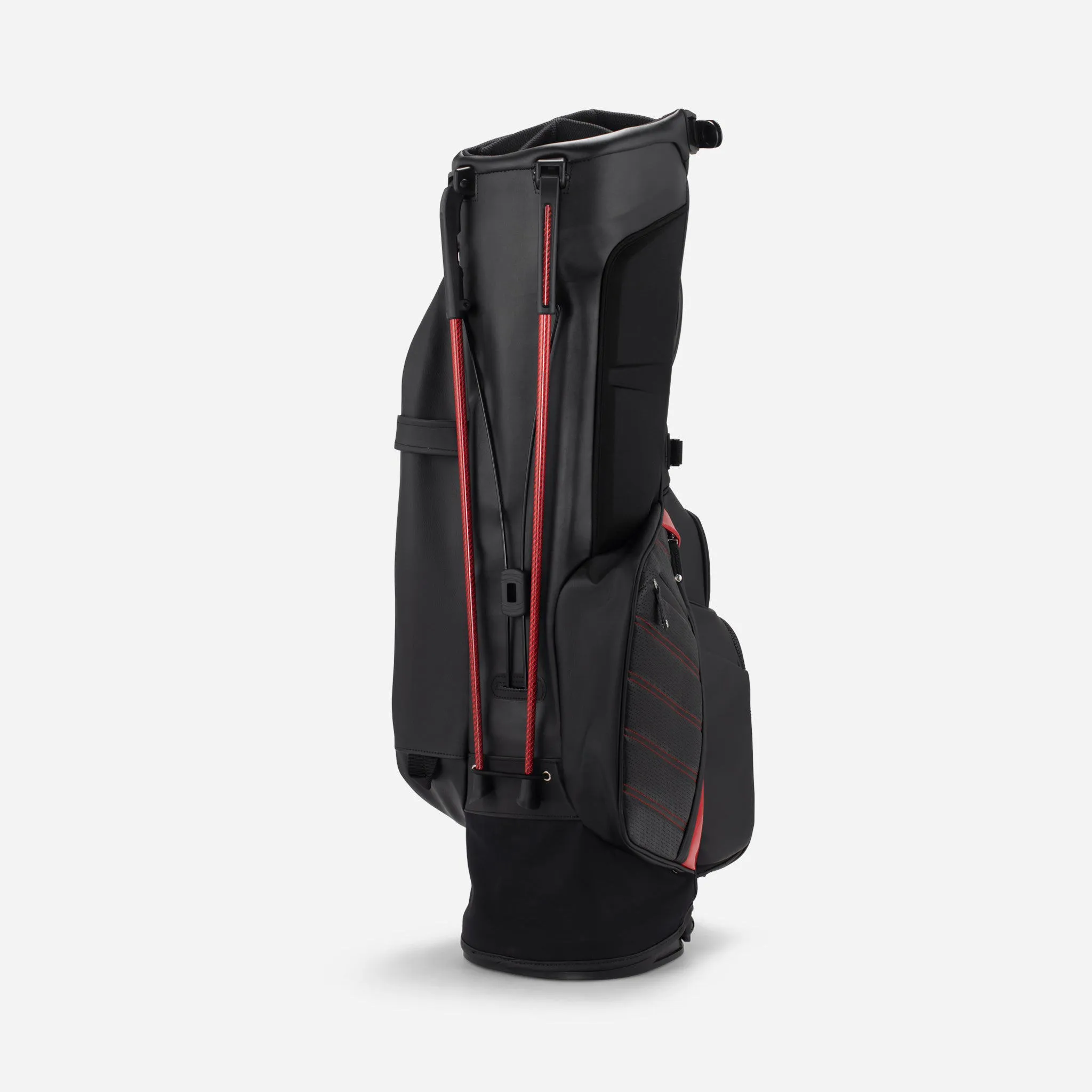
Relationship mechanics compound: a factory that holds your dies, material lots and golden samples turns reorders into 5-7 week turns with zero re-engineering. That institutional memory is worth more than per-unit price differences between suppliers — switching costs in covers are low per order and high per programme. Choose the partner for year three, not the quote for order one.
Communication rhythm is the soft factor that predicts programme health better than any audit. A partner that returns architecture documents in two working days, flags material-lot risks before they become delays, and photographs inline QC gates without being asked is a partner that will still be performing in year five. Test the rhythm at sampling stage: the speed and candour of the sampling conversation is the most reliable preview available of the bulk relationship that follows.
The Bottom Line
Wholesale cover buying is a specification business dressed as a commodity business. MOQ 200 with 100-piece trials, tier pricing from $2.5 to $20 ex-works, volume breaks at 500/1,000/2,000, and margin architectures that hold at retail — but only for buyers who verify quality before committing and spec the product instead of taking the catalogue.
The winning shape is consistent: factory-direct for spec control and unit economics, tight launch architectures that buy information cheaply, coordinated merchandising that lifts attach rates, and reorder relationships that compress timelines and compound knowledge.
Send the channel, the tier target and the volume plan, and a programme quote comes back in two working days. Covers are the easiest money in golf accessories — for the buyers who treat them like a product.
Start a Wholesale Programme
Send the channel, tiers and volume plan. We return a programme quote in 2 working days and samples in 6–10 days.
Request a Quote →People Also Ask
What is the MOQ for wholesale golf head covers?
Factory-direct custom covers: MOQ 200 pieces per design, with a 100-piece trial for first-time buyers. Stock-design wholesale through trading companies runs lower MOQs at a 15-30% margin stack with no spec control. Volume price breaks concentrate at 500, 1,000 and 2,000 pieces. Start a factory-direct programme at our quote page.
How much do wholesale golf head covers cost?
Ex-works by tier at 200-piece MOQ: value (neoprene/single knit) $2.5-4, classic (double knit/basic PU) $4-7, premium (1.2mm PU, EVA, magnetic) $7-12, luxury (full-grain leather) $12-20. At 2,000 pieces those drop roughly 20-35%. Retail bands run $8-15, $15-25, $25-45 and $45-80 respectively.
How do I verify quality before a bulk cover order?
Run the two-hour field audit on samples: measure key dimensions (driver 34-36cm, fairway 28-30cm, hybrid 24-26cm), seat and remove 20 times per geometry, cycle every closure 50 times, pinch-test padding for two layers plus core, check elastic recovery, look for sewn (not glued) magnet pockets, and count 8-10 SPI stitching on stress seams. Then verify BSCI/ISO 9001:2015/CE/CPC/RoHS paperwork and the latest third-party audit.
Factory-direct vs trading company for head covers?
Factory-direct: spec control, own branding, best unit economics at volume, reorder security — at MOQ commitment. Trading companies: breadth and low MOQs at 15-30% margin stack, zero spec control, no reorder continuity. Serious retail programmes go factory-direct; trading companies serve opportunistic buys and consolidation convenience.
What certifications should a head cover supplier have?
BSCI (social compliance), ISO 9001:2015 (quality management), CE (EU product safety), CPC (US juvenile products where applicable), RoHS (materials), plus a current third-party audit — ours is SGS, March 2026. For US retail vendor onboarding, CPC documentation on applicable products is non-negotiable. Ask who audited last and when.
How long does a bulk head cover order take?
Samples 6–10 days; bulk 35–50 days after golden-sample sign-off; reorders compress to 5-7 weeks because dies, material lots and golden samples are locked. Seasonal planning: Q4 gift editions brief by July for October freight; spring ranges brief November-December. Work backward from the shelf date.
What are the payment terms for wholesale covers?
Standard: T/T 30% deposit with order, 70% against shipping documents. First orders sometimes run 50/50; established relationships move to net terms by annual agreement. Sample costs are nominal and credited against first bulk orders. Full structures are in our payment terms guide.
Do head covers sell well at retail?
Yes — structurally the best category in golf accessories: high purchase frequency (lost, gifted, collected), low price sensitivity, tiny logistics footprint, and demand from the installed base rather than equipment cycles. Coordinated cover-bag merchandising lifts attach rates to 25-40%. Gift editions multiply at 2-4x standard retail in Q4.
What is the best-selling head cover configuration for retail?
The three-piece coordinated set (driver, fairway, hybrid, one material story) at $59-79 retail is the volume engine; the magnetic leather driver single is the margin leader; boxed gift editions are the Q4 multiplier; matched replacement singles are the annuity. Launch tight — one architecture, three colourways — and extend what the data proves.
Can I get custom branding on wholesale head covers?
Yes — factory-direct programmes include embroidery, debossing, foil, intarsia or woven labels from MOQ 200, with individual name personalisation available at the same minimum. Branding options and costs are detailed in our logo options guide. Custom branding is what separates a margin programme from a commodity buy.
What Incoterms are standard for head cover orders?
FOB Xiamen is standard, with CIF and DDP available. Covers consolidate beautifully — a 2,000-piece order is a fraction of a pallet — so consolidated freight with bags makes covers nearly free to ship. Landed-cost planning: ex-works plus roughly $0.30-0.60 freight, $0.20-0.50 duty and clearance per unit. See our Incoterms guide.
How do I start a private label head cover line?
Four steps: define tier and architecture (set vs singles, materials, closures) — our architecture document returns in 2 working days from brief; approve branded golden samples in 6–10 days; run a 100-piece trial or MOQ 200 first order; extend what sells using 5-7 week reorders. Total entry cost is lower than a single page of advertising in most golf media.
Can I mix different cover types in one wholesale order?
Yes — mixed-SKU orders across driver, fairway, hybrid and putter covers are standard, with the MOQ counted per design rather than per order. A typical first programme mixes one three-piece set architecture (200 sets) with hero singles (200 pieces) in two colourways, giving a retail-ready range from a single production window.
What packaging comes with wholesale head covers?
Standard is individual polybag with hang-tag; retail-ready options add printed belly bands, kraft sleeves, or rigid gift boxes ($1.2-2.5 extra, supporting $15-25 more retail). E-commerce programmes spec ISTA 1A mailer-strength packaging to avoid double-boxing. Barcode and labelling requirements travel in the tech pack so covers arrive shelf-ready at your DC.
Do you offer dropshipping or just bulk?
Our model is bulk factory-direct — MOQ 200 with 100-piece trials — because unit economics and QC control live at that scale. Buyers running e-commerce typically fulfil from their own 3PL after one consolidated inbound shipment, which preserves both margin and packaging control versus per-piece dropship arrangements.
Sources & Authority
Pricing tiers and volume-break structures reflect 2026 factory-direct programme data across 200+ OEM brand clients of QUANZHOU JUNYUAN BAGS. Market structure context draws on National Golf Foundation participation research and Golf Datatech accessory tracking. Factory credentials: SGS-audited March 2026, BSCI, ISO 9001:2015, CE, CPC, RoHS.