Golf Bag Incoterms 2026: Complete Guide to International Trade Terms for Importers
Table of Contents
- Introduction to Incoterms for Golf Bag Trade
- Key Incoterms Every Golf Bag Importer Must Know
- Real Cost Comparison Across Different Incoterms
- Risk Transfer Points and Insurance Implications
- Common Mistakes Importers Make with Incoterms
- How to Choose the Right Incoterm for Your Situation
- Negotiation Strategies for Better Incoterm Terms
- Frequently Asked Questions
Introduction to Incoterms for Golf Bag Trade
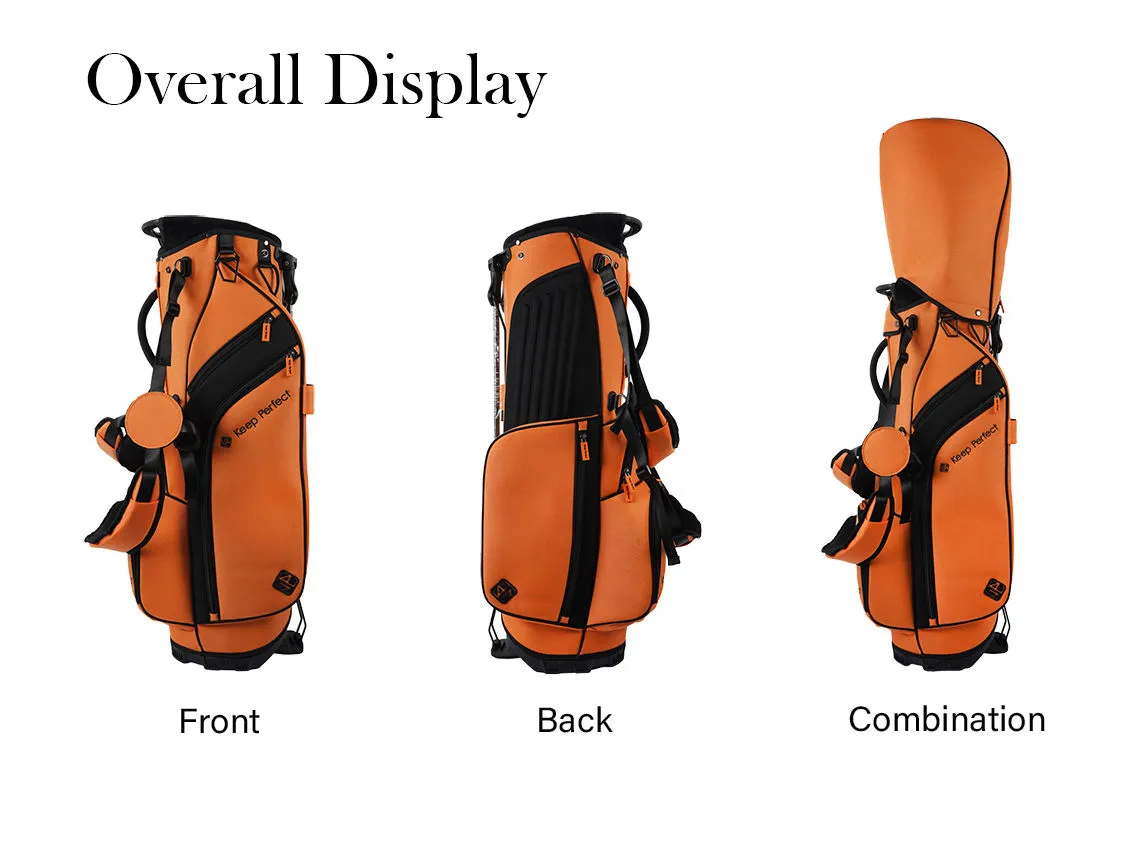
International Commercial Terms, commonly known as Incoterms, form the essential vocabulary of global golf bag trade. Published by the International Chamber of Commerce and updated periodically to reflect evolving commercial practices, Incoterms define the precise point at which responsibility, cost, and risk transfer from the golf bag manufacturer to the buyer. For importers, distributors, and brand owners sourcing golf bags from overseas factories, mastering Incoterms is not optional academic knowledge but a practical business necessity that directly impacts landed costs, cash flow timing, liability exposure, and ultimately profit margins.
The current version, Incoterms 2020, defines eleven distinct trade terms organized into two categories based on the mode of transport. Seven terms apply to any mode of transport including ocean, air, rail, and road freight, while four terms are reserved specifically for sea and inland waterway transport. Understanding which terms apply to golf bag shipments and how each term allocates costs and responsibilities between buyer and seller forms the foundation of effective international procurement management.
In the golf bag industry, where product values range from $15 to $150 per unit and order volumes span from 100-piece trial orders to 50,000-piece annual programs, the choice of Incoterm has meaningful financial implications. A golf bag quoted at $25 under EXW terms carries a fundamentally different cost structure than the same bag quoted at $25 FOB, $28 CIF, or $35 DDP. Without clear understanding of what each term includes and excludes, importers risk making apples-to-oranges comparisons between supplier quotations, leading to misguided sourcing decisions that can erode margins by 10 to 20 percent or more.
This comprehensive guide walks through every Incoterm relevant to golf bag importing, provides real-world cost examples showing how each term affects total landed cost, identifies common pitfalls that cost importers thousands of dollars, and offers practical negotiation strategies for securing favorable terms. Whether you are placing your first golf bag order or managing a multi-million dollar annual sourcing program, this guide delivers the knowledge needed to navigate Incoterms with confidence.
Key Incoterms Every Golf Bag Importer Must Know
While Incoterms 2020 defines eleven terms, golf bag trade predominantly utilizes five or six terms. Understanding these terms thoroughly, including their precise cost allocation boundaries, documentation responsibilities, and risk transfer points, equips importers with the foundation for effective supplier communication and accurate landed cost calculation.
EXW - Ex Works (Named Place)
Under EXW terms, the factory makes goods available at its premises and the buyer bears all costs and risks from that point forward. For a golf bag factory in Xiamen, China, an EXW quotation of $22 per bag means the buyer must arrange and pay for inland transportation from the factory to Xiamen port, export customs clearance, port handling charges, ocean freight, insurance, import customs clearance at destination, and final delivery to their warehouse. EXW places maximum responsibility and risk on the buyer while offering the lowest apparent unit price from the factory.
EXW terms are rarely optimal for golf bag importers because they require the buyer to manage export customs clearance in China, a process that requires local expertise, customs broker relationships, and regulatory knowledge that overseas buyers typically lack. Additionally, the factory has minimal incentive to cooperate with the buyer's logistics arrangements under EXW, potentially causing delays and communication friction. Most experienced importers prefer FOB terms that shift export formalities to the factory.
FOB - Free On Board (Named Port of Shipment)
FOB is the most widely used Incoterm in golf bag trade, and for good reason. Under FOB terms, the factory delivers goods on board the vessel nominated by the buyer at the named port of shipment. The factory handles all export formalities including customs clearance, pays inland transportation to the port, covers port handling charges, and bears all risk until the goods are loaded on the vessel. The buyer takes responsibility from that point, including ocean freight, insurance, import duties, and onward delivery.
For a golf stand bag quoted FOB Xiamen at $25, the buyer's additional costs would typically include ocean freight of $2 to $4 per bag (based on container load), marine insurance of $0.10 to $0.30 per bag, import duties ranging from 2.5 to 17.5 percent depending on destination country, customs brokerage fees, and inland transportation. The total landed cost for an FOB purchase typically runs $30 to $38 per bag delivered to a US warehouse, representing a transparent and controllable cost structure.
CIF - Cost, Insurance, and Freight (Named Port of Destination)
CIF is a sea-freight-only term where the factory arranges and pays for ocean freight and minimum insurance coverage to the named destination port. Under CIF Los Angeles at $28 per golf bag, the factory covers all costs through ocean transit including export formalities, ocean freight, and marine insurance. However, critically, risk transfers at the port of shipment when goods pass the ship rail, identical to FOB. The buyer assumes risk during ocean transit despite the factory paying for the freight.
The insurance coverage under CIF is often a point of confusion. Incoterms 2020 requires the seller to obtain minimum insurance coverage of 110 percent of the contract value under Institute Cargo Clauses C, which covers only major casualties such as vessel sinking, fire, or collision. This minimum coverage may not adequately protect golf bags against more common risks such as water damage, handling damage, or pilferage. Importers requiring broader coverage should negotiate for Institute Cargo Clauses A coverage or purchase supplemental insurance independently.
DDP - Delivered Duty Paid (Named Place of Destination)
DDP places maximum obligation on the seller, who bears all costs and risks including import duties, taxes, and customs formalities at the destination country. A DDP quotation of $35 per golf bag delivered to a warehouse in California means the factory handles everything from production through final delivery, including ocean freight, insurance, US customs clearance, import duties, and trucking.
While DDP offers the simplest buying experience, it comes at a significant cost premium. Chinese factories typically add 15 to 25 percent to their pricing under DDP compared to FOB, incorporating risk premiums for duty rate fluctuations, currency exchange uncertainty, and the administrative complexity of managing import compliance in foreign jurisdictions. Additionally, many Chinese golf bag factories lack direct import licensing capabilities in destination countries and rely on third-party importers of record, adding another layer of cost and complexity.
Real Cost Comparison Across Different Incoterms
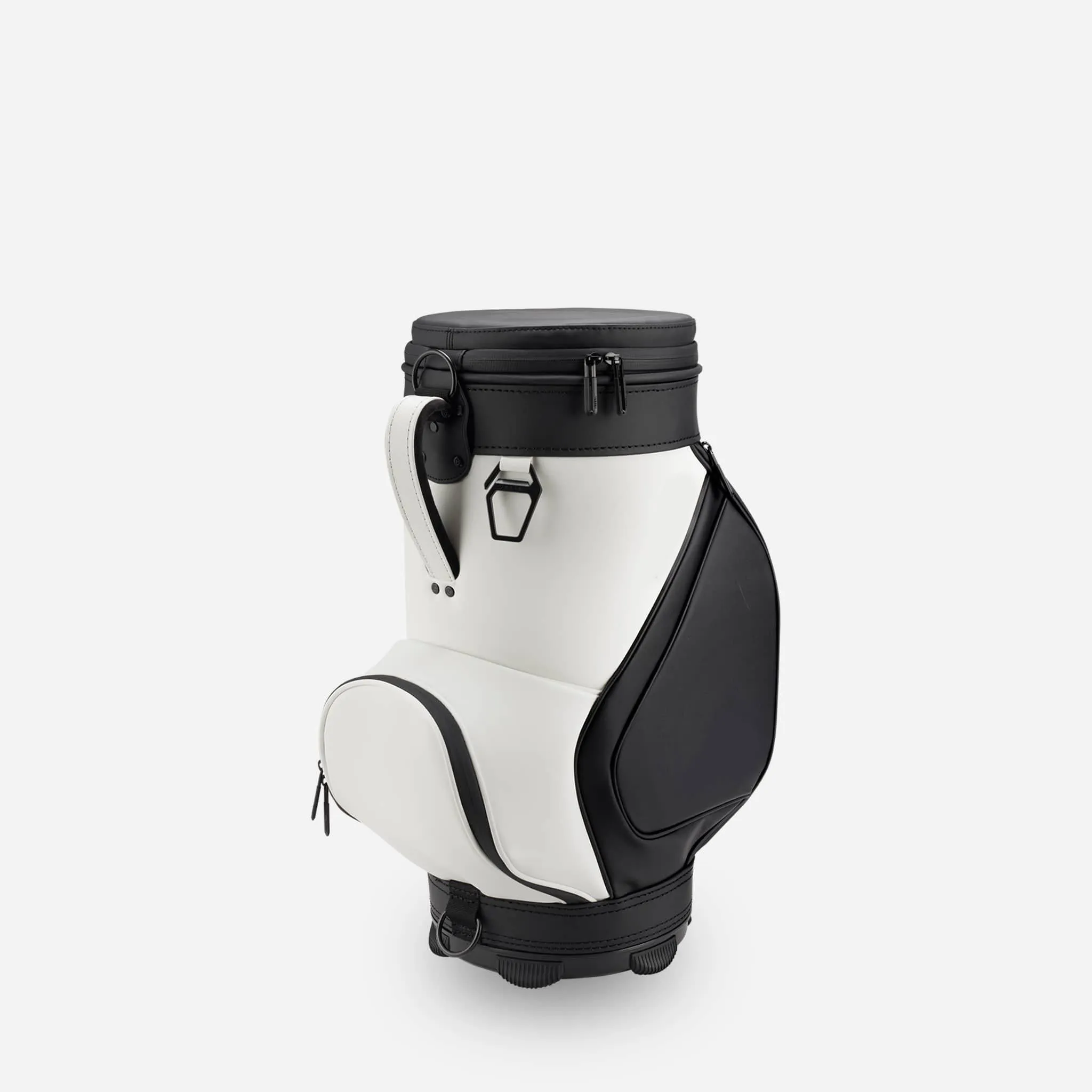
To illustrate how Incoterms affect total landed cost, consider a realistic example of importing 1,500 custom golf stand bags from a certified factory in Xiamen, China, to a distribution warehouse in Los Angeles, California. The factory's production cost is $20 per bag, and we will trace how each Incoterm builds on this base price.
| Cost Component | EXW | FOB | CIF | DDP |
|---|---|---|---|---|
| Factory price per bag | $22.00 | $25.00 | $25.00 | $25.00 |
| Inland transport to port | $0.35 | Included | Included | Included |
| Export customs clearance | $0.15 | Included | Included | Included |
| Port handling charges (origin) | $0.20 | Included | Included | Included |
| Ocean freight per bag | $2.50 | $2.50 | Included | Included |
| Marine insurance | $0.20 | $0.20 | Included | Included |
| Import duties (8%) | $2.03 | $2.23 | $2.43 | Included |
| Customs brokerage | $0.15 | $0.15 | $0.15 | Included |
| Destination port charges | $0.30 | $0.30 | $0.30 | Included |
| Inland delivery to warehouse | $0.40 | $0.40 | $0.40 | Included |
| Seller risk premium (DDP) | - | - | - | $4.50 |
| Total landed cost per bag | $28.28 | $30.78 | $30.78 | $34.50 |
This comparison reveals several important insights. The EXW price appears lowest but requires the buyer to manage multiple additional cost elements, each involving administrative effort and potential for unexpected charges. FOB provides a clean division of responsibility, with the factory managing origin logistics and the buyer controlling ocean freight and destination costs. CIF and FOB yield similar total costs in this scenario, though CIF transfers ocean freight management to the factory, potentially reducing the buyer's ability to negotiate competitive freight rates. DDP offers maximum convenience but at a 12 to 20 percent cost premium over FOB or CIF.
The Hidden Costs Within Each Incoterm
Beyond the explicit cost elements in the table above, each Incoterm carries implicit costs that sophisticated importers factor into their decision-making. Under EXW, the buyer's logistics team spends additional time coordinating with the factory for cargo pickup, managing export documentation remotely, and handling any delays caused by miscommunication. Under FOB, the buyer must maintain relationships with ocean carriers or freight forwarders and bear the cost of empty container repositioning if applicable. Under CIF, the factory may select the lowest-cost carrier rather than the most reliable, potentially introducing transit delays. Under DDP, the buyer loses visibility into individual cost components, making it difficult to identify savings opportunities or benchmark pricing accuracy.
Risk Transfer Points and Insurance Implications
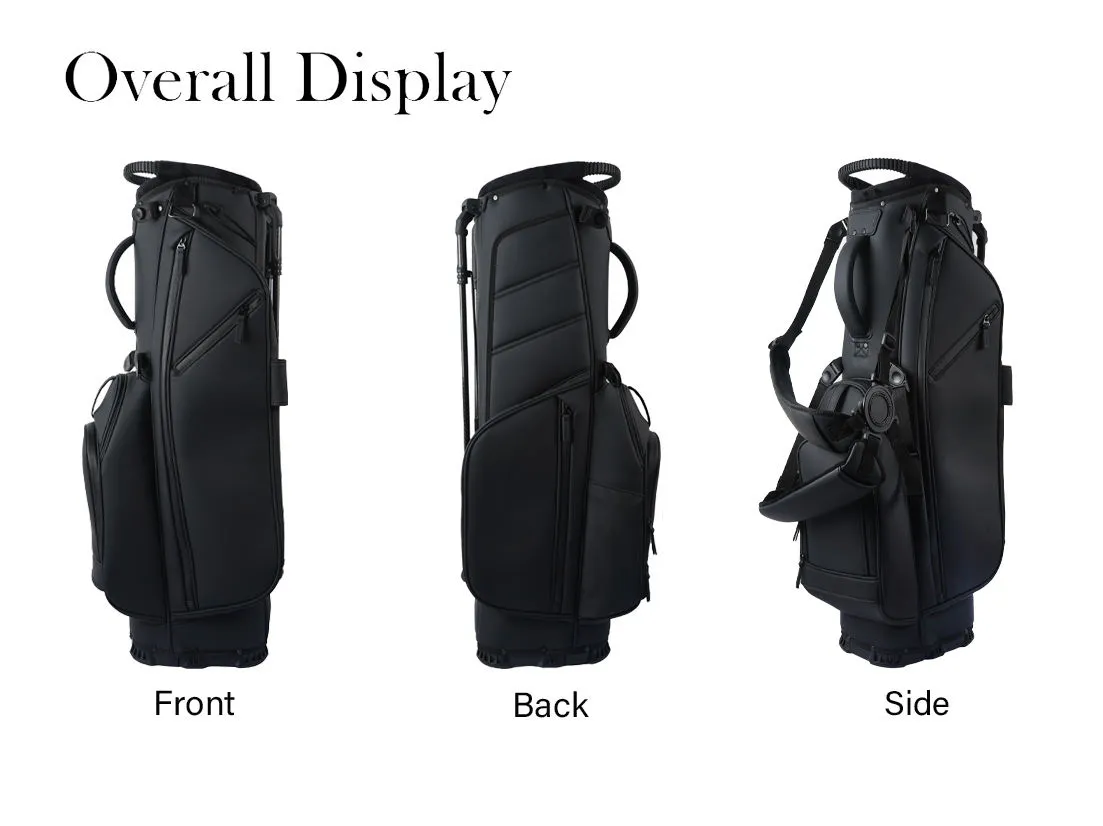
One of the most critical and frequently misunderstood aspects of Incoterms is the distinction between cost allocation and risk transfer. The point where costs transfer from seller to buyer does not always align with the point where risk transfers. This distinction has profound implications for golf bag importers, particularly regarding insurance coverage and liability for damaged goods.
Under FOB, CIF, and CFR, risk transfers from seller to buyer when the goods pass the ship rail at the port of loading. This means that from the moment the first golf bag container is lifted over the vessel's side at Xiamen port, any damage during ocean transit is the buyer's problem, regardless of whether the buyer or seller pays the ocean freight. Under FOB, the buyer arranges and pays for insurance. Under CIF, the seller arranges minimum insurance but risk still transfers at the ship rail.
Insurance Coverage Strategies for Golf Bag Importers
Golf bags face specific risks during ocean transit including moisture damage from container condensation, crushing from improper stacking, and handling damage during port operations. Standard Institute Cargo Clauses C coverage, which is the minimum required under CIF, does not cover these common risks. Golf bag importers should ensure coverage includes Institute Cargo Clauses A for all-risk protection, or at minimum add specific coverage for water damage and breakage.
The cost of adequate marine insurance for golf bags is modest, typically 0.1 to 0.3 percent of the cargo value. For a container of 1,500 golf bags valued at $37,500 FOB, comprehensive marine insurance costs approximately $50 to $150. Given this low cost relative to the potential loss, carrying full coverage represents sound risk management regardless of the Incoterm selected. Some importers opt for annual open cargo policies that cover all shipments throughout the year, offering even more competitive premium rates for regular importers.
Common Misconceptions About Risk and Incoterms
A pervasive misconception in the golf bag import community is that under CIF terms, the seller bears the risk during ocean transit because they pay for freight. This is incorrect. Under CIF, the seller pays for freight and insurance as a cost element, but risk transfers to the buyer at the port of loading. If goods arrive damaged, the buyer must file the insurance claim and bear any uncovered losses. Understanding this distinction prevents costly surprises when claims need to be processed.
Another misconception is that DDP eliminates all buyer risk. While DDP places maximum cost responsibility on the seller, the buyer should still verify that appropriate insurance is in place and that the seller has adequate financial capacity to handle potential disputes or claims. The seller's financial stability and insurance coverage should be evaluated independently of the Incoterm selected.
Common Mistakes Importers Make with Incoterms
After two decades of exporting golf bags to customers in over 40 countries, our team has observed recurring mistakes that cost importers significant amounts in unnecessary charges, disputes, and delivery delays. Understanding and avoiding these common errors is essential for smooth international trade operations.
Mistake 1: Comparing Quotations Under Different Incoterms
The most frequent and costly mistake occurs when importers compare factory quotations without ensuring that all quotes use the same Incoterm. A factory quoting $25 FOB and another quoting $22 EXW may appear to offer a $3 per bag savings, but once inland transport, export clearance, and port charges are added to the EXW price, the actual difference may be negligible or even reversed. Always normalize all quotations to the same Incoterm and ultimately to total landed cost at your warehouse before making sourcing decisions.
Mistake 2: Failing to Specify the Named Place Correctly
Incoterms require a precisely named place that defines the point of delivery or destination. "FOB China" is meaningless and potentially legally problematic. The correct formulation is "FOB Xiamen" or "FOB Shenzhen," specifying the actual port of loading. Similarly, "CIF Los Angeles" should specify "CIF Port of Los Angeles, USA, Incoterms 2020." Vague place designations create ambiguity about which party bears specific costs and can lead to disputes when unexpected charges arise.
Mistake 3: Ignoring Terminal Handling Charge Allocations
Terminal handling charges at both origin and destination ports represent significant costs that are sometimes ambiguously allocated between buyer and seller. Under FOB, origin THC should be included in the seller's costs, but some factories quote FOB while excluding origin THC, creating a surprise charge for the buyer. Always confirm explicitly which party pays origin and destination THC, and ensure these allocations are documented in the purchase contract.
Mistake 4: Using Inappropriate Incoterms for the Situation
Some importers default to the same Incoterm for every order regardless of circumstances. Using DDP for a first trial order with a new factory unnecessarily exposes the buyer to supplier dependency and cost opacity. Using EXW without having established logistics capability in China creates unnecessary coordination challenges. The appropriate Incoterm should be selected based on the buyer's logistics capabilities, order size, supplier relationship maturity, and specific shipment requirements.
How to Choose the Right Incoterm for Your Situation
Selecting the optimal Incoterm for golf bag imports depends on several factors including the importer's logistics experience, order volume, supplier relationship, destination country capabilities, and risk tolerance. There is no universally best Incoterm; the right choice depends on your specific circumstances and capabilities.
Decision Framework for Golf Bag Importers
For first-time importers with limited international logistics experience, CIF may provide a comfortable starting point, with the factory managing freight arrangements while the importer focuses on product quality and market development. However, as the importer gains experience and volume, transitioning to FOB typically yields better cost control and more competitive freight rates through direct carrier relationships.
For established importers with dedicated procurement logistics teams or established freight forwarding partnerships, FOB offers the best combination of cost transparency, control, and flexibility. FOB enables importers to leverage their freight forwarding relationships for competitive rates, consolidate shipments from multiple factories, and maintain visibility throughout the ocean transit process. Most large golf bag brands and major retailers operate on FOB terms for these reasons.
For small-volume importers or those sourcing from multiple factories in different regions, DDP may offer practical advantages despite the cost premium. The simplified logistics management and single-point accountability can be worth the additional cost when order volumes do not justify investment in dedicated logistics infrastructure. However, DDP pricing should be regularly benchmarked against FOB-plus-self-managed-freight alternatives to ensure the premium remains justified.
Scaling Your Incoterm Strategy
As import volumes grow, the financial impact of Incoterm selection becomes increasingly significant. At annual volumes of 10,000 golf bags, the difference between FOB and DDP can exceed $30,000 per year. At 50,000 bags annually, this differential grows to over $150,000. Progressive importers should plan their Incoterm strategy as part of their overall supply chain development roadmap, transitioning from simpler terms to more cost-efficient terms as their logistics capabilities mature.
Negotiation Strategies for Better Incoterm Terms
Effective Incoterm negotiation goes beyond simply requesting a lower price under a specific term. It involves understanding the factory's actual cost structure, identifying opportunities for mutual benefit, and structuring agreements that align incentives between buyer and seller. These strategies, developed through decades of international golf bag trade, help importers secure more favorable terms while maintaining strong supplier relationships.
Unbundling Factory Quotations
When negotiating FOB terms, request that the factory itemize the components of their price: production cost, inland transport to port, export customs clearance, and port handling charges. This transparency enables you to identify where the factory's costs are competitive and where they may be marking up logistics services. Factories that earn margins on logistics arrangements have less incentive to optimize those costs, whereas transparent pricing enables collaborative cost reduction.
When a factory's inland transport costs are significantly above market rates, you may offer to arrange your own trucking from the factory to the port, potentially saving $0.10 to $0.25 per bag. Similarly, if port handling charges appear inflated, your freight forwarder may be able to negotiate more competitive terminal rates. These granular negotiations yield modest per-unit savings that accumulate significantly across large annual volumes.
Volume Commitments and Long-Term Agreements
Factories offer more favorable Incoterm pricing to buyers who commit to regular volume over extended periods. An annual commitment of 20,000 or more bags with quarterly shipment schedules enables the factory to optimize production planning and logistics coordination, generating efficiencies that can be shared with the buyer through reduced pricing or more favorable Incoterm terms. These arrangements benefit both parties by providing demand predictability for the factory and cost certainty for the importer.
Long-term agreements also provide opportunities to incorporate flexible Incoterm provisions. For example, the agreement might specify FOB pricing for standard orders with an option to use the factory's preferred freight forwarder at pre-negotiated rates during peak seasons when carrier space is tight. This flexibility enables both parties to adapt to changing market conditions while maintaining the overall commercial relationship framework.
Frequently Asked Questions
What is the best Incoterm for importing golf bags from China?
FOB (Free On Board) is generally the best Incoterm for importing golf bags from China because it gives the importer control over freight costs and carrier selection while the factory handles all export formalities. FOB provides the optimal balance of cost transparency, risk management, and logistical flexibility for most golf bag importers.
What is the difference between FOB and EXW for golf bag orders?
Under EXW, the buyer arranges and pays for all transportation from the factory door, including export customs clearance. Under FOB, the factory handles export customs, inland transport to the port, and loading onto the vessel. FOB is preferred by most importers because the factory manages export compliance while the importer controls the main ocean freight.
Does DDP make sense for golf bag imports?
DDP places maximum responsibility on the seller, including all costs and import duties at destination. While DDP simplifies the buying process, it typically costs 15 to 25 percent more than FOB because the factory builds risk premiums into pricing. Most experienced importers avoid DDP for golf bags and prefer FOB or CIF with their own freight forwarding arrangements.
Who bears the risk of damage during golf bag shipping under CIF?
Under CIF, risk transfers from seller to buyer once goods pass the ship rail at the port of loading. Although the seller pays for insurance and freight to the destination port, any damage during ocean transit is the buyer's risk, who must file insurance claims with the designated insurer.
How do Incoterms affect the total landed cost of golf bags?
Incoterms directly determine which costs each party bears. A golf bag quoted at $25 FOB Xiamen might cost $28 CIF Los Angeles or $32 DDP New York. Understanding the cost breakdown under each term enables importers to compare true landed costs and negotiate more effectively with suppliers.
What changed about Incoterms for golf bag trade in 2020 and 2026?
The Incoterms 2020 revision introduced changes including the renaming of DAT to DPU and updated insurance requirements under CIP. In 2026, electronic documentation and digital bills of lading have become widely accepted, simplifying processes under all Incoterms. Blockchain-based trade documentation is emerging as the next evolution.
Ready to Start Your Custom Golf Bag Project?
Partner with a BSCI & ISO 9001:2015 certified factory producing 200,000+ premium golf bags annually. MOQ just 100 pieces.
Get a Free Quote Today