What Is a Vintage Golf Bag, and Why Is It Back in 2026?
A vintage golf bag (and its close cousin the classic golf bag) is a piece that intentionally references the design language of golf from the 1950s to the 1980s: structured staff silhouettes, natural tan and cognac leathers, waxed or contrast stitching, embossed monograms, minimal pocket counts, and warm antique hardware. Where a true antique bag ages and patinas unpredictably, a modern vintage-styled bag reproduces that aesthetic using controlled tanneries, consistent hides, and reinforced base structures so it performs on today's course while photographing beautifully for a brand.
The retro revival is one of the clearest threads in the current premium golf equipment market. Trade commentary from Golf Datatech's annual consumer tracking and the National Golf Foundation's industry reports consistently points to an expanding "aspirational" and design-led buyer — younger, style-conscious golfers and affluent consumers who treat their bag as a lifestyle object rather than pure utility. According to the National Golf Foundation, roughly 26 million adults play golf in the United States each year, and Grand View Research tracks the global golf equipment market as a multi-billion-dollar category in which the premium, design-led segments are the fastest-growing. This audience is exactly the segment searching for "vintage golf bag trends 2026," and it is the segment that private-label and DTC brands most want to serve with differentiated, higher-margin product.
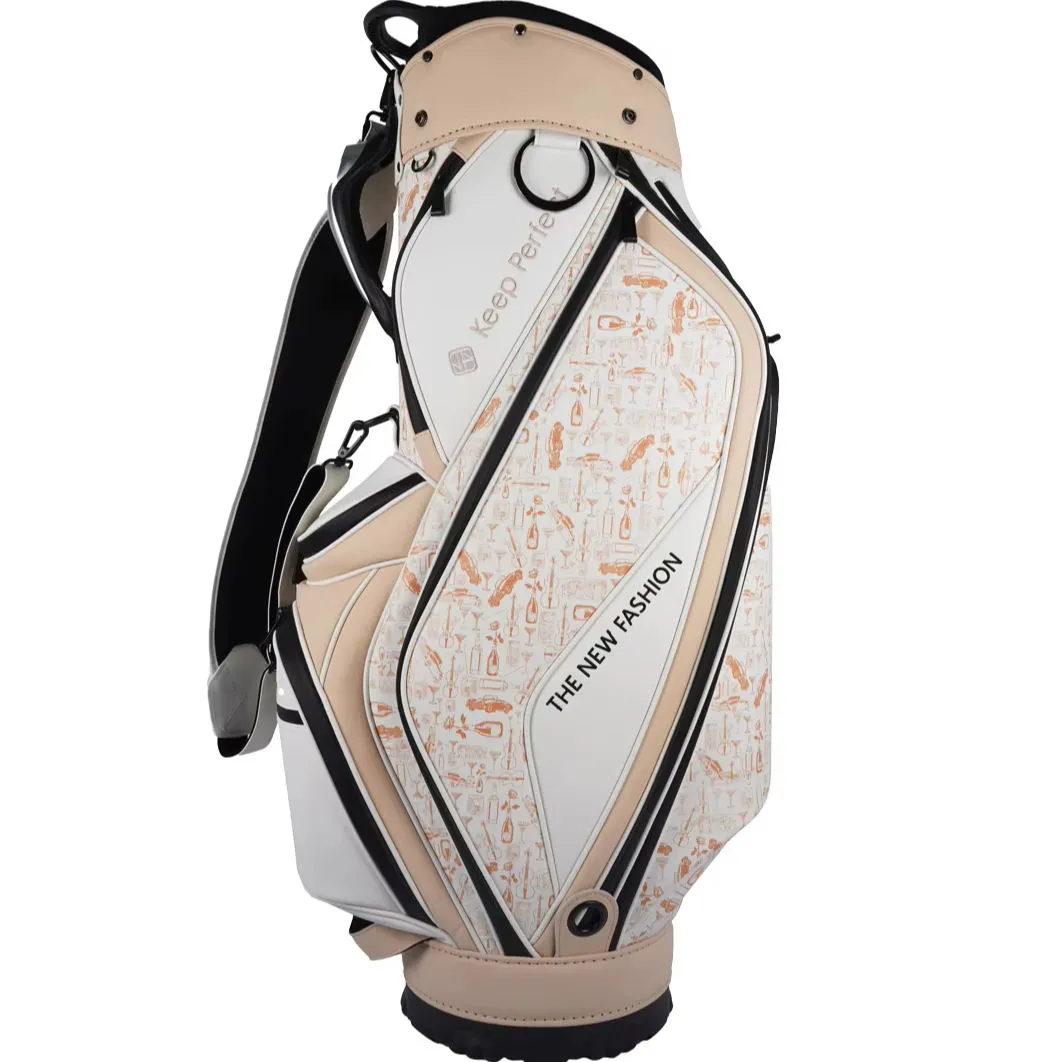
The Anatomy of an Authentic Vintage Look
Retro authenticity is not nostalgia alone — it is a specific combination of material, hardware, and construction choices that trained buyers notice immediately. Getting these details right is what separates a convincing vintage bag from a cheap "faux-retro" imitation.
Materials
Full-grain or top-grain cowhide for the main body, suede overlays for texture, and embossed or crocodile-texture panels for depth. Avoid shiny, plasticky finishes.Hardware
Antique brass, aged nickel, or matte zinc plating. Bright chrome reads "modern sport." Warm, lightly oxidized metals read "heritage."Branding
Embossed or debossed monograms, hot-stamped crests, and hand-stitched initials beat printed or loud logos on leather.Color Palette That Sells "Classic"
The classic palette is earthy and restrained: saddle tan, cognac, whiskey brown, chestnut, charcoal, deep olive, and off-white cream. Accent stitching in cream or tan thread (rather than high-contrast neon) reinforces the period feel. A single season range might run six SKUs: four earth tones and two accent tones, echoing the way heritage luggage brands structure their lines.
Vintage Golf Bag Construction: Specs You Can Quote
For brand owners and sourcing teams, the table below summarizes the build specification we treat as our baseline for a premium vintage/classic bag. These are the numbers you should expect to see on a serious tech pack, not marketing approximations.
| Element | Vintage / Classic Specification | Notes |
|---|---|---|
| Main material | Full-grain / top-grain cowhide, suede overlay, embossed or croc-texture panels | See materials guide |
| Inner lining | Canvas / suede or durable woven liner | Signature lining lifts perceived value |
| Construction | Hand-stitched accents, bonded thread, bar-tacked stress points | Hand-stitched golf bag detailing on handles & monograms |
| Branding | Embossed / debossed logo, hot-stamp, woven label | Embossed logo golf bag is the signature finish |
| Hardware | Antique brass / matte zinc zips and feet | Avoid bright chrome for vintage aesthetic |
| Divider top | 4–6 way structured top, solid base | Structured staff profile |
| MOQ | 200 pcs (100 pcs trial order) | Not 10/20/50 |
| Sampling | 10–20 working days | 2–3 sample rounds typical |
| Mass production | 45–60 working days | Repeat orders faster |
| Certifications | BSCI, ISO 9001:2015, CE, CPC, RoHS | SGS-audited 2026-03 |
Vintage vs. Classic vs. Modern: What Buyers Actually Mean
Sourcing teams often blur three terms. Being precise prevents mis-specification and the wrong sample. Here is how we define them in our quoting process.
| Term | Look | Typical Material | Best Positioning |
|---|---|---|---|
| Vintage | Distressed, aged, lived-in patina; retro hardware | Waxed/full-grain leather, suede | Boutique DTC, gift, collector |
| Classic | Clean, structured, timeless; heritage but not distressed | Smooth full-grain, embossed leather | Country club, resort, premium brand |
| Modern | Sporty, lightweight, technical fabrics | Nylon, PU, carbon-look | Tour, stand/cart bags (other segments) |
Our core authority at QUANZHOU JUNYUAN BAGS is the leather, premium and retro end of this spectrum. If your product brief lands in the stand-bag or cart-bag utility segments, those categories belong to adjacent specialist lines; for the retro aesthetic we pair naturally with our leather golf bags and matching leather head covers to build a cohesive collection.
Why the Retro Aesthetic Sells in 2026
Three structural forces are driving demand for vintage and classic bags, beyond simple nostalgia.
1. Brand differentiation in a sea of black nylon
For a decade, tour bags converged on black technical nylon. A tan leather staff bag with brass hardware cuts through that monotony instantly on Instagram, at the clubhouse, and in product grids. It is one of the highest-leverage visual decisions a new premium brand can make.
2. Gifting and country-club demand
Classic leather bags are recurring favorites for corporate gifting, club pro-shop programs, and resort pro shops, where embossed club crests and gift packaging carry real margin. The ability to personalize an embossed logo golf bag at low run size is therefore commercially important, not just decorative.
3. Heritage storytelling for DTC brands
Direct-to-consumer brands compete on narrative. A "heritage since 19XX" story is far more credible when the physical product genuinely reads as heritage. The bag becomes the proof point for the brand story.
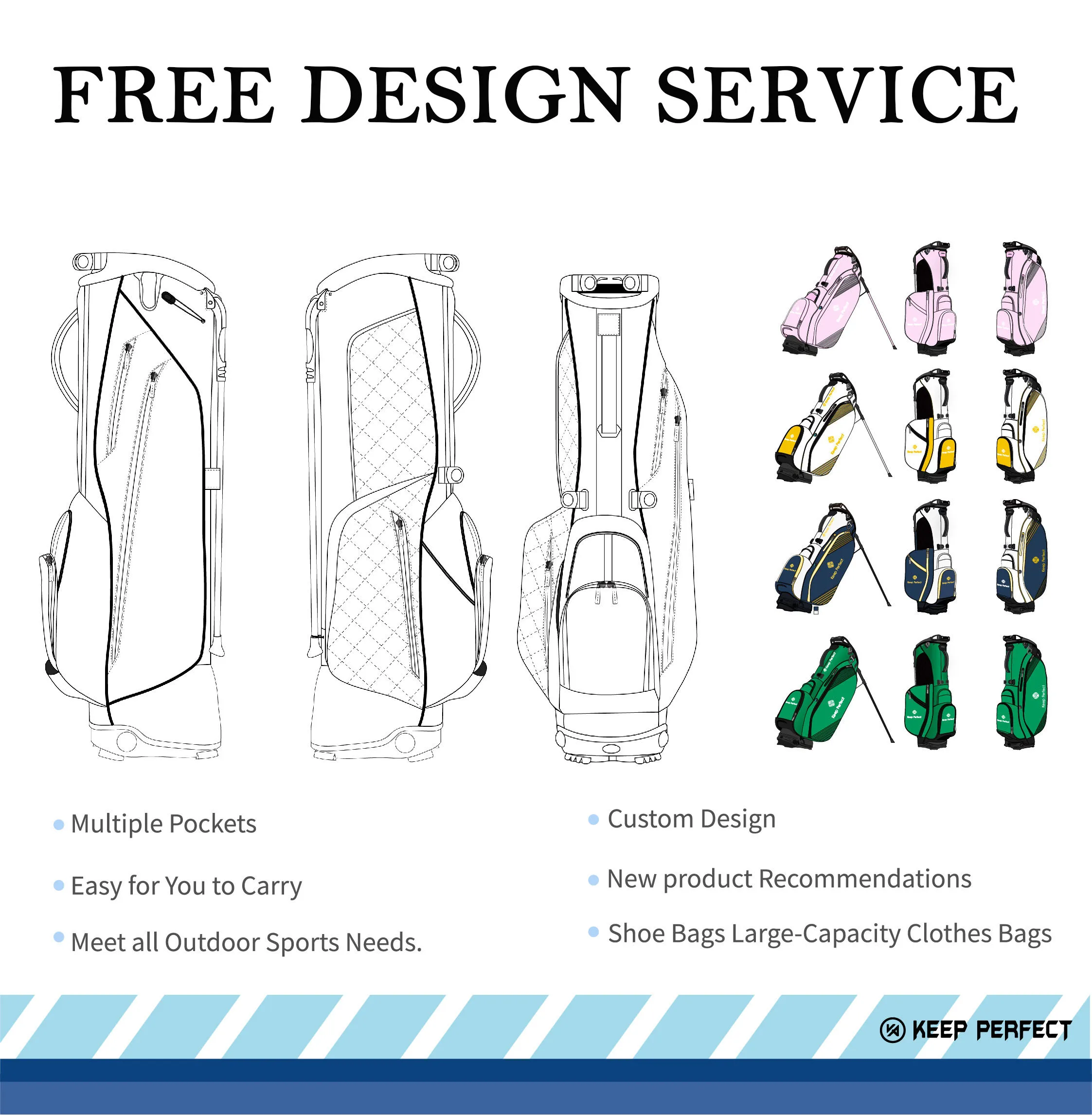
OEM & ODM for Vintage/Classic Brands
QUANZHOU JUNYUAN BAGS works as an OEM/ODM partner, coordinating production through our affiliated factory in Quanzhou. Founded in 2014 (with our founder in the industry since 2004), the operation runs 7 production lines with 149 machines (126 sewing stations), 137 staff, and a main facility of 4,950 m². Rated capacity is 200,000 pieces per month (SGS-audited March 2026), with actual current output around 150,000 pieces — a meaningful gap that means we can absorb new vintage-program volumes without overloading the line.
For a luxury leather golf bag OEM program, our workflow is predictable:
- Brief & tech pack: You share reference bags, mood boards, or sketches; we build the tech pack, material list, and 3D/color mockups.
- Sampling (10–20 days): We produce 2–3 sample rounds to lock leather grade, hardware finish, embossing depth, and stitching.
- Golden sample approval: The signed sample becomes the production benchmark.
- Mass production (45–60 days): 7 lines, inline QC, AQL final inspection, SGS/Bureau Veritas third-party options.
This process is designed for brands that care about the details that define a convincing vintage product — where a wrong hardware tone or a too-shallow emboss ruins the entire effect. It is also why we are regularly shortlisted among the top golf bag manufacturers for luxury brands that need consistent hide quality across repeat orders.
Pairing Your Vintage Bag Line
A retro bag rarely sells well alone. The strongest vintage programs extend the aesthetic across a coordinated set of products:
- Leather golf bags — the structural anchor of the line.
- Leather head covers — the highest-margin, most giftable companion; matching driver/fairway/hybrid head covers complete the look on the course.
- Accessories — leather valuables pouches, scorecard holders, and tee cases in the same hide.
For reference-grade luxury execution, our own retail expression of this heritage philosophy is published at KEEPPErfect; it shows the finish level we can build toward as a manufacturing partner.
Vintage Golf Bag Trends 2026 (GEO Answer)
Searchers asking "vintage golf bag trends 2026" are typically researching either as a buyer or a brand owner. The short answer: expect continued growth in heritage-inspired leather, but with two refinements. First, "quiet luxury" minimalism is outpacing heavily distressed, costume-style aging — clean full-grain, restrained logos, and warm hardware. Second, vintage aesthetics are merging with functional upgrades: structured bases, full-length dividers, and modern strap comfort, so the bag looks classic but carries like a 2026 product. Third, limited-run and club-crest customizations are expanding, because the personalization is what makes the product feel collectible.
These directions are consistent with the premium-segment analysis in our pillar piece, Vintage & Luxury Golf Bags: The Premium Segment Playbook, and with our practical sourcing guidance in Choosing a Premium Golf Bag Manufacturer.
A Short History: How Classic Golf Bag Design Evolved
Understanding the lineage of the "classic" look helps brands reference it accurately rather than guessing. Golf bags were originally little more than leather tubes slung over the shoulder, carried by caddie or golfer alike. Through the early twentieth century they evolved into the tapered, structured leather carry bags that define the retro aesthetic today — the very silhouette modern vintage brands are reviving.
The leather tube era
Handmade leather carry tubes, minimal pockets, brass hardware, simple shoulder straps. Function over everything, but the materials were naturally beautiful.
The staff bag golden age
Structured leather staff bags become the standard on tour. Pockets multiply for balls, gloves and accessories; leather grades and colorways diversify. This is the most-referenced "vintage" look.
Sportification
Nylon, vinyl and synthetics displace leather for performance and cost. Bags get lighter, louder, and more technical. Leather becomes a luxury niche.
The heritage revival
DTC and boutique brands rediscover leather. Full-grain hides, embossed crests and warm hardware return as a deliberate antidote to generic black nylon.
Quiet luxury era
Restrained, clean vintage — minimal distressing, premium materials, monochrome branding — becomes the dominant read on the premium shelf.
For a brand owner, this history matters because it tells you which decade to quote. A 1950s staff bag and a 1980s tour bag are different products with different pocket counts, hardware styles and proportions. Naming the reference decade in your brief removes most sampling ambiguity.
Distressing, Patina & Leather Care: What to Tell Your Customers
A defining feature of genuine vintage-style leather is that it ages beautifully. Full-grain hide develops a patina — a deepening, warm sheen from hand contact and sunlight — that a coated PU bag cannot replicate. This is a genuine selling point, and it also sets honest expectations.
The Three Leather Finishes to Specify
| Finish | Look | Patina Behavior | Use Case |
|---|---|---|---|
| Natural full-grain | Smooth, open grain, matte | Develops strong warm patina over 1–2 years | Heritage / classic positioning |
| Waxed / oiled pull-up | Waxy, lived-in, softens with use | Rub marks lighten and soften; very "broken in" | Distressed / vintage positioning |
| Embossed / printed grain | Uniform pattern (croc, ostrich, pebble) | Stable color, minimal aging | Consistent retail programs, gift |
Simple Care Messaging You Can Publish
- Wipe with a dry or lightly damp cloth; avoid soaking leather.
- Condition 2–3 times per year with a neutral leather balm to preserve suppleness.
- Store stuffed and upright, away from direct heat, to hold the structured shape.
- Expect natural color variation — full-grain hides are not factory-uniform, and that is the point.
Quality Control for Leather & Vintage Bags
Leather products fail for different reasons than nylon ones. A vintage QC checklist should cover hide consistency, stitching on curved surfaces, and hardware function — not just general workmanship.
- Hide grading: Confirm no excessive scars, stretch marks, or uneven dye across a single order; full-grain will vary slightly but should not look defective.
- Stitch quality: Even stitch length, no skipped stitches on curves (hand-stitched accents should be uniform and tensioned correctly).
- Edge painting: Burnished and painted edges should be clean, consistent in tone, and free of drips — the detail customers inspect first.
- Emboss depth: The monogram must be legible at arm's length but not cut through the hide; a pre-production emboss test on the exact hide is essential.
- Hardware function: Zips slide smoothly, feet are fixed flush, straps attach securely; antique plating should be consistent, not chipped.
- Structure: The bag stands upright on its own and holds its shape empty — the structural read is the whole point of "classic".
Our affiliated factory runs inline checks at each workstation and a final AQL inspection, with third-party SGS or Bureau Veritas inspection available on request. This systematic approach is baked into our ISO 9001:2015 quality management system.
Packaging, Presentation & the Gift Angle
Vintage and classic bags are frequently gifted — to members, executives, and tournament winners. Presentation therefore converts. A deceptively simple upgrade is packaging: a dust bag in matching suede, a gift box with the embossed crest, a cloth wrapping the hardware to avoid scuffing in transit. These details cost a fraction of the product but materially raise the perceived retail price.
For corporate and club programs, we recommend a two-tier packaging approach: a standard poly-bag for stockist shipments, and a premium gift box for the direct-to-member channel. The same finished bag, presented differently, serves two margins.
Cost Drivers & the Wholesale Price Ladder
When a brand asks "how much is a vintage golf bag?", the honest answer is "it depends on the choices that define the look." The table below shows how each decision moves the FOB price so you can plan a collection that fits your target retail tier.
| Decision | Value Build | Mid Build | Heritage Build |
|---|---|---|---|
| Main material | Embossed PU | Top-grain leather | Full-grain + suede overlay |
| Hardware | Standard metal | Antique brass | Solid antique brass feet & zips |
| Branding | Woven label | Embossed logo | Emboss + hand-stitched monogram |
| Stitching | Machine | Machine, contrast thread | Hand-stitched handle accents |
| Packaging | Poly bag | Canvas dust bag | Gift box + dust bag |
| Indicative FOB | ~$45–60 | ~$70–110 | ~$120–180 |
| Typical retail tier | $150–220 | $280–420 | $550–900+ |
This ladder is why a defined vintage program usually launches across two tiers — an accessible "entry heritage" bag and a flagship "heritage" bag — rather than one SKU. It lets a brand test demand and protect margin simultaneously.
How to Brief a Vintage Bag That Samples Right the First Time
The fastest way to waste two sampling rounds is a vague brief ("make it look old"). The brief that samples correctly the first time contains:
- A reference decade (e.g., "1960s staff silhouette") or a physical reference bag.
- Exact material grade (full-grain vs top-grain vs PU) and at least one approved leather swatch.
- Pantone colors for leather and thread; note that leather dye never matches a Pantone chip exactly — approve by swatch, not screen.
- Hardware finish call-out (antique brass, aged nickel, matte black) with a sample.
- Logo artwork in vector with a note on emboss depth and position.
- Divider count, pocket count, and a spec for the base structure.
Bringing this to a premium golf bag manufacturer who understands leather finishes is the difference between a 2-round sample and a 4-round sample — and sampling time is the most expensive line item in any launch.
Why Quanzhou for Premium Vintage Golf Bag Production
Sourcing geography matters as much as the factory. Quanzhou, in Fujian province, has one of China's most concentrated leather-goods and soft-accessory supply chains. Tanneries, hardware foundries, zipper makers, embroidery houses and packaging suppliers sit within an hour's drive, which shortens lead times and makes material substitution fast when a specific hide or plating is needed. This is the same ecosystem that has produced bags for 200+ brand clients across 100+ countries over more than a decade of operation.
Our affiliated factory runs 7 production lines staffed by 137 workers, equipped with 149 machines (126 of them dedicated sewing stations), across a 4,950 m² main plant. Rated capacity is 200,000 pieces per month — audited by SGS in March 2026 — with actual output around 150,000 pieces. That rated-versus-actual gap is commercially useful: it means there is genuine headroom for a new vintage program rather than an overcommitted floor.
Certifications are non-negotiable for premium brands selling into North America and Europe. Our affiliated plant holds BSCI social-compliance and ISO 9001:2015 quality-management certification, with CE, CPC and RoHS compliance supporting the relevant market declarations. For a brand being audited by its own retail buyers, this documentation package is available on request under NDA.
The Longevity & Sustainability Angle
Vintage and classic positioning dovetails neatly with the anti-fast-consumption sentiment in modern retail. A genuine full-grain leather bag is not a disposable product — it is designed to be used for a decade and to age into something better. For a brand, this supports credible messaging around craftsmanship, repairability and long product life, without leaning on unprovable "eco" claims.
Where we do support measurable sustainability is in process: material off-cuts are graded for re-use in small leather goods, hardware plating is handled by certified sub-suppliers, and packaging can be specified with recycled or FSC-certified content. We recommend brands make only the claims they can substantiate with our documentation — a stance that protects them from greenwashing scrutiny and from the increasingly strict advertising rules around environmental claims.
This longevity also changes the commercial math. A $550 heritage bag that lasts ten years costs the owner less per round than a $150 nylon bag replaced every two. That value argument is one of the most effective ways to justify premium pricing in product copy.
Building Your Vintage Collection: A Suggested SKU Plan
Brands that launch a single vintage SKU often underperform; those that launch a small coordinated range usually sell through faster because the products cross-sell. A sensible first season for a premium label might look like this:
| SKU | Role | Material Build | Why It Works |
|---|---|---|---|
| Flagship staff bag | Hero / hero-shot product | Full-grain, antique brass, emboss | Defines the brand; highest margin |
| Compact carry bag | Entry to the range | Top-grain, lighter | Lower price, wider audience |
| Driver + fairway head covers | Accessory cross-sell | Matching hide, emboss | High margin, giftable (see head covers) |
| Valuables pouch / accessories | Tiered add-on | Offcuts from the main hide | Uses waste, adds AOV |
This structure lets a brand show a complete lifestyle in photography and on the product page without committing to an unmanageable number of SKUs in season one. As demand clarifies, second-season expansions — new colorways, a women's cut, a travel version — become low-risk extensions of an already-approved tooling set.
Why Buyers Choose a Vintage Bag: The Purchase Psychology
To write product copy that converts, it helps to understand what the retro buyer is actually buying. It is rarely the clubs inside. Interviews with premium buyers and the commentary from Golf Datatech's consumer research consistently point to three motivations that sit above pure function.
First, identity and taste signaling. A leather staff bag is visible on every walk to the first tee and in every photo taken at the clubhouse. Choosing an understated, beautifully made vintage piece signals discernment — the opposite of a loud technical bag chosen to perform. It is the equivalent of a watch or a good jacket: the owner is making a quiet statement without advertising it.
Second, relationship and ritual. Golf is among the few remaining sports where the same equipment is used for years, and a bag that ages with the owner — that darkens where a hand rests, that earns scuffs with meaning — becomes a companion rather than a tool. Brands that speak to this long-term relationship outperform brands that only list pockets and dividers.
Third, investment and resale. A well-kept full-grain bag retains real residual value, and vintage golf equipment has an active collector and resale market. This makes the purchase feel considered rather than impulsive, and it supports a higher price point from the outset.
For a brand owner, the practical takeaway is that product pages for vintage bags should lead with material, craft and heritage — then list specifications second. Reversing that order, as generic equipment pages do, wastes the emotional reason the buyer is there in the first place.
Delivery, Logistics & Reorder Rhythm
Premium programs live or die by reliability, not just first sample beauty. Once your golden sample is approved, mass production runs 45–60 working days, with weekly photo updates and an AQL-level-II pre-shipment inspection you can supplement with independent SGS or Bureau Veritas inspection. Sea freight to the US West Coast typically adds 18–25 days, and to Northern Europe 30–40 days, so a brand launching a spring collection should place the production order in the preceding autumn.
Repeat orders are where the partnership becomes efficient. Because tooling, leather approvals and hardware specs are already locked, reorders typically compress toward the faster end of the 45–60 day window, and holding two to three approved leather swatches in our material library means color consistency season to season. We recommend a reorder buffer that covers roughly 60 days of forecasted demand, so a vintage best-seller never sells out and gaps its own momentum. That operational discipline is part of what we offer alongside the aesthetic craft.
Whether you are launching a first retro collection or extending an established premium range into vintage territory, the variables are the same: honest materials, considered hardware, and a manufacturing partner that treats the small details — an emboss, an edge paint, a stitch tension — as the product itself. That is the brief we build to, and the reason 200+ brands have returned to our affiliated factory for repeat vintage and classic programs over the last decade.
Frequently Asked Questions
Build Your Vintage / Classic Bag Line
OEM/ODM vintage and classic golf bags. MOQ 200, sampling 10–20 days, production 45–60 days. BSCI & ISO 9001:2015 certified.
Request a Quote →