Leather Golf Head Covers, Built to Age Beautifully

Leather is the premium voice of the head cover range — it takes a crisp deboss, softens into a patina, and signals craftsmanship on first touch. We manufacture OEM leather head covers in full-grain and PU across driver, fairway wood, hybrid and putter, lined in fleece or velvet and finished with embroidery, blind deboss or hot-stamp. Because the same affiliated plant builds our leather golf bags, a cover can be matched to a bag hide, thread and hardware. MOQ 200, sampling 10–20 days, on 149 machines (126 sewing stations) rated at 200,000 pieces a month.

QUANZHOU JUNYUAN BAGS, established 2014 in Quanzhou, Fujian, manufactures these covers through an affiliated factory of 4,950 m², 7 production lines, 149 machines (126 sewing stations) and 137 staff — rated at 200,000 pieces per month, actual output around 150,000. Every order runs AQL 2.5 inspection, MOQ 200 (100-piece trial), sampling 10–20 days, bulk 45–60 days, with BSCI, ISO 9001:2015, CE, CPC and RoHS certifications (SGS audit, March 2026). We serve 200+ brands in 100+ countries.

Why Leather Is the Premium Choice

A leather cover is not simply a durable shell; it is a material that improves with age. Neoprene and knit wear out — they pill, crack and fade. Full-grain leather wears in. The same hide that feels firm and tight on day one supples over months of use, the deboss deepens in the hand, and the colour takes on a lived-in patina that reads as character, not damage. That is why leather is the choice of every heritage and premium label: it makes a cover a companion that lasts, not a consumable that wears out. On a driver that sits in the bag for years, a leather cover is the only shell that ages as well as the club it protects.

Leather also carries branding better than any other material. A blind deboss — the mark pressed into the hide with no ink or foil — is the most understated luxury signal there is. It cannot crack, flake or wash off, because it is physically part of the leather. Add embroidery in a thread matched to Pantone, or a hot-stamped gold foil, and the cover reads as a piece of made goods rather than a printed accessory. For a brand, that tactile credibility is the whole point of going premium.

Full-grain leather driver head cover with blind deboss and saddle stitching

Full-Grain vs PU Leather: Choose Honestly

AttributeFull-Grain LeatherPU (Faux) Leather
SourceNatural cowhide, top layerCoated synthetic over a backing
AgeingDevelops a patina, softensStays as made, eventually crazes
DebossBeautiful deep impressionShallower, holds less detail
CostPremium~40–55% lower material cost
ConsistencyNatural grain variationFully uniform
Best forLuxury / heritage / matched bagsMid tier, full colour range
MOQ200200

The honest guidance: if your brand tells a craftsmanship story, choose full-grain — the patina is part of the product. If you need a wide, uniform colour range at a mid price, PU delivers the same smooth look and stitch lines without the natural grain variation. We offer both, and we will not push full-grain on a buyer whose price point and story call for PU.

The Leather Range Across the Bag

Driver

Oversized 460 cc cover in full-grain leather, magnetic collar, debossed wordmark. The hero.

Fairway Set

Numbered 3/5/7 sleeves matched to the driver hide and thread.

Putter

Blade or mallet shell, velvet lining, magnetic flap — the most personal cover.

Matched to the Bag: The Cross-Sell That Sells

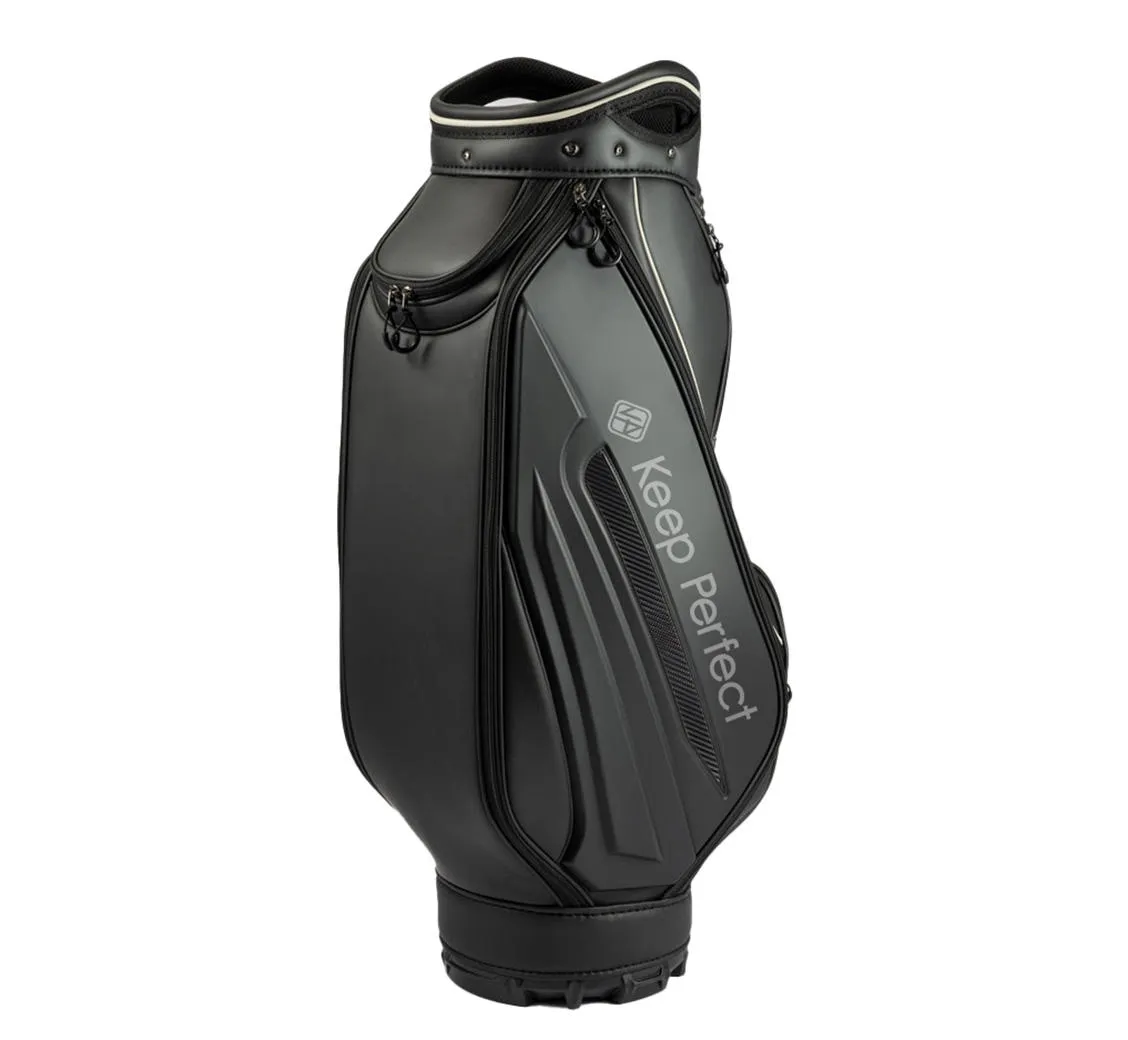
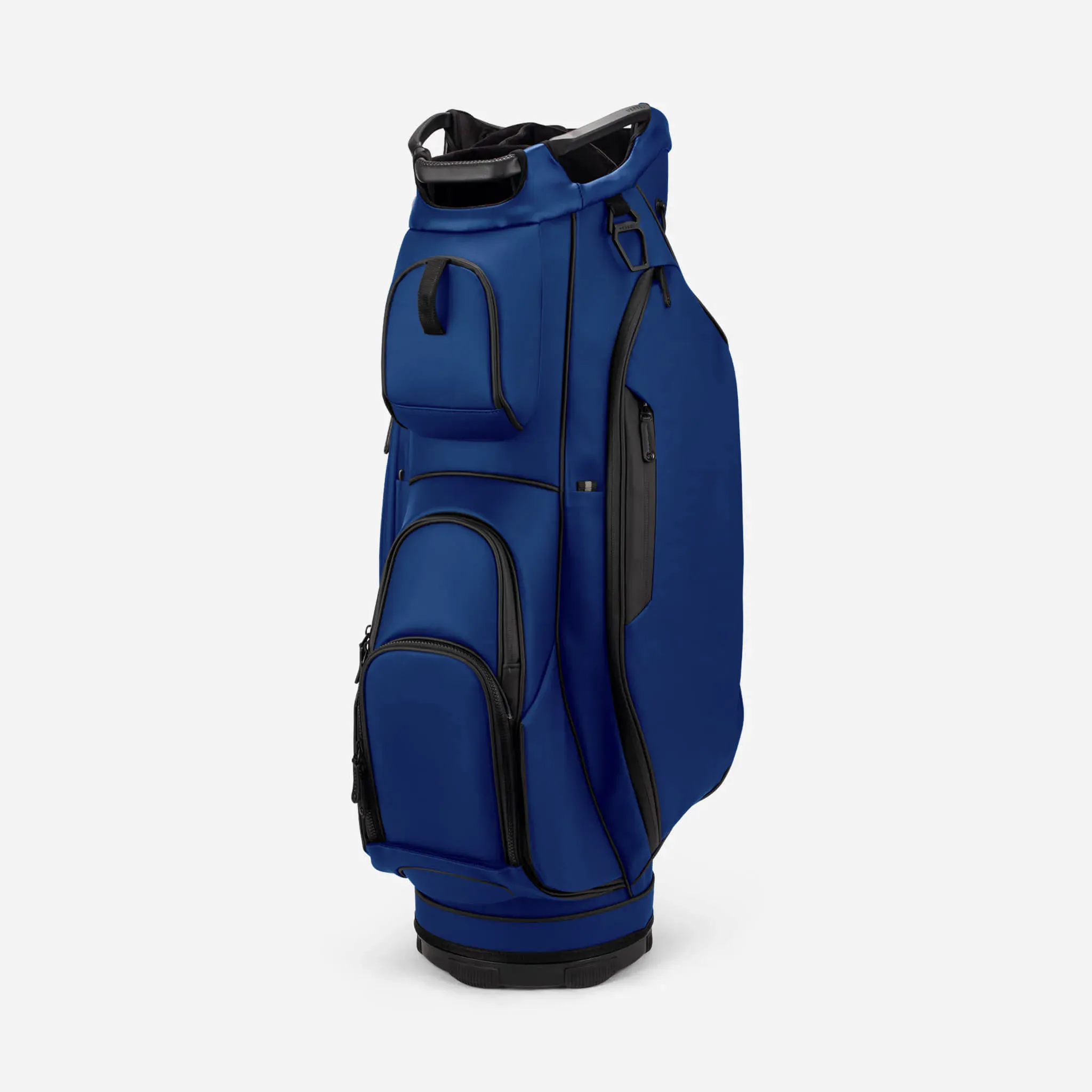
The single strongest reason to buy a leather cover from us is that the same affiliated plant builds our leather golf bags. That is rare in the industry — most cover makers cannot match a bag hide. When a brand orders a leather staff or tour bag and a matching set of covers from the same factory, the hide, the thread and the hardware all come off the same lot. The result is a bag and cover collection that reads as one deliberate object, not two products bought separately. That coordinate look is what justifies a bundle price, and it is the cross-sell with the best margin in the premium segment. Explore the hide options on the premium materials page and the bags on the leather bag line.

Leather head covers matched to a full-grain leather staff golf bag

Branding on Leather: Three Finishes

Blind deboss — the mark pressed into the hide, no foil. The quiet luxury choice; it lives in the leather and cannot wear off. Hot-stamp — a gold or tone-on-tone foil impressed into the hide when the mark needs to pop on a dark colour. Embroidery — thread stitched into the leather for multi-colour wordmarks and crests, matched to Pantone. We recommend blind deboss as the default on full-grain, with hot-stamp or embroidery only when the design demands it. A leather cover with one clean deboss, done right, out-looks anything busier.

Construction and Aftercare

A leather cover is built like a small leather good, not a plastic sleeve. Parts are die-cut from a hide, turned and lock-stitched with matched thread (we offer the classic saddle stitch on premium lines), padded with EVA, and lined in fleece or velvet that is softer than the club finish. The closure is usually a magnetic flap for the premium feel, or a press-snap. Leather ages best with light, occasional care — a wipe with a soft cloth and, once or twice a season, a neutral leather conditioner — and it should be stored out of direct sun. We advise retail buyers to include a small care card, because a customer who conditions their leather cover keeps it for a decade and becomes a lifelong brand advocate.

Spec and Lead Time

The leather line runs on the same disciplined terms as the rest of the range: MOQ 200 per design (100-piece test order for first-time buyers), sampling 10–20 days, bulk production 45–60 days. The affiliated plant runs 149 machines (126 sewing stations) at a rated 200,000 pieces a month, with the same skilled seamstresses who build the bags. Certification: BSCI, ISO 9001:2015, CE, CPC and RoHS (SGS audit, March 2026). For novelty and sculpted leather-look covers, our sister line at customgolfbagsfactory.com handles character designs; for serious full-grain leather matched to a bag, this is the home.

Leather Grades: What the Terms Actually Mean

Buyers hear “full-grain,” “top-grain” and “genuine leather” used loosely, so it is worth being precise, because the grade is what a discerning customer will inspect. Full-grain is the outermost layer of the hide, with the natural grain left intact. It is the strongest and most patina-friendly grade, and it is what we specify for the luxury line. Top-grain has been lightly sanded and corrected, which removes some character and durability; it sits between full-grain and the lower grades. “Genuine leather”, confusingly, is often the lowest grade of real leather — split hide, heavily corrected — and should not be confused with the premium material. PU / bonded leather is not real leather at all but a coated synthetic, which we offer honestly as the value alternative. When we say full-grain on a spec sheet, we mean the un-sanded outer layer, and we are happy to send hide samples so a buyer can feel the difference before tooling.

The tannage matters just as much. Vegetable-tanned leather ages with a warm, deepening patina and smells natural; chrome-tanned leather is more uniform, supple and colour-fast, the standard for coloured goods. For a vintage, heritage cover we lean toward vegetable-tanned and warm tones; for a modern, coloured premium line we use chrome-tanned hides in a wider palette. We match the tannage to the brand story, not the other way around — and we can provide the hide specs and swatches a buyer needs to write the product copy accurately.

Why Premium Brands Build Their Cover in Leather

Leather is the material that signals “serious” to a buyer who knows the game. A neoprene cover reads as equipment; a leather cover reads as ownership. On the PGA Tour and in premium golf retail, the leather, debossed, magnetic cover has become the visual shorthand for a well-appointed bag — the kind of detail a golfer notices on a playing partner’s cart and asks about. That cultural association is why a leather cover commands a higher price with less resistance than any material upgrade: the customer already knows it means quality. For a brand, the leather driver cover is the product that anchors the whole range’s perceived tier.

The economics reward it, too. Leather adds material cost, but it also adds margin — because the perceived value rises faster than the cost does. A full-grain driver cover with a magnetic flap and a clean deboss sits in a price bracket where the customer is not comparing unit cost; they are comparing taste. Pair it with a matching leather golf bag from the same hide lot, and you have a coordinate set that sells as a collection rather than two accessories. That is the upsell leather makes possible that neoprene never could.

Hand-finished leather head cover showing saddle stitching and debossed logo detail

Packaging and Gifting the Leather Cover

A leather cover is bought as a gift at the highest rate of any material — it looks like a present, feels like one, and sits in a gift budget. That justifies a rigid box with a fitted insert and a soft tissue, so the first touch of the hide happens out of a box that already felt premium. A belly band with the logo, or a card slot for a personal message, turns the cover into a Father’s Day, client or club-prize gift at near-zero tooling. For corporate orders, a debossed initials block or a club crest on a leather putter cover is one of the highest-perceived-value, lowest-cost branded gifts available. We package polybag for e-commerce, paper sleeve for retail hang-sell, and the rigid box for the premium leather line.

Whether you build the heritage vegetable-tanned driver cover, the modern chrome-tanned matched set, or the debossed leather putter gift, the leather cover does something no other material can: it makes a functional protector feel like an object worth owning. That is the premium promise — and it is why we treat the hide, the stitch and the deboss as seriously as we treat the bags they sit beside.

Colour Matching: Pantone Across the Collection

A coordinate leather set lives or dies on colour consistency. A driver cover and a 5-wood that look like two different browns on the bag read as a mistake, not a collection. We match the whole range to a Pantone reference, and we hold tolerance tightly so the hide, the thread and any foil all sit on the same tone. For a brand that also orders a leather bag from us, we pull the cover hides from the same lot as the bag panels, so the bag, the driver, the fairway set and the putter read as one deliberate object. That lot-matching is invisible until it is missing — and it is one of the quietest proofs that a cover was built by a bag factory rather than a generic accessory shop.

QC on the Leather Line

Leather reveals mistakes fast, so the bench checks three things specific to the material. The hide grade: full-grain panels are inspected for natural marks that would show through a deboss, and routed so the cleanest panel lands on the branding face. The stitch: thread is tension-matched and colour-matched, with no broken or skipped stitches along the high-flex seam. The deboss: the impression is deep, even and centred, tested so it will not punch through a thin hide. Samples are pulled to AQL 2.5 visual inspection before pack, and the programme sits under the affiliated plant’s BSCI, ISO 9001:2015, CE, CPC and RoHS certifications (SGS audit, March 2026). We also send hide swatches with the sample so the buyer can approve the grain and tone before bulk — the step that prevents a costly colour surprise at delivery.

Spec at a Glance

ParameterLeather Cover Specification
HideFull-grain cowhide / PU leather
TannageVegetable (heritage) or chrome (modern colour)
BrandingBlind deboss / hot-stamp / Pantone embroidery
ClosureMagnetic flap (default) / press-snap
LiningFleece (woods) / velvet (putter)
ColourPantone-matched; lot-matched to leather bags
MOQ / Sampling / Bulk200 / 10–20 days / 45–60 days

Send us the Pantone tone, the clubs, and the bag you want to match, and we will return hide swatches, a sized spec and a sample inside the 10–20 day window. The result is a leather cover that ages with the club, matches the bag, and quietly carries the brand for years.

The Long Case for Leather

It is worth stating the obvious, because buyers sometimes overlook it: a leather cover is a purchase the customer makes once and keeps, not one they replace every season. That changes the whole relationship. A golfer who buys a cheap neoprene cover replaces it when it wears out, often switching brands each time. A golfer who buys a full-grain leather cover keeps it for a decade, and every year of use it looks more like his cover — and every year it markets your brand on his bag at the club. The higher upfront price is therefore paid back many times in word-of-mouth and repeat collection buying. For a brand that wants customers for life rather than for a season, leather is the material that builds that loyalty.

It also pairs naturally with the rest of our premium world. The same hides and threads flow into our leather staff and tour bags, our premium luxury bags, and our premium materials programme — so a brand that starts with a leather cover can extend into a full coordinate collection without changing factories, changing quality, or breaking the visual identity. That continuity is the luxury of working with one specialist plant. Start with the driver cover, add the putter, then the bag; the collection builds itself, piece by piece, in the same hide. We are ready when you are.

In the end, the leather cover earns its place because it respects the golfer’s investment. It wraps a several-hundred-dollar driver in a material that gets better, not worse, with age; it carries the brand in a mark that cannot flake; and it coordinates with the bag so the whole setup looks considered rather than cobbled together. That is what a premium cover is — not a sock, but a small piece of made goods. Build it in the right hide, stitch it on the right benches, match it to the right bag, and it stays on the club and in the customer’s affection for years. Quote yours today.
Quote Your Leather Covers

Tell us full-grain or PU, the clubs, and the bag you want to match. We will return a sized spec with hide and thread matching and a 10–20 day sample timeline at MOQ 200.

Request a Quote →

People Also Ask

What is the best leather for golf head covers?

Full-grain cowhide is the best premium choice: it ages into a patina, takes a deep blind deboss, and outlasts synthetics when cared for. PU (faux) leather is the value alternative, matching the smooth look at 40-55% lower cost with a fully uniform colour. Choose full-grain for a craftsmanship story; PU for a wide colour range at mid price.

Should I choose full-grain or PU leather?

Choose full-grain if your brand tells a craftsmanship or heritage story — like our vintage and classic builds — and you want the cover to age well. Choose PU if you need a uniform colour range at a lower price point. Both use the same stitch lines and finishes; the difference is in ageing and branding depth.

Can leather head covers match my leather golf bag?

Yes. Because the same affiliated plant produces both our leather covers and leather golf bags, we can match full-grain hides, Pantone thread and hardware finishes across a leather bag and cover collection. This is one of the strongest, highest-margin cross-sells in the premium segment.

Do leather golf head covers last?

Yes. Full-grain leather lasts for years and improves with a light patina, unlike neoprene or knit which pill and crack. With occasional neutral conditioner and storage out of direct sun — as detailed in our materials care guide — a full-grain cover outlasts the clubs it protects.

What is the MOQ for custom leather head covers?

MOQ is 200 pieces per design, with a 100-piece test order for first-time buyers — start your custom line on the contact page. Sampling takes 10 to 20 days and bulk 45 to 60 days, run on an affiliated plant rated at 200,000 pieces per month.

How should I brand a leather cover?

For full-grain leather, a blind deboss is the understated luxury default and cannot wear off. Add a hot-stamp gold foil or Pantone-matched embroidery when the design needs it. We recommend one clean mark rather than busy decoration — see our FAQ page for branding best practices.

Sources & Authority

The claims on this page draw on long-running industry tracking of the golf accessory market — the National Golf Foundation’s golfer-spend research and Golf Datatech’s retail reporting, which consistently rank head covers among the most consistently purchased, lowest-price-sensitivity equipment aftermarket products — together with tour-level equipment observation of the PGA Tour. Production figures, materials and lead times are our own working numbers from the affiliated plant, independently verified by SGS (March 2026) under BSCI and ISO 9001:2015, with CE, CPC and RoHS product-safety certification. Where a recommendation is made, it is based on what our QC bench actually measures, not on marketing.

Why This Matters for Your Brand

For a brand sourcing in 2026, the takeaway is simple: protect the customer’s investment, make the cover feel deliberate, and build it with a partner who can match the material across the whole collection. The small details — a lining softer than the club, a closure that does not fatigue, a single confident mark, a colour held to one Pantone — are what turn a disposable cover into a product that reorders and refers. With MOQ 200, a 10–20 day sample window, and an affiliated plant certified to BSCI, ISO 9001:2015, CE, CPC and RoHS, launching is lower-risk than it has ever been. Start the conversation, and let a physical sample set the standard rather than a spec sheet.