Saffiano, Waxed and Beyond: The Leather Finish Playbook for Golf Bags
The finish is the leather’s face to the world — the surface system that decides how a bag looks, ages, cleans and survives — and two identical hides diverge completely through it. Saffiano’s waxed cross-hatch delivers wipe-clean structure; waxed and pull-up finishes deliver living colour that scratches and heals; aniline delivers naked beauty for the careful owner. This playbook compares the five production finish families on character, durability, care and channel fit, with the OEM specs behind each. Finishes run across our leather colours and textures programme.
QUANZHOU JUNYUAN BAGS, established 2014 in Quanzhou, Fujian, manufactures through an affiliated factory of 4,950 m², 7 production lines, 149 machines (126 sewing stations) and 137 staff — rated at 200,000 pieces per month, actual output around 150,000. Every order runs AQL 2.5 inspection, MOQ 200 (100-piece trial), sampling 6–10 days, bulk 35–50 days, with BSCI, ISO 9001:2015, CE, CPC and RoHS certifications (SGS audit, March 2026). We serve 200+ brands in 100+ countries.
The Finish Is the Product
Buyers shop for leather and receive finishes: the surface system — pigment, wax, texture, topcoat — is what hands touch, weather attacks, and time transforms. The hide beneath provides strength and structure, but the finish provides the entire user experience: how the bag looks at unboxing, how it photographs, how it cleans after a muddy round, how it ages across seasons. Two bags from the same tannery’s hides can serve different customers entirely through finish choice.
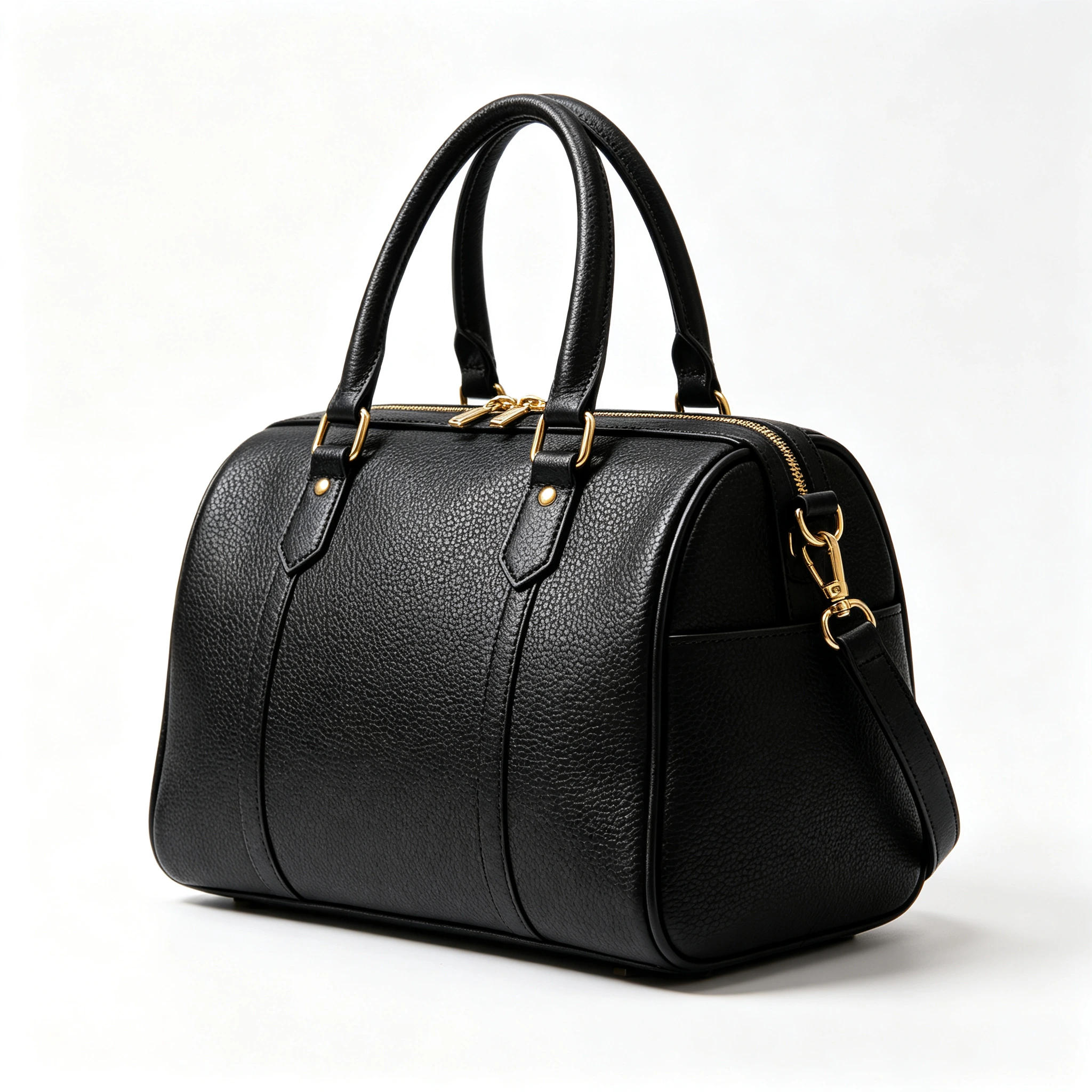
The finish families in production: pigmented (opaque protective coats — maximum consistency and cleanability), saffiano (cross-hatch texture under wax — structured contemporary luxury), waxed and pull-up (oil-and-wax-loaded surfaces that scratch, heal and patina dramatically), semi-aniline (light protective coat over transparent dye — the balance point), and full aniline (naked dyed surface — maximum beauty, maximum honesty, maximum care).
The selection logic inverts the usual instinct: do not choose the finish by how it looks on the sample table; choose it by how it will look at year three in the target customer’s hands. That decision requires knowing what each family does under golf’s specific abuse — UV, rain, cart straps, bag-room floors, sunscreened hands — and that is the comparison this playbook makes.
Pigmented: The Engineered Surface
Pigmented finish is leather’s armour: an opaque colour coat with protective topcoats over the grain, making the surface consistent, cleanable and wear-defiant. It is the finish of white builds (where colourfastness is engineering, per our white colourfast guide), of exact brand colours, and of any programme where batch consistency outranks surface romance.
The golf performance is the best raw durability in the finish families: pigmented surfaces resist water spotting, wipe clean of grass and mud, shrug off sunscreen, and hold colour through seasons of UV. The trade is patina: the pigment layer sits between the world and the grain, so the bag looks the same at year three as at unboxing — a feature for consistency-driven brands, a loss for patina romantics.
The quality variables: coat thickness (too thin wears through at flex points; too thick cracks at the collar fold), flex additive engineering (verified at Bally flex 50,000 cycles), and topcoat chemistry (fluorocarbon-free stain guards as the modern standard). Pigmented done well is the hardest-working finish in golf; done cheap it is the plastic-feeling surface that gives "coated leather" its bad name.
Saffiano: Structured and Waxed
Saffiano is a finish and a texture in one: cross-hatch pressing into pigmented leather, sealed with a protective wax coat. The result is the contemporary premium signature — crisp, structured, urban — with a performance profile engineered for exactly golf’s demands: scratch resistance (the texture disperses abrasion), water resistance (the wax sheds rain), and effortless cleanability (dirt wipes from the waxed cross-hatch without chemistry).
The aesthetic register deserves precision: saffiano reads as designed, modern and intentional — the finish of structured luxury goods rather than heritage craft. It suits navy, black, tan and grey; it carries gold or silver branding with crisp authority; and it photographs with an even, forgiving depth that e-commerce loves. For the modern-professional customer, saffiano is the most complete finish package available. The texture context is in our texture playbook.
The maintenance distinction: the wax coat is a renewable wear layer. Years of handling polish the cross-hatch peaks and thin the wax; a professional re-wax (or careful home application of matched wax, well buffed) restores sheen and water behaviour. Saffiano’s only real service item is this re-wax, and brands running multi-season saffiano programmes should print it on the care card — owners who re-wax keep bags looking boxed-fresh indefinitely.
Waxed and Pull-Up: The Living Finishes
Waxed and pull-up finishes are the romantics: leather loaded with oils and waxes so the surface lightens when bent or scratched (the "pull-up" effect) and heals when rubbed (the oils migrate back). These finishes put leather’s living character on maximum display — every round, every cart strap, every buckle touch writes into the surface, and the writing blends into a patina no uniform finish can fake.
The golf behaviour is distinctive: waxed leather shrugs water beautifully (the wax is the original waterproofing, proven on boots and saddlery for centuries), handles cold without stiffening, and actually benefits from hard use aesthetically — a waxed bag at mid-season looks better than at unboxing. The costs: surface marks are visible immediately (the pull-up lightening), the hand is waxy-greasy until broken in, and colour consistency between hides runs wider than pigmented systems.
The customer match is precise: waxed and pull-up finishes are for the buyer who wants the leather to live — the heritage player, the vintage collector, the brand selling story over uniformity. They are wrong for the buyer who wants unboxing-perfection preserved — that customer reads every pull-up mark as damage and generates support tickets. Finish choice is customer selection; waxed finishes select their people. The heritage context is in our patina guide.
Aniline and Semi-Aniline: The Transparent Finishes
Aniline is leather naked: transparent dyes, no pigment, the hide’s entire natural surface — pores, grain, healed scars — visible and touchable. It is the most beautiful finish family and the most demanding: nothing protects the surface from stains, UV or handling, and everything the bag meets becomes part of its story. Aniline develops the deepest patina in leather — and the fastest visible wear.
Semi-aniline adds a whisper of protective coat over the aniline dye: most of aniline’s transparency and hand, with meaningful resistance to stains and fading. It is the connoisseur’s balance — the finish of premium builds that must age beautifully AND survive real use — and our default recommendation for flagship leather bags: the customer sees and feels the grain, and the bag forgives a wet round.
The deployment discipline: full aniline belongs on heirloom-tier builds sold with honest care education (the customer must choose the living finish knowingly); semi-aniline suits the premium volume of leather programmes; and both demand the best hides — transparent finishes hide nothing, so grading must be stricter than for pigmented systems, with the yield and cost consequences that implies.
The photography and unboxing economics of the transparent finishes repay attention: aniline and semi-aniline surfaces give product photography a depth that coated finishes cannot replicate — light enters the surface rather than bouncing off it, and the grain reads in the image. For direct-to-consumer premium channels where the photograph must do the persuading, transparent finishes earn their care burden at the conversion rate; the bag that looks alive on the page outsells the bag that looks laminated.
The Finish Decision Framework
| Finish | Look | Durability | Care demand | Ages | Best channel |
|---|---|---|---|---|---|
| Pigmented | Consistent, engineered | Excellent | Minimal | Stable | Volume premium, white, brand colours |
| Saffiano | Structured, contemporary | Excellent | Minimal + re-wax | Stable | Modern premium, e-commerce |
| Waxed / pull-up | Rustic, living | Very good | Low but visible marks | Dramatic patina | Heritage, collector |
| Semi-aniline | Natural, refined | Good | Moderate | Beautiful patina | Flagship leather |
| Full aniline | Naked, deepest | Delicate | High | Maximum patina | Heirloom, limited |
Choosing is four questions. Who owns the bag? — maintenance-averse buyers need pigmented or saffiano; ritual-enjoying collectors earn waxed and aniline. What does the bag photograph as? — e-commerce volume loves saffiano’s even depth; campaign photography loves aniline’s life. What does year three look like? — consistency strategies choose pigmented; story strategies choose living finishes.
What does the brand promise? — engineered precision (pigmented, saffiano) or organic craft (waxed, aniline). The finish IS the brand position made physical, which is why finish decisions belong at the brand-strategy table, not just the materials meeting. The colour interaction is mapped in our colour guide.
OEM: Finish Programme Notes
A finish brief specifies: family (pigmented / saffiano / waxed-pull-up / semi-aniline / aniline), colour with tolerance band under D65 light, performance grades (rub fastness ISO 105-X12, light fastness ISO 105-B02, Bally flex cycles), texture plate where applicable (saffiano scale relative to panel size), and care-card language matched to the finish’s real behaviour. The finish sample is approved as a physical master, photographed under raking light, and archived as the production standard.
Terms: finish families run standard programme terms — MOQ 200 with 100-piece trials, 6–10 day sampling (finish trials on the actual hides included), 35–50 day bulk under AQL 2.5 with finish-batch verification at intake. Wax-loaded and aniline systems carry wider natural variation; the golden-sample variation window is agreed explicitly so production and client inspect against the same reality.
The multi-finish architecture that works: one silhouette offered in two finishes at two altitudes — saffiano for the contemporary tier, semi-aniline or waxed for the heritage tier — lets one pattern serve two customers with shared tooling. Finish is the cheapest range-extension in leather: same cut, same sew, different surface, different customer. Begin the finish conversation at our quote page.
The Bottom Line
The finish families sort cleanly by customer: pigmented for engineered consistency, saffiano for contemporary structure, waxed and pull-up for living heritage, semi-aniline for refined flagship balance, aniline for heirloom honesty. Each is a complete answer — to a different question.
The selection discipline: choose by the target customer’s year-three reality, not the sample table’s day-one beauty. Durability, care demand, aging direction and channel fit all flow from finish choice — it is the most consequential single spec on a leather bag after the hide itself.
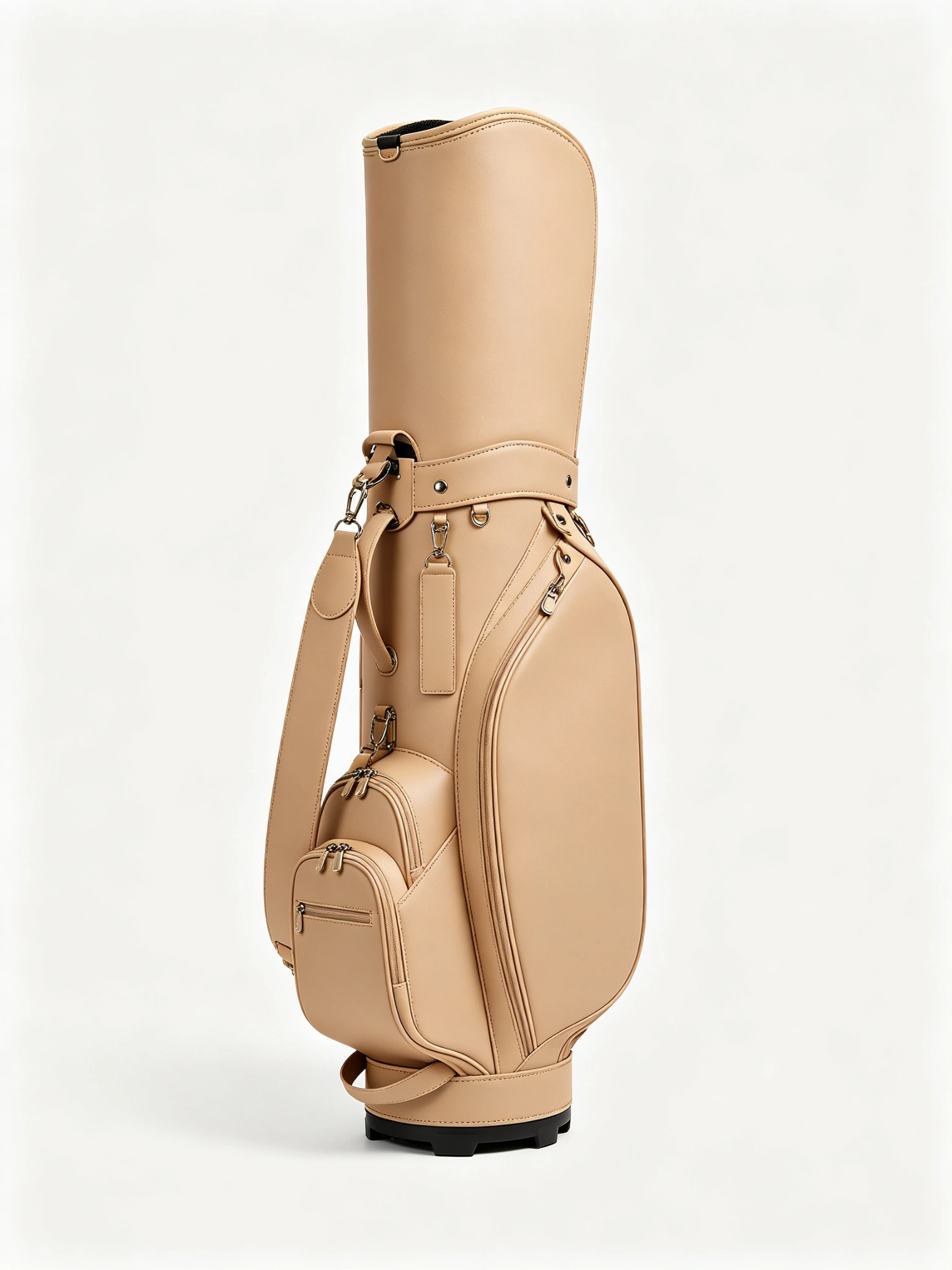
Send the silhouette and the customer description, and finish samples across families — on the actual hides, raking-light photographed — come back in 6–10 days. The hide is the foundation. The finish is the house the customer lives in.
A closing observation from a decade of finish decisions: brands rarely regret choosing a more durable finish, and frequently regret choosing a more delicate one for the wrong customer. The complaints arrive on schedule — stained aniline from a buyer who expected armour, scratched pull-up from a buyer who expected plastic permanence. Every one of those tickets traces back to a finish chosen by beauty rather than by customer, and every one was preventable at the spec table.
So the playbook ends where it began: the finish is the product. Choose it with the customer’s hands, climate and habits in mind, spec it with the test grades that prove it, and communicate it with care instructions the box actually contains. Do that, and the finish does what great surfaces always do — it turns a purchase into a relationship that deepens every round. The samples make the decision obvious; they always do. Hold them, scratch them, wet them — then spec with total confidence, knowing the finish will keep every single promise the photograph made.
Spec Your Finish
Send the silhouette and customer profile. We return cross-family finish samples in 6–10 days, quoted at MOQ 200.
Request a Quote →People Also Ask
What is saffiano leather?
A finish-and-texture system: cross-hatch pattern pressed into pigmented leather, sealed with a protective wax coat. Originally engineered for scratch resistance, water resistance and cleanability, it reads as contemporary structured luxury — crisp, precise, urban. For golf bags it delivers wipe-clean practicality, scuff-shrugging texture and multi-season shape retention, suiting navy, black, tan and grey especially.
What is the difference between waxed leather and regular leather finishes?
Waxed leather is loaded with oils and waxes rather than sealed under pigment: the surface lightens when bent or scratched (pull-up effect) and self-heals when rubbed, water beads off naturally, and hard use improves the look. Regular pigmented finishes armour the surface for consistency and minimal care. Waxed is the living finish for heritage customers; pigmented is the engineered finish for consistency strategies.
Which leather finish is most durable for golf bags?
For raw durability: pigmented and saffiano finishes — protective coats that resist water, UV, stains and abrasion with minimal care, verified at Bally flex 50,000 cycles. For longevity-with-character: waxed finishes, which tolerate decades of hard use and improve through it. The delicate option is full aniline — maximum beauty, maximum care. Match the finish to the owner’s maintenance reality, not just the durability chart.
Does saffiano leather scratch?
It resists scratching better than any smooth finish — the cross-hatch texture disperses abrasion and the wax coat sheds contact. What scratching occurs blends into the texture rather than reading as damage (unlike smooth finishes, where every mark announces itself). Years of handling polish the peaks; a re-wax restores the original sheen. For scuff-prone golf use, saffiano is the low-anxiety premium choice.
What is pull-up leather and why does it change colour?
Leather impregnated with oils and waxes that migrate under stress: bending or scratching displaces the oils, lightening the surface temporarily — the pull-up effect. Rubbing or warming lets the oils migrate back and the mark heals. It is not damage; it is the finish living. Pull-up builds the dramatic patinas of heritage goods and suits buyers who want the leather to record their rounds.
Is aniline leather suitable for golf bags?
For the right owner: full aniline (transparent dye, no protective coat) offers the deepest beauty and patina but stains, fades and marks freely — it demands a careful, ritual-enjoying owner and suits heirloom-tier and limited builds. Semi-aniline (light protective coat) keeps most of aniline’s transparency with real-world forgiveness, and is our default for flagship leather bags that must age beautifully and survive wet rounds.
How do you care for waxed leather golf bags?
Minimal and forgiving: brush off dried mud, damp-wipe as needed, and let the wax do its work — marks heal with a thumb-rub or a warm-cloth buff. Re-wax annually with a matched wax product to replenish the protective loading. Avoid heat drying and solvents. The finish rewards neglect better than any other — which is precisely its heritage charm. Full protocol in our care guide.
Can saffiano finishes be re-waxed?
Yes — the wax coat is a renewable wear layer. Years of handling thin it and polish the cross-hatch peaks; a professional re-wax, or careful home application of matched wax well buffed, restores both sheen and water behaviour. It is saffiano’s only real service item, and brands running multi-season saffiano programmes should print re-waxing on the care card: owners who re-wax keep bags looking boxed-fresh indefinitely.
Which finish is best for a white golf bag?
Pigmented, necessarily: white’s colourfastness (ISO 105-X12 grade 4-5, light fastness ISO 105-B02 grade 5+) is an engineered-coat achievement — transparent finishes cannot deliver it. Add stain-guard topcoat chemistry and through-dyed pale substrate. White aniline does not exist for golf; white is a finish-engineered product. The full spec is in our white colourfast guide.
What is the MOQ for custom-finish leather golf bags?
MOQ 200 pieces per design with 100-piece trials, 6–10 day sampling including finish trials on the actual hides, 35–50 day bulk under AQL 2.5 with finish-batch verification at intake. One silhouette in two finishes (e.g., saffiano contemporary tier + semi-aniline heritage tier) shares tooling and is the cheapest range extension in leather. Start at our quote page.
Do leather finishes affect the bag’s price?
Yes, through hide grade and process: aniline and semi-aniline demand the cleanest hides (transparent finishes hide nothing), raising material cost; waxed systems add loading process cost; pigmented finishes tolerate mid-grade hides, protecting yield. Net effect: aniline-family builds carry 15-30% material premiums over pigmented equivalents of the same silhouette — the price of transparency, in the literal sense.
Which finish photographs best for e-commerce?
Saffiano — the cross-hatch creates even micro-shadow that gives photography depth without hot spots, and its consistency means the shipped bag matches the photo. Semi-aniline photographs beautifully but varies unit-to-unit (a feature customers must be told about). Pigmented shoots clean and colour-exact. Waxed and pull-up photograph with drama but demand skilled lighting to read their depth rather than their marks.
Can different finishes combine in one bag?
Yes — the sophisticated architecture: saffiano body with smooth semi-aniline trim, or waxed pull-up panels with pigmented structure zones. Keep it to two finishes maximum, matched to zone logic (durable finish at wear zones, living finish at display zones), and expect separate hide sourcing per finish. One silhouette in combined finishes is a proven signature-build formula on our lines.
How does finish choice affect sustainability?
Chemistry and longevity both: aniline uses minimal coating chemistry; pigmented systems use more but modern fluorocarbon-free topcoats have cleaned the profile; waxed finishes use natural oils and waxes. The larger sustainability axis is service life — a waxed or aniline bag kept for 15 years beats any finish on a 4-year replacement cycle. Durability is the greenest finish property of all.
What finish do luxury golf brands use most?
Two poles: heritage-luxury houses lean waxed pull-up and aniline (the living finishes that prove the leather), while contemporary-luxury brands lean saffiano and refined pigmented systems (the engineered finishes that prove the design). The strongest programmes run both poles as tiers — heritage finish for the collector customer, engineered finish for the modern professional — under one brand architecture.
Sources & Authority
Finish performance data from Bally flex, ISO 105-X12 and ISO 105-B02 testing at the QUANZHOU JUNYUAN BAGS QC bench under AQL 2.5 (SGS-verified March 2026). Finish-family deployment analysis from 200+ OEM leather programmes since 2014, with care protocols per our leather care methodology.