Embossed Leather Textures for Golf Bags: The Complete Texture Playbook
Embossed textures — croc, saffiano, lizard, pebble, basketweave — solve three problems at once: they add design depth without added colour, they disguise daily wear, and they differentiate a range at zero colour risk. Each texture has a character, a durability profile and a channel where it wins. This playbook compares the six production textures, their embossing and finishing specs, and the OEM notes for each. Textured builds run across our leather colours hub.
QUANZHOU JUNYUAN BAGS, established 2014 in Quanzhou, Fujian, manufactures through an affiliated factory of 4,950 m², 7 production lines, 149 machines (126 sewing stations) and 137 staff — rated at 200,000 pieces per month, actual output around 150,000. Every order runs AQL 2.5 inspection, MOQ 200 (100-piece trial), sampling 6–10 days, bulk 35–50 days, with BSCI, ISO 9001:2015, CE, CPC and RoHS certifications (SGS audit, March 2026). We serve 200+ brands in 100+ countries.
Why Texture Is the Quiet Differentiator
Colour is the loud axis of bag design; texture is the intelligent one. A textured leather bag reads as designed before a single colour judgement is made — the surface itself carries the interest. For brands, texture solves real commercial problems: it differentiates without colour risk (a navy saffiano bag is safe and distinctive simultaneously), it hides wear (textured surfaces disguise the scuffs flat leather displays), and it adds perceived value that customers can feel — texture is a tactile luxury signal.
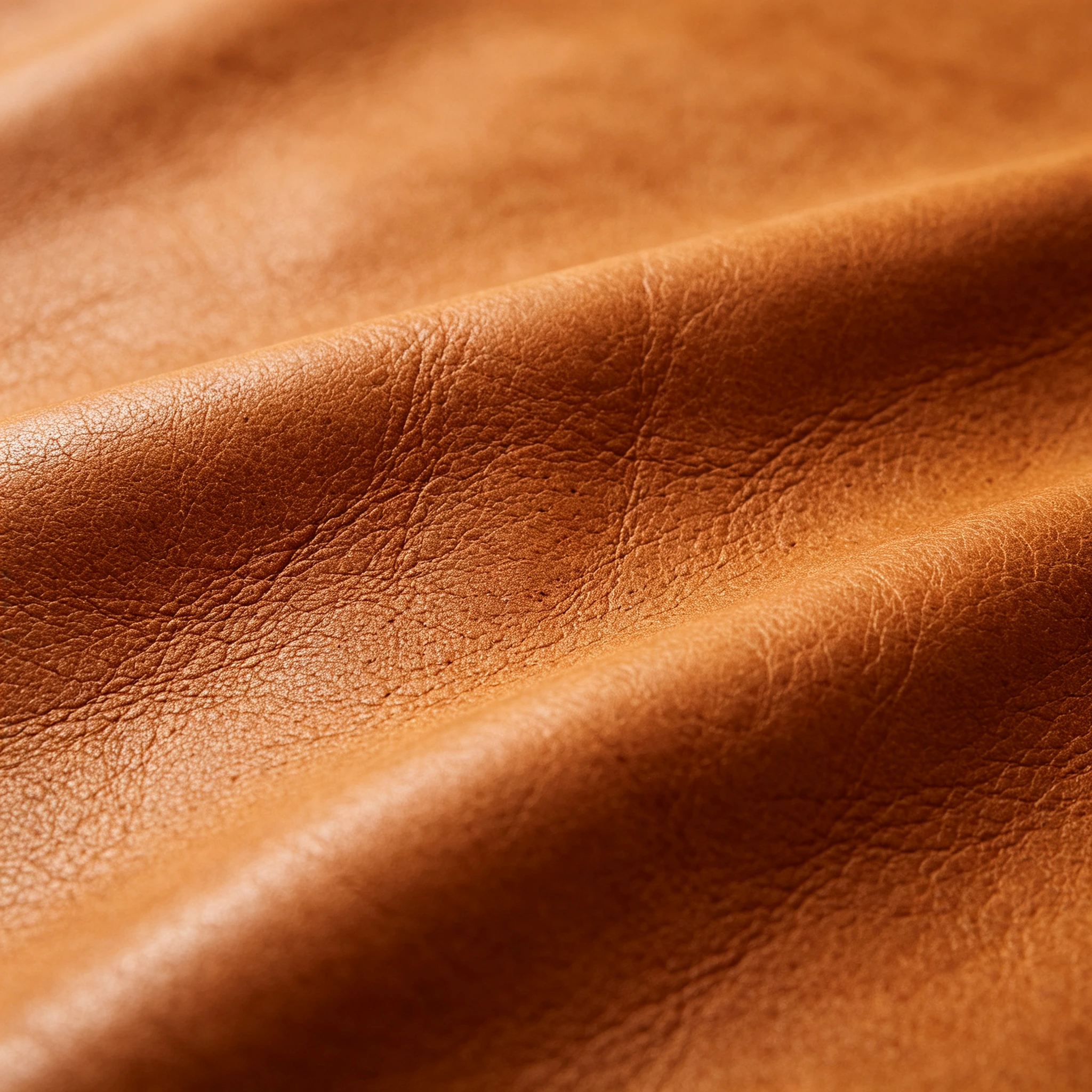
The luxury industry proved the playbook: the most successful leather goods textures of the past century — saffiano’s cross-hatch, the fashion houses’ exotic embosses, caviar pebble — built brand recognition through surface alone, surviving every colour trend. Texture is the most durable design investment because it is style without fashion: it does not date the way colours do.
Golf is under-textured relative to the wider luxury market — most bags are smooth, and the textured few stand out immediately. That gap is the opportunity this playbook maps: six production-ready textures, what each one says, where each one wins, and the specs that make each perform on a golf course rather than just in a showroom.
The Six Production Textures Compared
The six textures below are proven in production across our programmes, each with a distinct register:
| Texture | Character | Wear disguise | Best colours | Best channel |
|---|---|---|---|---|
| Croc | Bold exotic luxury | Excellent | Black, cognac, green | Statement, trophy |
| Saffiano | Cross-hatch, structured chic | Very good | Navy, black, tan | Contemporary premium |
| Lizard | Fine exotic, refined | Very good | Black, burgundy | Fashion, gift |
| Pebble / caviar | Soft grain, sporty luxe | Excellent | All | Play bags, volume |
| Basketweave | Woven craft look | Good | Tan, brown, navy | Heritage, club |
| Debossed monogram | Brand texture | Good | Any dark | House brands, limited |
Croc is the drama texture — bold scales, trophy register, covered in full in our croc embossing guide. Saffiano is the contemporary champion: the cross-hatch wax finish invented for structured luxury goods — scratch-resistant, water-friendly, and the texture that reads "designed" to the widest audience. Lizard is croc’s refined sibling: fine, tight scales for understated exotic — the connoisseur’s texture.
Pebble (caviar grain) is the volume hero: soft, natural-looking texture that hides wear better than any other and suits every colour — the play-bag texture par excellence. Basketweave embossing gives a woven-craft look that pairs beautifully with heritage palettes. Debossed monogram patterns — the brand’s own mark repeated as texture — are the house-brand play: surface as identity, at the cost of custom plates.
Saffiano: The Contemporary Champion
Saffiano deserves its own section because it solves the modern premium problem so completely. The texture is a fine cross-hatch pressed into pigmented leather and finished with a protective wax coat — originally engineered for exactly the properties golf needs: scratch resistance, water resistance, structural crispness, and effortless cleanability. A saffiano bag wipes clean, shrugs off bag-room scuffs, and holds its shape and finish for years.
The aesthetic register is contemporary luxury: structured, precise, urban — the texture of modern premium leather goods rather than heritage craft. Saffiano suits navy, black, tan and grey especially, and it carries gold or silver branding with crisp authority. For brands whose customer is the modern professional rather than the vintage collector, saffiano is the texture answer.
The production spec: cross-hatch plates at the correct scale for bag panels (finer than wallet-scale saffiano reads as noise; the bag scale is a measured enlargement), pigmented finish systems verified at ISO 105-X12 4-5, and wax-coat uniformity inspected under raking light. Saffiano’s regularity is its signature — plate consistency across hides is the QC watchpoint, locked at golden sample.
Saffiano’s one maintenance distinction from other textures: its wax coat is a renewable wear layer. Years of handling polish the cross-hatch peaks and thin the wax; a professional re-wax (or a careful home application of matched wax, well buffed) restores both the sheen and the water behaviour. Brands speccing saffiano for multi-season programmes should put re-waxing on the care card — it is the texture’s only real service item, and owners who know about it keep saffiano bags looking boxed-fresh indefinitely.
Pebble and Caviar: The Volume Hero
Pebble texture — the soft, irregular grain also marketed as caviar leather — is the workhorse texture of premium leather goods, and the most commercially important texture for golf bags that see real play. Its superpower is wear disguise: the irregular surface scatters light and hides the micro-scratches, scuffs and handling marks that flat leather announces. A pebbled bag looks new at year three with nothing but basic care.
The aesthetic is sporty luxe: soft, natural, approachable premium — less formal than saffiano, less dramatic than croc, and the easiest texture for conservative buyers to accept. Pebble suits every colour, photographs with appealing depth, and gives mid-price hides a premium surface that smooth leather at the same price cannot match — which makes it the margin-friendly texture as well as the practical one.
Production notes: pebble plates come in grain sizes — fine caviar for refined builds, larger pebble for casual and sport registers — and the grain must be scaled to panel size (large panels want larger grain). Emboss depth is moderate: pebble is a surface texture, not a sculpture, and over-deep pebbling crushes the hide’s hand. The texture is the most forgiving in production and the most forgiving in use — the volume hero on both axes.
Grain-size selection is the pebble decision that most affects the finished read. Fine caviar grain suits refined builds and smaller panels — on large staff-bag panels it can read as flat from distance. Large pebble suits sport and casual registers and holds its texture read at full-panel scale, but overwhelms small components. The cutting plan therefore assigns grain by component: display panels at the bag’s chosen scale, small tabs and welts from finer-grain zones. It is the same logic as croc’s belly-flank hierarchy, applied to the volume texture.
Lizard, Basketweave and the Specialist Textures
Lizard embossing delivers the refined exotic: fine, tight scales with a subtle sheen — croc’s drama distilled into understatement. It suits formal and fashion builds in black, burgundy and deep navy, and it pairs with slim, elegant silhouettes rather than bulky utility shapes. Lizard is the connoisseur texture: less immediately legible than croc, more rewarded by a second look.
Basketweave embossing mimics woven leather strips — the craft texture. It suits heritage palettes (tan, brown, navy), pairs naturally with brass hardware and canvas hybrids, and reads as artisanal rather than exotic. Basketweave is the texture for club-traditional and heritage-leaning ranges where croc would shout and smooth would bore.
The specialist plays complete the menu: debossed monogram textures (the brand’s mark as repeating surface — custom plates at $500-2,000, and the strongest brand-identity texture available), ostrich embossing (the quill-bump exotic — distinctive, polarising, best in small doses), and technical textures (carbon-look, diamond stitch emboss) for contemporary sport lanes. Each specialist texture follows the same spec discipline: plate from physical swatches, depth and dwell in the tech pack, alignment rules at cutting.
Texture Selection: The Decision Framework
Choosing texture is answering four questions. Who is the buyer? — croc and lizard for statement and fashion buyers, saffiano for contemporary professionals, pebble for the broad premium market, basketweave for heritage and club buyers. What is the bag’s life? — heavy play wants pebble or saffiano (wear disguise and cleanability); ceremony and gift want croc or lizard; heritage display wants basketweave.
What is the colour story? — texture and colour interact: bold textures quiet bold colours (croc tames burgundy into richness), and subtle textures let quiet colours speak (pebble lets a good navy glow). What is the brand register? — heritage brands lean basketweave and pebble; contemporary brands lean saffiano; fashion brands lean croc and lizard; house brands build toward monogram.
The range architecture that works: smooth leather as the foundation, one texture per silhouette as the differentiator, croc or monogram as the halo. Texture across too many SKUs dilutes into gimmick; texture deployed precisely — one per silhouette, rotated seasonally — reads as a design programme. The colour-side of the architecture is in our leather colour guide.
Texture and two-tone combine, with discipline: one texture, two colours, never two textures. A saffiano-and-smooth two-tone (saffiano body, smooth contrast panels) is the contemporary power combination; croc panels on smooth body is the luxury play. Two textures on one bag reads as a material sample book — the eye needs one surface story. And texture plus two-tone plus contrast stitching is the full toolbox at once, which is to say too much: pick two of the three instruments and let them play cleanly.
OEM: Texture Programme Notes
A texture brief specifies: texture plate (from physical swatch library — texture never specifies by photograph), grain scale relative to panel sizes, emboss depth and dwell spec, finish system (tipped / glazed / matte / waxed), panel alignment rules (pattern-flow on display faces for scale textures; free-cut for random textures like pebble), and branding placement (smooth zones or patches for deep textures).
Production economics: texture adds 10-40% ex-works over smooth equivalents depending on plate type and finishing — pebble at the low end, croc and monogram at the high. Cutting yield drops on pattern-matched textures. Custom monogram plates are a one-time investment ($500-2,000) that converts stock leather into brand property — among the highest-ROI brand moves in the texture playbook.
Terms hold: MOQ 200 with 100-piece trials, 6–10 day sampling (emboss trials included), 35–50 day bulk, AQL 2.5 with texture-depth and alignment inspection at gate two. Texture durability is verified at golden sample: Bally flex for crack resistance, rub fastness ISO 105-X12, and a wear simulation that confirms the texture’s disguise performance. Start the texture conversation at our quote page.
Texture adds one QC instrument the smooth programme does not need: raking-light inspection. Light raked across the surface at a low angle exposes depth variance, plate marks, dwell shadows and wax-coat streaks that overhead light hides — the texture’s own shadows reveal its defects. Every textured run passes raking-light surface inspection at final QC, and golden-sample photography includes raking-light reference shots so the standard is photographic, not arguable. Texture hides wear beautifully; at the QC gate, we let it hide nothing.
The Bottom Line
Embossed texture is the intelligent differentiator: design depth without colour risk, wear disguise without care burden, tactile luxury the customer feels in the hand. The production menu: croc for drama, saffiano for contemporary structure, lizard for refined exotic, pebble for volume and play, basketweave for heritage craft, monogram for house identity.
Deploy with precision: smooth foundation, one texture per silhouette, croc or monogram at the halo — specified from physical plates, depth and dwell in the tech pack, alignment rules at cutting. Texture is style without fashion: it does not date, and it compounds.
Send the silhouette and the register, and textured samples — depth-verified, alignment-photographed — come back in 6–10 days. The surface is the design. Spec it like one.
The compounding point is worth repeating: colour cycles, texture stays. A brand that chooses its texture language once — and repeats it across seasons, silhouettes and accessories — builds a surface identity customers recognise from across the shop without reading a logo. That is the deepest form of brand equity a material can carry, and it begins with a single, well-specified plate.
Spec Your Texture
Send the silhouette and register. We return depth-verified textured samples in 6–10 days, quoted at MOQ 200.
Request a Quote →People Also Ask
What is embossed leather on a golf bag?
Leather pressed under heated engraved plates to create permanent three-dimensional surface texture — croc scales, saffiano cross-hatch, pebble grain, basketweave and more. The texture is physical sculpture, not print: it catches light, disguises wear, and adds tactile luxury. Quality embossing is depth-uniform across the hide and permanent for the product’s life.
What is saffiano leather and why is it popular for bags?
A cross-hatch textured leather finished with protective wax, originally engineered for scratch resistance, water resistance and cleanability — the exact properties golf demands. It reads as contemporary structured luxury, wipes clean, shrugs off scuffs, and holds shape for years. For modern professional buyers it is the most complete texture package available. See our colour and texture range.
Which embossed texture hides wear best?
Pebble (caviar grain): its irregular surface scatters light and disguises micro-scratches, scuffs and handling marks better than any other texture — bags look new at year three with basic care. Croc runs close behind (scales hide wear in valleys and peaks). Smooth flat leather shows the most; that is the whole case for texture on play bags.
What is the difference between croc and lizard embossing?
Scale size and drama: croc is bold, large-scale, sculptural — the statement and trophy texture. Lizard is fine, tight-scaled and refined — the understated exotic for fashion and formal builds. Croc suits staff bags and drama; lizard suits slim elegant silhouettes. Both are cowhide embosses with none of genuine exotic’s fragility or CITES complexity.
Does embossed texture add cost to a golf bag?
Yes: 10-40% ex-works over smooth equivalents depending on plate and finishing — pebble at the low end, croc and custom monogram at the high. Custom monogram plates are a one-time $500-2,000 investment converting stock leather into brand property. Retail premiums of 30-50% are supported because texture value is instantly visible and tactile.
Can I get my logo embossed as a repeating texture?
Yes — debossed monogram texture: your mark engraved as a repeating plate, pressed across panels as surface identity. It is the strongest brand-texture play available (custom plates $500-2,000, MOQs apply) and converts any colourway into unmistakably yours. Best on dark colours where the debossed shadow-play reads clearly. Details in our branding guide.
How do you clean textured leather golf bags?
Same rhythm as smooth with one addition: a soft brush works cleaner and conditioner into texture valleys — cross-hatch and scale valleys collect dust that flat wiping misses. Wipe after rounds, clean monthly in season, condition every 2-3 months, buff texture peaks to re-glaze. Full protocol in our leather care guide.
Does embossing weaken leather?
Properly calibrated embossing does not: depth, pressure, temperature and dwell are set per hide thickness so texture sets without crushing fibre structure. Over-embossed leather (too deep, too hot) is weakened — which is why depth and dwell are tech-pack specs verified at golden sample, with Bally flex testing for crack resistance. Quality embossing is engineering, not stamping.
What is the MOQ for textured leather golf bags?
MOQ 200 pieces per design with a 100-piece trial, sampling 6–10 days including emboss trials, bulk 35–50 days under AQL 2.5 with texture-depth and alignment inspection. Custom monogram plates carry their own tooling terms. Start at our quote page.
Which texture suits a heritage golf bag range?
Basketweave (woven-craft look, pairs with tan, brown and brass) and fine pebble in heritage palettes. Croc reads too fashion-loud for strict heritage; saffiano reads too contemporary. Heritage texture should whisper craft, not shout luxury — basketweave whispers best. The full heritage material picture is in our vintage materials guide.
Can textured and smooth leather combine in one bag?
Yes — the designer’s architecture: textured display panels framed by smooth body and trim (or the reverse). It gives texture a stage, reduces pattern-matching cost, and often reads more elegant than full-texture builds. Croc-plus-smooth and saffiano-plus-smooth are the proven combinations; keep it to one texture per bag.
Do textured bags photograph well for e-commerce?
Exceptionally — texture creates micro light-and-shadow that gives product photography depth flat leather cannot match. Pebble and saffiano are the easiest to shoot (even, forgiving); croc needs angled light to show scale depth; lizard wants macro detail shots to be appreciated. Texture is one of the highest-conversion features available to product photography.
What is the difference between saffiano and pebble leather?
Structure and register: saffiano is a fine, regular cross-hatch with a wax coat — structured, contemporary, wipe-clean, the urban professional texture. Pebble is a soft, irregular grain — approachable, sporty-luxe, the best wear-disguise in the playbook. Saffiano suits navy, black and tan in contemporary ranges; pebble suits every colour in play bags and volume lines. Many ranges run both: pebble for the play tier, saffiano for the premium tier.
Can saffiano leather be re-waxed?
Yes — the wax coat is a renewable wear layer. Years of handling polish the cross-hatch peaks and thin the wax; a professional re-wax, or careful home application of matched wax well buffed, restores sheen and water behaviour. It is saffiano’s only real service item, and brands running multi-season saffiano programmes should print it on the care card: owners who re-wax keep bags looking boxed-fresh indefinitely.
Can you combine two different textures on one golf bag?
One texture per bag is the rule; two colours is fine, two textures is not. Saffiano body with smooth contrast panels, or croc display panels on smooth body, are the proven combinations — one surface story, told well. Two embossed textures on one bag reads as a material sample book. Texture plus two-tone plus contrast stitching is the full toolbox at once; pick two instruments and let them play cleanly.
Sources & Authority
Texture specifications and durability data reflect production embossing operations and QC testing (Bally flex, ISO 105-X12) at QUANZHOU JUNYUAN BAGS under AQL 2.5, SGS-verified March 2026. Channel and architecture analysis from 200+ OEM brand client programmes.