Tan Leather Golf Bags: The Patina Journey, From Day One to Year Ten
Tan leather is the patina champion of golf bags: a light natural hide that begins pale honey and darkens through caramel to deep amber across one to three seasons of play, recording sun, handling and rounds in its surface. No synthetic material and no other colour offers this journey — it is the core promise of heritage leather. This guide explains how tan patinas, which hides do it best, the care rhythm that guides the journey, and the OEM specs behind tan builds. Our tan flagship lives at tan leather bags.
QUANZHOU JUNYUAN BAGS, established 2014 in Quanzhou, Fujian, manufactures through an affiliated factory of 4,950 m², 7 production lines, 149 machines (126 sewing stations) and 137 staff — rated at 200,000 pieces per month, actual output around 150,000. Every order runs AQL 2.5 inspection, MOQ 200 (100-piece trial), sampling 6–10 days, bulk 35–50 days, with BSCI, ISO 9001:2015, CE, CPC and RoHS certifications (SGS audit, March 2026). We serve 200+ brands in 100+ countries.
Why Tan Is the Heritage Colour
Tan is leather before it is anything else: the colour of vegetable tannin itself, the shade every hide becomes when coloured by the tanning process rather than by dyes. A tan golf bag is therefore the most honest leather object in the shop — nothing between the buyer and the material’s true nature. That honesty is the heritage segment’s founding aesthetic, and tan is its flag.
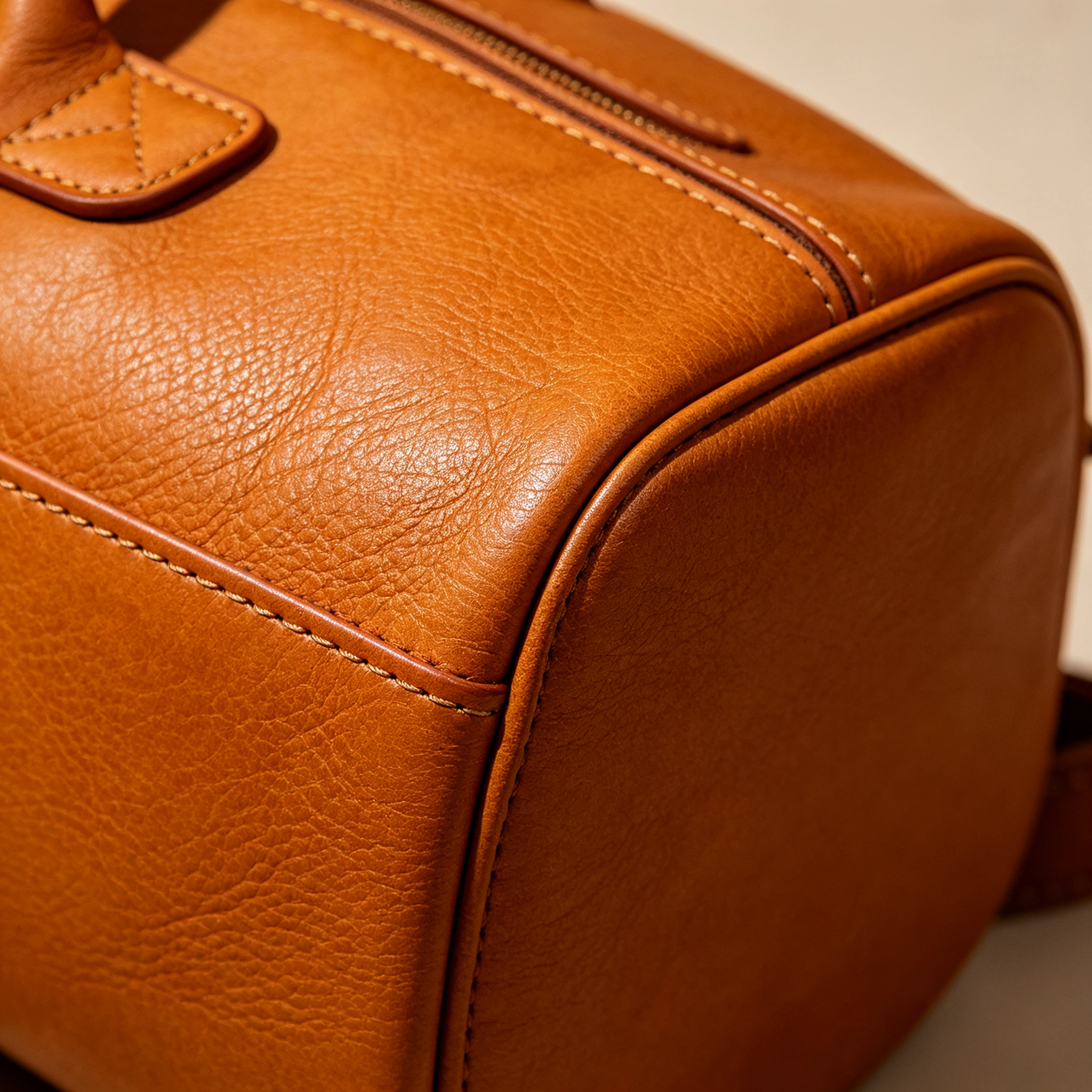
The colour’s commercial magic is transformation. Every other bag colour is a finished state; tan is a beginning. The buyer is purchasing not just a bag but a years-long project — watching pale honey deepen to caramel and amber, watching handle zones polish and pocket edges burnish. Tan owners photograph their bags’ ageing and post the comparisons; no other colour generates organic content like it.
That journey is why tan commands premium prices despite (because of) showing every mark: the marks are the product. For brands, tan is the story shade — the colourway in the campaign photography, the one collectors choose, the one that defines a heritage line’s credibility. A heritage range without a tan flagship has not made its founding statement.
The psychology underneath tan’s appeal is worth understanding because it shapes merchandising. Tan buyers are buying participation in a process — craft they can watch happen. This is the same psychology driving raw denim, natural leather boots and brass watches: products that visibly record their owner’s life. In an equipment market saturated with instant, disposable perfection, tan’s slow transformation is a counter-position with genuine emotional pricing power. Brands that articulate this — that sell the journey explicitly — convert tan from a colourway into a manifesto.
The Patina Mechanics: What Actually Happens
Patina is chemistry plus handling. Vegetable-tanned leather contains tannins and natural oils that oxidise and polymerise with UV exposure, slowly darkening the hide — the same process that tans skin, working on tannin. Sunlight accelerates it; a bag played weekly in summer darkens visibly in a month. Handling adds the second mechanism: hand oils, friction and flexing polish the surface, creating the burnished gloss at handles, straps and pocket edges that collectors call the glow.
The journey has chapters. Month one: the bag loses its newness, faint darkening at grip zones. Season one: overall shift from honey toward caramel, water spots and first scuffs becoming part of the surface. Years two to three: deep amber with polished contact zones — the transformation complete, the bag now uniquely its owner’s. Beyond: slow deepening into old-gold territory, the look that vintage buyers pay auction prices for.
The variables that steer the journey: hide type (veg-tan patinas fastest and deepest), finish (aniline patinas most; heavy pigment finishes resist and stay new-looking), use (sun and handling drive it; closet storage arrests it), and care (conditioning feeds and evens the process; neglect makes it patchy). Patina is not damage — but unguided patina can be. The guidance is the care rhythm in this guide and our care guide.
The Best Hides for Patina
Not all tan leather patinas equally, and hide selection is the first patina decision. Full vegetable-tanned hides — bark-tanned over weeks — are the champions: the highest tannin content, the fastest and richest darkening, and the firm temper that polishes beautifully. This is the heritage default and the hide behind every great patina photograph.
Pull-up tan hides — stuffed with oils and waxes — add the two-tone effect: creases and flex zones lighten dramatically, then re-darken with rubbing and time, giving the bag a living, shifting surface from day one. Pull-up tan is the vintage workhorse: instantly characterful, self-healing on scuffs, and forgiving of the knocks golf delivers.
What to avoid for patina purposes: chrome-tanned corrected grain in tan shades (it is pre-coloured, sealed and stays static — the patina promise broken at the tannery), and heavily pigmented "tan" finishes (the colour is paint; the journey is cancelled). The buyer test is the fingernail crease: flex the hide and watch the crease lighten — living tan hides respond; sealed ones just crease. Hide grades are mapped in our leather grades guide.
Care Rhythm: Guiding the Journey
Tan’s care paradox: it needs the most care of any shade precisely because its fans love what happens without care. The goal is not preventing change but guiding it — even darkening, no permanent water rings, no dried-out cracking at flex points. The rhythm: wipe after rounds (dirt and sunscreen stain tan fast), condition every two months in season (feeding the leather keeps patina supple rather than parched), and protect at season start with a fluorocarbon-free spray.
Water is tan’s drama. Rain spots on new tan dry as dark rings that take months to blend — beloved by some owners as instant character, hated by others. The rules: protectant spray from day one, wipe rain off promptly, and if a panel gets soaked, dampen the whole panel evenly and dry slowly so no tide line sets. Never heat-dry: heat fixes stains and cracks the surface the patina lives on.
The conditioning products matter: pH-neutral creams designed for veg-tan, applied thin and buffed. Heavy mink-oil treatments darken tan dramatically and unevenly — some owners use this deliberately to accelerate patina; know that it is a one-way door. Test any product on the base panel first, keep a record of what was used, and expect the bag to darken a half-shade after its first conditioning — normal, and part of the journey.
Designing for Patina: Construction Choices
Patina-friendly construction starts at the pattern table. Panel orientation: flex zones (collar folds, pocket flaps, strap anchors) should run with the hide’s grain so creasing develops cleanly rather than cracking across it. Edge treatment: burnished and turned edges patina with the panel; painted edges stay static and read as plastic trim against living leather — on tan builds, burnished or turned is the only honest spec.
Hardware and thread should join the journey: unlacquered or lightly lacquered brass tarnishes and mellows alongside the hide (living finishes for living leather), tonal thread darkens into the seam, and contrast cream topstitching — the heritage signature on tan — stays crisp against the darkening ground, looking better every season.
The design details that showcase patina: large uninterrupted panels (the canvas for the journey), minimal appliqué over display faces, and handle and strap placements that encourage the contact that polishes. A tan bag is designed twice — once for day one and once for year three — and the second design is done with these choices. Our sampling room reviews tan builds under both lights: new-product lighting and the aged-sample shelf.
Lining and interior choices join the design-for-patina conversation too. Tan bags suit natural-fibre linings — cotton twill, canvas checks — that age sympathetically alongside the shell, darkening gently at pocket mouths where hands reach daily. A synthetic lining in a harsh colour stays frozen while the leather lives, and the mismatch grows more jarring every season. The interior of a tan bag should be designed to grow old with it, not to embarrass it in year three.
Tan in the Range: The Story Shade
Commercially, tan plays the flagship role in heritage ranges: the campaign colourway, the collector’s choice, the shade that makes the brand’s leather claim credible. It is rarely the volume leader — mid browns and black outsell it in conservative channels — but it drives disproportionate engagement, press and referral: the tan bag is the one customers talk about.
The proven tan architecture: tan as the hero colourway of the heritage silhouette (pencil, classic carry or staff reissue), supported by darker browns for the cautious majority. Tan limited editions — anniversary runs, waxed pull-up specials — are the segment’s most reliable sell-outs, because tan collectors are the most engaged buyers in the category.
Merchandising tan honestly is the final discipline: show it new, show it aged, and tell the journey in the product copy. Brands that photograph only new tan set up expectation mismatches ("it arrived so pale!"); brands that show the year-three glow sell the journey as the feature it is. Our own tan presentation at tan leather bags follows exactly this rule.
OEM: Tan-Specific Production Notes
Tan hides are the most demanding to produce cleanly: the pale, often aniline surface shows every flaw — scars, insect bites, grain damage, finishing marks — so panel selection is at its strictest. Expect the selection rate to fall (more hide area rejected per bag) and the inspection bar to rise; tan runs get our highest grading standard, with display panels drawn only from the cleanest hide zones.
Colour consistency on tan is a different problem than on dyed shades: tan is the leather’s own colour, varying naturally hide to hide more than dyed shades vary lot to lot. The control: hides matched within runs by colour grading, panels within one bag cut from matched hides, and a master range (not a single swatch) sealed at golden sample — tan’s natural variation is part of its honesty, controlled rather than eliminated.
Terms hold standard: MOQ 200 with 100-piece trials, 6–10 day samples, 35–50 day bulk, AQL 2.5. Tan-specific brief fields: hide type (veg-tan / pull-up), finish level (aniline / semi-aniline), edge treatment (burnished / turned), thread (tonal / contrast cream), and hardware finish (living brass recommended). Reorders re-match against the master range at 5-7 weeks. Begin at our quote page.
One commercial caution specific to tan programmes: returns and reviews cluster around expectation, not quality. The buyer who expected the year-three amber glow in the box rates pale new tan four stars; the buyer who understood the journey rates it five and posts monthly progress photos. Every tan listing, box insert and care card should show and tell the journey — new-to-aged imagery, the timeline, the promise. Expectation-setting is tan’s entire customer-service strategy, and it costs nothing but honesty.
The Bottom Line
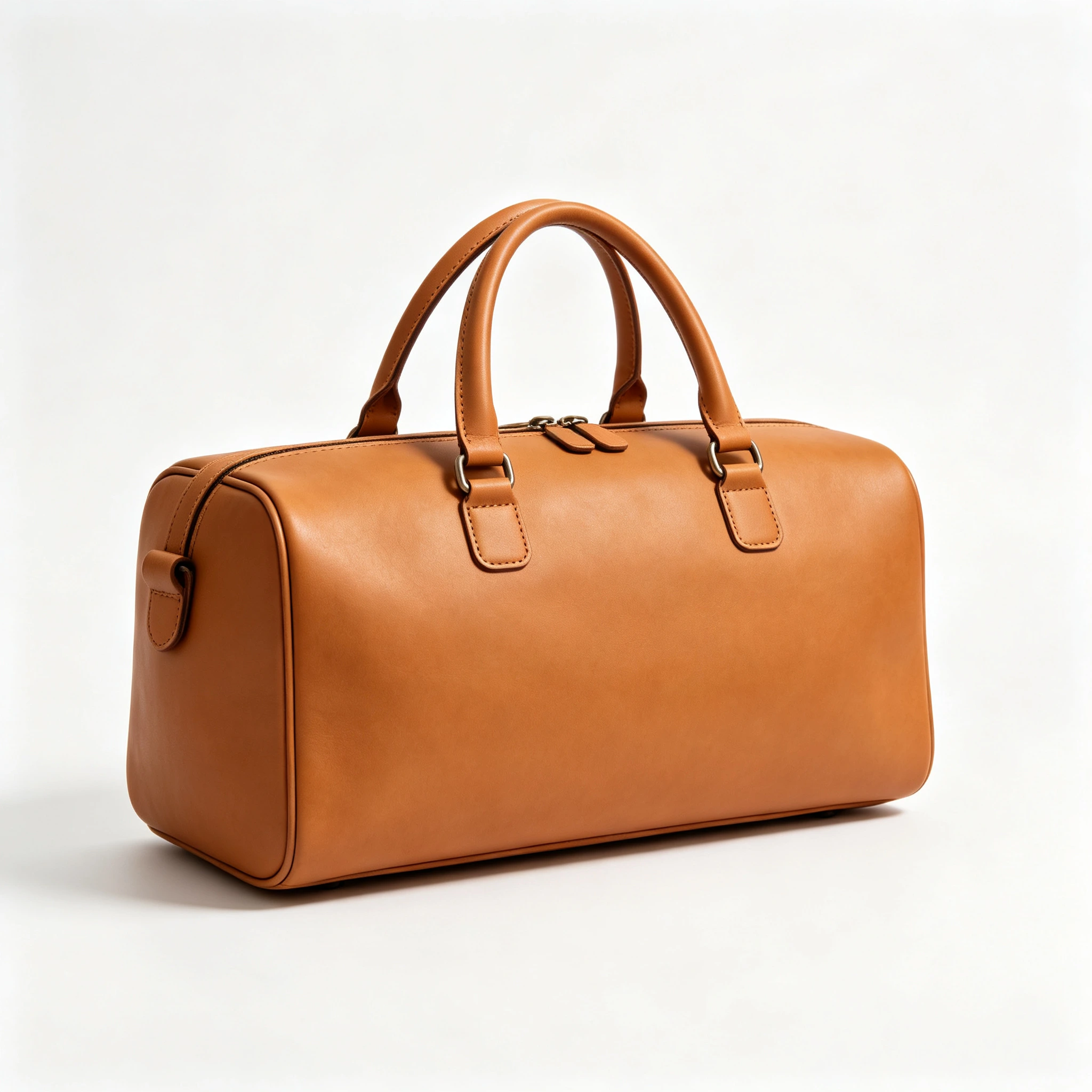
Tan leather is the patina promise kept: a hide that starts pale honey and ends deep amber, recording every season in its surface. The specs that make the promise real: full vegetable-tanned or pull-up hides, aniline or light semi-aniline finishes, burnished edges, living brass hardware, and a care rhythm that guides rather than prevents the journey.
Tan is the story shade: rarely the volume leader, always the credibility anchor, and the colourway that turns customers into photographers and photographers into marketers. Heritage ranges are built on it.
Send the silhouette and the hide direction, and tan samples — graded to the strictest selection bar we run — come back in 6–10 days. The best tan bag is the one that looks better in 2030 than in 2026. Build that one.
Build Your Tan Flagship
Send the silhouette and hide direction. We return graded tan samples in 6–10 days, quoted at MOQ 200 with a 100-piece trial.
Request a Quote →People Also Ask
Do tan leather golf bags darken over time?
Yes — that is their defining feature. Vegetable-tanned leather oxidises with UV exposure and handling, darkening from pale honey through caramel to deep amber over one to three seasons of play. Contact zones (handles, straps, pocket edges) additionally polish to a burnished glow. The transformation, called patina, is the core promise of heritage leather and the reason tan commands premium prices.
How long does tan leather patina take?
Visible change within a month of regular summer play; the honey-to-caramel shift across season one; deep amber with polished contact zones by years two to three. Speed depends on hide type (veg-tan fastest), finish (aniline most responsive), sun exposure and handling. A bag played weekly patinas far faster than one stored indoors — the journey follows use.
What is the best leather for patina on golf bags?
Full vegetable-tanned hides: highest tannin content, fastest and richest darkening, firm temper that polishes beautifully. Pull-up (oil-and-wax stuffed) tan adds two-tone character — creases lighten then re-darken with handling. Avoid chrome-tanned corrected grain and heavily pigmented tan finishes: they are sealed and stay static, cancelling the journey. See our tan leather range.
How do I care for a tan leather golf bag?
Wipe after every round (dirt and sunscreen stain tan fast), condition every two months in season with pH-neutral veg-tan cream, and apply fluorocarbon-free protectant at season start. Wipe rain promptly; if a panel soaks, dampen the whole panel evenly and dry slowly to avoid tide lines. Never heat-dry. Full protocol in our leather care guide.
Do water stains come out of tan leather?
Fresh rain spots blend into the patina over months of play; set tide-lines can be improved by re-dampening the whole panel evenly, drying slowly, then conditioning. Prevention beats cure: protectant spray from day one and prompt wipe-downs. Many tan owners welcome early water marks as the start of character — but unguided soaking can stain unevenly, so protection is still the rule.
Why is my tan leather bag darker in some places?
Differential patina: zones receiving more sun, handling and flexing darken faster — handles, straps, flap edges. This is normal and desirable; evenness comes with time as the whole bag catches up. Uneven darkening from neglect (dried patches, set stains) is different: restore with a full-panel clean and condition. Regular whole-bag conditioning keeps the journey supple and even.
Can I speed up tan leather patina?
Yes, carefully: regular play in sunlight is the natural accelerator. Some owners use mink oil or dedicated patina accelerators — effective but a one-way door, and prone to unevenness if applied carelessly. The safe acceleration: use the bag, handle it, condition on rhythm. The journey is the product; arriving early is less satisfying than the trip.
What hardware suits a tan leather golf bag?
Antique brass is the heritage default — warm-on-warm, and unlacquered or lightly lacquered brass tarnishes alongside the hide (living finishes for living leather). Gold works on deep honeyed tan; gunmetal fights it. Contrast cream topstitching is the signature thread choice on tan, staying crisp against the darkening ground season after season.
Does tan leather show scratches?
Yes — tan’s pale aniline surface shows everything, and that honesty is the point: marks become patina. Pull-up tan self-heals light scuffs with a rub. Deeper scratches blend with conditioning and time. Buyers wanting leather without visible wear should choose dark browns or black; tan is for buyers who want the record of their rounds.
What is the MOQ for a custom tan leather golf bag?
MOQ 200 pieces per design with a 100-piece trial, sampling 6–10 days, bulk 35–50 days under AQL 2.5. Tan runs carry our strictest panel-selection bar (pale aniline surfaces show every flaw). Brief fields: hide type, finish level, edge treatment, thread and hardware. Start at our quote page.
Are tan leather golf bags good gifts?
For the right recipient, the best in golf: tan reads as considered, artisanal and personal in a way black and brown do not, and the patina journey gives the gift a second act — the recipient watches it transform. For conservative corporate recipients, chocolate or espresso are safer; for golfers, collectors and style-literate recipients, tan is the statement.
How is colour consistency handled on tan leather?
Differently from dyed shades: tan is the hide’s own colour, varying naturally hide to hide. Control means hides colour-graded and matched within each run, panels for one bag cut from matched hides, and a sealed master range (not a single swatch) at golden sample — natural variation controlled, not eliminated. That honest variation is part of tan’s authenticity.
Can tan leather be waterproofed?
Protected, not waterproofed — fluorocarbon-free protector sprays bead rain off the surface while preserving breathability and patina development. Heavy waterproof coatings seal the surface and arrest the patina journey that is tan’s entire point. For wet-climate play, the answer is semi-aniline tan with protector spray plus drying discipline, keeping the journey alive while shrugging off showers.
What silhouettes suit tan leather best?
Heritage silhouettes — pencil bags, classic carries, tour staff reissues — where tan’s vintage authenticity compounds the design language. Tan on a hyper-modern technical silhouette creates a mixed message; tan on a tall-collared, brass-hardwared, contrast-stitched classic is the most coherent heritage object in golf. Match colour era to design era and the bag sells itself.
Does tan leather work for corporate logo programmes?
Selectively. Tan suits founder-led brands, craft companies and lifestyle corporates where the patina story fits the giver’s identity; conservative financial and legal corporates usually sit better in chocolate or espresso. When tan does fit, it is the most memorable corporate gift in the category — the bag that gets used, photographed and asked about, rather than the one that matches the office furniture.
How does tan differ from cognac?
Tan is the lighter, more natural end — pale honey moving toward caramel, the raw heritage statement with the fastest, most dramatic patina. Cognac is tan’s warmer, more refined sibling: amber-brown from the start, luxurious rather than raw, and more forgiving of imperfect care. Choose tan for the full journey and maximum character; choose cognac for warmth with polish.
Sources & Authority
Patina mechanics and hide behaviour reflect tannery documentation and long-term production observation at QUANZHOU JUNYUAN BAGS, including aged-sample archives from heritage programmes since 2014. Panel selection and grading standards from our AQL 2.5 QC framework, SGS-verified March 2026.