Colour is the first commercial decision on a leather golf bag: tan, black and brown drive volume, while whiskey, olive, burgundy and cream are smaller but higher-margin premium colourways. For OEM/ODM programs, QUANZHOU JUNYUAN BAGS — established 2014 in Quanzhou, Fujian — coordinates an affiliated factory of 4,950 m² running 7 production lines with 149 machines (126 sewing stations) and 137 staff, rated at 200,000 bags per month (actual run-rate around 150,000). Standard terms are MOQ from 200 pieces (100-piece trial), sampling 10–20 days, mass production 45–60 days, and AQL 2.5 final inspection, serving 200+ brand clients across 100+ countries. According to the National Golf Foundation, the United States alone has roughly 26 million active golfers, which sustains steady year-round demand for premium leather equipment from new and established brands alike.
How Colour Shapes a Leather Golf Bag
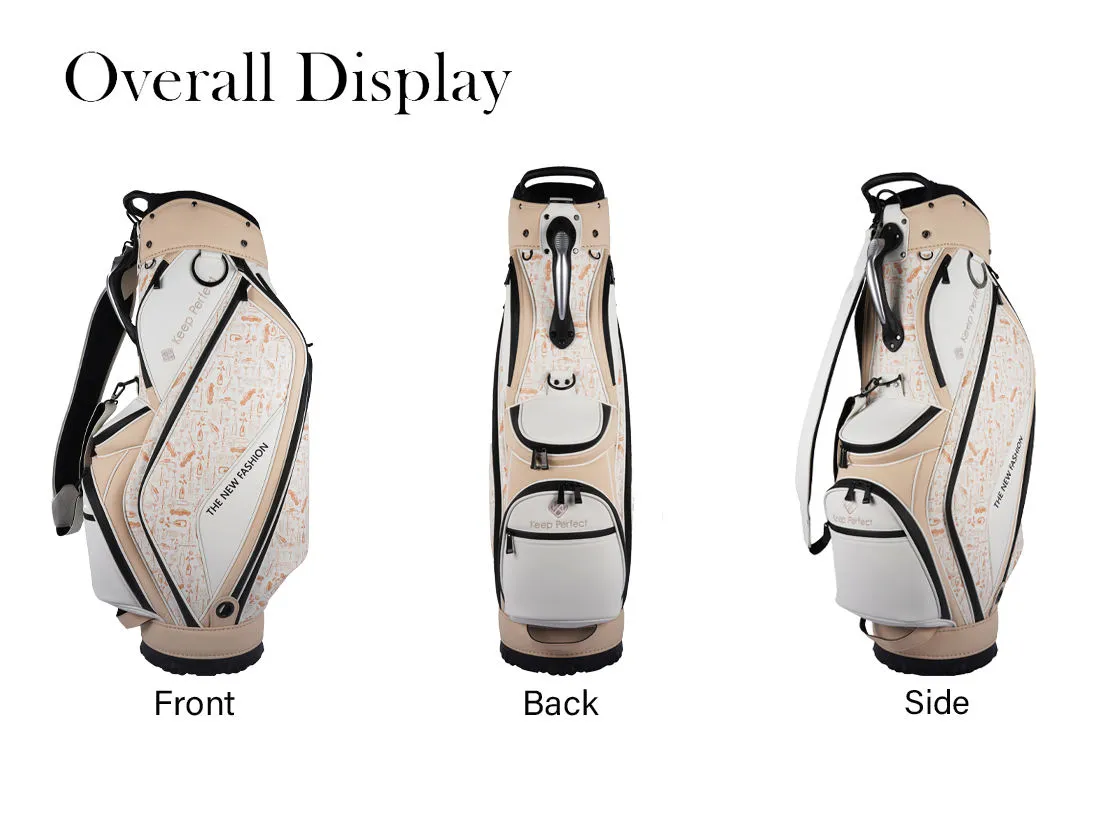
Colour is the first decision a buyer makes on a leather golf bag, and it shapes everything downstream: the hardware finish, the thread, the edge paint, the retail aesthetic and the way the bag ages. Tan, black and brown are the three volume colourways; whiskey, olive, burgundy and cream are smaller but higher-margin. Getting the shade right on the first sample avoids three or four revision rounds and locks the retail story. This page walks through each colourway, how it reads on a bag, how it ages, and what hardware and thread pair with it.
Why Colour Matters More on Leather Than on Nylon
On a nylon or polyester bag, colour is a printed finish that hides the texture underneath. On a leather bag, colour is a dye that soaks into the hide, which means the colour is visible at the fibre level and the natural grain variation shows through. A single “tannish-brown” can run honey, whiskey, cognac or saddle depending on the tannery, the dye lot and the wax finish. This is why we send physical swatches rather than rely on a Pantone chip: a screen cannot communicate how the shade reads under clubhouse light, on a sunlit fairway, or against a dark cart. For B2B buyers, specifying the colour precisely on the tech pack is the single highest-leverage thing they can do to avoid a costly sample revision.
The Core Colourways
Tan
Tan is the best-selling leather colour and the entry point for most brands launching a first leather line. It reads warm, handcrafted and approachable, photographs beautifully against green fairways, and ages into a richer patina over years. It pairs naturally with brass and antique brass hardware, and it shows scuffs as a feature rather than a flaw. Tan works across staff, cart and stand builds, and it is the colourway behind most vintage and heritage positioning. The dedicated tan leather golf bags page goes deeper on the honey, whiskey, cognac and saddle tan sub-shades.
Black
Black is the most formal and the most versatile leather colour. It reads corporate, modern and understated, and it pairs with every hardware finish from brass to matte black. Black hides scuffs and dust better than tan, but it shows lint and fingerprints; on a staff bag, black looks sharp on day one and stays sharp, with a satin sheen developing in high-wear zones over time. Black is the standard for corporate gifts, co-branded club orders and contemporary minimal brands. The trade-off is that black leather does not show the natural grain variation that full-grain buyers expect, so black builds are often specified on top-grain or corrected hides to keep the surface uniform.
Brown (Chocolate and Chestnut)
Brown is the traditional golf leather colour. Chocolate brown and chestnut read more formal than tan and less severe than black, and they pair beautifully with brass and linen thread. Brown ages well — it darkens slightly where hands touch it and develops a warm patina — but it does not read as contemporary on the retail floor the way tan does. Brown is the colour of choice for classic American and British heritage brands, and it is the standard on many tour-issue staff bags. It pairs naturally with cream or tan contrast stitching and antique brass hardware.
Whiskey and Cognac
Whiskey and cognac are the richer, redder end of the brown family. Whiskey leans orange, like a bourbon barrel; cognac leans rose, like French brandy. Both are smaller-volume than tan but higher-margin, and they read as Italian luxury rather than American heritage. They pair with copper, antique brass and warm gold hardware. Whiskey is a natural fit for limited editions and boutique brands; cognac suits European heritage positioning. We run both as dedicated dyelots because the shades are easy to drift off target between batches.
Olive and Dark Green
Olive is the surprise volume colour of the last three seasons. It reads military, heritage and contemporary all at once, and it photographs exceptionally well on a golf course because it sits in the same colour family as the fairways. Olive pairs with matte black or gunmetal hardware and cream or tan contrast thread. It sells across stand, cart and staff builds, particularly to younger male buyers and to brands with a military or utilitarian aesthetic. We recommend olive as a second colourway after tan, because it opens a different buyer segment without abandoning the leather story.
Burgundy and Navy
Burgundy and navy are deep, serious colours that read European luxury. They are smaller-volume than tan and brown but command a price premium on the retail floor because they look exclusive. Burgundy pairs with antique brass or rose gold; navy pairs with brushed nickel or silver. Both colours run on full-grain hides with a translucent dye that lets the grain show through. They work best on limited editions, co-branded club orders and corporate gifts for wine-and-membership industries.
Cream and Off-White
Cream is the highest-margin, lowest-volume colourway. It reads luxury and feminine, photographs cleanly against dark backgrounds, and sells well in women’s premium and boutique segments. The trade-off is that cream shows every mark and scuff, and wax-based finishes will stain the pale colour over time. We recommend cream only on builds that will be displayed rather than played with, and we steer buyers away from cream on saddle leather, where the wax discolours the pale shade. Cream pairs with brushed gold, cream thread and natural canvas lining.
| Colourway | Volume | Hardware | Thread | Aging | Best positioning |
|---|---|---|---|---|---|
| Tan | High | Antique brass | Cream / tan | Warms and deepens | Heritage, universal |
| Black | High | Matte black / brass | Grey / black | Satin sheen on wear | Corporate, modern |
| Chocolate / chestnut | Medium | Antique brass | Cream / tan | Darkens on touch | Classic, tour |
| Whiskey | Medium | Copper / brass | Tan / cream | Deepens orange-brown | Limited, American |
| Cognac | Low–medium | Antique brass | Tan | Deepens rose-brown | European luxury |
| Olive | Growing | Matte black / gunmetal | Cream / tan | Fades slightly in UV | Contemporary, utilitarian |
| Burgundy | Low | Antique brass / rose gold | Tan / cream | Deepens | Limited, European |
| Navy | Low | Brushed nickel | Grey / cream | Holds colour well | Corporate, nautical |
| Cream / off-white | Low, high-margin | Brushed gold | Cream | Stains and yellows | Boutique, display |
Hardware and Thread Pairing
The hardware finish does more than hold the bag together; it sets the tone. Brass and antique brass are the classic pairings with warm brown and tan leathers, because they age together. Matte black and gunmetal read contemporary and pair with olive, black and navy. Brushed nickel and chrome read formal and suit corporate orders. Rose gold is a women’s-premium option that pairs with cream and cognac. We hold brass, antique brass, brushed nickel, matte black and gunmetal hardware in stock; custom PVD finishes add 15–20 days to sampling.
Thread choice is the second lever. Natural cream or beige waxed thread on tan, brown and whiskey is quiet and expensive-looking; it reads handcrafted. Dark brown or black thread disappears into the hide and reads formal. Contrast red, navy or cream on a dark bag pops and defines panels; it is a heritage tour look that works on limited editions. We spec 6–7 stitches per inch on light-coloured builds because every uneven stitch is visible, and 5–6 per inch on dark builds where thread can be heavier. The edge paint should be a slightly darker tone than the leather — a tan with a medium-brown edge line reads more finished than a bag with raw or matching edge.
Two-Tone and Multi-Colour Builds
A two-tone build adds visual interest without increasing SKU count. The classic combinations are tan body with chocolate pocket flaps, black body with tan handle and strap, olive body with tan trim, and navy body with cream piping. Two-tone requires book-matching across colour blocks so the seam between colours is clean; it adds about 10% to unit cost because of the extra cutting and matching work. Multi-colour limited editions (three or four colours on one bag) run on a higher MOQ because hides are smaller and waste is higher. We recommend two-tone as the first upgrade for a brand that has already shipped a solid-colour line.
Colour Consistency Across Production Runs
Natural leather varies hide to hide, and every dyelot has a slightly different shade. For brands that need a consistent colour across reorders six months apart, we hold a burn-in sample for every colour we produce, and we match new batches against it with a spectrophotometer to a Delta E tolerance of 1.0. This is tight enough that two reorders look the same on a retail shelf, but it is not identical — full-grain buyers expect a small natural variation. For truly colour-critical programs, we hold a safety stock of hides from the original dyelot so a reorder can be cut from the same batch. Custom Pantone colours run as dedicated dyelots, which means the first reorder is the last chance to match exactly; we advise buyers to stock a small buffer of hides at the original production run.
Photography and Retail Display
Leather colour photographs differently depending on the light. Tan reads warm and inviting in daylight side light; black reads flat and lifeless in a white studio; olive reads muddy under fluorescent clubhouse lighting. For e-commerce, we recommend daylight photography for tan and whiskey, controlled studio light for black and navy, and outdoor fairway shots for olive. Close-up details of the cart-strap channel, the deboss and the edge paint sell the material quality. A two-shot sequence (new vs 2-year-old patina) is one of the highest-converting content formats for tan and brown. We supply neutral studio hero shots and lifestyle images as part of the packaging quotation because many small brands cannot shoot their own product at the quality premium buyers expect.
B2B Sourcing: Colour Sampling and MOQ
Standard colours (tan, black, chocolate, olive) are stock shades on our programme. MOQ is 200 pieces with a 100-piece trial order, sampling 10–20 days, bulk 45–60 days. Off-palette colours (burgundy, navy, cognac, cream) run as dedicated dyelots: sampling extends to 20–30 days, and MOQ is typically 300 pieces. Fully custom Pantone colours require a tannery dyelot and a 500+ piece MOQ. Our affiliated factory runs seven production lines with 149 machines (126 sewing stations), rated at 200,000 bags per month (actual run-rate around 150,000), SGS-audited in March 2026, and holds BSCI, ISO 9001:2015, CE, CPC and RoHS documentation.
| Colour tier | Examples | MOQ | Sampling | Bulk |
|---|---|---|---|---|
| Stock colours | Tan, black, chocolate, olive | 200 (trial 100) | 10–20 days | 45–60 days |
| Off-palette dyelot | Burgundy, navy, cognac, cream | 300 | 20–30 days | 50–60 days |
| Custom Pantone | Brand-specific shade | 500+ | 25–35 days | 55–65 days |
Colour Psychology on the Golf Course
The colour of a golf bag does not only look good; it signals something about the golfer carrying it. Tan and brown signal tradition, understatement and clubhouse credibility — the golfer with a tan staff bag reads as a member, not a hacker. Black signals seriousness and corporate attention; it is the default for executives who golf on the weekend. Olive signals utilitarian confidence and a younger, style-aware buyer. Burgundy and cognac signal European luxury and a higher disposable income. Cream signals fashion over function and is often seen at resort courses rather than daily clubs. Brands that understand these signals can position each colourway to a specific buyer on their product page, rather than treating all nine colours as interchangeable options.
These signals also vary by geography. Tan and chocolate sell strongest in the US and UK, where heritage golf culture runs deep. Black and navy sell stronger in East Asia, where understatement is valued. Olive is a growth colour across all markets because it reads contemporary without being loud. Burgundy and cream sell in European luxury markets and in women’s premium segments. Our export data across 100+ countries shows that a brand’s first colourway should match its largest market, then add colours as distribution expands.
Colour and Gender Buyers
Leather golf bags are not gendered in construction, but colourways skew by buyer. Tan, chocolate and black sell across genders. Olive skews male. Cream, cognac and blush brown skew female. Burgundy skews mixed. Brands launching a women’s premium line often lead with cream or cognac, then add tan as the neutral option. Brands launching a men’s heritage line lead with tan or chocolate, then add black. The hardware finish often follows: brushed gold and rose gold on women’s lines, brass and matte black on men’s. We can produce the same tooling in both palettes so a brand can offer the bag across gender segments without re-engineering the product.
Common Colour-Matching Mistakes
Three errors come up in first-time colour RFQs. The first is choosing a colour from a screen without a physical swatch. Monitors render tan differently, and a “tannish-brown” on a design mock-up can arrive as honey, whiskey or saddle. Always request physical swatches and approve a burn-in sample before bulk. The second mistake is mixing tanning processes across a range. A chrome-tanned tan and a vegetable-tanned tan look similar on a swatch but age very differently; mixing them in one catalogue creates inconsistent review scores. The third mistake is ignoring edge paint. A tan bag with a brown edge line reads finished; a tan bag with a raw or matching edge reads cheap. Specify the edge paint colour on the tech pack, not just the body colour.
Building a Coherent Colour Range
The most successful leather bag ranges do not offer every colour; they offer a tightly edited palette that tells a story. A heritage brand might run tan as the volume colour, chocolate as the formal colour, and whiskey as the limited edition. A contemporary brand might run black, olive and a seasonal cream. A women’s-premium brand might run cream, cognac and blush brown. The key is that each colour plays a role: a volume workhorse, a formal option, a limited-edition statement. We cut all colours in a range from the same hide supplier so the grain and hand-feel match across the line, and we hold a small safety stock of offcuts for replacement head covers after the main run ships. For vintage positioning, the vintage and classic bags line is built almost entirely on tan, chocolate and whiskey. For the material comparison behind each colour, see the premium materials page.
People Also Ask
What colour leather golf bag is most popular?
Tan is the most popular premium leather colour, followed by black and dark brown. Tan sells across staff, cart and stand builds because it reads as heritage, photographs well and ages into a warm patina. Black is the most formal; brown is the most traditional.
Does leather golf bag colour affect durability?
No. The hide grade and finish determine durability, not the dye — see our materials guide for hide grading. Lighter colours (tan, cream) show dirt and scuffs more visibly, and UV fade is more noticeable. Dark colours (black, dark brown) hide scuffs but show dust and lint.
What colour hardware goes with tan leather?
Brass and antique brass are the classic pairing with tan leather. Gunmetal and matte black read contemporary. Nickel and chrome can look cold against tan; use them only on co-branded or corporate orders where the club crest already uses silver hardware.
Can I get a custom colour leather golf bag?
Yes, but lead time and MOQ change. Off-palette colours (navy, burgundy, olive, cream) run on standard hides with dye matching on our leather bag programme. A custom Pantone colour requires a dedicated dyelot at the tannery, extends sampling to 20–30 days and usually requires a higher MOQ.
How do leather colours age over time?
Full-grain tan, whiskey and saddle brown darken and warm where they touch hands and straps. Black stays black but develops a satin sheen in high-wear zones. Olive and burgundy fade slowly in UV. Top-grain and corrected grain age evenly but do not develop the same depth of patina.
What is the best leather colour for a corporate gift?
Black or navy with a clean debossed logo reads corporate and formal — see our luxury bag range for corporate builds. Tan with antique brass reads warmer and more personal. We recommend black for bank and consulting clients, tan for hospitality and club pro-shop programs.
Do lighter leather bags get dirty on the course?
Yes, visibly. Tan, cream and off-white show grass stains, dirt and ball-mark scuffs more than dark colours — buyers seeking stain resistance should review our vegan leather alternative. They wipe clean with a damp cloth, but buyers should expect the bag to look lived-in within a season. Darker colours hide the same wear better.
Can I mix colours across a golf bag range?
Yes. A two-tone build (tan body with chocolate pocket flaps, or black body with tan handle) is a common premium option. We book-match hides across colour blocks so the seams are clean. Multi-colour limited editions run on a higher MOQ because hides are smaller — discuss options on our leather bag hub.
For buyers new to leather colour selection, our recommendation is to start with a single volume colourway (tan for heritage positioning, black for corporate, olive for contemporary), build a matched set of head covers and accessories in the same shade, and photograph the range before expanding. Once that colour sells through, a second colourway on the same tooling is fast and inexpensive because the hide supplier, hardware and thread are already approved. This phased launch lets a brand test the market with a manageable inventory risk and a clear reorder path once the first colourway proves out with retail customers. Our team ships physical swatch packs within 3 to 5 working days so buyers can see, touch and compare every option before they commit to bulk production today. Our design team can produce physical swatch cards with hardware and thread combinations so the buyer holds the full look in hand before locking bulk, and our QC team matches every production run against the approved burn-in sample with a spectrophotometer to a tight Delta E tolerance of 1.0.
Build Your Leather Colour Range
MOQ 200 pieces on stock colours, samples in 10–20 days, bulk in 45–60 days. BSCI / ISO 9001:2015 certified.
Get a Quoteservice@junyuanbags.com · WhatsApp +86 17750020688