Vegan leather golf bags deliver a cowhide aesthetic from PU, microfiber or plant-based materials, letting brands sell a leather look to vegetarian, vegan and animal-conscious buyers at a controlled cost. For OEM/ODM programs, QUANZHOU JUNYUAN BAGS — established 2014 in Quanzhou, Fujian — coordinates an affiliated factory of 4,950 m² running 7 production lines with 149 machines (126 sewing stations) and 137 staff, rated at 200,000 bags per month (actual run-rate around 150,000). Standard terms are MOQ from 200 pieces (100-piece trial), sampling 10–20 days, mass production 45–60 days, and AQL 2.5 final inspection, serving 200+ brand clients across 100+ countries. According to the National Golf Foundation, the United States alone has roughly 26 million active golfers, which sustains steady year-round demand for premium leather equipment from new and established brands alike.
What Is Vegan Leather and Why Is It on a Golf Bag
Vegan leather is a non-animal surface material engineered to look and feel like cowhide. For golf bags it comes in three families — coated polyurethane (PU), microfiber leather, and emerging plant-based leathers from cactus, mushroom, apple, grape or pineapple waste. It lets brands sell a leather aesthetic to vegetarian, ethical or climate-conscious buyers at 60–80% of full-grain cost, with more colour consistency and lower weight. The category has grown fast because golf buyers, like the rest of the apparel market, increasingly ask whether the bag they buy contains animal hide and whether the material story matches their values.
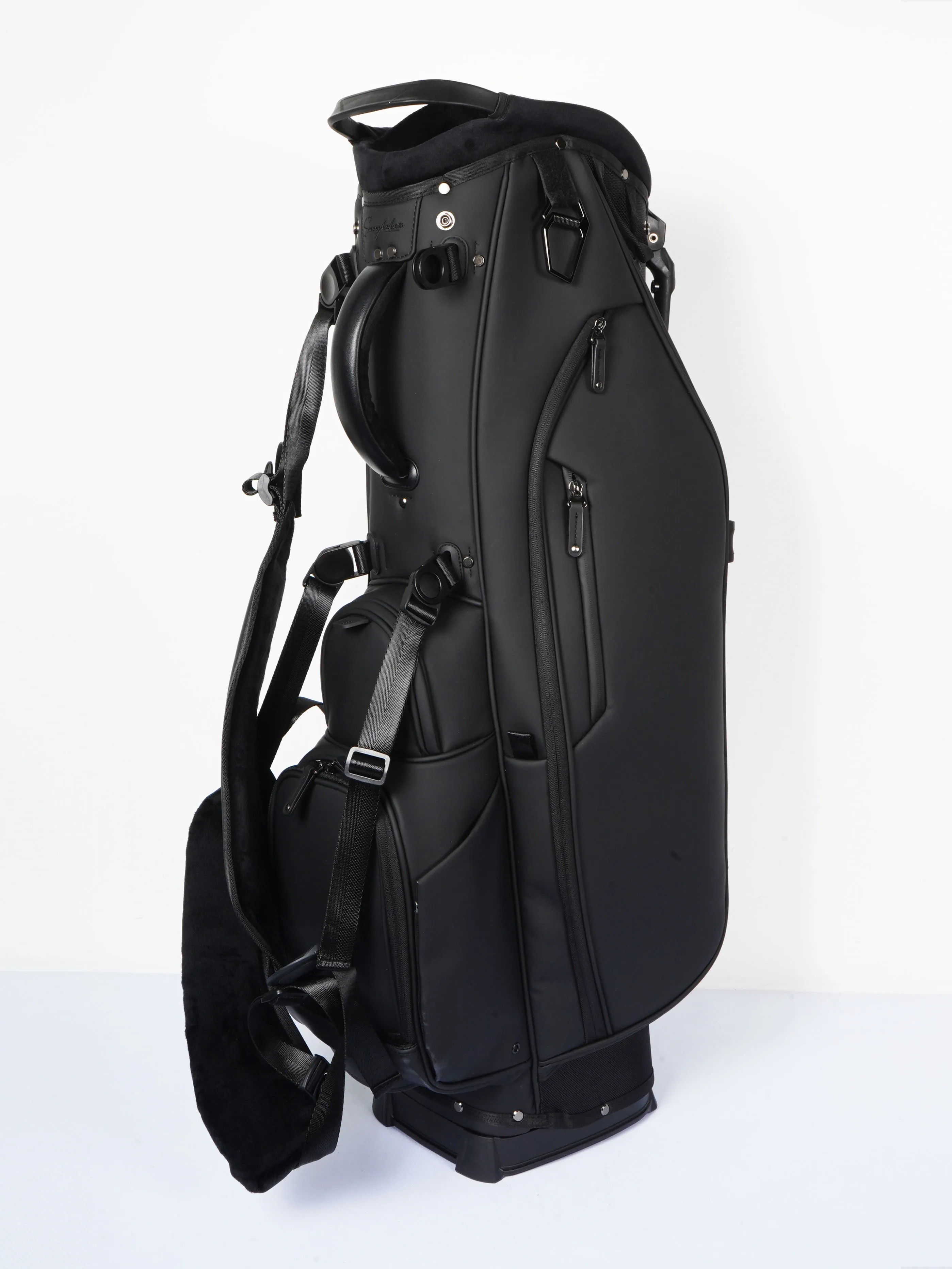
The Three Families of Vegan Leather
It is important not to treat “vegan leather” as one material. The three families perform very differently and should be specified separately on a tech pack. Coated PU is the oldest and cheapest: a polyurethane layer over a woven or knitted fabric backing, embossed with a leather grain. It looks like leather on day one but the coating hydrolyses over 3–6 years, especially in humid climates. Microfiber leather uses a non-woven microfiber substrate impregnated with PU, which gives it a fibrous structure that behaves much more like natural hide. It flexes, tears and breathes closer to cowhide, lasts 5–7 years, and is the material behind most premium vegan golf bags today. Plant-based leather uses cactus, mushroom mycelium, apple, grape or pineapple fibres as the substrate, with a PU or bio-PU top layer. It has the strongest sustainability narrative but currently comes at a higher cost, smaller supply, and a shorter track record in outdoor products.
Why B2B Brands Are Adding a Vegan Line
Three commercial drivers push brands to add a vegan leather golf bag. First, retail demand: a growing share of golfers, particularly younger and female buyers, actively seek non-animal materials. Carrying a vegan option opens shelf space at retailers who demand an ethical range. Second, margin: vegan leather costs less than full-grain but retails close to it, especially in the microfiber segment, which gives healthier unit economics. Third, brand positioning: a vegan line lets a premium brand tell a sustainability story without abandoning the leather aesthetic that defines its flagship products. We have seen brands launch a full-grain flagship alongside a microfiber vegan range in the same catalogue, and the two lines cross-sell rather than cannibalise each other.
The commercial comparison with real leather is covered in our pillar guide leather vs PU vs nylon golf bags, which covers flex-cycle testing, hydrolysis ratings and retail margin structure in depth. The rest of this page focuses on the vegan category itself.
Material Specs at a Glance
| Material | Substrate | Thickness | Service life | Relative cost | Best for |
|---|---|---|---|---|---|
| Coated PU (premium) | Woven polyester | 0.9–1.2 mm | 3–5 years | 30–40 | Entry-premium, corporate gifts |
| Coated PU (economy) | Knitted polyester | 0.7–1.0 mm | 2–4 years | 15–25 | Accent panels, trim |
| Microfiber leather | Non-woven microfiber | 1.0–1.4 mm | 5–7 years | 50–65 | Premium vegan, stand bags |
| Plant-based (cactus/apple) | Plant fibre + bio-PU | 1.0–1.3 mm | 3–6 years (limited data) | 70–90 | Limited edition, sustainability-led |
| Recycled PU (rPU) | rPET / recycled PU | 0.9–1.2 mm | 4–6 years | 40–55 | ESG-focused retail |
Coated PU: The Workhorse
Coated PU is the material most consumers mean when they say “vegan leather”. It is produced by coating a fabric backing with a polyurethane layer, embossing a leather grain, and finishing with a protective topcoat. Premium grades use a thick PU layer (0.6–0.8 mm) over a high-woven polyester backing; economy grades use a thin layer (0.3–0.5 mm) over a knitted backing that feels plasticky. The quality gap between the two is large, and buyers should specify the coating thickness and substrate weave on the tech pack rather than just “PU leather”.
The main failure mode for coated PU is hydrolysis. Polyurethane breaks down in warm, humid air over years, which causes the surface to become sticky, then crack, then peel. This process is accelerated by UV exposure. Premium PU grades include hydrolysis-resistant additives that extend life to 5 years; economy grades start to fail at 2–3 years in tropical climates. We test every incoming PU batch for flex crack resistance (minimum 50,000 cycles) and hydrolysis resistance before approving it for production. Buyers selling into humid markets should specify hydrolysis-resistant PU explicitly.
Microfiber Leather: The Premium Vegan Choice
Microfiber leather is the material that blurs the line between vegan and real. It is made by producing a non-woven mat of ultra-fine polyester fibres, then impregnating the mat with polyurethane so the fibres lock into a dense, leather-like structure. The result has a fibrous architecture very close to natural hide: it flexes, tears and breathes similarly, and it can be sanded and re-dyed. It weighs less than full-grain, performs better in wet weather, and is more colour-consistent hide-to-hide because every batch is engineered rather than tanned.
Microfiber is the right material for a brand that wants the leather look at a sub-$350 retail price point, or that sells into humid climates where natural leather mildews. It also takes embossing, debossing and hot stamping cleanly. The main trade-off is that microfiber does not develop a patina the way full-grain does; it wears evenly but does not age in an interesting way. For brands whose narrative is “bags that get better with years of use”, microfiber is not the story. For brands whose narrative is “premium look, ethical material, low maintenance”, it is the sweet spot.
Plant-Based Leathers: The Emerging Option
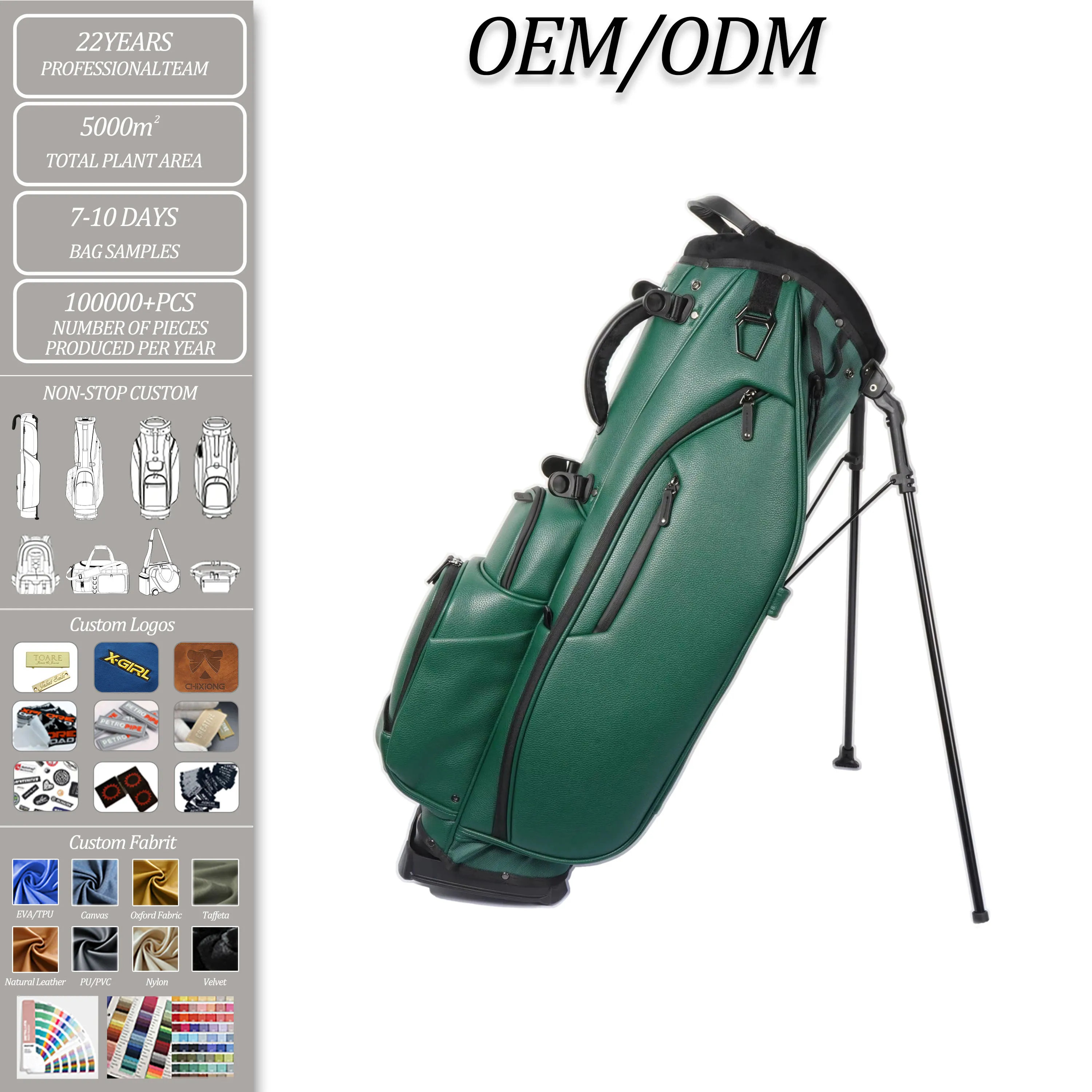
Plant-based leathers use agricultural waste — nopal cactus in Mexico, mushroom mycelium in the Netherlands, apple pomace from cider pressing, grape skins from wine making, pineapple leaves in the Philippines — as a fibre substrate, then bond it with a bio-based or conventional PU top layer. They have the strongest sustainability narrative in the category and appeal to buyers who want to advertise the material itself on the hangtag. The trade-offs today are cost (typically 1.5–2.5x PU), supply (most producers run small batches), and durability (real-world outdoor product track record is still short). We recommend plant-based for limited-edition runs of 200–500 pieces rather than full catalogue programmes, and we test every batch for flex and hydrolysis before production.
For buyers wanting a credible sustainability claim without the supply risk, recycled PU (rPU) backed on rPET is a safer middle ground. It uses post-industrial PU offcuts and recycled polyester backing, carries a Global Recycled Standard (GRS) certificate, and costs close to conventional PU. We can supply GRS documentation on request for buyers selling into EU or California markets where recycled-content claims are regulated.
How Vegan Leather Compares to Real Leather on a Golf Bag
| Attribute | Full-grain leather | Microfiber vegan | Coated PU |
|---|---|---|---|
| Empty weight (staff bag) | 5.0–6.5 kg | 3.8–5.0 kg | 3.8–5.0 kg |
| Water behaviour | Water-resistant, breathes | Water-resistant, non-absorbent | Water-resistant, non-absorbent |
| Patina | Strong | None | None |
| Repairability | Sand, re-oil, restitch | Surface scuffs only | Surface scuffs only |
| Colour consistency | Natural variation | Very consistent | Very consistent |
| Expected service life | 8–15 years | 5–7 years | 3–5 years |
| Relative material cost | 100 | 50–65 | 25–40 |
| Best retail band | $400–$900+ | $250–$500 | $150–$300 |
Building a Vegan Golf Bag: What Changes on the Line
Vegan leather builds share most steps with real leather builds — cutting, sewing, edge finishing, hardware attachment — but three details change. First, cutting: coated PU can be stacked 2–3 layers because it does not surface-adhere the way hide does, which speeds cutting; microfiber is cut single-layer like hide because it frays at the edge. Second, edge finishing: vegan leather edges are sealed with a hot-melt edge band or a thin edge paint rather than the multi-coat paint used on hide, because the substrate does not absorb paint the same way. Third, stitch tension: PU and microfiber do not self-heal around needle holes the way woven fabric does, but they also do not stretch like hide, so thread tension is set slightly looser to avoid pulling the panel. Operators trained on vegan builds are separate from the hide-trained team because the machine settings are different.
Care and After-Sales
Vegan leather is lower-maintenance than real leather. It does not need conditioning, it resists mildew, and it wipes clean with a damp cloth. The two care rules matter. First, keep it out of prolonged UV: UV is the single biggest driver of coating breakdown, and a vegan bag left in a hot car trunk for a summer will age years faster. Second, avoid solvents and silicone sprays, which dissolve the PU top layer. A neutral UV-protectant spray applied once a season slows fading and extends coating life. For brands, we print a simple care card in the hangtag that tells customers how to clean and store the bag; it reduces warranty claims because customers know what not to do.
B2B Sourcing: MOQ, Sampling and Lead Time
Vegan leather builds run on the same commercial terms as our other leather programs. MOQ is 200 pieces with a 100-piece trial order for first collaborations. Sampling takes 10–15 days because vegan materials are colour-consistent and do not require hide selection; bulk production runs 45–60 days. Our affiliated factory runs seven production lines with 149 machines (126 sewing stations), rated at 200,000 bags per month (actual run-rate around 150,000), SGS-audited in March 2026, and holds BSCI, ISO 9001:2015, CE, CPC and RoHS documentation. For plant-based materials, lead times extend to 20–30 days for sampling because the material is sourced in small dedicated lots.
| Material | Sampling | Bulk | MOQ |
|---|---|---|---|
| Premium coated PU | 10–15 days | 45–60 days | 200 (trial 100) |
| Microfiber leather | 10–15 days | 45–60 days | 200 (trial 100) |
| Recycled PU (rPU / GRS) | 12–18 days | 45–60 days | 300+ |
| Plant-based (cactus/apple) | 20–30 days | 60–75 days | 500+ |
Testing Vegan Leather for Golf Bag Duty
Vegan leather that looks convincing in a swatch book can fail on the course in months if it was not specified for outdoor load-bearing use. We run four tests on every incoming batch before approving production. Flex crack testing folds a sample 90 degrees at 180 cycles per minute for 50,000 cycles; any surface crack before 50,000 cycles rejects the batch. Hydrolysis testing exposes the sample to 70 C and 95% humidity for 240 hours; premium PU and microfiber should show no tackiness or softening after the test. Crocking and rub fastness rubs the surface 500 times against a cotton swatch; no visible dye transfer is allowed. Colour fastness to light exposes the sample to a xenon arc for 40 hours; Delta E below 3.0 is the pass threshold. These tests follow SATRA and ISO standards that our quality lab runs in-house, with third-party lab reports from SGS or Intertek on request.
For B2B buyers, the practical takeaway is to ask for the test reports on the specific material grade being quoted, not on a generic “PU leather” specification. Cheap PU can pass a visual inspection but fail hydrolysis in two summers. Our QC team can share the actual test results for the material we plan to use on the buyer’s order so there are no surprises at final inspection.
Pricing and Margin Structure
Vegan leather bags sit between nylon and full-grain on cost, which is where their commercial appeal lies. A premium microfiber staff bag costs roughly 50–65% of the equivalent full-grain build, but retails at 50–60% of the full-grain price, which means the unit margin is often stronger. A coated PU bag costs 25–40% of full-grain and retails at 30–40%, suitable for a value-conscious or corporate-gift channel. Plant-based leathers cost 70–90% of full-grain today but retails at a premium because of the sustainability story, which makes them a margin play rather than a cost play.
| Material | FOB unit cost (staff bag) | Typical retail | Retail multiple |
|---|---|---|---|
| Coated PU (premium) | USD 55–85 | USD 180–280 | 3.0x–3.5x |
| Microfiber leather | USD 75–115 | USD 280–450 | 3.5x–4.0x |
| Plant-based | USD 110–160 | USD 400–650 | 3.5x–4.0x |
| Full-grain (reference) | USD 85–160 | USD 400–800 | 4.0x–5.0x |
Common Spec Mistakes
Three errors come up in first-time vegan leather RFQs. The first is specifying “PU leather” without a grade. The material spans USD 8 per metre to USD 25 per metre; a supplier that quotes the cheapest PU will deliver a bag that looks fine on day one and fails in two years. Specify coating thickness (minimum 0.5 mm), substrate (woven polyester, not knitted), and hydrolysis resistance rating. The second mistake is treating vegan leather as zero-maintenance. It needs UV protection and surface cleaning; customers who leave a vegan bag in a hot car will get a cracked coating. The care card should say so explicitly. The third mistake is over-claiming sustainability. “100% biodegradable vegan leather” is not true for any commercial PU or microfiber on the market today; accurate claims are “animal-free”, “recycled content X%” or “lower carbon footprint than cowhide”, each backed by supplier documentation.
Pairing a Vegan Line With the Rest of the Range
The most successful vegan programs we run do not replace the real leather line; they sit beside it. A brand might offer a full-grain staff bag at $650 retail, a microfiber vegan staff bag at $320 retail, and a coated PU stand bag at $180 retail, all in the same colourway and with matching head covers. The vegan buyer gets the same look at a lower price and without animal product; the full-grain buyer gets the flagship. This price ladder lets a brand capture buyers who would otherwise shop elsewhere. Our premium materials page covers the full material palette across real and vegan options, and our colours page shows how each vegan shade reads next to the equivalent real leather.
Certifications and Documentation
Buyers selling vegan golf bags into the EU or California increasingly need material declarations. We can supply REACH compliance, AZO-free dye certification, phthalate test reports, and — on rPU orders — Global Recycled Standard (GRS) chain-of-custody documentation. For plant-based materials, we work with our material suppliers to provide composition declarations and environmental product declarations (EPDs) where available. We recommend brands avoid unqualified “100% vegan” or “biodegradable” claims on hangtags unless the supplier documentation supports them; greenwashing claims draw FTC and ASA attention in the US and EU. We help buyers word their material claims so they are accurate and defensible.
People Also Ask
What is vegan leather for golf bags?
Vegan leather for golf bags is a non-animal surface material that looks and feels like leather — see our materials guide for the full comparison. It includes coated polyurethane (PU) over a fabric substrate, microfiber leather on a non-woven microfiber substrate, and emerging plant-based leathers from cactus, mushroom, apple, grape or pineapple waste.
Is vegan leather as durable as real leather?
Premium microfiber vegan leather approaches full-grain in flex and tear strength but does not patina or last as long (4–7 years vs 8–15). Coated PU lasts 3–6 years before coating hydrolysis. Real full-grain leather can be reconditioned; most vegan leather cannot.
Is vegan leather better for the environment?
It depends. Vegan leather avoids animal husbandry and tanning chemicals, but conventional PU is petroleum-based and not biodegradable. Plant-based leathers have a lower carbon footprint but are currently more expensive and less durable. Recycled PU and bio-based PU are improving every year — read about our production standards on the about page.
Do vegan leather golf bags look real?
Premium microfiber and high-grade coated PU look convincingly like leather at retail distance. Under close inspection, vegan leather lacks the natural grain variation and the warm hand of full-grain leather, but most consumers cannot tell them apart in a blind touch test.
How do you clean a vegan leather golf bag?
Wipe with a soft damp cloth and mild soap. Avoid solvents, abrasive brushes and silicone sprays. Unlike real saddle leather, vegan leather does not need conditioning, but it benefits from a UV-protective spray in sunny climates to slow coating breakdown.
What is the MOQ for a custom vegan leather golf bag?
MOQ is 200 pieces with a 100-piece trial order. Sampling takes 10–15 days because vegan materials are more colour-consistent than hide; bulk production runs 45–60 days — request a sample via our contact page.
Is microfiber leather better than PU?
Yes for premium use. Microfiber has a fibrous non-woven substrate that flexes and tears like natural hide — see our materials guide for the full breakdown — and offers better hydrolysis resistance, lasting 5–7 years. Coated PU over a woven backing is cheaper but degrades faster in humidity and UV.
Can vegan leather be embossed or debossed?
Yes. Hot stamping, blind debossing and embossed grain patterns all work well on vegan leather. The material is more dimensionally stable than hide, so the logo stays crisp across a long production run — see our FAQ page for branding options. Plant-based leathers are softer and take debossing less cleanly.
For buyers launching a first vegan line, our recommendation is to start with premium microfiber in a single proven colourway (black, tan or olive), matched with a small run of vegan head covers and a simple value pouch. This gives the brand a credible vegan SKU with a manageable inventory risk and a clear path to reorder. Once the line sells through, coated PU can be added at the value end and plant-based materials at the limited-edition end. Our design team can produce samples in two directions — a quiet, minimalist look and a bold, colour-led look — so the buyer tests the market with the strongest aesthetic. We send photo and video QC updates at cut, panel and finish, and we work with the buyer’s nominated third-party inspector on the production floor if required. Every order closes with a formal AQL 2.5 inspection report and detailed packing photos for the buyer’s records.
Source Your Vegan Leather Bag Line
MOQ 200 pieces, samples in 10–15 days, bulk in 45–60 days. PU, microfiber and plant-based options.
Get a Quoteservice@junyuanbags.com · WhatsApp +86 17750020688