Full-Grain Leather for Golf Bags: The Hide Grading and Sourcing Playbook
Full-grain leather is the pinnacle material of the golf bag category — the intact hide surface with its natural grain, patina potential and decades-long durability — but "full-grain" on a spec sheet says nothing about the grade of the hide underneath. Two full-grain bags can differ by 40% in hide cost and by years in service life, purely on grading. This playbook covers the A/B/C grade system, defect mapping, yield economics, tanning choices and the OEM sourcing specs that turn full-grain from a marketing word into an engineered material. Graded full-grain builds run across our leather bag programme.
QUANZHOU JUNYUAN BAGS, established 2014 in Quanzhou, Fujian, manufactures through an affiliated factory of 4,950 m², 7 production lines, 149 machines (126 sewing stations) and 137 staff — rated at 200,000 pieces per month, actual output around 150,000. Every order runs AQL 2.5 inspection, MOQ 200 (100-piece trial), sampling 6–10 days, bulk 35–50 days, with BSCI, ISO 9001:2015, CE, CPC and RoHS certifications (SGS audit, March 2026). We serve 200+ brands in 100+ countries.
What Full-Grain Actually Means
Full-grain is the hide’s untouched top layer: the dense, tightly packed fibre structure just below the hair, carrying the animal’s natural grain pattern, pore texture and — honestly — its scars, wrinkles and insect bites. Nothing is sanded, buffed or corrected away. That intactness is the value: the grain layer is the strongest, most breathable and most beautiful part of the hide, and it is the layer that develops patina — the deepened colour and glow that makes a five-year-old full-grain bag more attractive than a new one.
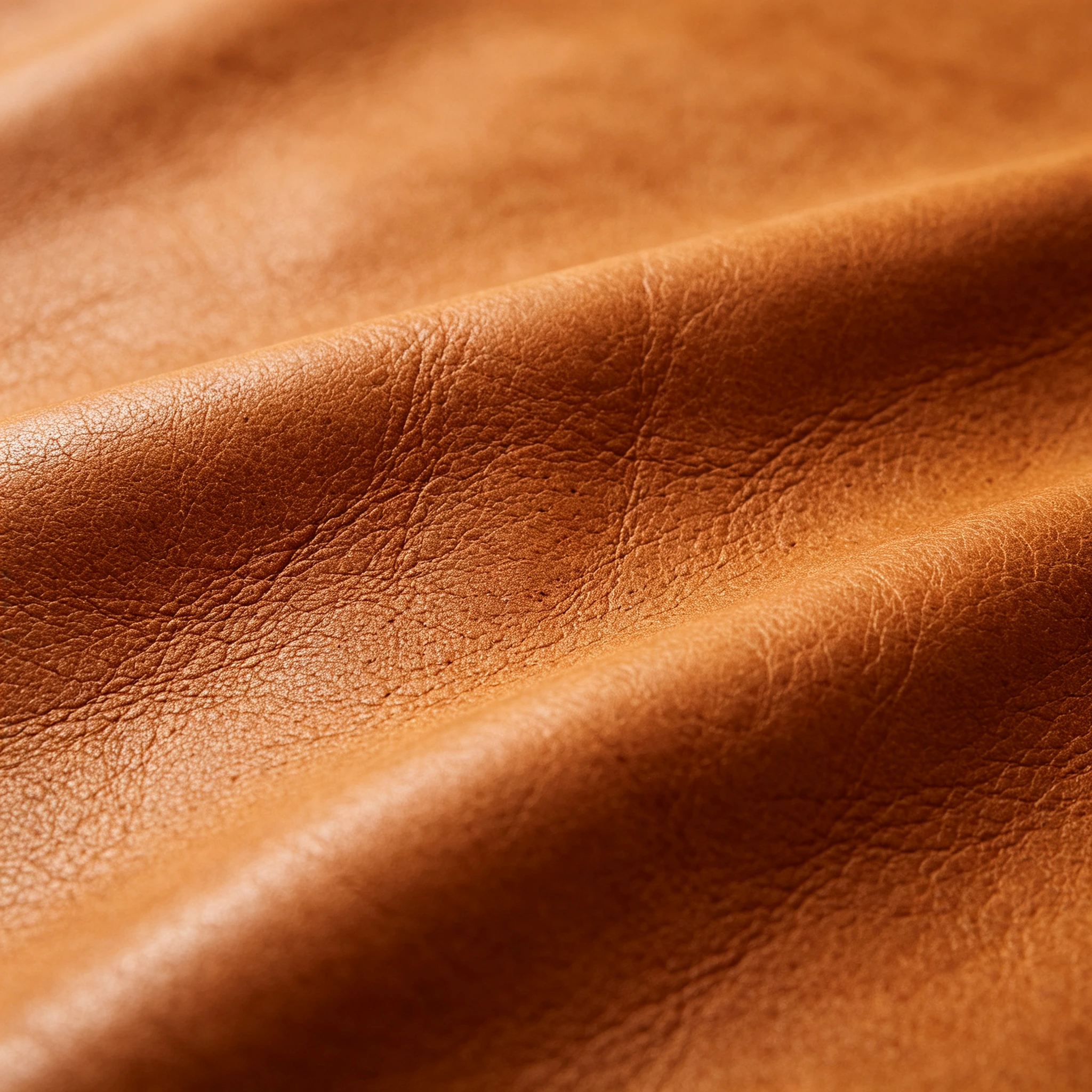
The contrasts clarify the definition. Top-grain leather has the surface lightly sanded to remove imperfections — more uniform, slightly weaker, no true patina. Corrected grain is sanded deeper and re-embossed with an artificial pattern — uniform but no longer the hide’s own face. Split leather is the fibrous layer beneath, sold as suede or coated into "genuine leather" — a different material class entirely. Our full-grain vs top-grain comparison maps the performance differences in detail.
The buying trap: "full-grain" is a process description, not a quality grade. A scarred, loose-flanked hide is still technically full-grain. The quality variable is grading — which hides are selected, from which body zones, with which defect tolerances — and that is where this playbook spends its pages, because grading is where two "full-grain" quotes diverge by 40%.
The A/B/C Grade System
Commercial hide grading sorts raw material by usable surface: the share of the hide free of significant defects. Grade A hides (roughly the top 10-15% of supply) offer 85%+ usable surface — clean bellies, minimal scarring, tight flanks. Grade B hides run 70-85% usable — sound material with defects that cutting must route around. Grade C hides fall below 70% — usable for small goods and patch panels, uneconomic for large display surfaces.
| Grade | Usable surface | Typical defects | Best use | Cost index |
|---|---|---|---|---|
| A | 85%+ | Isolated, avoidable | Display panels, premium bags | 100 |
| B | 70-85% | Scattered scars, tick marks | Secondary panels, mid builds | 70-80 |
| C | <70% | Frequent scars, loose grain | Small goods, welts, patches | 45-60 |
The defect taxonomy buyers should know: brand marks and healed scars (permanent texture interruptions), tick and insect bites (clusters of small pits), barbed-wire scratches (linear surface breaks), grain looseness (wrinkled, coarse fibre at flanks and belly edges), and growth marks at the neck. Each defect type has a cutting implication: isolated defects cost the circle around them; clustered defects write off whole zones.
The crucial nuance: grading measures defects, not fibre quality — but the two correlate. Hides from well-managed herds (no barbed wire, controlled parasites, good nutrition) grade higher AND carry tighter, stronger fibre. This is why sourcing region and husbandry standards belong in a leather spec, not just grade letters on a quote.
Anatomy of a Hide: Where Bag Panels Come From
A hide is not uniform material — it is a map of zones with different properties, and bag construction is zone allocation. The back and butt (the hide’s centre) is the premium zone: tightest fibre, thickest and most even substance, fewest defects — this is where display panels, collars and structural bodies come from. The shoulder is good secondary territory: slightly looser, often showing growth marks, fine for pocket faces and gussets.
The belly and flanks are the loose zones: stretchier fibre, coarser grain, more defect-prone — usable for internal panels, pocket bags and non-visible structure, but a flank-sourced display panel is the tell of an under-specced build: it stretches out of shape within a season and wrinkles where the back would hold. The neck carries strong fibre but heavy growth wrinkles — a character zone some vintage builds use deliberately.
A quality cut plan reads like this: display panels from back/butt, structural and secondary panels from shoulder, hidden components from belly, welts and tabs from whatever sound material remains. When a factory quotes suspiciously low on a full-grain bag, the cut plan is the first audit target — the leather is full-grain, but it is the wrong geography of the hide.
Yield Economics: Why Grade Drives Price
Full-grain pricing is yield mathematics. A bag silhouette requires a fixed set of panel areas; the question is how much hide must be purchased to cut those panels cleanly. On Grade A hides, a premium staff-bag panel set might yield at 65-70% (panels covering that share of purchased area); on Grade B, the same set yields at 50-55% because cutting routes around defects; on Grade C, yield collapses below 40% and large panels may be impossible at any price.
The arithmetic inverts naive expectations: a Grade A hide at 100 cost index yielding 68% beats a Grade B hide at 75 index yielding 52% on cost-per-panel — before counting the quality difference. Cheap full-grain quotes are usually B/C-grade economics disguised: the material line looks lean, but the yield loss and the defect risk are simply moved off the quote and into production, where they surface as panel-substitution disputes and rejection arguments.
The honest costing conversation covers four numbers: hide grade, expected yield for the specific silhouette, cost per cut panel (not per square foot of hide), and the defect-tolerance standard applied at cutting. A factory that volunteers those four numbers is costing leather professionally; one that quotes only a hide price is leaving the expensive parts for later.
Tanning: The Second Quality Axis
Grading selects the hide; tanning decides its character. Vegetable tanning (bark extracts, 30-60 day process) produces the heritage leathers: firm temper, rich colour depth, extraordinary patina, and the smell that defines leather goods — at higher cost and with greater water sensitivity. Chrome tanning (chromium salts, 1-2 day process) produces soft, water-resistant, colour-consistent leather at accessible cost — the volume standard.
Combination tanning (chrome base, vegetable re-tan) splits the difference: chrome’s stability with some of veg’s depth and aging character — the sweet spot for premium golf bags that must perform outdoors and age beautifully. Our vintage materials guide covers veg-tan’s heritage applications in depth.
The spec fields that matter: tanning method, retannage system, fatliquor content (the oil loading that sets softness and water behaviour — too dry cracks, too greasy migrates), and finish system on top of the crust. Two hides of identical grade diverge completely through this axis, which is why "Grade A full-grain" is a starting point for a spec, never the spec itself.
Intake QC: How Grades Are Verified
Professional leather intake is a documented inspection, not a receiving signature. Every hide lot entering our lines passes five checks: grade verification against the tannery’s certificate (sample hides inspected under grading light, defect-mapped), substance (thickness) measurement at five points per hide against spec (typically 1.4-1.6 mm for bag panels), temper check by hand (fold recovery, surface feel against the master), colour verification against the master swatch under D65 daylight, and finish rub testing (dry and wet crocking, ISO 105-X12).
The defect map matters beyond acceptance: inspected hides carry their defect zones marked, and the markers follow the hides into cutting, where the nesting software or the cutting master routes panels around them. This is where grade becomes yield in practice — disciplined defect mapping recovers 3-5% of usable surface that unmapped cutting wastes, which on a 1,000-hide programme is real money.
The paperwork trail closes the loop: lot numbers on every hide bundle, panel-to-lot traceability in cutting records, and retained swatches from every lot archived against future disputes. When a brand asks "which hides made my bags", a professional programme answers from records, not from memory. Our factory audit guide lists the intake questions to ask any supplier.
The rejection discipline matters as much as the acceptance standard: hides failing any of the five checks return to the tannery against the contract, and the rate of returns is itself a supplier scorecard — a tannery whose lots fail repeatedly is a cost centre wearing a leather price. We track intake pass rates per tannery per quarter, and the league table decides next season’s allocation. Quality in leather is not inspected into the product at the end; it is selected into the supply chain at the beginning.
OEM: Full-Grain Programme Notes
A full-grain brief specifies five axes: grade (A for display panels, with the grade standard defined by defect tolerance, not just the letter), zone allocation (back/butt for display faces), substance (1.4-1.6 mm typical for bag panels, 1.8-2.0 for bases), tanning system (veg / chrome / combination with fatliquor spec), and finish (aniline / semi-aniline / pigmented, with colourfastness grades). The fuller taxonomy is in our premium materials library.
Terms: full-grain builds run MOQ 200 with 100-piece trials, 6–10 day sampling (including hide-lot approval), 35–50 day bulk under AQL 2.5 with intake grading records available to the client. Hide price volatility is quoted transparently: leather is a commodity, and honest contracts index material cost rather than burying it.
The partnership advice: approve the hide, not the photograph. Full-grain’s whole point is its natural surface, and natural surfaces carry variation — the brands that succeed with full-grain set a variation window at golden sample (grain character range, colour tolerance band) and hold production to it. Variation within the window is the material being itself; variation beyond it is a quality event. Start the conversation at our quote page.
The Bottom Line
Full-grain leather is two decisions, not one: the grade (A/B/C usable surface, defect taxonomy, zone allocation) and the tanning (veg heritage, chrome performance, combination balance). Both axes belong in the tech pack, because "full-grain" alone spans a 40% cost range and a decade of service-life difference.
The economics favour honesty: Grade A hides at honest yield beat cheap grades at hidden yield, and documented intake QC turns grade from a promise into a record. Panel-zone allocation — back/butt for display, belly for hidden structure — is the signature of a professional cut plan.
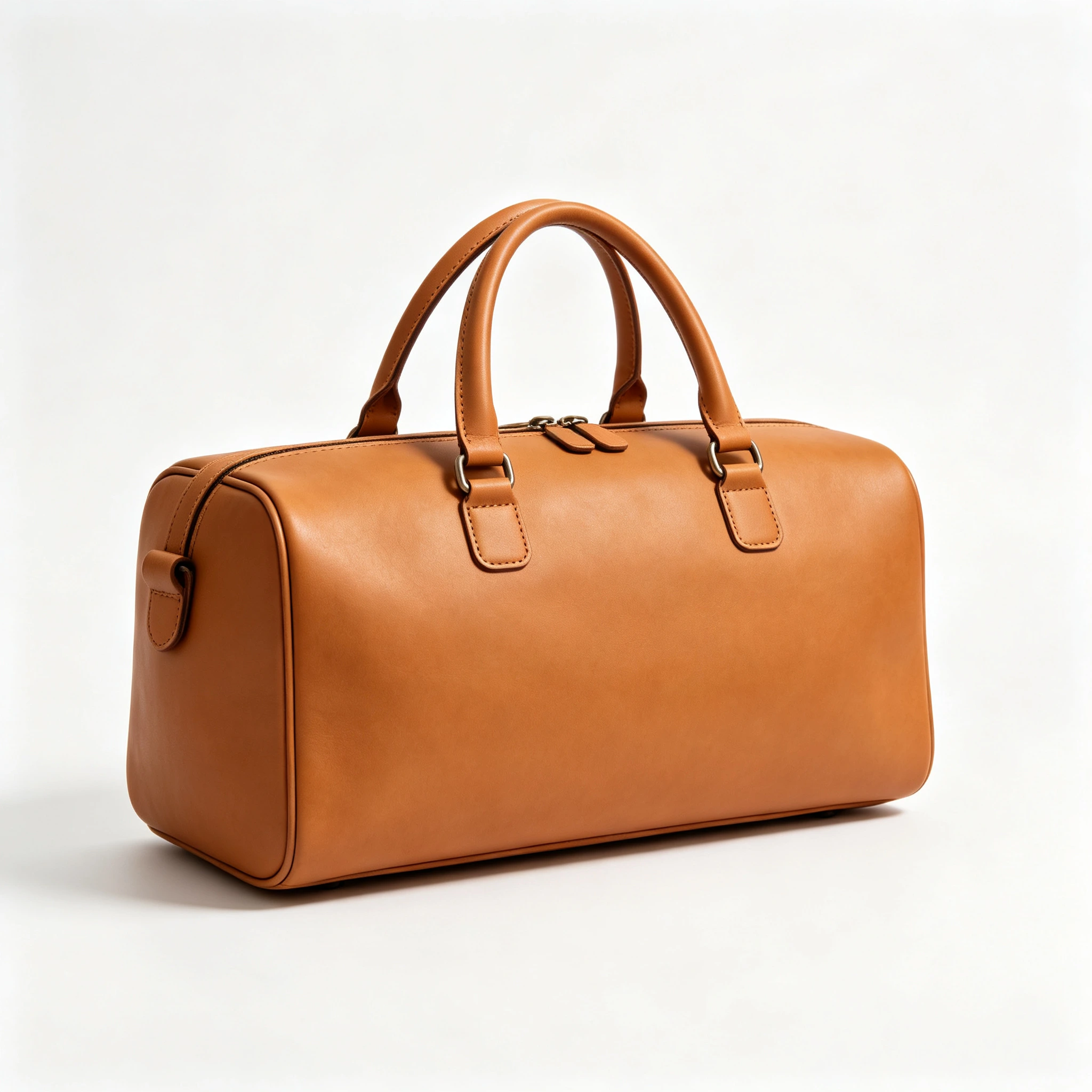
Send the silhouette and the leather direction, and graded full-grain samples — lot-documented, zone-allocated — come back in 6–10 days. The grain is the goods. Grade it, tan it, and cut it like it matters.
One last commercial truth from a decade of leather programmes: the brands that struggle with full-grain are the ones who buy it as a marketing adjective, and the brands that compound with it are the ones who buy it as a supply-chain discipline — grade letters defined by defect tolerance, zones allocated in the cut plan, lots traceable to tanneries, variation windows agreed at golden sample. The adjective costs nothing and returns nothing; the discipline costs rigour and returns a decade-long product story.
And the customer already knows the difference. The premium golf buyer of 2026 reads grain, checks edges, asks about tanning — the information asymmetry that once protected under-specced builds is gone. Full-grain done properly is not a risk in this market; it is the safest premium position in the category, because the material’s honesty matches the customer’s literacy. Spec the grade, trust the grain, and let the hide do the selling.
Spec Your Full-Grain Build
Send the silhouette and leather direction. We return lot-documented full-grain samples in 6–10 days, quoted at MOQ 200.
Request a Quote →People Also Ask
What is full-grain leather and why is it the best for golf bags?
Full-grain is the hide’s intact top layer — unsanded, uncorrected, carrying the natural grain. It is the strongest, most breathable layer of the hide and the only one that develops true patina, meaning the bag improves aesthetically for years. For golf bags (heavy structure, outdoor exposure, premium positioning) full-grain delivers the longest service life and the highest perceived value of any leather class.
What is the difference between Grade A and Grade B full-grain leather?
Usable surface: Grade A hides offer 85%+ defect-free area (clean bellies, minimal scarring); Grade B runs 70-85% with defects cutting must route around; Grade C falls below 70%. Grade measures defects, but correlates with fibre quality — well-managed herds produce both cleaner and tighter hides. For large display panels, Grade A is the professional standard.
How can you tell full-grain from corrected-grain leather?
Three tells: pore pattern (full-grain shows irregular natural pores; corrected grain shows uniform re-embossed texture), surface depth (full-grain’s grain varies across the panel; corrected is mechanically even), and edge character (full-grain edges show dense fibre; corrected edges may show the sanded layer). Full-grain also scars honestly — small natural marks are the signature, not the flaw.
Is vegetable-tanned or chrome-tanned leather better for golf bags?
Different strengths: vegetable tanning gives firm temper, rich depth, extraordinary patina and heritage character — but higher cost and water sensitivity. Chrome tanning gives softness, water resistance and colour consistency at accessible cost. Combination tanning (chrome base, veg re-tan) balances both and is our recommendation for premium bags that must perform outdoors and age beautifully.
Why do full-grain leather quotes vary so much between factories?
Grading and yield. A quote on Grade A hides at 65-70% yield differs from Grade B/C at 40-55% yield by 30-40% in material cost-per-panel — before tanning and finish differences. Cheap full-grain quotes usually hide B/C-grade economics. Ask four numbers: hide grade, expected yield for your silhouette, cost per cut panel, and the defect-tolerance standard at cutting.
What thickness of leather is used for golf bags?
Bag panels typically run 1.4-1.6 mm; bases and high-structure zones 1.8-2.0 mm; trim and pocket details 1.2-1.4 mm. Substance is measured at five points per hide at intake QC, because thickness varies across the hide and between hides. Spec the substance per component, not one number for the whole bag.
Does full-grain leather scratch easily?
It marks honestly and recovers beautifully: surface marks on aniline and semi-aniline full-grain respond to a thumb-rub or conditioner (the oils redistribute and the mark blends); deeper scratches become part of the patina story. This is the material’s character, not a defect — full-grain is chosen by buyers who want leather that lives. Pigmented full-grain resists marking but patinas less.
What part of the hide should bag panels come from?
Display panels from the back and butt (tightest fibre, fewest defects, best shape retention); structural and secondary panels from the shoulder; hidden components from the belly and flanks; welts and tabs from remaining sound zones. A flank-sourced display panel is the tell of an under-specced build — it stretches and wrinkles within a season.
How long does a full-grain leather golf bag last?
Ten to twenty seasons with basic care — full-grain is generational material. The limiting factors are construction (stitching, hardware) and care rhythm (conditioning every 2-3 months), not the leather itself. Vintage full-grain bags from the 1970s remain functional and beautiful, which is why full-grain anchors our heritage programme.
What is the MOQ for a full-grain leather golf bag?
MOQ 200 pieces per design with a 100-piece trial, sampling 6–10 days including hide-lot approval, bulk 35–50 days under AQL 2.5 with intake grading records available. Hide cost is indexed transparently against the leather market. Start at our quote page.
Can full-grain leather be waterproofed for golf?
To a degree: tanning chemistry (fatliquor loading), wax or fluorocarbon-free surface treatments, and seam construction give strong water resistance — our leather builds handle rain rounds and dry back without damage. Full submersion-grade waterproofing is synthetic territory; the honest leather promise is weather resistance plus drying discipline. Care protocol in our care guide.
What defects are acceptable in full-grain leather?
Inside the golden-sample variation window: small healed scars on non-display zones, natural grain variation, subtle colour shading panel-to-panel (the material being itself). Outside the window: brand marks or wire scratches on display faces, loose flank grain on structural panels, finish defects, colour beyond the tolerance band. The window is set at golden sample and enforced at every QC gate.
Is full-grain leather sustainable?
Leather is a by-product of the food industry — hides exist regardless of leather demand — and full-grain’s longevity (10-20 seasons versus 2-4 for synthetics) is the strongest sustainability argument in materials: impact amortised per year of use. Vegetable tanning adds a natural-chemistry dimension. The fuller analysis is in our eco materials guide.
How is full-grain leather graded at intake?
Five checks per lot: grade verification against the tannery certificate (defect-mapping under grading light), substance measurement at five points, temper check against the master, colour verification under D65 daylight, and finish rub testing (ISO 105-X12 dry and wet). Defect zones are marked and the markings follow hides into cutting for nesting. Lot numbers give panel-to-hide traceability.
Does full-grain leather need a finish coat?
It depends on the register: aniline (no pigment, pure transparency) for maximum patina and honesty; semi-aniline (light protective coat) for the everyday premium balance; pigmented finishes for maximum colour consistency and cleanability at some patina cost. All three are legitimate full-grain executions — the finish axis is chosen by channel and care expectation, not by quality hierarchy.
Sources & Authority
Grading standards, zone-allocation practice and intake QC protocols reflect leather sourcing operations at QUANZHOU JUNYUAN BAGS under AQL 2.5 (SGS-verified March 2026). Tanning and longevity data draw on tannery technical documentation and 200+ OEM leather programmes since 2014.