Vintage Golf Bag Trends 2026: Heritage Looks, Modern Engineering
Vintage golf bags are a defined, growing premium segment in 2026: heritage silhouettes (pencil bags, classic staff shapes, canvas-and-leather carry) built with modern internals — waterproof zippers, 14-way dividers, insulated pockets. The winning products are not replicas but reissues: retro outside, engineered inside. This report maps the five trends driving the segment, the materials and price bands, and the OEM spec for brands entering it. Our vintage and classic range is built on exactly this logic, and the segment playbook is in our premium segment playbook.
QUANZHOU JUNYUAN BAGS, established 2014 in Quanzhou, Fujian, manufactures through an affiliated factory of 4,950 m², 7 production lines, 149 machines (126 sewing stations) and 137 staff — rated at 200,000 pieces per month, actual output around 150,000. Every order runs AQL 2.5 inspection, MOQ 200 (100-piece trial), sampling 6–10 days, bulk 35–50 days, with BSCI, ISO 9001:2015, CE, CPC and RoHS certifications (SGS audit, March 2026). We serve 200+ brands in 100+ countries.
Why Vintage, Why Now
The vintage golf bag is not nostalgia for its own sake — it is the equipment expression of the same current running through fashion, watches and cars: heritage aesthetics with contemporary performance. Golf’s version has specific drivers. The post-2020 participation wave brought in younger players who treat equipment as style, not just function. The retro-equipment movement — persimmon reissues, blade irons, classic putters — created a bag-shaped gap in the look. And the premium segment discovered that heritage design supports price points that technical nylon cannot.
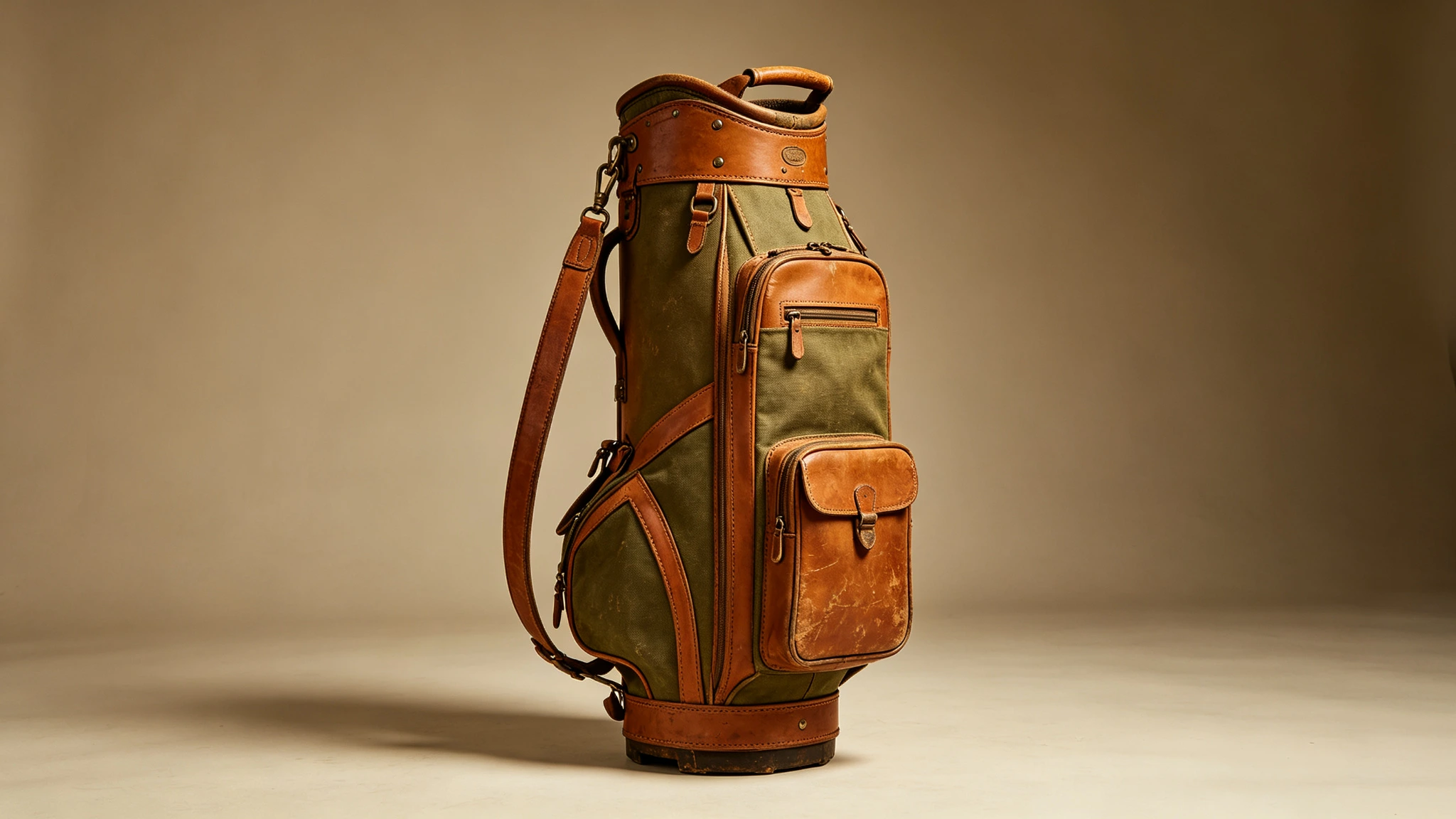
The market structure confirms it. Premium bags (retail $300+) are the category’s growth engine, and within that tier, heritage-styled product consistently out-performs on sell-through and margin. The vintage buyer is not price-shopping against a $150 cart bag; they are choosing between a $400 canvas-and-leather carry and a $500 leather staff bag — a conversation about taste, not discounts.
For brands, the strategic point is timing: the vintage segment is established enough to be proven and young enough to be uncrowded. The window where a well-executed heritage line can define a brand’s identity is open now, in 2026, and windows like it do not stay open. This report is the map of what to build.
One structural observation underpins everything in this report: vintage demand is cohort-driven, not fad-driven. The players entering golf since 2020 arrived through lifestyle channels — social media, entertainment venues, fashion crossovers — and they buy equipment the way they buy clothing: as identity. Heritage design is identity equipment par excellence, which means this demand base renews itself with every new cohort of style-conscious entrants rather than expiring with a trend cycle. Brands building vintage lines now are building on demography, not on fashion luck.
Trend 1: The Pencil Bag Renaissance
The pencil bag — slim, light, two-pocket, single-strap — is the segment’s fastest-growing silhouette. Its appeal is the walking-round ideal: nine holes at dusk, a half set, nothing to prove. Social golf culture (the evening league, the par-3 revival, the resort walking round) made the pencil bag the bag of the moment, and heritage styling is its natural language — the original pencil bags were leather and canvas before they were nylon.
The 2026 spec that sells: waxed canvas or premium PU shell, leather trim, one or two pockets maximum, a single padded strap, and — the modern concession — a stand mechanism or a cleverly angled base that keeps the bag off wet turf. Weight target is 1.2-1.8 kg. Retail bands run $180-350 for canvas-and-leather builds, $400+ for full leather.
Manufacturing notes for the silhouette: pencil bags are pattern-simple but detail-critical. The strap anchor takes the full carry load — bar-tack it to a reinforced webbing chassis, not the shell. The base wants a shaped, scuff-proof panel because slim bags tip. And slim means slim: every pocket and seam added beyond the minimum dilutes the product’s entire reason to exist. Our pencil bag guide covers the format in depth.
Trend 2: Canvas and Leather, Properly Done
The material pairing that defines the segment is waxed canvas with full-grain leather trim — and the market has learned to distinguish the real thing from the printed-nylon imitation. Real waxed canvas (18-22 oz, halcyon or martexin waxed) develops character: creases lighten, scuffs buff out, the bag records its rounds. Leather trim — handle wraps, pocket welts, base panels — patinas alongside. A two-year-old waxed canvas bag looks better than a new one; that is the whole value proposition.
The spec decisions that separate authentic from costume: wax weight (heavy enough to weather, not so heavy it transfers to car seats), canvas colour (olive, tan, navy and charcoal are the proven four), and hardware (antique-brass or gunmetal, never bright chrome — the single fastest way to break a heritage look). Zippers are the hidden modern compromise: vintage-styled bags run coil zips with leather pulls, and the quality ones spec YKK with waxed-canvas tape covers.
The care story is part of the product — waxed canvas wants re-waxing every year or two, leather wants the conditioning rhythm of our leather care guide — and brands that merchandise the ritual win the segment. A care kit (wax tin, conditioner, cloth) in the box converts maintenance from a chore into brand theatre.
The sourcing reality behind authentic canvas deserves a buyer’s attention. True waxed canvas is a specialist textile with a short list of credible mills; the market is full of "wax-look" coated polyester that photographs identically and ages terribly — it cracks at creases instead of lightening, and it never develops the character that justifies the price. Verifying the fabric is a golden-sample discipline: crease the swatch sharply and watch whether the line lightens (real wax) or whitens and cracks (coating). That ten-second test is the difference between a heritage product and a heritage costume.
Trend 3: The Classic Staff Bag, Reissued
The tour staff bag — 9.5-10 inch, six-pocket, single-strap — is the eternal silhouette of professional golf, and its heritage reissue is the segment’s prestige product. The 2026 version keeps the profile and drops the weight: modern staff reissues run 3.5-4.5 kg where 1990s originals ran 6-7 kg, through synthetic linings, aluminium stay frames and considered pocket counts.
The design cues that read authentic: a tall, straight collar profile; contrast piping; a single bold side panel for the brand mark (the staff bag is golf’s biggest branding canvas); and metal hardware at the ring and handle. The cues that date badly: excessive pocket count, mesh panels, technical-looking strap systems. The reissue discipline is restraint — the silhouette is the statement.
Commercially, staff reissues work at $400-700 retail as range flagships: low volume, high margin, and outsized brand-building value — the bag in the hero photography, the bag behind the counter, the bag in the pro’s hands. They also anchor limited editions (major-championship colourways are the proven play). Our staff bag feature guide details the architecture; the vintage positioning lives in the materials and the restraint.
Trend 4: Heritage Colour Palettes and Branding
Vintage colour is a discipline of subtraction. The palettes that sell: olive and tan, navy and cream, charcoal and saddle, forest and brass — two colours plus a metal, never more. The palettes that fail: anything neon, anything digital-camo, anything that could not have existed in 1965. Heritage colour is about what the material could plausibly have been — waxed canvas, bridle leather, brass — and the eye reads plausibility instantly.
Branding follows the same restraint. The executions that work on vintage bags: debossed leather patches, woven labels in period typefaces, felt appliqué (the varsity-letter look, golf’s most charming heritage branding), and simple embroidery in one or two colours. The executions that break the spell: heat-transfer prints, reflective trims, oversized modern logotypes. Typeface choice matters more than buyers expect — a serif or collegiate face reads heritage; a geometric sans reads tech brand.
The OEM implication is a different tech-pack conversation. Vintage programmes spec typefaces, label weaves, patch leather grades and hardware finishes alongside the usual materials and dimensions — because in this segment, those details are the product. The brands that get the details right can charge for them; the ones that get them wrong have made an expensive costume.
Trend 5: Vintage Outside, 2026 Inside
The defining engineering trend of the segment is the stealth upgrade: bags that look 1965 and perform 2026. The internals that matter: full-length dividers (vintage-styled bags now hide proper 5-14 way top cuffs under classic collars), waterproof zippers and seam-sealed pockets (heritage shells over modern membranes), insulated drink pockets disguised as period pocket shapes, and modern stand mechanisms under classic profiles.
The design rule for stealth upgrades: invisible or invisible-in-style. A 14-way top works if the cuff is wrapped in the shell material with contrast piping; it fails if it reads as injection-moulded tech. A waterproof pocket works behind a leather flap with brass snaps; it fails behind a welded aqua-zip in fluorescent tape. The buyer is purchasing the aesthetic — every functional upgrade must smuggle itself in.
This trend is where manufacturing capability decides winners. Combining heritage shells with modern internals is harder than either alone: waxed canvas does not sew like nylon, leather welts do not weld like TPU, and attaching a modern stand mechanism to a canvas chassis requires reinforcement engineering. It is precisely the mixed-discipline work our lines are built for — the same plant runs full leather staff bags and waterproof technical builds, and the vintage range is where the disciplines meet.
Price Bands and Market Positioning
Vintage segment pricing maps to materials and restraint, and the bands are honest:
| Band | Build | Typical retail | Position |
|---|---|---|---|
| Entry heritage | Premium PU, heritage styling | $180-280 | Gateway, gift |
| Core vintage | Waxed canvas + leather trim | $280-450 | Segment engine |
| Premium leather | Full-grain leather builds | $450-800 | Prestige, collector |
| Limited / bespoke | Numbered editions, exotics | $800+ | Halo, brand theatre |
The core band is where volume and margin balance — the waxed-canvas-and-leather carry at $350-400 is the segment’s workhorse SKU. The premium leather band is smaller but disproportionately valuable: it builds the brand story that sells the core band, and its buyers are collectors who purchase across seasons. Entry heritage serves the gift market and the vintage-curious — important as a funnel, dangerous as a main line, because the segment’s credibility lives upmarket.
Positioning rule: never discount the vintage line. The segment’s buyers are paying for permanence and taste; promotional pricing contradicts both and trains the customer to wait. The proven lever instead is scarcity — limited colourways, numbered editions, seasonal releases — which protects price while creating urgency. Vintage is a margin business run on discipline.
OEM: Speccing a Vintage Line That Sells
A vintage OEM brief has five extra fields beyond a standard bag brief: silhouette (pencil / classic carry / staff reissue), material story (canvas+leather / full leather / PU heritage), hardware finish (antique brass / gunmetal), branding execution (deboss patch / woven label / felt appliqué), and internal spec (divider count, waterproof pockets, stand or none). With those, sampling runs the standard 6–10 days — vintage styling does not slow the line; it redirects it.
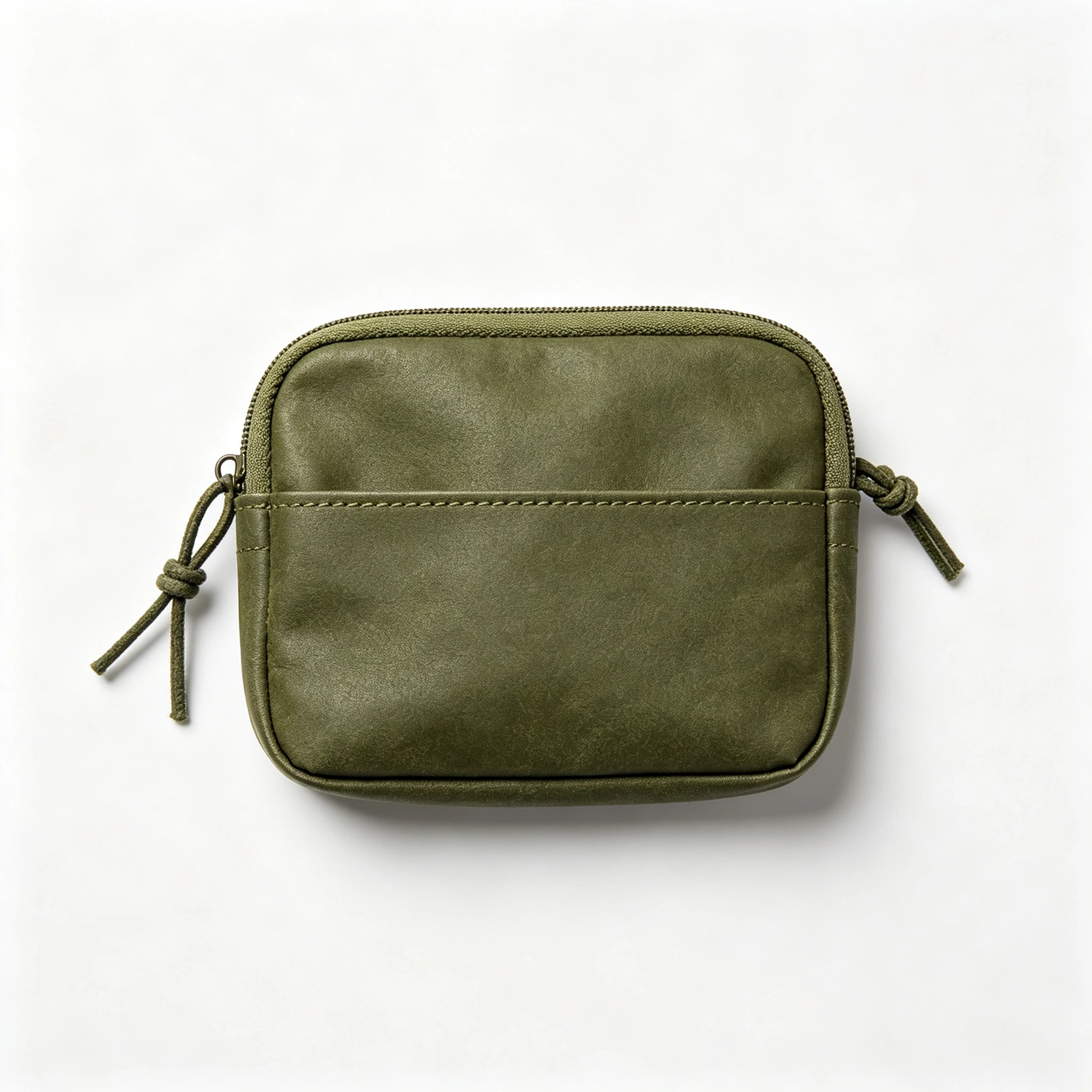
Material sourcing is where vintage programmes differ operationally. Waxed canvas comes in wax weights and colours that must be lot-matched; leather trim wants vegetable-tanned or pull-up hides that patina (chrome-tanned corrected grain will not); hardware in antique finishes is a plating spec, not a paint. Our sourcing bench handles all three as standard, and material lots are locked against the golden sample — the same colour-lot discipline as our cover set protocol.
Commercial terms follow the house standard: MOQ 200 per design with 100-piece trials, bulk 35–50 days, AQL 2.5. The programme shape that works: one silhouette, three colourways, one limited edition for the launch season. Vintage buyers respond to story — the product page, the care ritual, the edition narrative — so budget the content alongside the product. The segment rewards brands that commit to it fully and punishes dabblers.
The Bottom Line
Vintage golf bags in 2026 are a proven, growing premium segment built on a simple formula: heritage silhouettes, authentic materials, restrained branding, and modern internals smuggled in invisibly. Pencil bags lead growth, canvas-and-leather owns the core band, staff reissues build prestige, and colour discipline separates the real from the costume.
The opportunity window is open: established enough to be proven, uncrowded enough to claim. The manufacturing bar — mixed heritage-and-modern construction — is exactly what keeps casual competitors out, and it is exactly what our lines run daily.
Send the silhouette, the material story and the colourway, and vintage samples come back in 6–10 days. The past is selling well this year — spec it properly.
Build Your Vintage Line
Send the silhouette, materials and colourways. We return heritage samples in 6–10 days, quoted at MOQ 200 with a 100-piece trial.
Request a Quote →People Also Ask
What are the vintage golf bag trends for 2026?
Five lead: the pencil bag renaissance (slim walking-round silhouettes at 1.2-1.8kg), waxed canvas with full-grain leather trim, classic staff bag reissues at modern weights (3.5-4.5kg), heritage colour palettes with restrained period branding, and stealth-modern internals — 14-way dividers, waterproof pockets, stand mechanisms hidden inside classic shells. Explore our vintage range.
Are vintage-style golf bags popular?
Yes — heritage-styled product is the growth engine of the premium bag segment ($300+ retail), driven by younger style-conscious players, the retro-equipment movement, and social golf culture (evening leagues, par-3 courses, walking rounds). Vintage bags sell on taste and permanence rather than features, which makes them a margin business rather than a discount battleground.
What materials are used in vintage golf bags?
The authentic palette: 18-22oz waxed canvas for shells, full-grain vegetable-tanned or pull-up leather for trim and premium builds, antique-brass or gunmetal hardware, cotton webbing straps, and period-correct woven labels. Modern equivalents (premium PU with heritage styling) serve the entry band. Bright chrome, mesh panels and technical nylon break the aesthetic instantly.
How much do vintage-style golf bags cost?
Entry heritage (premium PU styling): $180-280 retail. Core vintage (waxed canvas plus leather trim): $280-450 — the segment workhorse. Premium full-grain leather: $450-800. Limited and bespoke editions: $800+. The segment’s rule is never to discount — scarcity (limited colourways, numbered editions) creates urgency while protecting price.
What is a pencil golf bag?
A slim, lightweight bag for walking rounds: two pockets maximum, single strap, 1.2-1.8kg, carrying a half set comfortably. The 2026 spec adds a stand mechanism or angled base to keep it off wet turf. Pencil bags are the vintage segment’s fastest-growing silhouette — the original designs were leather and canvas. Our pencil bag guide covers the format.
Can vintage-style bags have modern features?
Yes — that is the winning formula: 2026 internals inside heritage shells. Full-length dividers hide under classic collars, waterproof seam-sealed pockets sit behind leather flaps, insulated pockets wear period shapes, and stand mechanisms mount under canvas profiles. The design rule: every functional upgrade must be invisible or styled to invisibility.
What colours work for vintage golf bags?
Two colours plus a metal, always: olive and tan, navy and cream, charcoal and saddle, forest and brass. The test is plausibility — the palette must be something the materials (waxed canvas, bridle leather, brass) could genuinely have been in the heritage era. Neon, digital camo and reflective trims fail the test instantly.
What is the MOQ for a custom vintage golf bag line?
Our standard MOQ is 200 pieces per design with a 100-piece trial for first programmes. Sampling runs 6–10 days; bulk 35–50 days under AQL 2.5 inspection. Vintage programmes add fields to the brief — silhouette, hardware finish, branding execution — but not to the timeline. Start at our quote page.
How do you brand a vintage-style golf bag?
Period-appropriate executions: debossed leather patches, woven labels in heritage typefaces, felt appliqué (the varsity look), one-or-two-colour embroidery. Typeface choice matters — serifs and collegiate faces read heritage; geometric sans-serifs read tech. Avoid heat-transfer prints, reflective trims and oversized modern logotypes, which break the aesthetic the buyer is paying for.
Are waxed canvas golf bags waterproof?
Waxed canvas is highly water-resistant — the wax beads rain off the surface — but not seam-waterproof without modern help. The 2026 vintage spec adds waterproof membranes and seam-sealed construction inside the heritage shell, giving period looks with genuine wet-round protection. Re-waxing every year or two maintains the shell; care kits ship with quality programmes.
Do vintage golf bags come with stands?
The best 2026 examples do — modern stand mechanisms engineered under classic profiles, or angled bases that keep slim bags off wet turf. The stand is hidden or styled to invisibility: no exposed carbon legs or technical plastics. A vintage-styled bag that must be laid in wet grass fails its own premise; the stealth stand solved it.
How do I launch a vintage golf bag brand?
Start with one silhouette (pencil or classic carry), three colourways in proven palettes (olive/tan, navy/cream, charcoal/saddle), authentic materials (waxed canvas plus full-grain trim), and one limited edition for launch story. MOQ 200 keeps entry light; the content budget (product story, care ritual, edition narrative) matters as much as the product in this segment.
Do vintage golf bags hold their value?
Better than technical bags. Heritage designs age aesthetically rather than obsoleting — a 2020 vintage-styled bag still looks current in 2026, while a 2020 tech bag looks dated. Quality leather and canvas builds develop patina that collectors prize, and limited editions from credible brands trade at premiums in secondary golf communities. Permanence is the segment’s core promise.
Who buys vintage-style golf bags?
Three cohorts: younger style-conscious entrants who treat equipment as identity, established players pairing retro bags with classic equipment (persimmon reissues, blade irons), and gift buyers — heritage bags are the premium gift of choice because they read as considered rather than merely expensive. All three cohorts are growing, which is why the segment keeps compounding.
Sources & Authority
Segment analysis draws on Golf Datatech premium-bag category tracking, National Golf Foundation participation demographics, and programme data across 200+ OEM brand clients of QUANZHOU JUNYUAN BAGS. Material specifications reflect production sourcing standards at our SGS-audited affiliated plant (March 2026: BSCI, ISO 9001:2015, CE, CPC, RoHS).