Brown Leather Golf Bags: The Complete Shade, Ageing and Sourcing Guide
Brown is the ancestral colour of leather golf bags — and a family of at least six commercial shades, from light tan through chestnut and cognac to chocolate and espresso. Each ages differently, pairs with different hardware, and answers to a different buyer. This guide maps the brown spectrum, the patina behaviour of each shade, and the OEM colour-control process that keeps a 500-piece run inside one Delta-E. Brown builds live in our leather bag hub and the tan flagship at tan leather bags.
QUANZHOU JUNYUAN BAGS, established 2014 in Quanzhou, Fujian, manufactures through an affiliated factory of 4,950 m², 7 production lines, 149 machines (126 sewing stations) and 137 staff — rated at 200,000 pieces per month, actual output around 150,000. Every order runs AQL 2.5 inspection, MOQ 200 (100-piece trial), sampling 6–10 days, bulk 35–50 days, with BSCI, ISO 9001:2015, CE, CPC and RoHS certifications (SGS audit, March 2026). We serve 200+ brands in 100+ countries.
Why Brown Owns the Heritage Market
Brown is not one colour but the entire history of leather as a material. Before synthetic dyes, leather was brown — the colour of bark tannin — and every heritage association the material carries flows from that fact. A brown leather golf bag reads as authentic before a single design cue is evaluated; it is the only colour family that sells the patina promise on sight, because brown is the colour patina visibly improves.
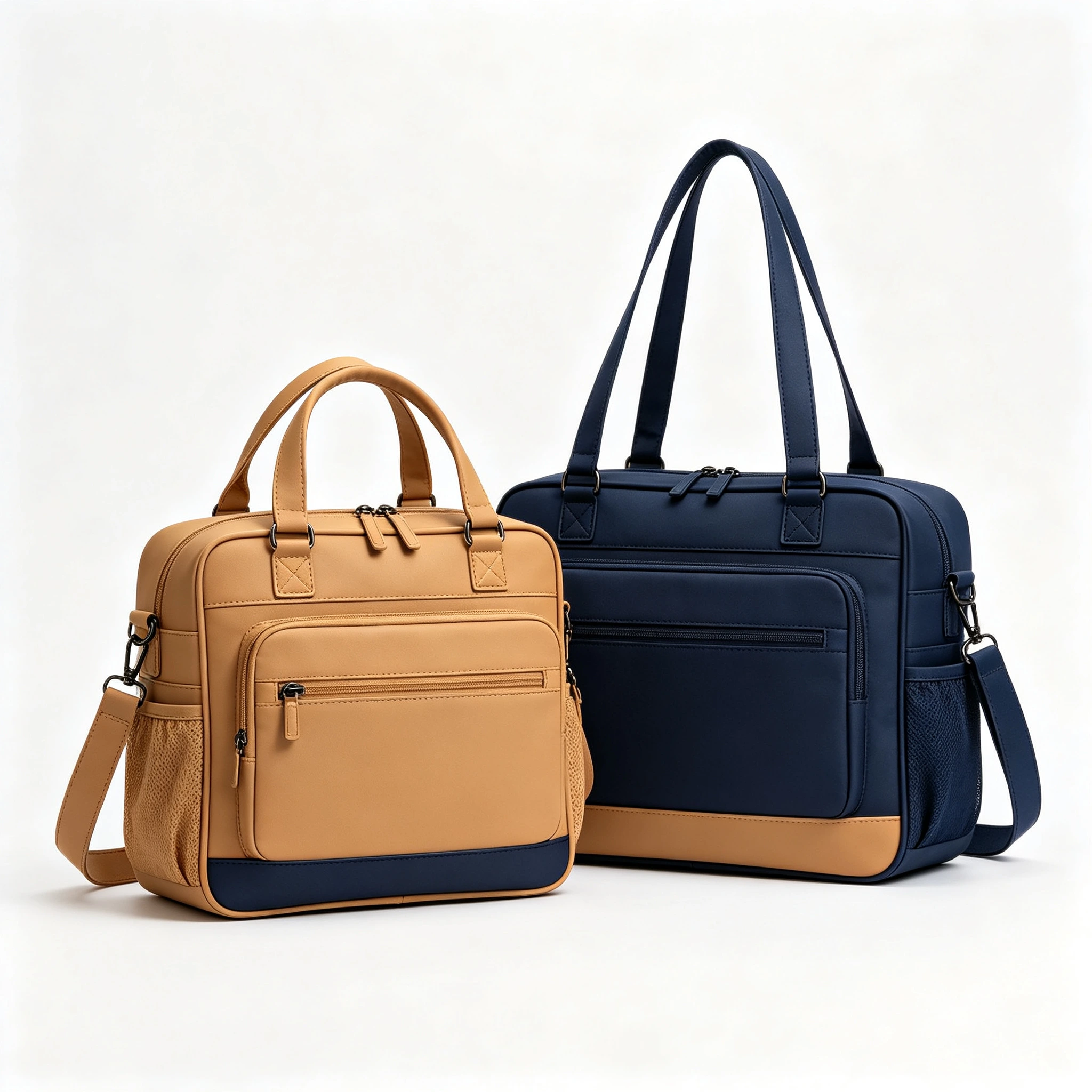
The commercial data supports the instinct: across premium leather goods generally, brown shades dominate heritage-positioned sales, and in golf specifically, brown leather bags anchor the vintage segment and the classic club-shop tier alike. Brown is also the most forgiving colour family at retail — it photographs warmly, displays well beside both wood and metal fixtures, and crosses gender and age demographics more evenly than any rival.
For brands, the strategic read: a leather bag programme without a credible brown anchor is a programme missing its center of gravity. The question is never whether to offer brown, but which browns, in what order — and that is a shade-architecture question this guide answers in full.
Brown also carries the widest styling latitude of any colour family. It reads equally at home beside waxed canvas (the heritage hybrid build), against white contrast panels (the classic two-tone), with felt appliqué branding (the varsity look), or stripped bare with blind deboss (the quiet-luxury read). No other colour family lets one range speak to the vintage collector, the traditional club member and the contemporary premium buyer simultaneously — which is precisely why brown anchor shades appear in every successful leather range we have shipped since 2014.
The Brown Spectrum: Six Commercial Shades
The brown family resolves into six shades with distinct markets. Light tan — the natural, almost undyed look: the purest heritage statement and the fastest patina-developer, darkening dramatically with sun and handling. Cognac — warm amber-brown: the luxury standard, flattering to every hardware finish and the best-photographing shade in the family. Chestnut — mid reddish-brown: the club-shop classic, traditional without being loud.
Saddle — the deep golden brown of English bridle leather: equestrian heritage, the natural partner of brass hardware, and the shade that reads most authentically "vintage golf." Chocolate — deep cool brown: the urban premium shade, easier to keep looking formal, slower to show scuffs. Espresso — near-black brown: the boardroom shade, maximal formality with leather’s warmth retained, and the most forgiving of neglect.
| Shade | Character | Patina speed | Hardware pairing | Best channel |
|---|---|---|---|---|
| Light tan | Natural, raw heritage | Fastest | Brass | Vintage, collector |
| Cognac | Warm luxury | Fast | Brass / gold | Premium retail |
| Chestnut | Classic club | Medium | Brass / nickel | Pro shop |
| Saddle | Equestrian vintage | Medium | Brass | Heritage |
| Chocolate | Deep urban | Slow | Gunmetal | Premium retail |
| Espresso | Formal, near-black | Slowest | Gunmetal / nickel | Corporate |
How Brown Ages: The Patina Mechanics
Brown’s superpower is that it ages visibly and beautifully — but the six shades age at different speeds and to different ends. Light tan is the sprinter: within one season of regular play it darkens two to three shades toward cognac, developing the honeyed depth that collectors prize. It is the patina showcase shade — and the shade that shows every water spot and careless hand print along the way. Light tan is for buyers who want the journey.
The mid shades — cognac, chestnut, saddle — age as deepen-and-burnish stories: colour richens, high-contact zones polish to a soft gloss, and the bag settles into itself over two to three seasons. These are the best commercial shades because the ageing is flattering at every stage: the bag looks good new, better at year one, best at year three.
The dark shades — chocolate, espresso — age subtly: less colour shift, more surface character, scuffs blending into depth rather than announcing themselves. They are the shades for buyers who want leather’s warmth without its maintenance theatre. All six shades follow the same care physics — conditioning every two to three months per our leather care guide — but they demand and reward the care differently, and honest brands merchandise that difference rather than hiding it.
One ageing variable cuts across all six shades and surprises first-time leather buyers: the first conditioning darkens any brown a half-shade. This is normal — oils enriching the hide — and largely reverses as the conditioner absorbs, but the permanent residual shift is real. We advise buyers to condition a new bag before its first round rather than after a month of play: the baseline colour settles immediately, and the patina journey then proceeds from a fed, even starting point. Brands should print this on the care card, because "conditioning changed the colour" is a preventable surprise.
Leather Type Decides the Brown
The same dye on different leather types produces different browns, and the pairing is a design decision. Vegetable-tanned leather gives the truest, warmest browns — tan, saddle, chestnut — because the bark tannins themselves contribute colour; it is also the champion patina base. Pull-up leather — hides stuffed with oils and waxes — gives browns that lighten dramatically when creased, producing the two-tone "worn-instantly" character beloved of heritage styling; cognac and saddle pull-ups are the vintage segment’s signature hides.
Aniline finishes show brown at its most transparent and natural — every pore and variation visible — and demand the best hides and the most careful owners. Semi-aniline adds a whisper of pigment protection: nearly the same depth, far more forgiveness, and the right answer for golf bags that see real weather. Corrected-grain pigmented leather gives uniform, durable brown at mid price — the club-programme answer — but sacrifices the ageing story that justifies leather in the first place.
The sourcing rule that protects a brown programme: brown shades are mixed by tanneries from dye recipes, and recipe interpretation drifts between tanneries and even between batches at one tannery. The only safe brown is a brown locked to a physical master swatch, with production verified against it under D65 light at Delta-E 1.5 or tighter. The full colour-control process is in our colour development guide.
Pairing: Hardware, Lining and Thread
Brown shades have hardware politics. Warm browns — tan, cognac, chestnut, saddle — pair with brass: the warm-warm combination is the heritage default and the safest aesthetic bet in the segment. Cool dark browns — chocolate, espresso — take gunmetal or aged nickel: brass against espresso reads as mixed metaphors. Gold hardware belongs to cognac alone and only in confident hands; chrome belongs nowhere near brown leather.
Lining is the pairing buyers forget: the lining flashes every time a pocket opens, and it must continue the brown story. Tonal browns, classic checks in brown-cream, and heritage stripes all work; bright technical colours break the spell at the first opened pocket. Thread follows: tonal thread for quiet luxury, contrast cream or gold topstitching for the crafted-heritage read — one choice, held consistently across the bag.
Complete-bag coordination extends the pairing to covers and accessories: a brown leather bag with matched brown head covers — same hide family, same hardware finish — is the premium cross-sell that lifts attach rates to 25-40%. Our leather head cover line is built in the same brown shades from the same tannery relationships precisely so this coordination is honest.
Brown in the Range: Shade Architecture
A leather bag range does not need six browns; it needs the right three. The proven architecture: one light heritage shade (light tan or cognac) as the story shade — the one in the photography, the one collectors buy; one mid classic (chestnut or saddle) as the volume shade — the pro-shop and club-programme workhorse; and one dark formal (chocolate or espresso) as the corporate and gift shade. Three browns, three buyers, one coherent family.
Resist the adjacent shades: two mid-browns a half-step apart split the same buyer and double the inventory without doubling the audience. Shade selection should be made from physical swatch books under both D65 and warm retail lighting — brown is the colour family most deceived by showroom light, and the shade that sings under LED can die under halogen.
Seasonal and limited browns — a waxed pull-up cognac for autumn, a light tan anniversary edition — give the range news without expanding the permanent palette. The edition cadence keeps brown buyers returning; brown buyers are, as a cohort, the most repeat-loyal in the premium segment. Colour strategy for the full range is mapped in our leather colour guide.
Channel fit completes the architecture. Vintage and heritage channels weight the light end (tan, cognac, saddle) 60-70% of the brown mix; pro shops and club programmes centre on chestnut; corporate and gift channels anchor on chocolate and espresso. Getting the channel-shade weighting right at buy-in prevents the classic brown mistake: a beautiful cognac flagship stranded in a channel whose buyers wanted espresso. Shade follows channel, channel follows customer — in that order, every season.
OEM: Locking a Brown Programme
A brown leather brief names the shade by physical master, not by adjective: the tannery’s swatch number, a sealed lab dip, or a cutting from an agreed reference. "Cognac" describes a dozen colours across suppliers; a sealed swatch describes one. From the master, sampling runs 6–10 days, with the colour verified under D65 against the master at golden-sample sign-off.
Production holds the colour with lot discipline: one tannery, one dye lot for the run, incoming hides verified against the master at Delta-E 1.5, and panel-layout grading that places any residual shade variation where the eye does not land first. MOQ 200 per design with 100-piece trials; bulk 35–50 days under AQL 2.5 with colour-check at every gate.
Brown-specific programme notes: light tan and cognac sell through fastest in vintage channels and should lead launch allocations; chocolate and espresso serve corporate programmes where name personalisation (standard at MOQ 200) turns the bag into the executive gift of record. Reorders of locked browns run 5-7 weeks and re-verify against the same master — a brown that drifts between seasons is a brand problem, not a shade problem. Begin at our quote page.
The Bottom Line
Brown is the centre of gravity of leather golf: six commercial shades from light tan to espresso, each with its own buyer, patina story and hardware politics. The range architecture that works is three browns — one heritage light, one classic mid, one formal dark — locked to physical masters and held at Delta-E 1.5.
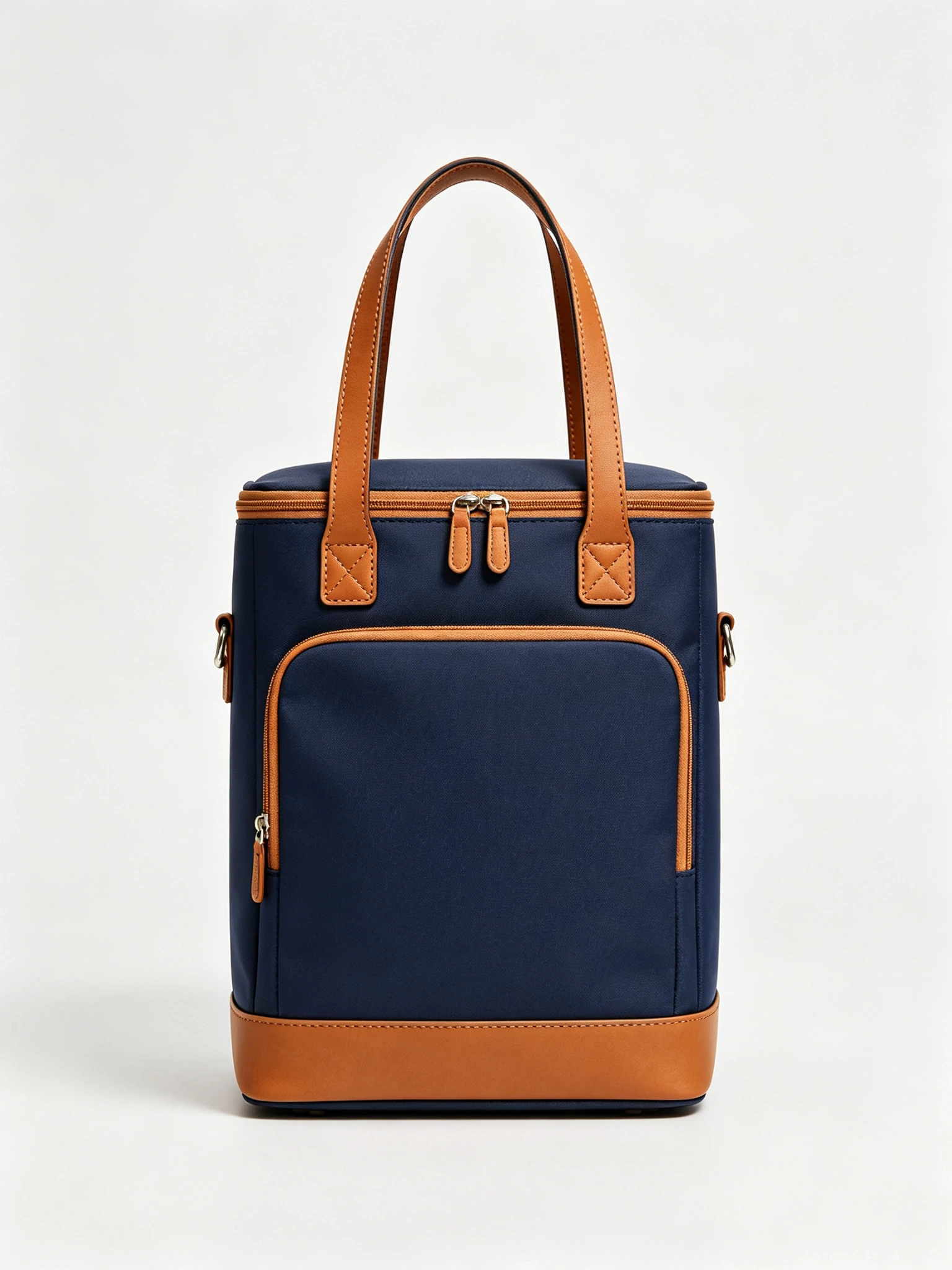
The shade decision is also a promise about ageing: light browns promise a journey, dark browns promise composure. Keep the promise with veg-tan and pull-up hides, honest aniline or semi-aniline finishes, and brass on warm browns only.
Send the channel and the palette, and brown samples verified against a sealed master come back in 6–10 days. Brown is the colour leather was born to be — spec it with the respect it deserves.
Lock Your Brown Programme
Send the shade references and channel. We return master-verified samples in 6–10 days, quoted at MOQ 200 with a 100-piece trial.
Request a Quote →People Also Ask
What shades of brown leather golf bag are available?
Six commercial shades: light tan (natural heritage, fastest patina), cognac (warm luxury), chestnut (club classic), saddle (equestrian vintage), chocolate (deep urban), and espresso (near-black formal). The proven range architecture is three: one light heritage shade, one mid classic, one dark formal. See builds at our leather bag hub.
Which brown leather golf bag ages best?
Light tan develops the most dramatic patina — darkening two to three shades toward cognac within a season of play. Cognac, chestnut and saddle deepen and burnish beautifully over two to three seasons. Chocolate and espresso age subtly, with scuffs blending into depth. For the full patina journey choose light tan in vegetable-tanned leather; for composed ageing choose the darker shades.
What hardware goes with a brown leather golf bag?
Warm browns (tan, cognac, chestnut, saddle) pair with antique brass — the heritage default. Cool dark browns (chocolate, espresso) take gunmetal or aged nickel. Gold belongs to cognac alone, used confidently. Chrome never pairs with brown leather. The whole set — clasp, pulls, studs, rivets — should share one finish from one batch.
Is tan or dark brown better for a golf bag?
Different promises. Tan and cognac: the heritage statement — dramatic patina, vintage authenticity, but show water spots and demand the care ritual. Chocolate and espresso: formal, forgiving, slower to show wear — leather’s warmth without its maintenance theatre. For club and corporate programmes the mid and dark shades are the practical choice; for collectors, light tan is the point.
What leather type is best for brown golf bags?
Vegetable-tanned for the truest warm browns and champion patina; pull-up (oil-and-wax stuffed) for the two-tone heritage character that lightens at creases; semi-aniline finish for the best balance of depth and weather forgiveness on the course. Corrected-grain pigmented leather gives uniform mid-price brown but sacrifices the ageing story. Details in our leather grades guide.
How do I care for a brown leather golf bag?
Wipe after rounds, condition every 2-3 months with pH-neutral cream, store dry and shaded, and never force-dry with heat. Light tan and cognac reward faithful conditioning with deepening patina; dark browns are more forgiving but age better with the same rhythm. Full protocol in our leather care guide.
Do brown leather bags show scratches?
It depends on shade and finish. Light tan aniline shows everything — and wears it as character. Pull-up leathers self-heal light scuffs with a rub. Dark browns in semi-aniline hide scuffs best. Deep scratches on any shade can be improved with colour-matched balm. The patina segment treats honest marks as provenance; the formal segment should choose dark semi-aniline.
How is colour consistency controlled on brown leather bags?
Shade locked to a physical master swatch (never a text description), one tannery and one dye lot per run, incoming hides verified at Delta-E 1.5 under D65 light, and panel grading that places residual variation out of the spotlight. Reorders re-verify against the same master. The process is detailed in our colour development guide.
Can I get matching brown head covers for my bag?
Yes — the premium cross-sell: covers built from the same brown hide family with the same hardware finish, merchandised beside the bag. Matched bag-and-cover coordination lifts attach rates to 25-40%. Our leather head cover line runs in the same brown spectrum for exactly this purpose.
What is the MOQ for a custom brown leather golf bag?
MOQ 200 pieces per design with a 100-piece trial, sampling 6–10 days, bulk 35–50 days under AQL 2.5. Colour locked to a sealed master swatch. Name personalisation is available at the same MOQ — chocolate and espresso builds with recipient names are the executive gift standard. Start at our quote page.
Why does my brown leather bag look different from the photo?
Three usual causes: photography lighting (brown is the colour family most deceived by warm studio light), screen calibration, or genuine shade drift from an uncontrolled dye lot. The first two are presentation; the third is a manufacturing failure. Locked-master programmes with Delta-E verification eliminate the third — ask any supplier how their browns are locked before ordering.
Are brown leather golf bags suitable for wet climates?
Yes with the right finish: semi-aniline or lightly protected finishes handle weather far better than pure aniline, and dark browns forgive water marks that light tan displays proudly. A fluorocarbon-free protector spray at season start and proper drying-after-rounds discipline covers the rest. For UK and Pacific Northwest programmes we spec weather-appropriate finishes at brief stage.
Can brown leather be recoloured if it fades?
Yes — professional leather recolouring restores faded brown with matched dyes and a new finish coat, typically at a fraction of replacement cost. It is a specialist service (shoe and leather restoration trades) rather than a DIY job. Prevention through conditioning rhythm beats restoration every time, but a quality brown bag is worth restoring — another advantage of buying real full-grain in the first place.
Which brown shade sells best?
Channel-dependent: cognac leads premium retail and photography-driven channels, chestnut leads pro shops and club programmes, chocolate and espresso lead corporate and gift. Light tan leads only in vintage/collector channels but drives outsized engagement everywhere. The safe launch allocation: mid classic heaviest, heritage light next, dark formal third — then let your channel’s data rebalance.
How do I match brown leather across bags and accessories?
By material lot, not by eye: bags, head covers and accessories cut from the same hide family and dye lot, verified together under D65 light. "Same colour name" from different suppliers or lots drifts visibly. Our coordinated programmes cut covers and bags from shared material purchases precisely so the brown matches at the shelf, not just in the catalogue.
Are brown leather golf bags in style?
Permanently. Brown is the ancestral leather colour — the shade of saddle, satchel and heritage craft — and it cycles only in intensity, never out of relevance. In golf specifically, the vintage movement has made brown the colour of the premium segment’s fastest-growing tier. Buying brown is the least fashion-exposed decision in leather golf.
Sources & Authority
Shade architecture and patina behaviour reflect tannery documentation and production outcomes across brown leather programmes at QUANZHOU JUNYUAN BAGS. Colour-control figures (Delta-E 1.5, D65 verification) follow our AQL 2.5 QC framework, SGS-verified March 2026. Attach-rate data from 200+ OEM brand client programmes.