Retro Leather Golf Bag Design Cues: What Makes Heritage Look Authentic
An authentic retro leather golf bag is built from seven design cues: the tall straight collar, contrast piping, a single bold branding panel, antique metal hardware, leather-wrapped handles, period typefaces, and restrained two-colour palettes. Miss two and the bag reads as costume; nail all seven and it reads as heirloom. This guide decodes each cue with the measurements and specs behind it — for brands designing a heritage line. Our vintage range executes all seven, and the material foundation is in our leather bag hub.
QUANZHOU JUNYUAN BAGS, established 2014 in Quanzhou, Fujian, manufactures through an affiliated factory of 4,950 m², 7 production lines, 149 machines (126 sewing stations) and 137 staff — rated at 200,000 pieces per month, actual output around 150,000. Every order runs AQL 2.5 inspection, MOQ 200 (100-piece trial), sampling 6–10 days, bulk 35–50 days, with BSCI, ISO 9001:2015, CE, CPC and RoHS certifications (SGS audit, March 2026). We serve 200+ brands in 100+ countries.
Why Design Cues Matter More Than Materials
Here is the uncomfortable truth of the heritage segment: a bag can be built from the finest full-grain hide and still read as fake — because retro authenticity lives in design language, not material quality. The eye reads a heritage bag in about two seconds, and what it reads is proportion, silhouette and detail: the collar height, the piping, the hardware, the type. Materials are felt in the hand; cues are seen from across the shop. Both matter, but the cues decide whether the customer ever picks the bag up.
The seven cues in this guide are drawn from the actual design archive of golf — the staff bags of the 1950s-70s, the canvas carries of the persimmon era, the leather pencil bags that preceded the stand bag. They are not arbitrary styling; each one existed for a functional reason that modern design forgot, and that functional ancestry is exactly what the eye recognises as authentic.
For brands, the commercial weight of the cues is direct: the heritage buyer is paying $450-800 for a feeling, and the feeling is the cues. A retro line that gets them right can charge full heritage prices with standard materials; a line that gets them wrong cannot sell premium hides at any price. Design language is the segment’s real raw material.
There is a second reason the cues matter commercially: they are defensible. Materials can be copied by any competitor with the same tannery account, but a coherent design language — seven cues executed consistently across a range — builds recognition that compounds season over season. The heritage brands that endure are recognisable from across the car park before a single logo is visible. That kind of recognition is designed deliberately, cue by cue, and it is the closest thing the bag business has to a moat.
Cue 1: The Tall, Straight Collar
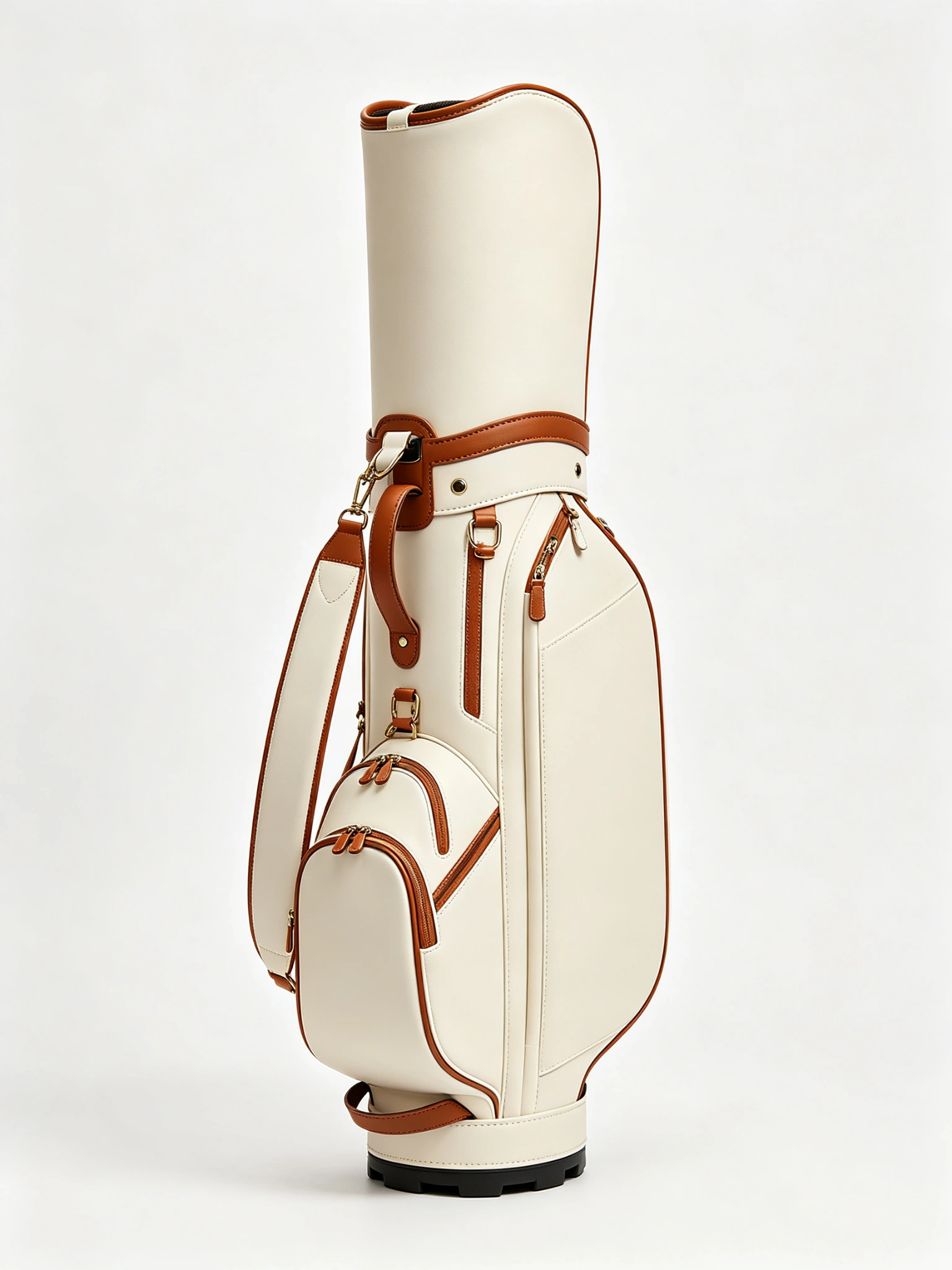
The collar — the top ring of the bag — is the silhouette’s signature. Heritage bags carry tall, straight-sided collars: 20-25 cm of vertical, largely untapered profile, versus the scooped, sculpted, asymmetric tops of modern bags. The tall collar existed to carry woods upright when woods were wood; today it reads instantly as classic, and it is the single most recognisable retro cue.
The construction spec behind the look: the collar is built over a shaped top cuff — heritage builds use wrapped and stitched cuffs (leather or canvas over a formed frame) with contrast piping at the rim, where modern bags use naked injection-moulded tops. The 2026 stealth approach wraps a modern divider cuff in shell material and piping: heritage appearance, contemporary club organisation.
Proportion rule: collar height should run roughly one-quarter of total bag height on staff silhouettes, slightly less on carries. Under-proportioned collars read as modern bags in leather cosplay; over-proportioned ones read as props. The measure that works on a 90 cm staff bag: 22-24 cm of visible collar, straight-sided, piped, with the brand panel beginning immediately below.
Cue 2: Contrast Piping
Piping — the bound cord running along seams and edges — is heritage golf’s defining detail. It existed to protect and stiffen seams on canvas and leather bags; today it is the line that draws the bag’s architecture. Contrast piping (cream on navy, tan on olive, saddle on charcoal) outlines collar, pocket welts, spine and base, turning the bag’s structure into its decoration.
The spec: piping cord at 4-5 mm, wrapped in the contrast material (leather or vinyl on leather bags, canvas or vinyl on canvas builds), machine-set into the seam with consistent exposure — the visible ridge should be even along its entire run. Uneven piping exposure is the detail that betrays rushed production instantly; on our lines it is a gate-two inline QC check.
The discipline is restraint: piping outlines structure, it does not decorate. One contrast colour, run consistently, on structural seams only. Multi-colour piping, decorative piping loops, and piping on non-structural panels all read as theme-park rather than heritage. The eye that pays $600 for a bag is an eye that notices.
Cue 3: The Single Bold Branding Panel
Heritage staff bags were billboards: one large side panel, one brand mark, seen across the fairway. The cue survives because it works — a single bold branding panel gives a bag presence that scattered logos never achieve, and it is the design element that makes the staff silhouette golf’s most prestigious product.
The spec: the panel sits on the bag’s display face, beginning just below the collar, sized generously — on a staff bag, 25-35 cm wide and 40-60 cm tall. The branding execution within it follows heritage rules: one mark, one typeface, one or two colours, executed in embroidery, debossed patch, or felt appliqué. The panel background can carry the bag’s contrast colour, making the panel itself the design.
The counter-cue to avoid: modern bags wallpaper every surface with marks — pocket, collar, ball pocket, shoe pocket, strap. Heritage branding is one confident statement, not five anxious ones. For OEM programmes the panel is also the practical centre of the tech pack: mark size in millimetres, position from collar, thread or patch spec, all locked at golden sample. The branding options are mapped in our branding guide.
Cue 4: Antique Metal Hardware
Hardware finish can make or break a heritage bag on its own. The authentic finishes: antique brass (the default — warm, aged, period-correct), gunmetal (for darker palettes), and aged nickel (for navy and grey stories). The finish that fails every time: bright chrome or polished gold, which reads as costume jewellery against heritage materials.
The hardware set on a heritage bag: collar ring (where fitted), handle fittings, strap adjusters and clasps, zipper pulls (metal with leather tabs), and base studs. Each piece is a small object the customer handles — the strap clasp especially, used every round, whose weight and action communicate quality directly. Solid brass castings with antique plating are the premium spec; zinc-alloy castings with antique finish are the acceptable mid spec; plastic with metallic paint is the fail.
The durability spec behind the finish: antique plating must survive the bag’s life — salt-air rounds, boot storage, handle sweat. Our hardware spec calls for plated-and-lacquered finishes salt-spray tested to 48 hours minimum, because an antique finish that wears to bright zinc in a season converts the whole bag from heirloom to embarrassment. Hardware is 3-5% of bag cost and 30% of its perceived authenticity.
Cue 5: Leather-Wrapped Handles and Straps
The carry handle is the most-touched component on any bag, and on heritage bags it is a design feature: a leather-wrapped grip, stitched or riveted, centred on the collar spine. The wrap is functional — leather grips better than nylon, ages beautifully, and softens to the hand — and it is one of the tactile moments that sells heritage bags in person.
The spec: full-grain leather wrap, 3-4 mm padded core, saddle-stitched or closely machine-stitched edges, anchored to a reinforced chassis point rather than the shell alone. Riveted ends with antique-finish rivets complete the period look and add real strength. On staff bags, the handle is often doubled — collar handle plus mid-spine grab — both wrapped, both anchored.
Straps follow the same language: cotton webbing or leather, wide (50mm+), with antique-metal adjusters, and padding wrapped in shell material rather than technical mesh. The modern concession — a hidden ergonomic pad or a convertible double-strap system — is welcome as long as it hides. The strap is where heritage bags most often fail their own aesthetic: one technical mesh strap pad and the spell is broken.
Cue 6: Period Typefaces and Label Craft
Typography is the cue buyers rarely name and always read. Heritage branding lives in a narrow type family: serifs (the club-crest tradition), collegiate/slab faces (the varsity tradition), and classic script (used sparingly). The faces that break the spell instantly: geometric sans-serifs, condensed grotesques, anything that belongs to a tech brand or a 2010s startup.
Label craft is typography’s partner. The heritage executions: woven damask labels with the mark in one or two colours, debossed leather patches with blind or colour-filled impressions, and felt appliqué letters — the varsity jacket’s gift to golf. Each has a production spec: woven labels at damask density for clean letterforms, patches at 1.4 mm+ leather with stitched (not glued) application, felt appliqué with tight satin-stitch borders.
The type-and-label conversation belongs in the tech pack with exact references: typeface name, letter height, thread or weave colours by Pantone, placement in millimetres. "Heritage-looking logo" is not a spec; it is an invitation to interpret, and interpretation is how a bag ends up wearing a font from a smartphone app. Our logo execution guide covers the production side of each method.
Cue 7: The Two-Colour Palette Plus Metal
Heritage colour discipline is absolute: two material colours plus one metal finish, no more. Olive and tan with brass. Navy and cream with aged nickel. Charcoal and saddle with gunmetal. Forest and tan with brass. These palettes work because they are what the materials genuinely were — canvas colours, bridle-leather tones, period metal — and the eye reads their plausibility without knowing why.
The failures are additions: a third colour "for accent," a contrast zip tape, a bright lining showing at open pockets. Heritage linings deserve their own rule: tonal or classic check/stripe in period palettes, never bright technical colours. The lining shows every time a pocket opens, and one flash of orange nylon undoes three hundred dollars of restraint.
For OEM colour development, the palette conversation happens with physical swatches under D65 light — heritage colours are subtle, and half-shade decisions (which tan? which olive?) define the product. Our colour development process — lab dips, strike-offs, golden-sample locking — is documented in our custom colour guide and applies to heritage palettes with extra discipline, because subtle colours show lot drift faster than loud ones.
Proportion: The Cue Behind the Cues
Beneath all seven cues sits the master variable: proportion. Heritage bags carry different ratios than modern ones — taller collars, longer spines, narrower pocket stacks, higher centre of visual mass. A bag can execute every cue correctly and still read wrong if the proportions are modern: the eye is comparing against an archive it does not know it has memorised.
The proportions that work on the two core silhouettes: staff reissues at 88-92 cm total height, collar at roughly a quarter of that, branding panel filling the upper half of the body, pocket stack low and narrow. Classic carries at 85-88 cm, slimmer through the body (23-26 cm diameter versus 28-32 on modern cart bags), pockets minimal and vertical.
Proportion is set at pattern stage and cannot be retrofitted — which is why heritage development starts from period references, not from modifying modern patterns. Our sampling room works from documented heritage silhouettes and adjusts for modern requirements (460 cc driver length, modern stand mechanisms) at the edges, preserving the ratios that make the eye believe.
The Bottom Line
Retro authenticity is engineering: tall straight collars at quarter-height, 4-5 mm contrast piping on structural seams, one bold branding panel, antique-plated hardware salt-spray tested, leather-wrapped handles anchored to chassis, period typefaces in woven or debossed craft, and two-colour-plus-metal palettes held to half-shade discipline.
None of these cues is expensive; all of them are exacting. That combination — cheap to spec, fatal to get wrong — is what makes the heritage segment a design-language business, and what makes a manufacturing partner with the archive and the discipline worth more than one with merely the machines.
Send the silhouette and the palette, and a heritage sample carrying all seven cues comes back in 6–10 days. The archive is open; the craftsmanship is current.
Design Your Heritage Bag
Send the silhouette, palette and brand mark. We return a heritage sample executing all seven cues in 6–10 days.
Request a Quote →People Also Ask
What makes a golf bag look vintage?
Seven design cues: a tall straight collar (roughly a quarter of bag height), contrast piping on structural seams, a single bold branding panel, antique-finish metal hardware (brass, gunmetal or aged nickel — never bright chrome), leather-wrapped handles and cotton or leather straps, period typefaces (serif, collegiate or script) in woven labels or debossed patches, and a disciplined two-colour-plus-metal palette.
What colours are authentic for retro golf bags?
Two material colours plus one metal finish: olive and tan with brass, navy and cream with aged nickel, charcoal and saddle with gunmetal, forest and tan with brass. The test is historical plausibility — the palette must be something canvas, bridle leather and period metal could genuinely have been. Third colours, bright zip tapes and vivid linings break the effect instantly.
What hardware finish suits a heritage golf bag?
Antique brass is the default and most versatile; gunmetal suits darker palettes; aged nickel suits navy and grey stories. All should be plated-and-lacquered and salt-spray tested to 48 hours minimum so the antique finish survives real use. Bright chrome and polished gold read as costume against heritage materials and should never appear on a retro build.
What is the correct collar height for a vintage staff bag?
Tall and straight-sided: 20-25 cm of largely untapered profile, roughly one-quarter of total bag height (22-24 cm visible collar on a 90 cm staff bag), built over a wrapped and piped top cuff. Under-proportioned collars read as modern bags in leather costume; the tall collar is the single most recognisable retro cue.
How should a heritage golf bag be branded?
One bold statement, not five anxious ones: a single large branding panel below the collar carrying one mark in one typeface and one or two colours, executed in embroidery, debossed leather patch or felt appliqué. Typefaces stay period — serif, collegiate or classic script. Full execution specs are in our branding guide.
What piping specification is used on retro bags?
4-5mm cord wrapped in contrast material, machine-set into structural seams with perfectly even exposure along the entire run. One contrast colour only, on structural seams only — collar, pocket welts, spine and base. Uneven piping exposure is an instant quality tell and a gate-two inline QC check on our lines.
Can a retro bag have a modern divider top?
Yes — the stealth approach: a modern 5-14 way divider cuff wrapped in shell material with contrast piping, giving contemporary club organisation under a heritage appearance. The rule is invisibility: the cuff must not read as injection-moulded tech. The same principle hides waterproof pockets, insulated compartments and stand mechanisms inside classic shells.
What typefaces look authentic on vintage golf bags?
Serifs (club-crest tradition), collegiate and slab faces (varsity tradition), and classic script used sparingly. Avoid geometric sans-serifs, condensed grotesques and anything belonging to tech branding. Typeface, letter height, thread colours and placement all belong in the tech pack with exact references — "heritage-looking" is not a specification.
What is the MOQ for a custom retro leather golf bag?
Our standard MOQ is 200 pieces per design with a 100-piece trial for first programmes. Sampling runs 6–10 days from a complete heritage brief (silhouette, palette, hardware finish, branding execution); bulk 35–50 days under AQL 2.5. Start at our quote page.
Are retro leather golf bags practical for modern play?
Yes, when engineered for it: modern builds run 3.5-4.5kg (versus 6-7kg originals), hide 14-way dividers, waterproof seam-sealed pockets and insulated compartments inside classic shells, and carry 460cc drivers comfortably. The formula is 1965 outside, 2026 inside — the aesthetic is archival, the performance is not.
What leather works best for heritage bags?
Full-grain vegetable-tanned or pull-up hides that develop patina — chrome-tanned corrected grain will not age and breaks the value proposition. Thickness 1.4-1.8mm for body panels with firmer temper for structure; softer hides for wraps and trims. Material grades and sourcing are detailed in our materials library.
How much does a custom heritage golf bag cost?
Ex-works varies by build: waxed-canvas-and-leather carries land mid-tier, full-grain leather staff reissues at the top of the bag price structure. Retail bands: entry heritage $180-280, core vintage $280-450, premium leather $450-800, limited editions $800+. MOQ 200 with 100-piece trials keeps programme entry proportional to ambition.
What is the most common retro design mistake?
Mixing eras and cues: a heritage collar with technical mesh panels, antique brass beside bright chrome zips, a period typeface next to a modern reflective logo. Authenticity fails by accumulation — each anachronism subtracts until the eye files the bag as costume. The discipline is to pick one era, learn its complete vocabulary, and smuggle every modern feature in invisibly.
Do retro cues work on non-leather bags?
Yes — the cues are design language, not material requirements. Waxed canvas builds execute all seven beautifully, and even premium PU heritage builds succeed when collar proportion, piping, hardware finish, palette and typography are disciplined. What cannot rescue the cues is a material that breaks them: no amount of piping saves bright chrome on neon nylon.
Sources & Authority
Design-cue specifications are drawn from documented heritage golf bag silhouettes (1950s-70s staff bags, persimmon-era carries) held in the QUANZHOU JUNYUAN BAGS sampling archive, cross-referenced with current production specs at our SGS-audited affiliated plant (March 2026). Hardware durability figures from salt-spray testing under our AQL 2.5 QC framework.