Magnetic vs Zipper Head Covers: What the Cycle Tests Actually Show
Magnetic head covers are worth it for play: rare-earth magnet closures survive 5,000+ open-close cycles with no measurable force loss, open one-handed in under a second, and add only $0.8-1.5 per unit ex-works. Zippers win only in travel, where containment matters more than speed. This guide puts all four closure systems through the same bench protocol — cycle life, pull force, speed, failure modes — and gives the spec for each. The magnetic range is at our magnetic cover line, and the trend data behind it is in our magnetic covers trend report.
QUANZHOU JUNYUAN BAGS, established 2014 in Quanzhou, Fujian, manufactures through an affiliated factory of 4,950 m², 7 production lines, 149 machines (126 sewing stations) and 137 staff — rated at 200,000 pieces per month, actual output around 150,000. Every order runs AQL 2.5 inspection, MOQ 200 (100-piece trial), sampling 6–10 days, bulk 35–50 days, with BSCI, ISO 9001:2015, CE, CPC and RoHS certifications (SGS audit, March 2026). We serve 200+ brands in 100+ countries.
The Closure Is the Product
A head cover’s closure operates more than any other component: twice per hole for a putter cover, once or twice per round for woods, thousands of times across a product’s life. It is also the component the customer touches every single time — the tactile interface that signals quality before any other. When the closure fails, the cover is retired regardless of how good the leather is. Choosing between magnetic, zipper, elastic and snap is therefore not a styling decision; it is the product definition.
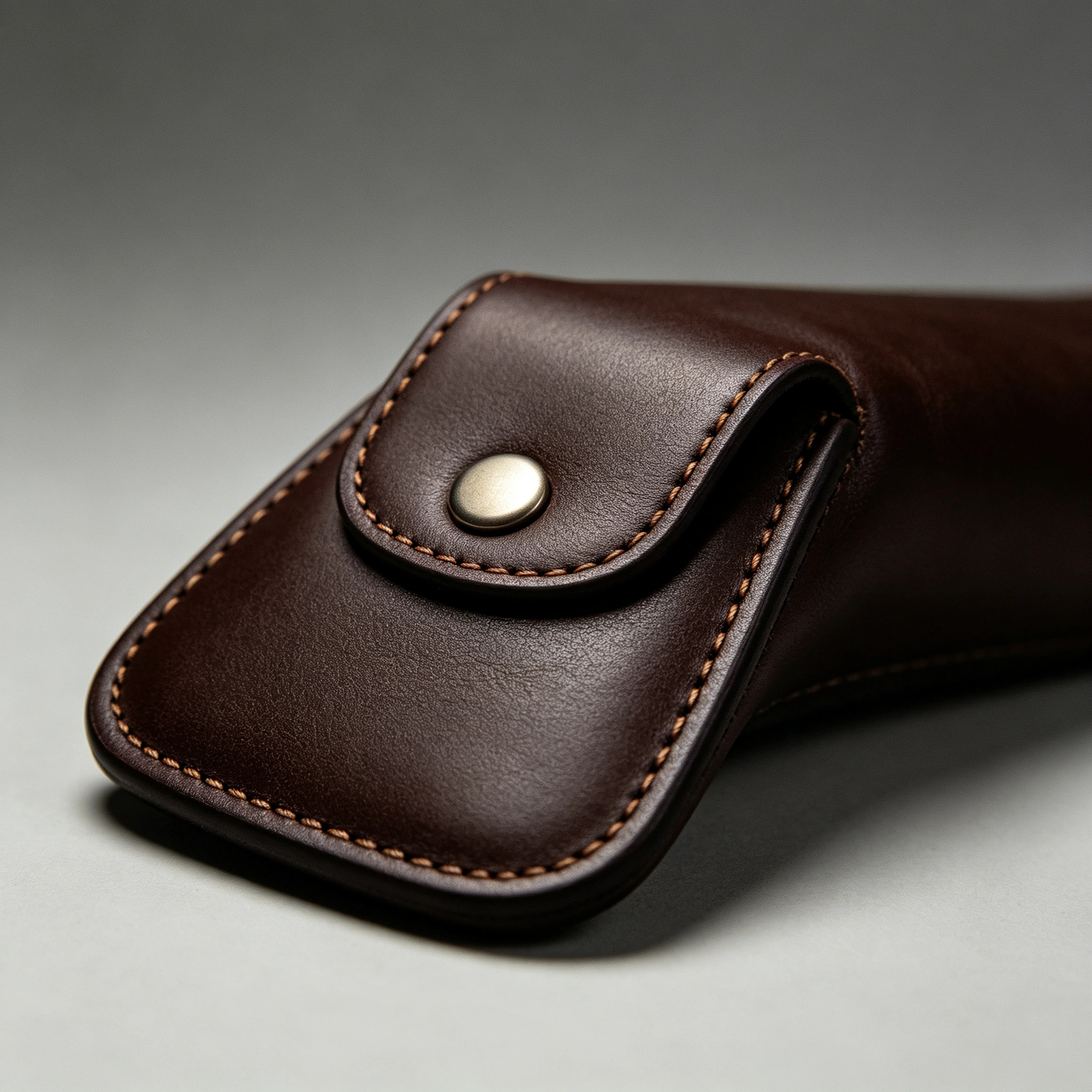
The four systems divide the market by job. Magnetic flaps own premium play covers. Elastic cuffs own value and knit. Snaps and hook-and-loop serve oversize mallets and security-critical niches. Zippers own travel. The failures happen when a system is used outside its job — zippered play covers that slow every hole, magnetic travel covers that burst open in a tumbling bag, elastic on premium leather that deadens the luxury signal.
This guide compares the systems on the four numbers that decide the question: cycle life (how long it lasts), retention (whether it stays closed), speed (whether it fits the rhythm of play), and cost (what it adds to the unit). Every figure is from our own bench, because "magnetic vs zipper" is a testable engineering question, not a matter of opinion.
Cycle Life: The Deciding Number
Cycle life — open-close operations before performance degrades — is where the four systems separate most dramatically. Our bench protocol runs each closure to failure or 5,000 cycles, measuring retention force every 500. The results are consistent enough to spec by:
| Closure | Cycle life | Degradation mode | End state |
|---|---|---|---|
| Magnetic (N38 rare-earth) | 5,000+ (no failure) | None measurable | Still at spec at 5,000 |
| Snap / hook-and-loop | ~2,500 | Loop clogs, snap spring fatigues | Weak closure, rattles |
| Elastic cuff | ~1,500 | Tension loss | Cover migrates on shaft |
| Zipper (coil) | ~800-1,200 | Slider wear, tooth separation | Jam or burst |
Magnetic wins because there is nothing to wear: no spring, no teeth, no elastic core — just two rare-earth poles whose field does not fatigue on any human timescale. The failure points in a magnetic closure are actually around the magnet: stitching on the encapsulation pocket, or glue in cheap glued-in builds. That is why the spec that matters is sewn encapsulation — magnets in stitched pockets, never adhesive.
Elastic’s 1,500-cycle ceiling is a materials fact, not a quality failing: natural-rubber cores relax with stretch cycles, and no construction changes that. Zippers fail mechanically — the slider wears the coil, grass seed and sand accelerate it, and one tooth separation ends the closure. For play covers with 60-80 operations per round, arithmetic alone rules zippers out: 1,000 cycles is roughly 15 rounds of putter-cover duty.
Retention: Staying Closed When It Matters
Retention — the closure’s resistance to accidental opening — is the counter-argument to magnets, and it is real. A magnetic flap tuned too light can jolt open on rough cart paths or in a travel bag. The engineering answer is pull-force specification: premium play covers want 1.5-2.5 kg of pull force, measured on a digital gauge per production lot. Below 1.2 kg, covers come off in transit; above 3 kg, one-handed operation suffers.
Zipper retention is absolute — a closed zipper cannot jolt open — which is precisely why zippers own travel. But note what absolute retention costs: two-handed operation, snag risk on club shafts, and the shortest cycle life in the table. Retention beyond the need is not a feature; it is friction. Play covers need enough retention to survive a cart ride and no more.
The belt-and-braces architectures deserve mention: magnetic-plus-snap-tab on oversize mallets (the magnet locates, the tab secures) and magnetic-plus-wrap on travel-grade covers. Each adds $0.2-0.5 and closes the retention gap for the segments where jolting is real. Spec retention by use case: cart-path vibration is a 1.5 kg problem; airline baggage handling is a zipper problem.
Speed and Rhythm: The Two-Second Rule
Play closures live by the two-second rule: a cover must come off and go on in two seconds total, one-handed, while the player holds other clubs. Break that rhythm and the cover gets left in the cart — and an uncovered club is the failure the product exists to prevent. This is the usability case for magnets, and it is decisive.
Magnetic flaps self-locate: polarity alignment within 2 mm means the flap finds its own seat without aiming, with the tactile snap that players read as quality. Zippers fail the rule categorically — two hands, a pull path around a curve, and a slider that fights back when grit enters the coil. Elastic cuffs pass on speed but with a two-handed stretch on tighter builds and declining retention as the core fatigues.
The rhythm argument compounds across a round. A putter cover operates 60-80 times per round; saving three seconds per operation is four minutes of faff removed from a four-hour round. Players do not articulate this in reviews — they write "love the magnetic close" and "the zipper drove me mad" — but the mechanism is rhythm. Spec the closure that respects the pace of play.
There is also a psychological dimension buyers should not ignore. The magnetic snap is a micro-reward — a small, satisfying confirmation delivered dozens of times per round — and products built on micro-rewards generate disproportionate loyalty. It is the same mechanic that makes a well-damped car door or a quality watch clasp feel expensive. No zipper has ever delivered one. When two covers sit side by side at retail and the customer handles both, the closure is usually the moment the decision is made — and it is made by feel, not by the spec sheet.
Failure Modes: What Actually Breaks
Every closure has a characteristic death, and knowing them is how buyers audit samples. Magnetic closures almost never die at the magnet — they die at the encapsulation: glued magnets creep and unseat in summer heat (car boots exceed 60 °C), and single-row stitching on magnet pockets opens under snag loads. The audit: flex the magnet pocket, look for adhesive squeeze-out, and check for double-row stitching.
Elastic dies by tension loss — gradual, invisible, then sudden. The audit is a stretch test: extend the cuff to 1.5x and release ten times; quality natural-rubber core recovers crisply, cheap polyester core stays visibly relaxed. Zipper death is mechanical and gritty: slider wear, tooth separation, and coil contamination from grass seed and sand. The audit: run the zipper twenty times and feel for rough spots — roughness is sand already in the coil, and jamming follows.
Snap and hook-and-loop die differently again: snaps by spring fatigue (the crisp click goes mushy), hook-and-loop by loop-side clogging with lint and seed. None of these failures is visible in product photography; all of them are audible and tactile in a two-minute sample audit. The full inspection discipline is in our five-stage QC framework — closures are gate-two items on every cover we ship.
Cost: What Each System Adds
Closure cost is small in absolute terms and decisive in margin terms. Baseline elastic adds nothing beyond materials. Snaps and hook-and-loop add $0.2-0.5 per unit. Sewn-encapsulated N38 magnets add $0.8-1.5 per unit depending on size and pull spec. Quality coil zippers add $0.4-0.9 — and bring the highest failure-rate warranty exposure in the table, which is their true cost.
Against those costs, the retail value created is asymmetric. Magnetic closure supports a $10-20 retail premium at the shelf — "magnetic" is the single most-converting feature word in the cover category — and it measurably reduces returns, because closure failure is the top cover return reason and magnets essentially eliminate it. Spending $1 to make $15 and cut returns is the easiest margin decision in golf soft goods.
The tier logic follows: premium (leather, $45+ retail) gets magnetic as default — anything less contradicts the price. Mid-tier PU gets magnetic on driver and putter, elastic or snap on fairway pieces where price sensitivity is real. Value and knit get natural-rubber-core elastic. Travel gets zippers. Mismatching tier and closure — elastic on a ¥500 leather cover, magnets on a $9 promo knit — breaks the product logic in both directions.
The Travel Exception: Where Zippers Win
Every rule in this guide has one exception, and it is travel. Airline baggage handling is a containment problem, not a rhythm problem: bags tumble, compress and drop, and any closure that can jolt open eventually will. Zippered travel covers — full-length coils, 12 mm padding, water-resistant shells — are the correct tool, and the two-second rule does not apply because nobody operates a cover at 35,000 feet.
The travel cover spec differs from play construction throughout: heavier padding, containment closures, and durability against conveyor-belt abrasion rather than velvet-touch finishes. It is a separate product line with its own peak season (pre-holiday), and brands with a play-cover range extend into travel naturally once the play line is established. The outer-layer decision — travel bag versus hard case — is mapped in our travel protection guide.
The spec error to avoid is hybrid confusion: zippered play covers (too slow, short-lived) and magnetic travel covers (jolt open). The categories look similar on a product page and are opposite in physics. If a supplier proposes one closure for both jobs, the proposal is a cost-saving, not an engineering decision.
OEM Spec: Getting Closures Right in the Tech Pack
Closure specification is where cover tech packs most often go vague, and vague is how "magnetic" becomes glued fridge magnets on a production line. The tech-pack lines that lock quality: magnet grade (N38 minimum), encapsulation (sewn pocket, double-row stitching, no adhesive), pull force (1.5-2.5 kg, lot-tested), and polarity alignment tolerance (±2 mm for self-locating flaps). For elastic: natural-rubber core, tension-tested per lot, 85% retention after 1,000 stretches.
Sampling verifies before bulk does. Golden samples go through the closure audit — flex test, stretch test, twenty-cycle zip test, gauge check on pull force — and the figures are recorded against the golden-sample register. Bulk then runs closure checks at gate two of inline QC, with AQL 2.5 on the final. That is how a closure spec survives contact with a production line.
The commercial terms stay friendly: closure upgrades are within standard MOQ 200 with the 100-piece trial, sampling 6–10 days, bulk 35–50 days. Closure decisions cost sampling time, not tooling money — which means there is no economic excuse for shipping the wrong one. Send the use case and the tier target, and the closure spec comes back as part of the architecture document within two working days, via our quote request.
The Bottom Line
Magnetic versus zipper is not a debate — it is a division of labour. Magnets win play: 5,000+ cycles, one-second one-handed operation, self-locating flaps, $0.8-1.5 of cost that returns $10-20 of retail. Zippers win travel: absolute containment where rhythm does not matter. Elastic serves value, snaps serve oversize security, and each system has a measurable, auditable spec.
The only wrong answers are mismatches: zippers on play covers, magnets on travel covers, elastic on premium leather, glued magnets anywhere. Spec by use case, lock the numbers in the tech pack, and audit the golden sample against them.
Send the product tier and the channel, and the closure architecture comes back with the samples. The customer will touch this component ten thousand times — it deserves ten minutes of engineering.
Get the Closure Spec Right
Send the tier and use case. We return closure-specced samples in 6–10 days, quoted at MOQ 200 with a 100-piece trial.
Request a Quote →People Also Ask
Are magnetic head covers worth it?
Yes for play covers. Rare-earth magnetic closures survive 5,000+ open-close cycles with no measurable force loss (versus ~1,500 for elastic, ~800-1,200 for zippers), operate one-handed in under a second, and add only $0.8-1.5 ex-works while supporting a $10-20 retail premium. The only segment where they lose is travel, where zippered containment wins. See our magnetic cover line.
Do magnetic head covers fall off?
Not when correctly specced: pull force tuned to 1.5-2.5kg survives cart-path vibration and normal bag handling. Undertuned magnets (below 1.2kg) can jolt loose — a spec failure, not a design flaw. For oversize mallets on rough terrain, premium builds add a snap or hook-and-loop security tab over the magnet. For airline travel, use zippered covers instead.
How long do magnetic closures last on head covers?
Effectively forever at the magnet — rare-earth fields do not fatigue on human timescales, and our bench shows no measurable force loss at 5,000 cycles. What fails in cheap builds is the encapsulation: glued magnets creep in summer heat and single-stitched pockets open under snags. Spec sewn encapsulation with double-row stitching and the closure outlives the cover.
Are zipper head covers better than magnetic?
Only for travel. Zippers give absolute containment — they cannot jolt open in a tumbling baggage hold — but they fail play requirements: two-handed operation (breaks the two-second rule 60-80 times per round), the shortest cycle life (~800-1,200 before slider wear or tooth separation), and jamming from grass seed and sand in the coil.
What pull force should a magnetic head cover have?
1.5-2.5kg, measured per production lot on a digital force gauge. Below 1.2kg covers jolt loose in transit; above 3kg one-handed operation suffers. Pull force is a tech-pack line item — "magnetic closure" without a pull spec invites the cheapest magnets available. N38 grade minimum, sewn encapsulation, polarity alignment within 2mm for self-locating flaps.
Why do zipper head covers jam?
Contamination and wear. Grass seed, sand and lint enter the coil on the course, the slider grinds against them, and teeth separate under the load. Zipper cycle life on covers runs 800-1,200 operations — roughly 15 rounds of putter-cover duty — which is why zippers belong on travel covers used a dozen times a year, not play covers used daily.
What is the best closure for a putter cover?
A magnetic flap tuned to 1.5-2.5kg: putter covers operate 60-80 times per round, one-handed, often gloved, while holding other clubs. Magnets self-locate and close silently in under a second. Oversize mallets on cart paths add a snap security tab. Zippers fail the rhythm test; hook-and-loop clogs with grass seed within a season. Details in our putter cover guide.
Do magnets in head covers affect golf clubs or phones?
No. The rare-earth magnets used in covers are small, static and fully encapsulated; their field at club-shaft distance is negligible and has no effect on clubs, grips or performance. Keep covers off phone screens and magnetic-stripe cards as a matter of general caution, but normal bag proximity is harmless. Rangefinders and GPS watches are unaffected at these field strengths.
How much does a magnetic closure add to cover cost?
$0.8-1.5 per unit ex-works for sewn-encapsulated N38 magnets, versus $0.2-0.5 for snaps and $0.4-0.9 for quality zippers. Against that: a $10-20 retail premium ("magnetic" is the category’s most-converting feature word) and the lowest closure-related return rate in the table. It is the highest-ROI component upgrade in golf soft goods.
What is the best closure for knit head covers?
Natural-rubber-core elastic — knit’s traditional partner and the right value-tier answer. Spec 85% tension retention after 1,000 stretches and a doubled 4-5cm cuff band. Magnets can be built into knit flaps for premium-hybrid designs but fight knit’s stretch nature; elastic works with it. Avoid zippers on knit — the coil snags the fabric.
Can elastic head covers be made to last longer?
Yes, within material limits. Natural-rubber core instead of polyester core (85% vs under-60% tension retention at 1,000 stretches), doubled cuff construction, and tension-testing per lot before production. Even the best elastic fatigues around 1,500 cycles — that is the material’s ceiling, which is why premium tiers move to magnetic. Quality elastic defers the end; it cannot repeal it.
What should a tech pack specify for head cover closures?
Magnetic: N38 grade minimum, sewn encapsulation with double-row stitching (no adhesive), pull force 1.5-2.5kg lot-tested, polarity alignment within 2mm. Elastic: natural-rubber core, 85% retention after 1,000 stretches, tension-tested per lot. Zipper (travel): coil size and slider grade named, 20-cycle grit-free operation verified at golden sample. Verify all figures at golden-sample audit before bulk.
Which closure do professional golfers use?
Overwhelmingly magnetic flaps on putter covers and elastic or magnetic on wood covers. Tour usage confirms the engineering: professionals operate putter covers 60-80 times per round under time pressure, one-handed, in all weather — the exact duty cycle magnets are built for. Zippers are effectively absent from tour bags except on travel gear, where containment rules.
Do magnetic covers work in cold weather?
Yes — rare-earth magnets are unaffected by cold, and the closure action stays crisp below freezing, where zippers stiffen and elastic turns brittle. Cold is actually the magnetic closure’s best environment relative to rivals. The one winter caution: keep grit out of the flap interface, since frozen sand in the magnet seat can score the leather around the closure.
Sources & Authority
Cycle-life, pull-force and retention figures are from the QUANZHOU JUNYUAN BAGS closure test bench (5,000-cycle protocol, digital force gauge, per-lot sampling) under AQL 2.5, SGS-verified (March 2026) under BSCI and ISO 9001:2015. Market conversion and return-rate context draws on programme data across 200+ OEM brand clients and Golf Datatech accessory tracking.