Leather Head Cover Care: Cleaning, Conditioning and Storage Done Right
A full-grain leather head cover should outlive the club it protects — five to ten seasons is the design life — but only with a care routine: wipe after wet rounds, condition every two to three months, store dry and shaded. Neglect reverses the economics: a dried, cracked ¥300 cover replaced every two seasons costs more than a conditioned one kept for eight. This guide gives the complete routine, the product specs, and the brand playbook that turns care instructions into fewer returns and better reviews. The covers this protects live at our leather cover line.
QUANZHOU JUNYUAN BAGS, established 2014 in Quanzhou, Fujian, manufactures through an affiliated factory of 4,950 m², 7 production lines, 149 machines (126 sewing stations) and 137 staff — rated at 200,000 pieces per month, actual output around 150,000. Every order runs AQL 2.5 inspection, MOQ 200 (100-piece trial), sampling 6–10 days, bulk 35–50 days, with BSCI, ISO 9001:2015, CE, CPC and RoHS certifications (SGS audit, March 2026). We serve 200+ brands in 100+ countries.
Why Leather Covers Age Differently
Full-grain leather is the only cover material that improves with use — handled correctly. The hide’s natural fibre structure, its oils, and the patina that develops across a season of sun and handling are the entire premium proposition: a year-old leather cover looks richer than a new one, which no synthetic can claim. But that living quality is a maintenance contract. Leather is skin — it loses oils to sun, water and time, and without replenishment it dries, stiffens and cracks at exactly the flex points a cover uses most.
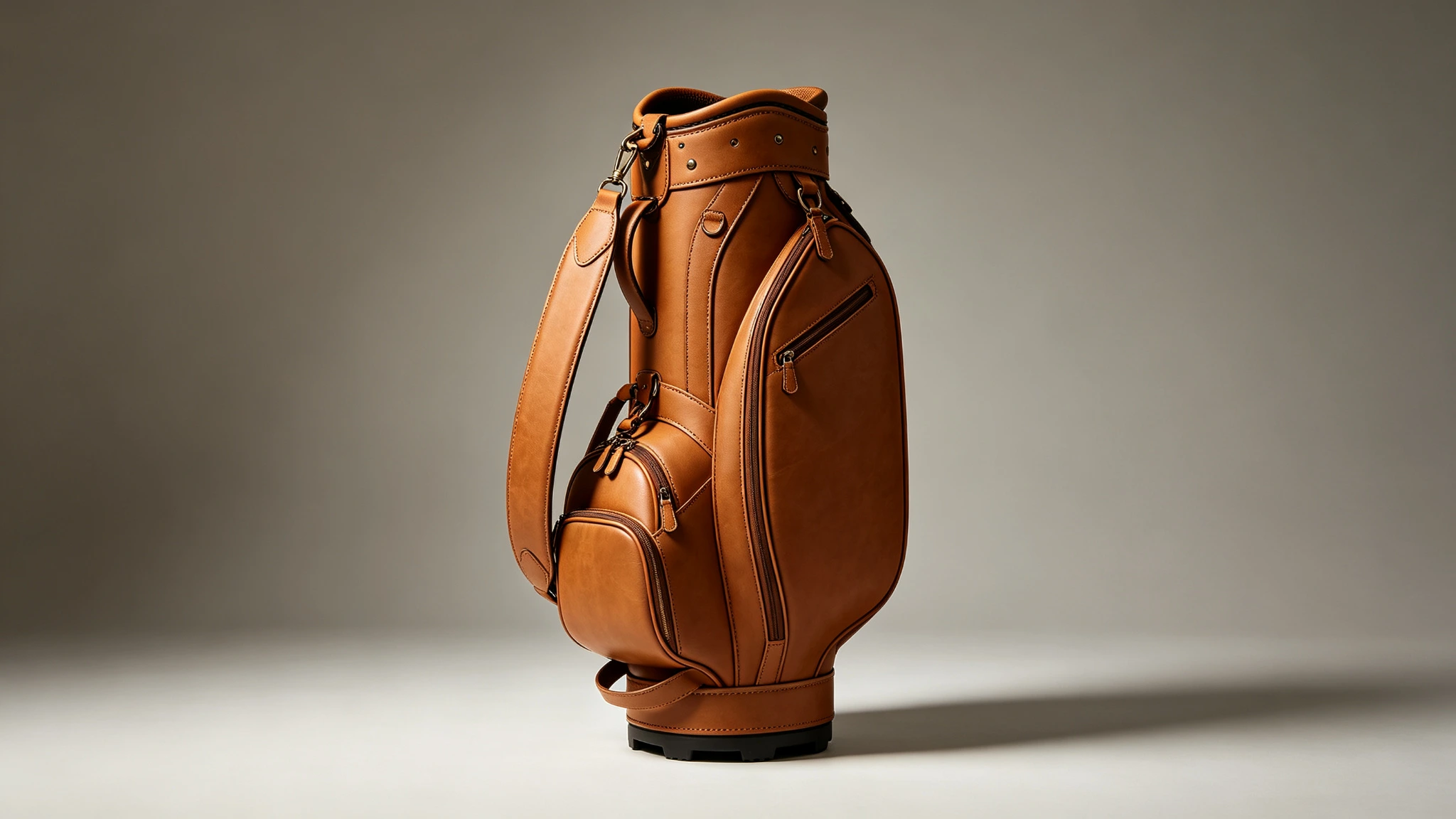
The failure timeline is predictable. Season one of neglect: the surface loses lustre, the flap fold stiffens. Season two: fine cracks appear at the crown flex and the welt, colour fades unevenly. Season three: deep cracks, flaking finish, structural failure at stitching — the cover is finished. Every stage was preventable with ten minutes of care every two months — which is why care is not an afterthought in a leather programme but part of the product.
The brand-side economics make this urgent. Leather covers sell at $45-80 retail on a promise of longevity; a cover that cracks in season two generates one-star reviews that contradict the price point and poison the range. The brands winning the premium cover tier print care cards, ship conditioning sachets, and merchandise aftercare as expertise. It costs cents per unit and it is the cheapest review insurance in the category.
The After-Round Routine: Two Minutes
Daily care is trivial and decisive. After every round — and immediately after wet ones — wipe the cover down with a dry cloth to remove moisture, grass and sand. Pay attention to the mouth and cuff, where moisture collects, and to the flap fold, where grit grinds into the flex point. Then let the cover air dry at room temperature before it goes back in the bag or the car.
The two rules that matter most: never force-dry leather with heat (radiators, hair dryers, car dashboards) — heat drives oils out faster than sun and sets cracks within a single mistake — and never store a wet cover sealed in a bag pocket, where trapped moisture feeds mildew and water-stains the finish. Air, shade and patience are the whole routine.
Sand and course grit deserve special attention because they are leather’s silent abrasive. A cover pulled from sandy turf and jammed straight onto the club carries grit against the lining and the club finish both. The two-minute wipe-down is mostly a grit-removal habit — and it protects the club as much as the cover. For the club-side of that equation, our club protection guide maps the full picture.
Cleaning: The Quarterly Deep Clean
Every three to four months — or after any soaking round — give the cover a proper clean. The method: brush off dry dirt with a soft brush, then wipe with a cloth barely dampened with water and a drop of pH-neutral leather soap. Work in small sections, never saturate the leather, and wipe residue away with a second clean damp cloth. Air dry completely — overnight, in shade — before conditioning.
What never to use: household detergents (strip oils and finish), alcohol-based wipes (same, faster), saddle soap on finished fashion leathers (formulated for tack, too aggressive for aniline and semi-aniline finishes), and any silicone spray (seals the surface, prevents conditioning, and shines unnaturally). The leather on a premium cover is furniture-grade fashion leather, not harness leather — it wants gentle chemistry.
The lining needs the same occasion. Turn the cover inside out where construction allows, or reach in with a lint brush: fleece and velvet linings collect grass seed, sand and sunscreen across a season, and that debris abrades the club finish the lining exists to protect. A clean lining is part of the cover’s protection specification — the detail that separates owners whose clubs stay pristine from those who cannot work out where the micro-scratches come from.
Conditioning: The Core of Leather Longevity
Conditioning replaces the oils that sun, water and time strip from the hide — it is the single intervention that determines whether a leather cover lives three seasons or ten. The rhythm: every two to three months in season, once before winter storage. The product: a pH-neutral leather conditioner — cream or lotion, not oil-heavy dubbin on finished leathers — applied sparingly with a soft cloth, worked in circles, left twenty minutes, buffed off.
The amount matters more than the product. Over-conditioning is the beginner’s error: saturated leather goes limp, stretches, and can darken permanently in blotches. A cover needs a thin, even film — the leather should look fed, not wet. Test any new conditioner on the inside of the cuff first, because some products darken certain aniline finishes a half-shade — harmless on the inside, visible on the crown.
Different leathers, different rules. Full-grain aniline and semi-aniline (the premium cover standard) take cream conditioners beautifully and reward them with deepening patina. Waxed and pull-up leathers want wax-based feeds that renew the surface bloom. Suede and nubuck covers want no cream at all — brush only, plus a protector spray. Patent and high-gloss finishes want a damp cloth and nothing else. The full material map is in our premium materials library, and it applies to covers exactly as to bags.
The Closure and Hardware: Small Parts, Long Life
Leather care guides usually stop at the hide, but a cover fails at its components too. Magnetic closures need nothing beyond keeping grit out of the flap interface — a magnetic pair contaminated with sand scratches its own leather seat and loses alignment feel. Wipe the flap contact zones when you wipe the cover.
Debossed and foil-stamped logos age differently. Debossing is permanent — it is pressed into the hide and patinas with it, which is why it is the premium default. Foil sits on the surface and wears at flex points; it is beautiful for gift editions but should be kept off flap folds. Embroidery on leather is the most durable colour branding, but its needle holes are permanent — a care note only in that dried leather cracks first along stitch lines, which is another argument for conditioning the crown flex zone faithfully.
Elastic-cuffed leather covers (common on fairway pieces) have one more component with a service life: the elastic itself, which fatigues after roughly 1,500 stretches regardless of leather condition. The tell is a cover that starts migrating on the shaft. Quality natural-rubber-core elastic defers it for years; when it arrives, a repair-friendly brand replaces the cuff — a repairability story worth merchandising in a premium range, and one we build into OEM programmes on request.
Storage: Where Covers Actually Die
More leather covers die in storage than in play, and the killer is almost always heat. A car boot in summer exceeds 60 °C — temperature at which leather loses moisture rapidly, EVA padding permanently compresses, and adhesives creep. A season of car-boot storage ages a cover more than three seasons of play. The rule is simple: clubs live indoors, covers on or off.
Long-term off-season storage wants four conditions: clean and conditioned leather (dirt and oils degrade in storage), breathable containment (a cotton bag or open shelf — never sealed plastic, which sweats), stable room temperature, and darkness (UV fades aniline finishes through a surprising amount of incidental light). Stuffed lightly with acid-free tissue, the cover holds its shape ready for spring.
Humidity is the other storage variable: sustained damp invites mildew, which stains leather permanently and smells forever. Desiccant sachets in the storage bag cost nothing and settle the question. For brands, these storage rules belong on the care card verbatim — "dried out over winter" is a warranty conversation that a printed sentence prevents, and prevented conversations are the cheapest customer service there is.
One last storage habit worth teaching: store covers on the clubs, or stuffed — never folded or crushed flat under other gear. A leather cover folded flat for six months takes a permanent crease at the fold, and creases are where season-three cracks begin.
Water, Rain and Recovery
Leather covers and wet rounds are compatible — with correct recovery. Rain itself does not ruin finished leather; slow, wet, sealed storage afterward does. The recovery protocol after a soaking: wipe down, stuff lightly with dry tissue to hold shape, air dry at room temperature away from heat, then condition within a few days — wetting and drying pulls oils from the hide, and conditioning replaces them before stiffness sets in.
Water stains — the tide-mark rings that appear on aniline leather after uneven wetting — are treated by re-dampening the whole panel evenly and drying uniformly, then conditioning. Prevention is better: a fluorocarbon-free leather protector spray, applied at season start and refreshed quarterly, beads water off the surface and buys the wipe-down time. Spec note for buyers: protector sprays belong on matte and aniline finishes, never on patent or high-gloss.
For OEM programmes serving wet-climate markets — the UK, Ireland, the Pacific Northwest — water behaviour is a spec decision, not an afterthought. Semi-aniline finishes with a light protective top coat, waxed pull-up leathers, and darker colourways all forgive wet climates; pure aniline pale colours punish them. Our sampling room advises on exactly this at brief stage, and the bag-level care guide covers the same chemistry at larger scale.
The Brand Playbook: Care as Product
Every care rule in this guide is also a commercial opportunity, because premium buyers read aftercare as expertise. The playbook we build into leather cover OEM programmes: a printed care card in every box (the after-round wipe, the quarterly clean, the conditioning rhythm, the storage rules), a conditioning wipe sachet with first orders (cents per unit, outsized perceived value), and a care-content page the brand can link from every listing.
The measurable returns: fewer "dried out" warranty conversations, better long-tail reviews (the season-three review is where leather products win or lose), and a replenishment revenue stream for brands that retail their own branded conditioner — a near-pure-margin accessory that also conditions the customer to return. Several of our partner brands report care products becoming their highest-margin SKU per centimetre of shelf.
For the programme itself, care specs flow backward into manufacturing choices: semi-aniline finishes for wet markets, debossed rather than foil branding at flex points, repair-friendly cuff construction, and a spare-parts policy. A cover designed for a ten-season life and a brand that teaches the care routine to get there — that combination is the premium tier’s real moat, and it is built one care card at a time.
The Bottom Line
Leather head cover care is a rhythm, not a chore: wipe after rounds, clean quarterly, condition every two to three months, store cool, dry and dark. Do that and a full-grain cover outlives the club it guards, patina deepening every season. Skip it and the same cover cracks in year three — the difference is ten minutes every two months.
The rules are few and absolute: never heat-dry, never seal wet, never over-condition, never use household chemistry. Everything else is detail. The clubs deserve it, the cover deserves it, and at $45-80 retail, the customer’s review score depends on it.
For brands, care is product. Print the card, ship the sachet, merchandise the routine — and spec the leather and construction for the climate the covers will actually live in. That is how a cover becomes a ten-season product, and how a range becomes a reputation.
Build a Leather Cover Programme
Send the material, colourway and logo. We return fitted samples with a care spec matched to your market in 6–10 days.
Request a Quote →People Also Ask
How do you clean a leather golf head cover?
Quarterly: brush off dry dirt, wipe with a cloth barely dampened with water and a drop of pH-neutral leather soap, work in sections, wipe residue with a clean damp cloth, air dry overnight in shade, then condition. Never use household detergent, alcohol wipes or silicone spray — they strip oils and finish from fashion-grade leather.
How often should you condition a leather head cover?
Every two to three months during the playing season, once before winter storage, and within a few days after any soaking round. Use a pH-neutral cream conditioner sparingly — a thin even film, buffed after twenty minutes. Over-conditioning saturates leather, making it limp and prone to dark blotches.
Can leather head covers get wet?
Yes — rain does not ruin finished leather, but slow sealed storage afterward does. Recovery: wipe down, stuff lightly with dry tissue, air dry at room temperature away from heat, then condition within days. A fluorocarbon-free protector spray applied quarterly beads water off and buys wipe-down time on matte and aniline finishes.
Why is my leather head cover cracking?
Drying — the hide has lost oils to sun, water and time without conditioning. Cracks appear first at flex points: the flap fold, crown and welt. Prevention is the two-to-three-month conditioning rhythm. Heat accelerates cracking dramatically: a summer of car-boot storage (60°C+) can do more damage than three seasons of play.
How long do leather golf head covers last?
Five to ten seasons with care — wipe after rounds, quarterly cleaning, regular conditioning, correct storage. Neglected covers crack in two to three seasons. The elastic cuff (where fitted) fatigues first at roughly 1,500 stretches; quality builds allow cuff replacement, extending the cover’s life further. Our leather covers are built to the ten-season spec.
What conditioner should I use on a leather golf cover?
A pH-neutral leather cream or lotion for aniline and semi-aniline finishes; wax-based feeds for waxed pull-up leathers; brush and protector spray only for suede and nubuck; damp cloth only for patent. Avoid oil-heavy dubbin on finished fashion leathers. Always test on the inside cuff first — some products darken aniline finishes a half-shade.
How should I store leather head covers off-season?
Clean and condition first, then store in a breathable cotton bag or open shelf — never sealed plastic, which sweats and mildews. Stable room temperature, darkness, light acid-free tissue stuffing to hold shape, and desiccant sachets against humidity. Never in a car boot: summer heat above 60°C dries leather and permanently compresses padding.
Do leather head covers scratch golf clubs?
Not when the lining is correctly specced and maintained: 280gsm fleece or velvet, always softer than the club finish. The risk is debris — sand and grass seed accumulating in the lining across a season abrades crown paint. Clean the lining quarterly with a lint brush. Full protection specs are in our club protection guide.
Can you wash a leather head cover?
Never machine wash or soak — it strips oils, waterlogs the hide, delaminates padding and cracks the finish on drying. Surface clean only: barely damp cloth with pH-neutral leather soap, wipe residue, air dry. The lining can be brushed out. If a cover is truly saturated (dropped in a lake), dry slowly and condition twice in the following week.
What is the white bloom on my leather cover?
Usually one of two things: wax bloom on waxed/pull-up leathers (natural wax migrating to the surface — buffs away with a soft cloth and is a sign of quality), or mildew from damp storage (smells musty, appears in patches — wipe with a barely damp cloth, dry thoroughly, condition, and fix the storage conditions). Distinguish by smell and location.
Do leather covers need different care in wet climates?
Yes. Wet-climate covers want semi-aniline finishes with a light protective top coat, quarterly protector spray, and stricter drying discipline after rounds. Buyers speccing for the UK, Ireland or Pacific Northwest should choose darker colourways and protected finishes at brief stage — our sampling room advises on climate-matched specs as standard.
Are leather head covers worth the maintenance?
Yes — the maths favours it. A conditioned full-grain cover lasts five to ten seasons and improves visually with age; a neglected one cracks in two to three. Ten minutes every two months protects a $45-80 product and the $600 club beneath it. No other cover material offers the patina-aging premium that makes the routine worthwhile.
Can cracked leather covers be repaired?
Surface cracks at flex points can be improved: clean, condition deeply twice a week apart, then touch with a colour-matched leather balm. Deep structural cracks through the finish cannot be reversed — only cosmetically filled. The honest answer is prevention: the conditioning rhythm stops cracks before they start, which is why care cards ship with every leather programme we build.
Does leather cover care differ by leather type?
Yes. Aniline and semi-aniline (the premium standard): cream conditioner, gentle chemistry only. Waxed pull-up: wax-based feeds that renew surface bloom. Suede and nubuck: no cream at all — brush plus protector spray. Patent and high-gloss: damp cloth only. Using the wrong product on the wrong finish causes darkening, streaking or finish loss. The full material map is in our materials library.
Sources & Authority
Care protocols reflect leather-chemistry practice for aniline, semi-aniline, waxed and suede finishes, cross-checked against tannery care specifications for the hides used in QUANZHOU JUNYUAN BAGS production. Component lifecycle figures (elastic fatigue, padding compression) are from our QC bench under AQL 2.5, SGS-verified (March 2026) under BSCI and ISO 9001:2015.