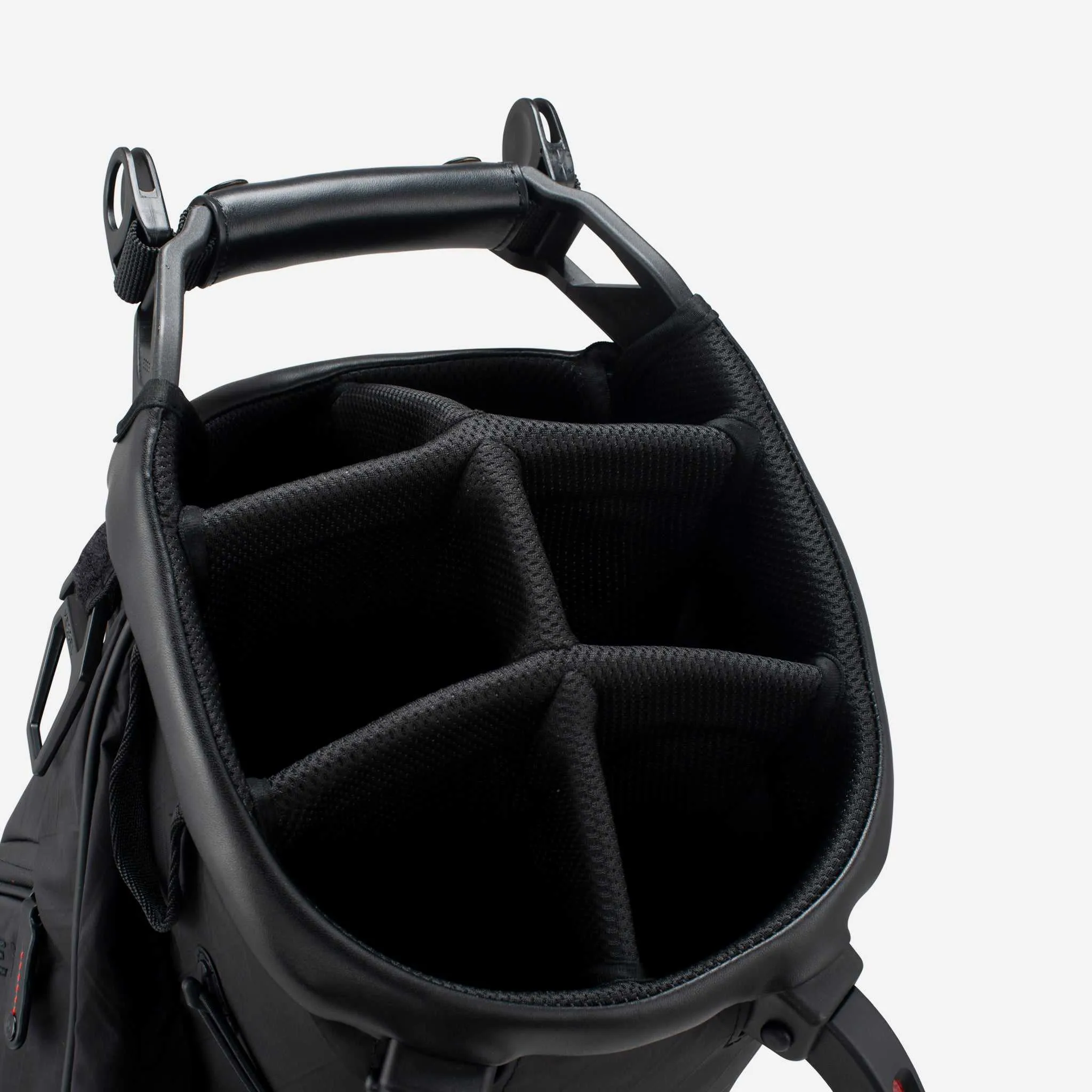
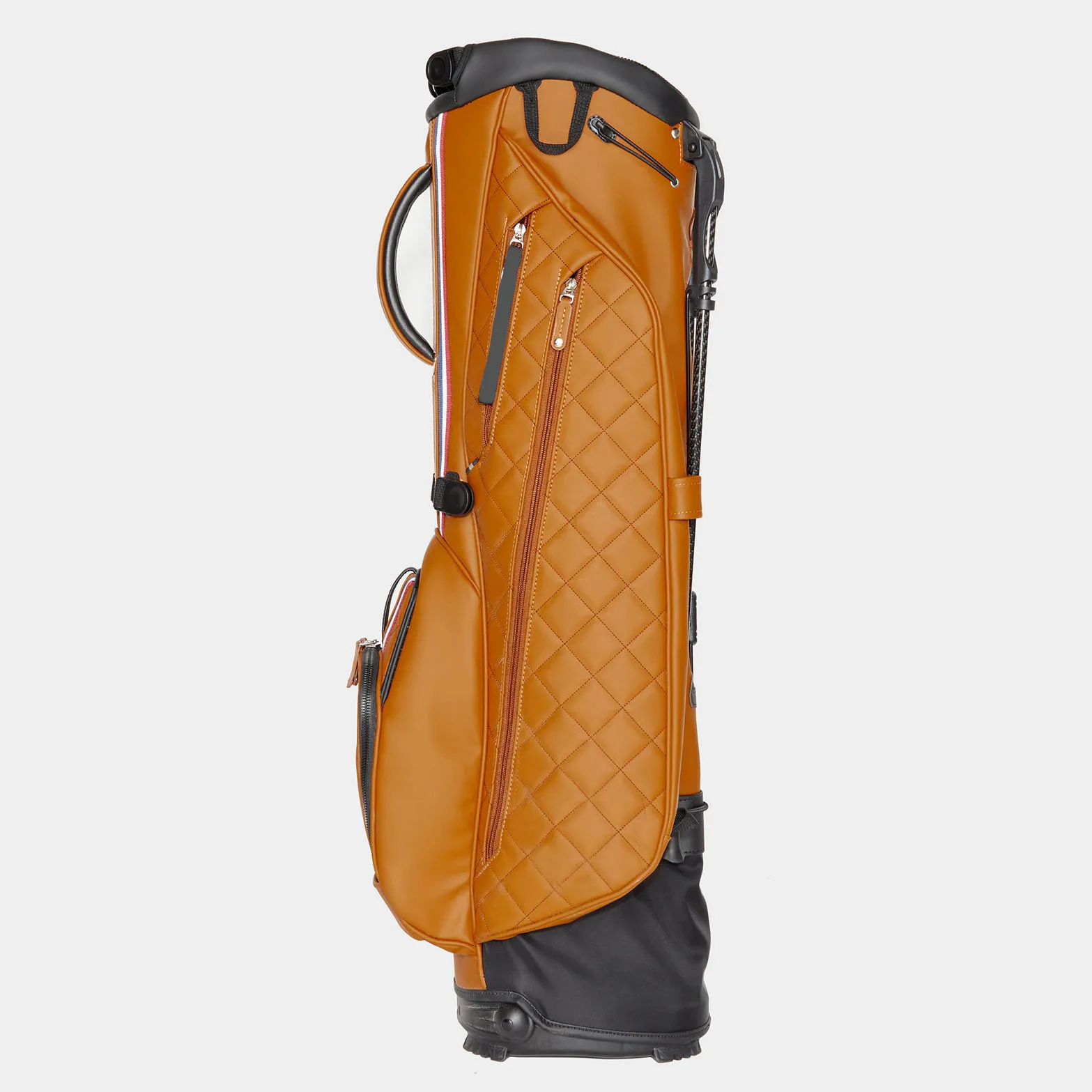
From a flat hide or roll of fabric to a finished, branded cover on a 460 cc driver, a golf head cover passes through dielines, die-cutting, sewing, padding, lining, branding and inspection. This guide walks through how covers are actually made, how to choose the right one for a brand, and the OEM economics — MOQ, sampling and lead time — behind a private-label programme. It is written from the bench of an affiliated plant that runs 149 machines (126 sewing stations) at a rated 200,000 pieces a month, so the details are production reality, not marketing. Walk through the full sequence on our design process. Trial and bulk terms are in our MOQ and pricing guide. Compare grades on our premium materials page. Timelines are detailed in our design process. See our magnetic closure builds. Browse our leather golf bag range. Review the full list on our certifications page.
QUANZHOU JUNYUAN BAGS, established 2014 in Quanzhou, Fujian, manufactures these covers through an affiliated factory of 4,950 m², 7 production lines, 149 machines (126 sewing stations) and 137 staff — rated at 200,000 pieces per month, actual output around 150,000. Every order runs AQL 2.5 inspection, MOQ 200 (100-piece trial), sampling 10–20 days, bulk 45–60 days, with BSCI, ISO 9001:2015, CE, CPC and RoHS certifications (SGS audit, March 2026). We serve 200+ brands in 100+ countries.
A head cover looks like a simple object, but it is a small piece of engineered soft goods. This guide is for product managers, brand founders and sourcing buyers who want to understand the product deeply enough to spec it correctly, avoid the common pitfalls, and compare suppliers with confidence. We cover the anatomy of a cover, the four outer materials, the three closure types, the seven-stage manufacturing flow, the five steps to choosing the right cover, the OEM economics, and the quality-control checks that separate a durable cover from a disposable one. Read it end to end, or jump to the section that matters.
Why trust this guide? It comes from QUANZHOU JUNYUAN BAGS, a premium golf manufacturing specialist established in 2014 (with the founder in golf goods since 2004), whose affiliated plant supplies 200+ brand clients across 100+ countries. The figures here — MOQ 200, sampling 10–20 days, bulk 45–60 days, BSCI/ISO 9001:2015/CE/CPC/RoHS certification — are our working production numbers, not generic claims.
Every cover, whatever the club, is built from the same five layers. Understanding them makes every later decision — material, closure, lining — obvious.
Get any layer wrong and the cover fails. A hard lining scratches a satin crown; cheap elastic fatigues; a weak magnet drops out. The craft is in matching all five layers to the club and the price tier.
| Material | Look | Durability | Best closure | Position |
|---|---|---|---|---|
| Full-grain leather | Premium, ages to patina | Excellent with care | Magnetic | Luxury / heritage |
| PU leather | Smooth, uniform | Good, eventually crazes | Magnetic / snap | Matched mid tier |
| Knit | Retro, light | Stretchy, pills cheaply | Elastic | Lifestyle / value |
| Neoprene | Sporty, waterproof | Very tough | Elastic / snap | Value / rugged |
The lining is chosen to be softer than the club — plush fleece for woods, velvet for putters — because the interior is what actually touches the crown or face insert.
Here is how a cover actually moves from idea to carton on our affiliated plant.
We confirm the club model, material, closure, lining and finish, then translate it into a cutting die sized to the actual head. This is the most important stage: a wrong die is expensive to fix.
A first physical sample is built against your real club and artwork. Fit is locked here. A brand that skips the sample and ships off a template risks a cover that does not fit.
Hides, neoprene or knit are rolled to Pantone approval; magnets, elastic and threads are kitted. Lot-matching ensures the whole set is one colour.
Parts are die-cut and sewn on the same 126 sewing stations used for our bags — turned seams, foam insert, lining. The craft lives here.
Embroidery, deboss, hot-stamp or print is applied and colour-checked against the artwork.
Fit pull-test, seam-strength, magnet pull-force and visual AQL 2.5 inspection. A sample that fails is reworked, not shipped.
Polybag, sleeve or gift box, cartoned and container-loaded to your Incoterm.
For a buyer specing a first programme, the choice reduces to five steps. These are also captured as structured HowTo guidance, so you can follow them in order.
Driver (460 cc), fairway wood (3/5/7), hybrid pod, or putter (blade or mallet). Each needs its own die; a cover cannot be generic. Confirm the exact model so the fit is right.
Leather for premium and heritage, PU for a matched mid tier, knit for retro lifestyle, neoprene for rugged value. Match it to your brand’s price and story.
Magnetic for premium, one-handed, fatigue-free on the driver and putter; elastic for value and knit fairway sets; snap or wrap for oversize mallets.
Blind deboss or hot-stamp on leather, embroidery for wordmarks and crests, numbers for the fairway set. One clean mark reads better than busy decoration.
Confirm the cover fits the club’s head — sample against the real club, check the pull-on and the hold, and reject anything tight or loose. This is what the 10–20 day sample is for.
| Parameter | Our standard |
|---|---|
| MOQ | 200 pcs (100-piece test order) |
| Sampling | 10–20 days |
| Bulk production | 45–60 days |
| Rated capacity | 200,000 pcs/month (SGS-verified) |
| Machines | 149 machines (126 sewing stations) |
| Workforce | 137 skilled workers; 4,950 m² plant |
| Certification | BSCI / ISO 9001:2015 / CE / CPC / RoHS |
These numbers make head covers the lowest-risk entry into golf soft goods: light tooling, low MOQ, fast sampling, and a capacity that protects lead times at peak. Compare lines across the cluster: driver, putter, fairway, magnetic, leather.
A cover that leaves the bench without a structured QC process fails in predictable ways in the field. Knowing those failures is how we design the tests that catch them before pack. The first failure is elastic fatigue: a draw-on cuff stretches over a 460 cc head hundreds of times a season and goes slack, sliding down the shaft. We spec a branded latex-core elastic tested over 1,000 recovery cycles — or move to a magnetic closure with no elastic to fatigue. The second is delamination, where the outer shell separates from the EVA foam core under moisture and flex. We control glue activation temperature and turn-and-stitch the seams, then pull a sample to a 90-degree peel test. The third is magnet drop-out on magnetic lines: a poorly seated magnet will not meet its partner, or will cling to the bag frame. We pocket, glue and stitch the magnet pair and run a pull-force check so the flap clicks firmly but lifts easily.
The fourth failure is lining abrasion: a coarse interior scratches a satin crown or a milled putter face. The fix is to specify a lining softer than the club finish — plush fleece for woods, velvet for putters — and stitch it flat with no loose threads. The fifth is branding wear-off: a heat-applied print cracks with flex, so we default to embroidery and deboss, which are physically part of the material. Every run is pulled to AQL 2.5 visual inspection before carton, so the defect rate a brand sees at retail is a small fraction of what a generic, un-inspected run would ship.
The mark is where a cover reads as crafted or promotional, and the four technologies we use are chosen to match the material and the price tier. Embroidery stitches thread directly into leather, PU or knit. It holds for years, reproduces a wordmark cleanly at small sizes, and can match thread to Pantone so it sits quietly on a tonal hide. It is the workhorse. Blind deboss presses the mark into a full-grain hide with no foil — the most understated luxury signal, and one that cannot crack or flake because it is part of the leather. Hot-stamp adds a gold or tone-on-tone foil when the mark needs to pop on a dark hide. Sublimation and screen print are reserved for neoprene and knit value lines, where full-colour artwork matters more than tactile luxury; they are durable enough for a two-year life but will never match embroidery for longevity.
A small woven jock-tag at the collar or a die-cast enamel badge lifts perceived brand at a disproportionate cost-to-impact ratio. These are the details buyers photograph on product pages, and they cost almost nothing to tool. The principle across all four: one clean mark reads as premium; busy decoration reads as promotional. We advise buyers to resist the urge to stack three logos on one cover.
The most expensive mistake in cover production is a die cut to the wrong head. Modern drivers are nearly all 460 cc, so that die is standardised; the variable dimensions live in the fairway and putter lines. A 3-wood runs around 200–250 cc, a 5/7-wood steps to 160–200 cc, and a hybrid pod shrinks to 100–160 cc. On the putter side, a blade is a slim ~12 cm shell, while a mid-mallet and a full-mallet need different dies — a full mallet can stretch to 22 cm. Rather than gamble on a universal template, we ask for the exact club model and build the first sample against it. This is precisely why sampling exists: it is not a delay, it is the fit-validation step that prevents a warranty stream of “does not fit” returns. A die built to a named club sells through with a fraction of the returns of a generic pattern.
For a first-time buyer, the production numbers are only half the story; the commercial paperwork is the other half. We quote on the Incoterm you need — EXW, FOB or CIF — and confirm the destination country so duties and lead times are priced correctly. The affiliated plant holds the documentation a US or EU importer needs on the desk: BSCI social-compliance audit, ISO 9001:2015 quality management, and CE, CPC and RoHS product-safety certification, with an SGS audit in March 2026. These are not optional extras for a brand selling on Amazon or into retail; they are the documents that clear goods and reassure a buyer. Payment terms, sample costs and packaging are agreed up front, and photos of production and pre-shipment QC are shared before the carton closes.
Because head covers share the sewing benches with our leather golf bags and premium-material bags, a brand can grow from a cover line into a bag collection without changing factories or quality. That continuity — same hide, same thread, same benches — is the quiet advantage of working with one specialist rather than a marketplace of anonymous suppliers.
The head cover market in 2026 is moving in three clear directions, and they shape what we tool. First, magnetic closures have moved from novelty to default premium — buyers now search for them by name. Second, quiet, tonal leather is winning over loud prints, as the “old money” bag aesthetic reaches the accessory shelf. Third, coordinate collections — a cover matched to a bag hide — outsell single novelty covers, because the modern buyer curates a whole bag look. Understanding these trends lets a brand tool for demand that is already rising rather than chasing a fad. Read the editorial take in our companion posts on why magnetic covers are trending and the 2026 materials and personalisation guide.
A brand pricing a cover line needs to know where the money goes, so it can trade material and finish against margin. Roughly, the bill of materials splits four ways. The outer material is the largest lever: neoprene and knit are cheap, PU sits in the middle, and full-grain leather carries the highest material cost but also the highest perceived value. The closure adds little for elastic, a small increment for magnets. The branding adds thread and machine time for embroidery, a tooling cost for deboss, and near-nothing for a print. The packaging moves from free polybag to a rigid box that materially raises the unboxing experience. Because a magnetic closure adds a small cost but moves the product up a perceived tier, it is usually the highest-return upgrade available — far more efficient than spending on a sculpted shape or a novelty print.
| Cost lever | Value option | Premium option |
|---|---|---|
| Outer material | Neoprene / knit | Full-grain leather |
| Closure | Elastic | Magnetic |
| Branding | Blind deboss / embroidery | |
| Packaging | Polybag | Rigid gift box |
| Effect on perceived tier | Functional | Luxury |
For a buyer planning a launch, the timeline breaks down cleanly. Days 0–10: send the club model, material and closure preference, and artwork; we return a sized spec sheet and quote at MOQ 200. Days 10–20: the first sample is built against your real club and shipped for approval. This is where fit is locked; a round of revisions is normal and cheap here. Days 20–60: once the sample is approved, bulk production runs 45–60 days across the 149 machines (126 sewing stations), with QC photos shared mid-run. Days 60–75: packing, carton loading and shipping to your port or door. Season one onward: the cover sells, and because it is a consumed, reorder-prone accessory, the repeat order starts the conversation again — usually faster, because the tooling already exists. The whole first programme, from blank sheet to stocked shelf, fits inside a single selling season.
As buyers — and their customers — ask more about sourcing, the material conversation is widening beyond look and cost. Full-grain leather is inherently long-lived and biodegradable when not coated, and a cover that lasts a decade is a lower-waste product than a cheap cover replaced every season. For brands that want an explicit sustainability story, we can offer reduced-packaging options, recycled or alternative linings, and hides sourced with traceability documentation. The affiliated plant’s BSCI and ISO 9001:2015 certifications already cover the labour and management systems buyers increasingly require, and the SGS audit provides independent verification. We are honest about what is “eco” and what is marketing: the most sustainable cover is simply one that does not need replacing — which is another reason to build it to last.
Whether you are a founder launching a first cover line, or an established brand adding a premium SKU, the path is the same: spec the club, choose the material and closure, sample to the real head, and let the tooling earn its keep through repeat orders. The manufacturing details in this guide are the short cut to doing that without the expensive mistakes. Bring us your club model and your artwork, and we will turn the spec into a sample in 10–20 days.
The accessory world has its own shorthand, and a spec sheet reads faster once the terms are familiar. 460 cc is the legal maximum driver head volume, and the size a driver cover is built for. Blade vs mallet describes the two putter shapes — slim flat versus wide boxy — which need different dies. Dieline is the cutting pattern for a cover’s panels. Deboss is a mark pressed into the leather without foil; hot-stamp adds foil. MOQ is the minimum order quantity — ours is 200, with a 100-piece test order. AQL 2.5 is the accepted quality-limit sampling standard we inspect against. Pantone matching is how we lock a colour so the whole set is one tone. Incoterm defines who pays freight and risk — EXW, FOB or CIF. Armed with these, a buyer reads any quote or spec sheet in this category without confusion.
When you compare factories, three questions matter more than price. First, will you sample to my actual club? A supplier who ships off a generic template will hand you a fit problem. Second, what certifications do you hold? For a US or EU brand, BSCI, ISO 9001:2015, CE, CPC and RoHS are not decorative — they clear goods and reassure buyers. Third, what is the real capacity and lead time? A rated 200,000 pieces a month across 149 machines (126 sewing stations) means your reorder will not get lost in peak season. Price per cover matters, but a cheap cover with no sample validation, no certification and no capacity is an expensive mistake by the time returns and delays land. Compare on fit, compliance and capacity first, and let price be the deciding factor between equally qualified factories.
New buyers repeat the same errors, and they are all avoidable. One: ordering a single “universal” cover that fits neither driver nor putter — choose the line for the exact club. Two: skimping on the lining so it scratches the crown or face. Three: assuming one mallet die fits mid and full mallet — it does not. Four: printing the logo when embroidery or deboss is needed to last. Five: skipping the sample and risking a fit failure in bulk. Six: buying a cover from a different factory than the bag, so the colours never match. Avoid those six and the programme launches cleanly; everything else — the deboss, the magnetic click, the gift box — is the enjoyable part. We have seen every one of these mistakes, and we build the process to prevent them. Bring your club model and your logo, and let the sample show you the standard.
For a new golf brand, the question is often what to launch with. Our strong recommendation is a head cover — specifically a magnetic leather driver cover as the hero. The reasoning is structural. Tooling is a single die, not an expensive mould, so the upfront risk is tiny. The MOQ is 200 (100 for a test), so cash stays light. The product is consumed, lost and re-bought, so it generates repeat demand a driver sale never does. And the cover is the most visible branding surface in the bag, marketing the brand at every tee and range. Once the cover sells, you extend into the fairway set, the putter cover, and finally the bag — always from the same benches, in the same hide. That ladder de-risks entry and builds a coordinate collection by degrees.
The cover also tells you who your customer is. Which material do they buy? Magnetic or elastic? Leather or knit? Those answers guide every later product decision. A cheap, throwaway first SKU gives you no signal; a well-made cover gives you a relationship and real retail data. That is why we treat a small accessory line with the same seriousness as a full bag programme — it is often where a brand’s real story begins. Read the product pages in this cluster for the specifics, then send us the club and the logo to turn the plan into a sample you can hold.
A golf head cover is a small object that carries an outsize role: it protects an expensive club, markets a brand on the most visible part of the bag, and generates the repeat reorders that keep an accessory programme alive. Making it well is a matter of discipline — the right die for the right club, a lining softer than the finish, a closure that does not fatigue, a mark that lasts, and a QC process that catches the failures before they reach retail. Everything in this guide points back to that discipline. We have built it into our process so a buyer does not have to learn it the expensive way. Start with the five steps, scope a hero driver cover, and let the sample prove the standard. That is the whole of manufacturing a great cover — and the start of a programme that pays back season after season.
Every figure in this guide is a working production number, not a rounded promise: 200-piece MOQ, 10–20 day sampling, 45–60 day bulk, 149 machines (126 sewing stations), a rated 200,000 pieces a month, and the certifications to clear goods into your market. Hold any supplier to the same specificity, and the right partner becomes obvious. We are ready to be that partner for your cover line.
Send the club model, material and logo. We return a sized spec, a quote at MOQ 200, and a 10–20 day sample timeline.
Request a Quote →A cover is built in seven stages: dieline and spec, sampling against the real club, material sourcing to Pantone, die-cutting and sewing, branding (deboss/embroidery/print), QC inspection, and packing. The five layers are outer shell, EVA padding, a lining softer than the club, a closure (elastic/magnetic/snap) and the branding. See our 2026 materials and OEM guide.
Our standard MOQ is 200 pieces per design, with a 100-piece test order for first-time buyers. Sampling takes 10 to 20 days and bulk production 45 to 60 days, on an affiliated plant rated at 200,000 pieces per month. Start a free sample request.
Match the material to your brand: full-grain leather for luxury and heritage, PU for a uniform mid tier, knit for retro lifestyle, and neoprene for rugged value. Then choose a closure (magnetic for premium, elastic for value) and a lining softer than the club finish. Compare grades in our premium materials guide.
Sampling takes 10 to 20 days once the club model and artwork are confirmed, and bulk production runs 45 to 60 days. The 200,000-pieces-per-month rated capacity keeps lead times stable at peak season. Discuss timing with our team.
A magnetic closure is the best premium choice: one-handed, never fatigues, and feels high-end on the driver and putter. Elastic is the best value choice for knit and neoprene fairway sets. Snap or wrap hook-and-loop suits oversize mallet putters. See our magnetic head covers.
Yes. Because the same affiliated plant builds both, we match full-grain hides, Pantone thread and hardware across a coordinated cover and leather-bag collection — a high-margin cross-sell in the premium segment. Explore our leather golf bags.
The affiliated factory holds BSCI, ISO 9001:2015, CE, CPC and RoHS certifications and was SGS-audited in March 2026 — the social-compliance and product-safety documentation US and EU importers require. Read about our factory and certifications.
The claims on this page draw on long-running industry tracking of the golf accessory market — the National Golf Foundation’s golfer-spend research and Golf Datatech’s retail reporting, which consistently rank head covers among the most consistently purchased, lowest-price-sensitivity equipment aftermarket products — together with tour-level equipment observation of the PGA Tour. Production figures, materials and lead times are our own working numbers from the affiliated plant, independently verified by SGS (March 2026) under BSCI and ISO 9001:2015, with CE, CPC and RoHS product-safety certification. Where a recommendation is made, it is based on what our QC bench actually measures, not on marketing.