Tour Staff Bag Buying Guide: Premium Custom Options for Brands (2026)
Table of Contents
- Introduction: The Pinnacle of Golf Bag Craftsmanship
- What Is a Tour Staff Bag?
- Premium Materials: The Foundation of Excellence
- Brand Customization Options
- Manufacturing Requirements and Standards
- Cost Structure and Price Analysis
- Market Positioning and Brand Strategy
- Market Trends and Future Directions
- Frequently Asked Questions
Introduction: The Pinnacle of Golf Bag Craftsmanship
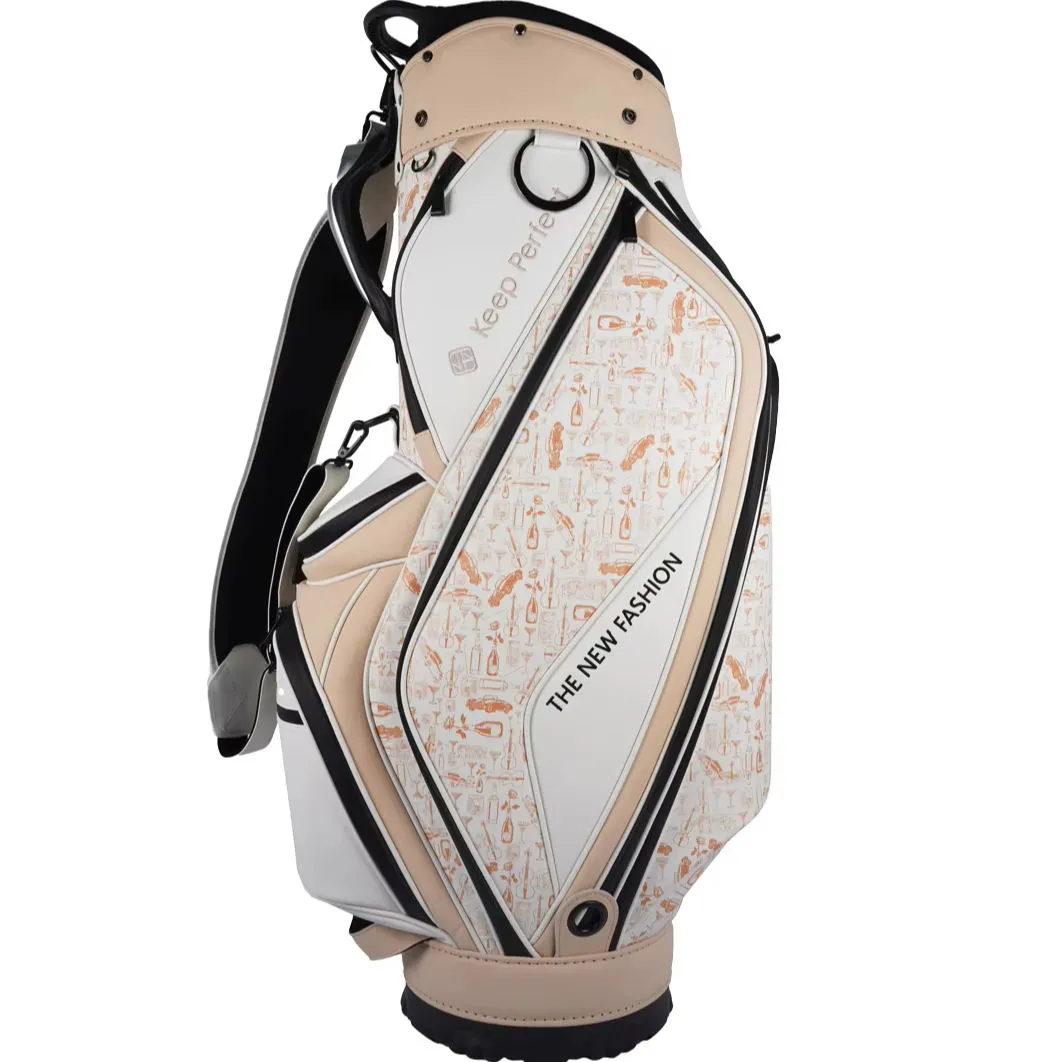
Tour staff bags occupy the absolute summit of the golf bag hierarchy, representing a product category where craftsmanship, premium materials, and brand identity converge to create objects that are as much about status and aspiration as they are about carrying golf equipment. For golf bag brands, developing a tour staff bag product line is a statement of intent: it communicates to the market that your brand operates at the highest level of quality, that you understand the expectations of discerning golf consumers, and that you possess the manufacturing expertise to deliver products that satisfy the most exacting standards in golf. Tour staff bags serve purposes that extend far beyond their functional role. They are the bags that professional golfers carry on television, visible in every broadcast frame, creating aspirational associations that drive sales across the entire product line. They are the premium offerings that anchor brand pricing architecture, creating a halo effect that elevates perceived value across every product tier. And they are the craftsmanship showcase that differentiates serious golf brands from casual accessory manufacturers.
As a certified manufacturer with twenty years of experience producing premium golf bags including tour staff bags for leading golf brands worldwide, we understand that this category demands a fundamentally different approach to manufacturing than stand bags or cart bags. The materials are more expensive and demanding to work with. The construction processes require higher levels of craftsmanship and quality control. The customization expectations are more exacting, with brands demanding precise color matching, flawless logo application, and perfect finish quality on every visible surface. The investment in development tooling, material sourcing, and artisan training is significantly higher than for other bag categories. But the rewards are commensurate: tour staff bags deliver the highest per-unit margins in the golf bag industry, the strongest brand-building visibility, and the most loyal customer relationships among golf consumers who value premium quality and heritage craftsmanship.
This comprehensive buying guide covers every aspect of tour staff bag development for OEM brand partners, from material selection through manufacturing processes, customization options, cost structures, and market positioning strategy. Whether your brand is launching its first tour staff bag or expanding an existing premium line, this guide provides the detailed knowledge needed to make informed decisions that result in products worthy of the tour staff designation and the premium prices it commands.
What Is a Tour Staff Bag?
Historical Origins and Evolution
The tour staff bag traces its origins to the early days of professional golf, when caddies carried large leather bags for touring professionals competing in major championships. These original staff bags were simple leather cylinders with a single compartment for clubs and minimal storage, designed to be carried by caddies rather than the players themselves. As golf equipment evolved and professional golfers began carrying more clubs and accessories, the staff bag evolved accordingly, incorporating divider systems, additional pockets, and more sophisticated construction techniques. The modern tour staff bag maintains the visual heritage of these original designs while incorporating contemporary materials science, manufacturing precision, and functional features that meet the demands of professional tournament play. The iconic silhouette of a tour staff bag, tall and commanding with premium leather construction and prominent brand logos, remains one of the most recognizable objects in professional golf, visible in every broadcast and associated with the highest level of the game.
Defining Characteristics
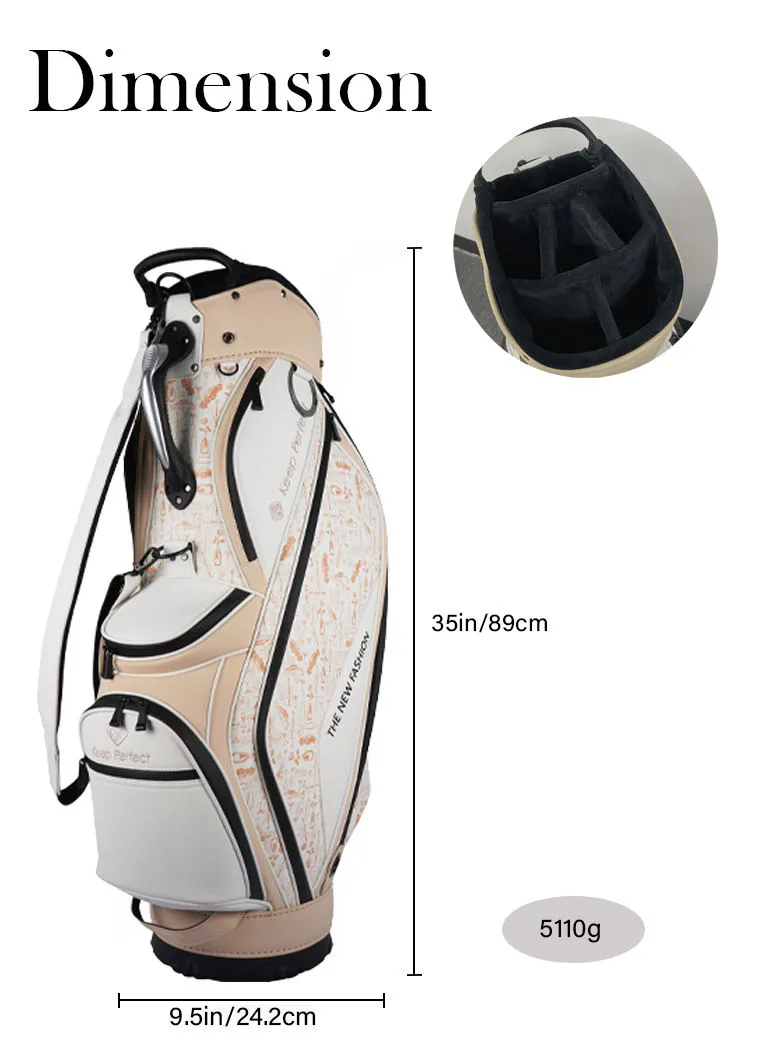
Modern tour staff bags are defined by several key characteristics that distinguish them from other bag categories. Height ranges from 36 to 38 inches, making them the tallest bag category and creating the commanding visual presence that defines the category. Weight ranges from 8 to 12 pounds, reflecting the premium materials and construction that prioritize quality over portability. Full-length 14-way divider systems are standard, providing individual club tubes that extend the entire bag length for maximum organization and protection. The exterior is dominated by large, unbroken panels of premium material, primarily leather or leather-look synthetic, that provide expansive branding real estate for embroidered logos, brand colors, and sponsor identification. Storage is typically more limited than cart bags, with six to ten pockets focused on essentials, because tour staff bags are designed for professional use with caddy support rather than self-sufficient carrying. The base features a non-slip rubber or molded polymer pad that provides stability on tour carts and protects the bag bottom during transport.
Tour Staff Bags vs. Premium Cart Bags
The distinction between tour staff bags and premium cart bags, while subtle to casual observers, is significant in terms of design intent, construction, and market positioning. Tour staff bags prioritize visual presence, premium materials, and brand expression above all other considerations. Their large exterior panels are designed primarily as branding canvases, with pocket placement and construction details subordinated to maintaining clean, unbroken visual surfaces. Premium cart bags, while also constructed from high-quality materials, prioritize storage functionality, pocket accessibility, and cart-specific features like non-slip bases and cart strap pass-throughs. Tour staff bags use leather or premium synthetic leather as the primary material across most of the exterior surface, while cart bags may use a combination of premium panels and more practical nylon or polyester in areas where functionality takes precedence over aesthetics. The price differential reflects these differences: tour staff bags retail from $300 to $800, while premium cart bags typically range from $200 to $450. Understanding this distinction helps brands position their premium offerings correctly and avoid the common mistake of creating a cart bag and marketing it as a tour staff bag, which savvy golf consumers immediately recognize as inauthentic.
Premium Materials: The Foundation of Excellence
Full-Grain Genuine Leather: The Gold Standard
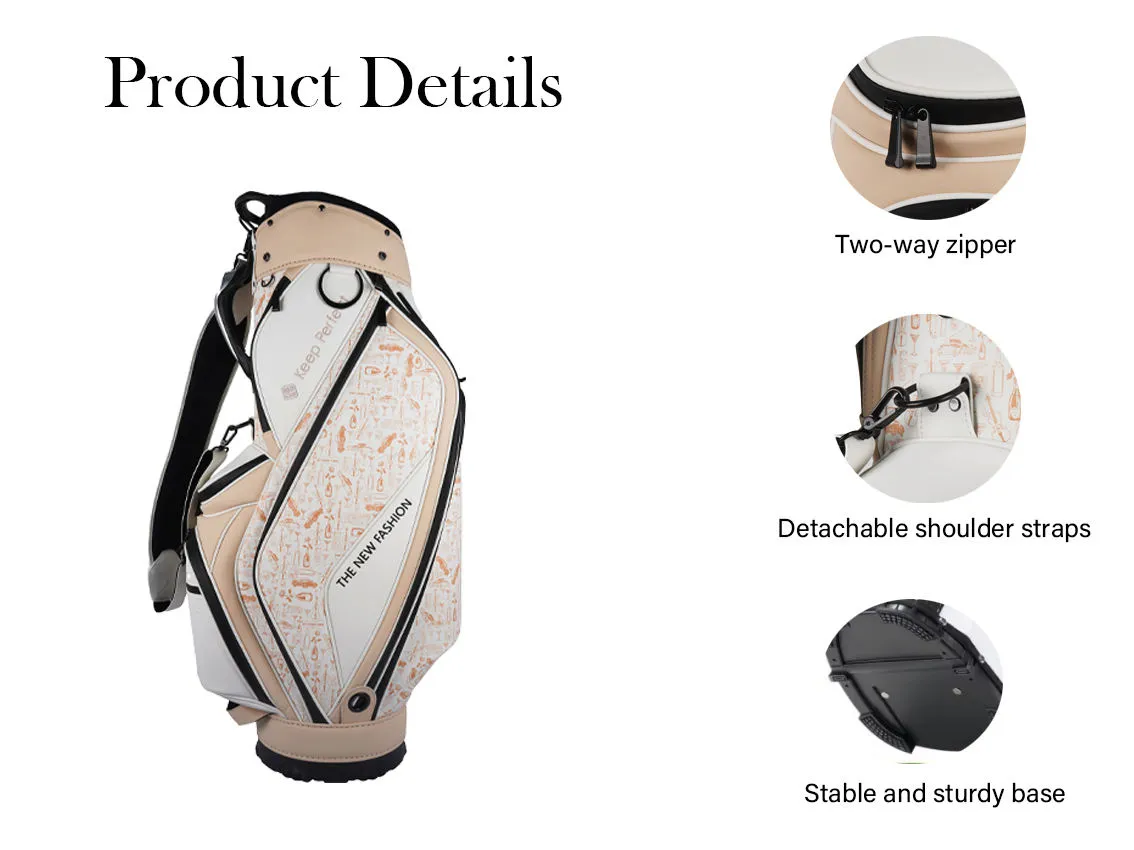
Full-grain genuine leather represents the ultimate material for tour staff bags, carrying associations of heritage, luxury, and craftsmanship that no synthetic material can fully replicate. Full-grain leather uses the outermost layer of the hide, preserving the natural grain pattern and fiber structure that provides superior strength, breathability, and the ability to develop a distinctive patina with age and use. The leather used in premium tour staff bags is typically 1.0 to 1.4 millimeters thick, providing durability without excessive weight. Top-quality golf bag leather is chrome-tanned for water resistance and flexibility, then dyed through-and-through to ensure color consistency even if the surface is scratched. The cost of full-grain leather for a single tour staff bag ranges from $40 to $80 in material alone, depending on hide quality, tanning process, and color. Leather requires specialized manufacturing processes including skiving at seam edges for clean finishing, edge painting or burnishing on exposed leather edges, and leather-specific sewing techniques using heavy-duty needles and waxed thread. Working with genuine leather demands experienced artisans who understand the material's unique characteristics, including how it stretches during sewing, how it responds to heat and moisture during shaping, and how to achieve consistent tension on seams without distorting the leather surface.
Synthetic PU Leather: The Practical Premium
Synthetic PU leather has advanced dramatically in quality over the past decade, now offering visual and tactile properties that approach genuine leather at 40 to 60 percent lower material cost. High-quality PU leather for golf bags features a microfiber base layer that mimics the fibrous structure of genuine leather, topped with a polyurethane surface layer embossed with a realistic grain pattern. Premium PU leather achieves a hand feel that most consumers cannot distinguish from genuine leather through casual touch, and offers practical advantages including lighter weight, better water resistance, easier maintenance, and greater color consistency between production batches. The material cost for a synthetic leather tour staff bag ranges from $15 to $30, representing significant savings compared to genuine leather while maintaining the premium visual aesthetic that defines the category. Manufacturing synthetic leather follows similar processes to genuine leather but with greater forgiveness in sewing tension and less sensitivity to environmental conditions. For brands targeting the premium segment without genuine leather positioning, high-quality PU leather provides an excellent balance of quality perception, durability, and cost efficiency.
Premium Nylon with Leather Accents: The Performance Alternative
Some of the most successful modern tour staff bags combine premium nylon construction with leather accent panels, creating products that offer the visual prestige of leather with the practical advantages of advanced synthetic fabrics. This hybrid approach typically uses 1000-denier Cordura nylon for the main body panels where durability and weather resistance are priorities, combined with genuine or synthetic leather on the top cuff, base reinforcement, pocket trim, and branding panels where the leather aesthetic has maximum visual impact. This construction approach reduces total weight by 15 to 25 percent compared to full leather bags, while maintaining the premium visual impression from typical viewing angles on the course. The manufacturing process combines nylon sewing techniques with leather working processes, requiring production teams skilled in both disciplines. Material costs range from $25 to $50 per bag, placing this construction approach in the mid-premium cost range with retail positioning between $300 and $500. For brands developing tour staff bags that appeal to performance-oriented golfers who also appreciate premium aesthetics, this hybrid approach offers a compelling value proposition.
Brand Customization Options
Logo Application and Embroidery
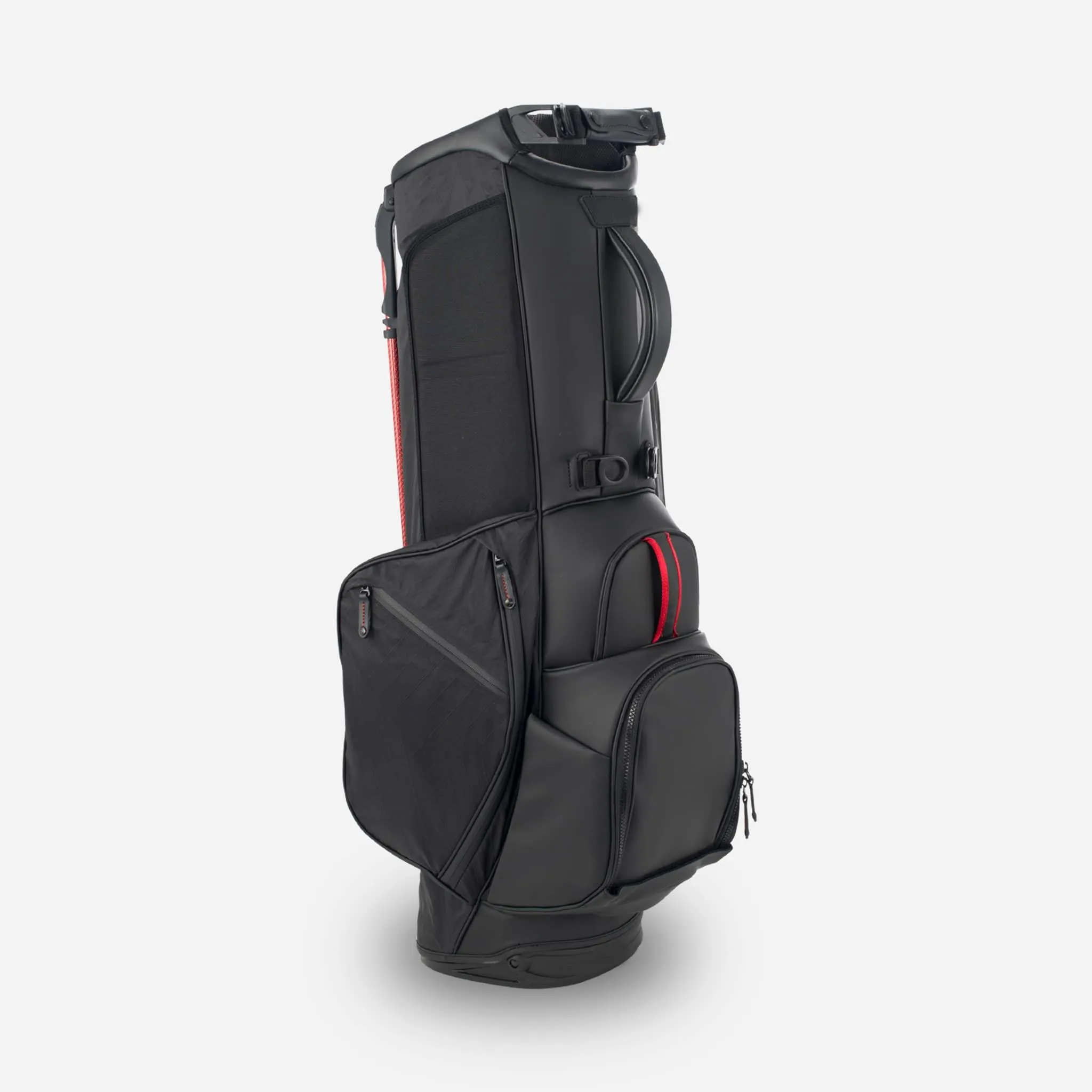
Tour staff bags provide the largest and most prominent branding real estate of any golf bag category, with large uninterrupted panels ideal for logo display. The primary logo application method for tour staff bags is embroidery, which creates a premium raised texture that communicates quality and permanence. High-density embroidery with 10,000 to 30,000 stitch counts produces crisp, detailed logos that withstand years of use without degradation. Thread color matching to brand specifications uses Pantone-matched threads available in over 400 standard colors, with custom dye lots possible for exact brand color reproduction at volumes above 200 pieces. Embroidery placement on tour staff bags typically features the primary brand logo on the largest side panel, a secondary mark or tagline on the opposite panel, and additional branding on the top cuff and base skirt. The cost of embroidery on tour staff bags ranges from $5 to $15 per application depending on stitch count, with total branding costs of $15 to $40 per bag for comprehensive multi-position programs. For brands investing in tour staff bags as brand-building tools, the visibility and quality of logo application should be treated as a primary design element, not an afterthought.
Custom Hardware and Metal Components
Custom hardware represents one of the most impactful customization options for tour staff bags, because metal components are highly visible and communicate quality through both appearance and tactile feel. Standard hardware options include zinc alloy die-cast components in chrome, gold, antique brass, or black nickel finishes. Premium options include solid brass components with hand-polished finishes, anodized aluminum in custom colors, and custom-designed proprietary hardware shapes that serve as brand signature elements. Custom zipper pulls cast with brand logos, monogrammed D-rings, and engraved buckle plates create consistent brand presence at every touchpoint. The cost of custom hardware ranges from $0.50 per piece for standard finishes on stock hardware shapes to $3 to $8 per piece for fully custom designs requiring new die-casting molds. Mold costs for custom hardware shapes typically range from $500 to $2,000 per design, amortized over production volumes. For brands committed to premium positioning, investing in custom hardware creates tangible differentiation that consumers can see and feel, justifying the investment through enhanced brand perception and product distinctiveness.
Interior Customization and Lining
The interior of a tour staff bag is as important as the exterior in communicating quality to discerning golf consumers who examine every detail. Interior lining options include microfiber suede that provides a soft, luxurious feel and protects club finishes, premium polyester in brand-matched colors with custom printed logos, and for the highest tier, genuine leather or Alcantara synthetic suede lining. Divider tubes in tour staff bags are typically lined with soft-touch fabric that prevents shaft scratches, with lining color options including traditional black, brand-matched colors, or contrasting accent colors that create visual interest when the bag is viewed from above. Interior customization extends to pocket linings, with valuables pockets typically lined in soft velour or microfiber to protect electronics and jewelry, and apparel compartments lined in smooth polyester for easy garment insertion and removal. The total cost of premium interior treatments ranges from $5 to $20 per bag, representing a meaningful but justifiable investment in the unboxing experience that premium consumers expect from products at this price level.
Manufacturing Requirements and Standards
Skilled Labor Requirements
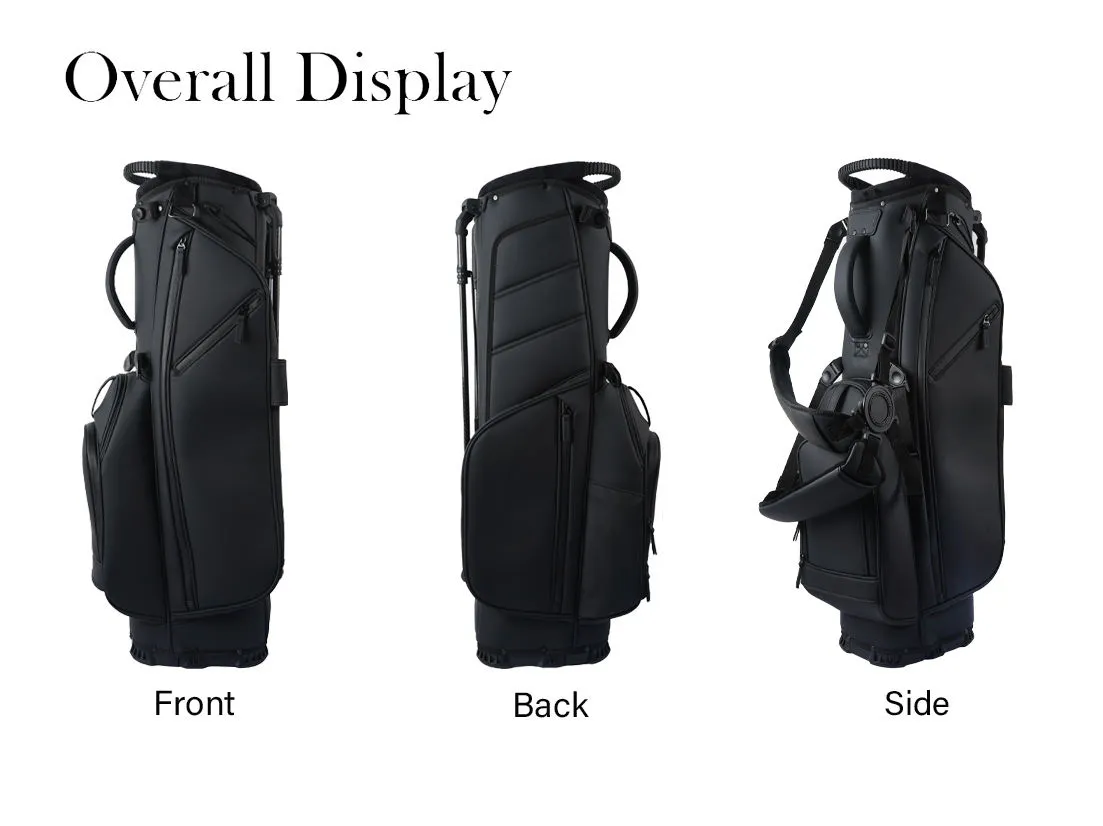
Tour staff bag manufacturing demands a significantly higher level of artisan skill than other golf bag categories. Working with genuine leather requires craftsmen who understand how to cut leather panels to optimize grain direction and natural hide characteristics, how to sew leather with consistent stitch tension without causing puckering or distortion, and how to finish exposed edges through painting, burnishing, or edge banding techniques. Our tour staff bag production line is staffed exclusively by craftsmen with a minimum of five years experience in leather goods manufacturing, with senior artisans who have dedicated their careers to premium bag construction. The training investment for tour staff bag craftsmen typically requires 12 to 18 months of supervised production before achieving independent quality standards, creating a significant barrier to entry for manufacturers without established leather goods expertise. For brands selecting manufacturing partners, evaluating the craftsman qualification and training programs is essential to ensuring consistent premium quality in tour staff bag production.
Quality Control Intensity
The quality control program for tour staff bags is substantially more rigorous than for other bag categories, reflecting the premium price positioning and discerning customer expectations. Our tour staff bag quality protocol includes 50 individual inspection checkpoints compared to 25 for standard stand bags, with specific focus on surface finish quality, stitch consistency, edge finishing, hardware alignment, and color matching. Every bag undergoes a comprehensive visual inspection under controlled lighting conditions to detect surface imperfections, color inconsistencies, and cosmetic defects that would be unacceptable at this price tier. Dimensional accuracy is verified against specification with tighter tolerances than standard products. Functional testing of zippers, dividers, and stand mechanisms meets the same performance standards as other categories. The result is a defect rate below 0.5 percent for tour staff bags, compared to 1 to 2 percent for standard products, ensuring that every bag reaching the customer meets the premium quality expectations the brand has promised.
Production Timeline and Capacity
Tour staff bag production requires longer timelines than other categories due to premium material sourcing, complex construction processes, and intensive quality control. Material lead times for genuine leather range from 30 to 45 days for stock colors to 60 to 90 days for custom dye lots. Custom hardware requires 20 to 30 days for mold creation plus 15 to 20 days for production. The total development timeline from initial concept to mass production delivery ranges from 75 to 120 days, compared to 60 to 90 days for standard bags. Mass production of approved tour staff bag designs takes 35 to 50 days for typical order quantities of 100 to 300 pieces, compared to 30 to 45 days for standard bags. Production capacity for tour staff bags is inherently more limited than for other categories due to the skilled labor requirements and slower production pace; our facility produces approximately 5,000 tour staff bags monthly compared to 18,000 stand bags on the same footprint. Brands planning tour staff bag product launches should account for these longer timelines in their seasonal planning and inventory management strategies.
Cost Structure and Price Analysis
Detailed Manufacturing Cost Breakdown
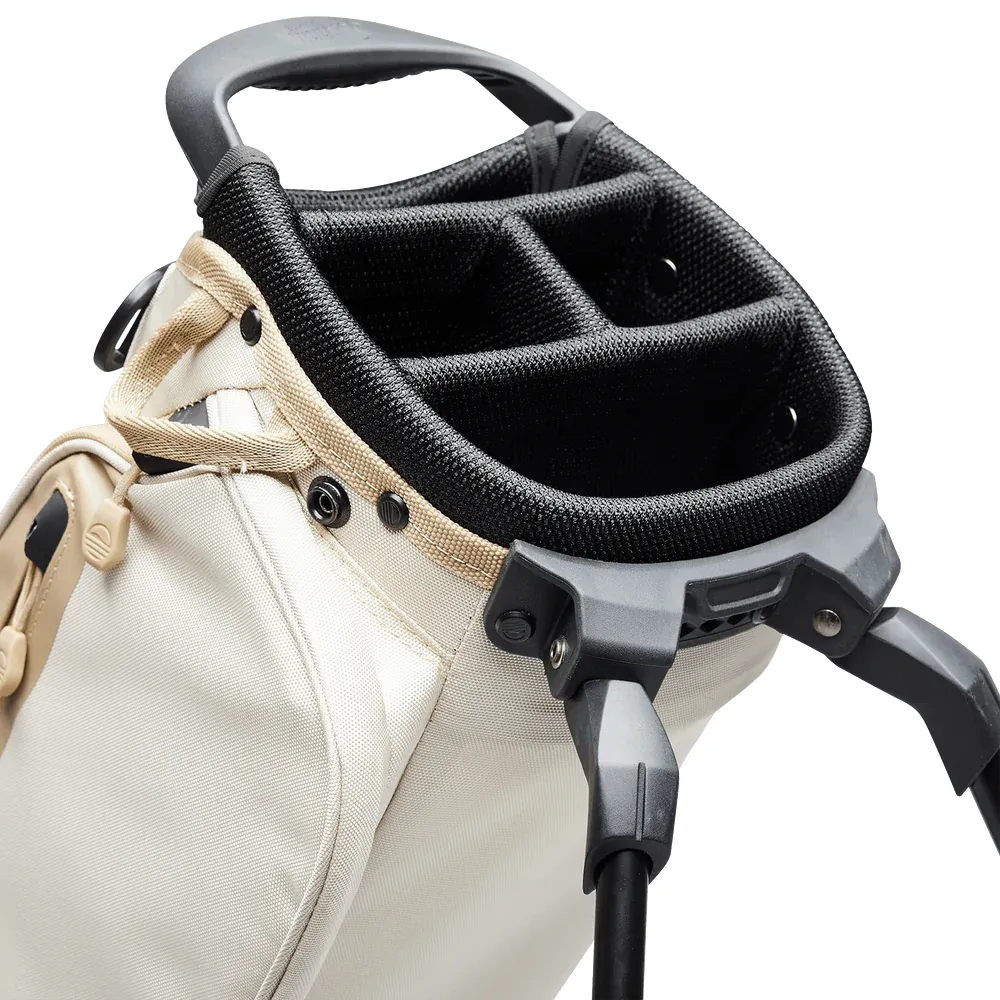
The manufacturing cost of a tour staff bag breaks down into several categories, each significantly higher than equivalent costs for standard golf bags. Premium materials including leather or synthetic leather represent 35 to 45 percent of total manufacturing cost, ranging from $25 to $80 per bag depending on material selection. Hardware and zippers account for 10 to 15 percent, at $6 to $18 per bag, reflecting the premium custom hardware specifications typical of this category. Divider systems, typically 14-way full-length, cost $8 to $15 per bag. Labor and assembly represent 20 to 25 percent of costs, at $15 to $35 per bag, reflecting the higher skill requirements and slower production pace. Branding elements including embroidery, custom labels, and packaging add $5 to $15 per bag. Quality control and finishing add $3 to $8 per bag. The total manufacturing cost ranges from $60 to $180 per bag, with genuine leather tour staff bags at the upper end and synthetic leather bags at the lower end of the range.
| Cost Component | Genuine Leather | Synthetic Leather | Premium Nylon/Leather |
|---|---|---|---|
| Materials (shell) | $40-$80 | $15-$30 | $25-$50 |
| Hardware/Zippers | $10-$18 | $6-$12 | $8-$14 |
| Divider System | $10-$15 | $8-$12 | $8-$12 |
| Labor/Assembly | $25-$35 | $15-$25 | $18-$28 |
| Branding/Logos | $8-$15 | $5-$12 | $5-$10 |
| QC/Finishing | $5-$8 | $3-$6 | $4-$6 |
| Packaging | $3-$5 | $2-$4 | $2-$4 |
| Total Manufacturing | $101-$176 | $54-$101 | $70-$124 |
| Target Retail (3-4x) | $400-$800 | $200-$450 | $280-$550 |
Retail Price Architecture
Tour staff bags occupy the premium end of golf bag retail pricing, with products ranging from $200 for entry-level synthetic leather models to over $800 for exclusive limited-edition genuine leather offerings. The typical price architecture for a brand offering multiple tour staff bag tiers includes an entry-level synthetic leather model at $200 to $300 that introduces the tour staff aesthetic at an accessible price point, a mid-range model in synthetic leather with premium hardware and comprehensive branding at $300 to $450 that represents the core of the tour staff product line, a premium genuine leather model at $450 to $650 that showcases brand craftsmanship and materials excellence, and limited-edition or signature models above $650 that serve as brand flagships and generate media attention. Each tier requires distinct manufacturing specifications, material selections, and customization levels, with the brand communicating clear value progression across the range that justifies price differences through visible and tangible quality improvements.
Margin Analysis and Profitability
Tour staff bags deliver the highest per-unit margins in the golf bag industry, with gross margins typically ranging from 55 to 70 percent for brands selling direct to consumer and 40 to 55 percent for brands selling through wholesale distribution channels. The higher margin reflects the premium pricing power that quality tour staff bags command, enabled by strong brand positioning and visible quality differentiation. However, tour staff bags also carry higher inventory risk due to their premium price points and smaller addressable market compared to stand bags and cart bags. The optimal approach for most brands is to position tour staff bags as margin enhancers and brand builders within a diversified portfolio that includes higher-volume stand bags and cart bags as the revenue foundation. Tour staff bags drive brand prestige and attract premium retail distribution, which in turn supports stronger positioning and pricing for the entire product line. This halo effect makes tour staff bags profitable beyond their direct unit margins, contributing to brand health in ways that extend far beyond the P and L of the individual product category.
Market Positioning and Brand Strategy
Target Consumer Profiles
The tour staff bag consumer profile differs significantly from the broader golf bag market. Primary targets include serious amateur golfers with handicaps below 15 who invest in premium equipment across all categories, golf club members who store their equipment at the club and value the professional aesthetic, corporate buyers purchasing branded tour staff bags for member gifts and executive promotions, and professional and collegiate golfers seeking authentic tour-quality equipment. Secondary targets include golf enthusiasts who collect premium golf equipment as a hobby, gift buyers seeking impressive presents for the golfer who has everything, and brand loyalists who want to own the top-tier product from their preferred brand. Understanding these consumer profiles helps brands develop tour staff bag products that meet specific expectations for quality, aesthetics, and brand association that these discerning buyers bring to their purchasing decisions.
Distribution Channel Strategy
Tour staff bags require careful distribution channel selection to maintain premium positioning. Pro golf shops and premium off-course retailers represent the primary distribution channel, where knowledgeable staff can communicate the quality story and customers can evaluate the product in person. Brand direct-to-consumer channels including branded retail stores and e-commerce websites provide margin advantages and complete brand experience control. Select high-end online golf retailers with strong brand curation extend reach while maintaining premium positioning. Mass-market channels and discount retailers should generally be avoided for tour staff bag products, as the price compression and brand perception risks outweigh the volume potential. For OEM brand partners developing tour staff bag lines, we recommend establishing the product in premium retail environments first, building credibility and testimonials that support broader distribution expansion over time.
Market Trends and Future Directions
Sustainable Premium Materials
The luxury goods market is increasingly demanding sustainable material options, and tour staff bags are no exception. Vegetable-tanned leather, produced using natural tannins rather than chromium salts, appeals to environmentally conscious premium consumers while maintaining excellent quality characteristics. Recycled leather made from leather fibers bonded with natural adhesives offers a sustainable alternative that maintains leather aesthetics at lower cost. Plant-based leather alternatives derived from cactus, pineapple, and mushroom mycelium are emerging as viable materials for premium applications, though current production volumes and cost structures limit widespread adoption. Brands that pioneer sustainable tour staff bag materials can capture the growing segment of environmentally conscious luxury consumers while differentiating from competitors using conventional materials.
Personalization and Bespoke Services
The trend toward personalization in luxury goods is extending to tour staff bags, with consumers seeking unique products that reflect their individual identity. Monogramming services offering custom initials or names, bespoke color combinations that match personal preferences or corporate branding, custom hardware engraving with meaningful dates or messages, and limited-edition collaboration designs with professional golfers or golf influencers represent the leading edge of tour staff bag personalization. For OEM manufacturers, offering personalization capabilities requires flexible production processes that can accommodate one-off customization within efficient production workflows, and digital ordering platforms that allow consumers to configure their ideal bag specifications with accurate visual previews before ordering.
Ready to Start Your Custom Golf Bag Project?
Partner with a BSCI & ISO 9001:2015 certified factory with 20 years of experience producing premium tour staff bags for leading golf brands worldwide. MOQ just 100 pieces.
Get a Free Quote TodayFrequently Asked Questions
What is a tour staff bag?
A tour staff bag is the premium category of golf bag, originally designed for professional golfers on tour. They feature the finest materials including genuine leather, full-length 14-way divider systems, and extensive branding panels. They typically measure 36 to 38 inches tall and weigh 8 to 12 pounds.
What materials are used in tour staff bags?
Tour staff bags use full-grain genuine leather for the highest tier, synthetic PU leather for mid-range premium products, and high-denier Cordura nylon with leather accents for performance-oriented premium bags.
How much does it cost to manufacture a tour staff bag?
Manufacturing costs range from $60 to $180 per unit. Genuine leather bags cost $120 to $180, synthetic leather bags cost $80 to $120, and premium nylon with leather accents costs $60 to $90.
What customization options are available?
Comprehensive customization includes custom leather colors, embroidered logos, custom metal hardware finishes, monogramming, custom interior lining colors, personalized name plates, and bespoke panel designs.
What is the retail price range for tour staff bags?
Tour staff bags retail from $200 for synthetic leather entry-level models to $800 or more for genuine leather premium offerings. The average premium tour staff bag retails between $350 and $500.
How long does custom tour staff bag development take?
Development takes 75 to 120 days from concept to delivery, longer than standard bags due to premium material sourcing, leather working processes, and extensive quality control requirements.
Can tour staff bags be used by amateur golfers?
Absolutely. Tour staff bags are available to all golfers who appreciate premium quality. They work best with golf carts as their 8 to 12 pound weight makes carrying impractical for extended periods.