How to Choose the Right Golf Bag Size: Complete Dimension Guide (2026)
Table of Contents
- Introduction: Why Golf Bag Size Matters More Than You Think
- Complete Size Comparison Across All Bag Types
- Detailed Dimension Analysis by Bag Category
- Club Count and Bag Size Matching
- Golfer Body Type and Bag Size Optimization
- Airline Travel Restrictions and Travel Bag Sizing
- Size Specifications for OEM Manufacturing
- Size Trends and Market Evolution
- Frequently Asked Questions
Introduction: Why Golf Bag Size Matters More Than You Think
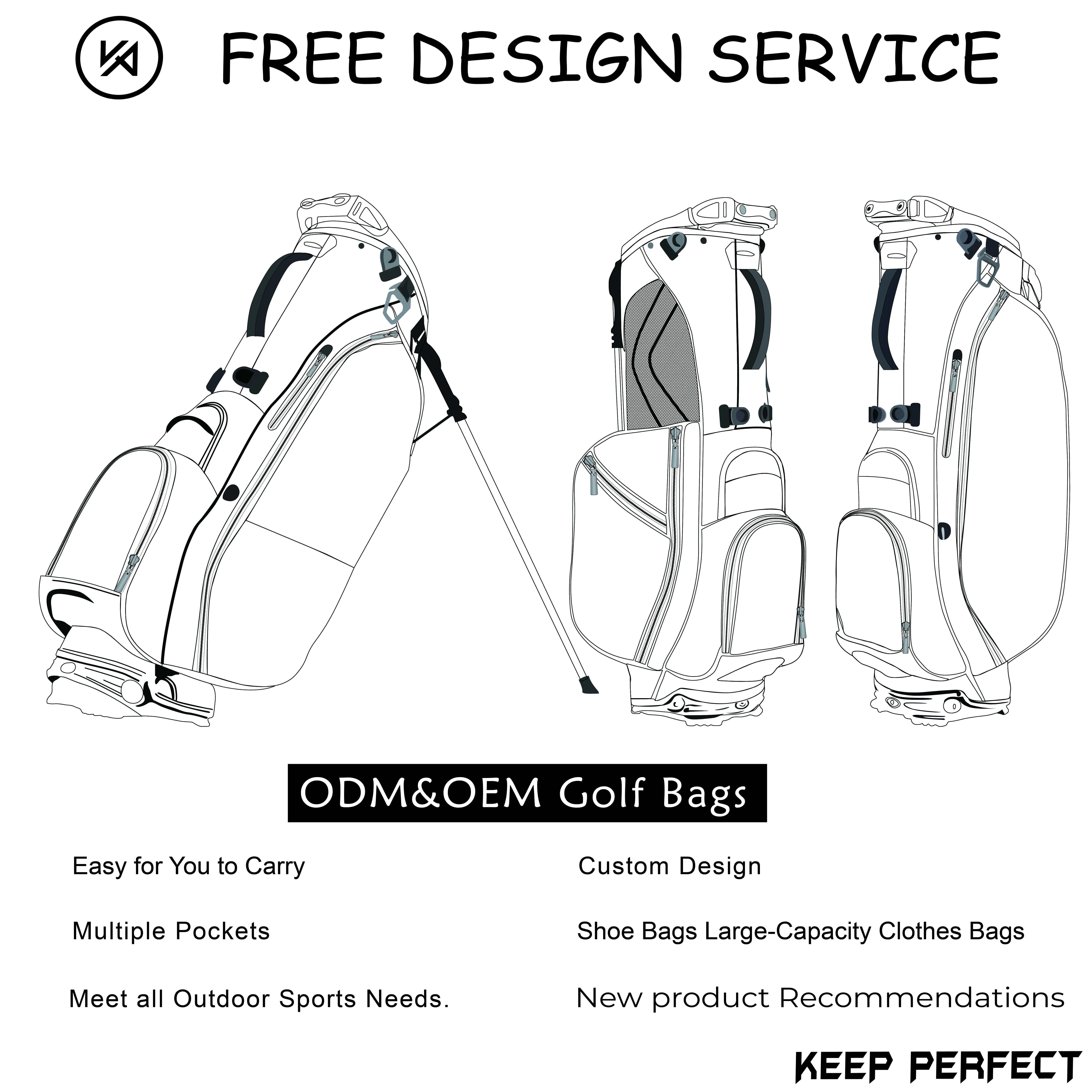
Golf bag size is one of those specifications that seems straightforward on the surface but reveals remarkable complexity when examined closely. The dimensions of a golf bag affect far more than just how it looks; they influence carry comfort and fatigue during walking rounds, cart fit and stability during riding rounds, club protection and organization efficiency, airline travel compatibility and associated costs, retail shelf presentation and consumer appeal, and manufacturing cost and material efficiency. For golf bag brands, getting the size specifications right is essential to creating products that function well in the hands of real golfers across real playing conditions. A bag that is too large for its intended use adds unnecessary weight and bulk, while a bag that is too small compromises club protection and storage functionality. The optimal size represents a carefully calculated balance of competing requirements, informed by golfer anthropometrics, equipment dimensions, transportation constraints, and usage patterns.
As a manufacturer producing over 200,000 golf bags annually across every category from ultralight carry bags to full-size tour staff bags, we have developed deep expertise in size optimization for different product types and target markets. Our engineering team has refined size specifications through feedback from over 150 brand partners and millions of end users worldwide, creating dimension profiles that consistently deliver high satisfaction scores across diverse golfer populations. This comprehensive size guide shares that accumulated knowledge, providing precise dimension data, comparative analysis, and practical guidance that helps brands and consumers make confident size decisions.
The golf bag sizing landscape has evolved significantly in recent years, driven by changing golfer preferences, equipment trends, and travel requirements. Modern golf club designs, particularly oversized drivers and oversized iron heads, influence internal dimension requirements. The growth of air travel for golf tourism creates airline compliance pressures that affect external dimension decisions. The walking golf movement drives demand for smaller, lighter bags that sacrifice maximum storage for carrying comfort. Understanding these competing pressures and their resolution across different bag categories is the foundation of effective golf bag size selection, whether you are a brand developing new products or a golfer seeking the perfect bag for your game.
Complete Size Comparison Across All Bag Types
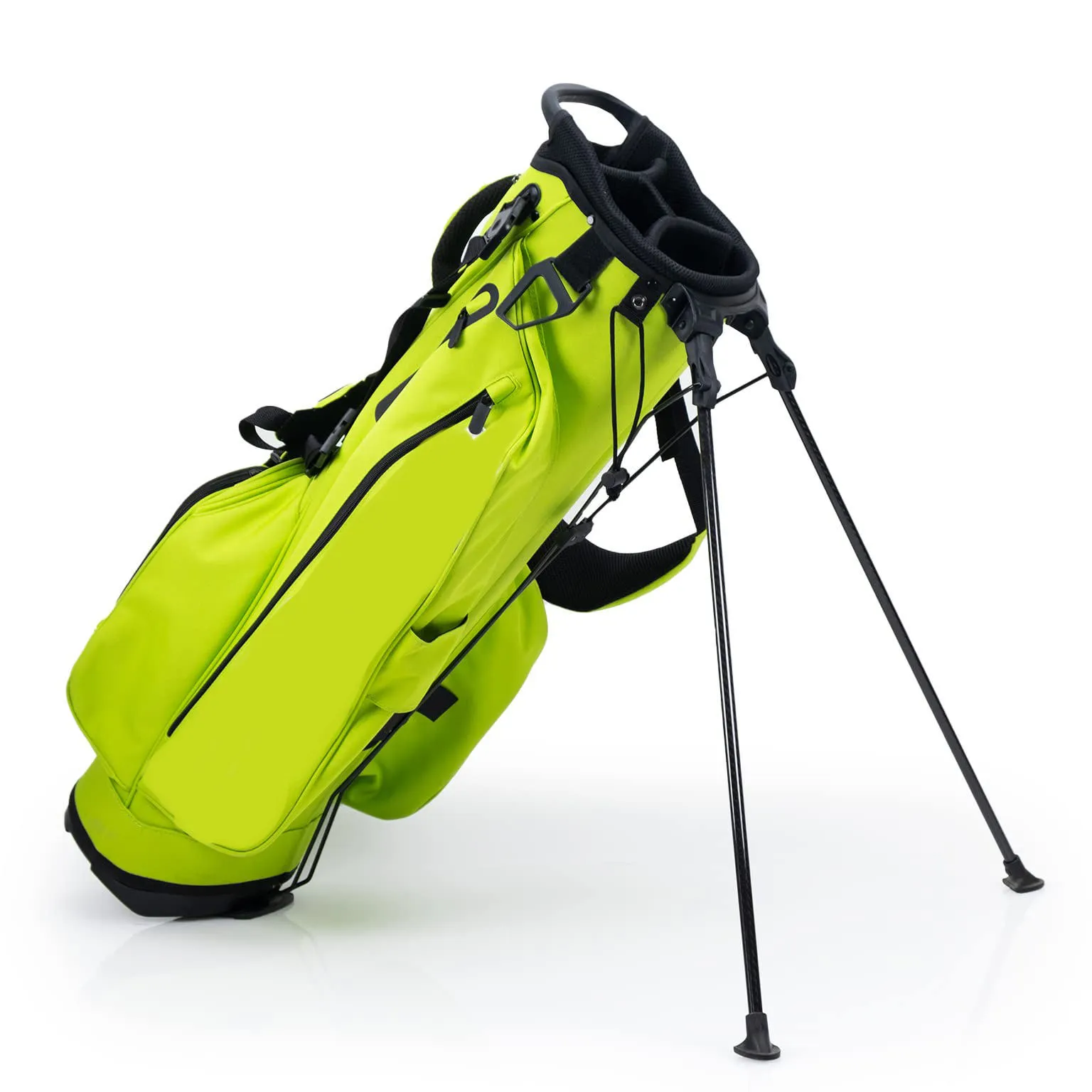
| Bag Type | Height | Base Diameter | Weight | Volume | Pockets |
|---|---|---|---|---|---|
| Carry/Sunday Bag | 33-35 in | 8-9 in | 1.5-3 lbs | 600-900 cu in | 2-4 |
| Ultralight Stand Bag | 34-36 in | 9-10 in | 3-4 lbs | 900-1,200 cu in | 4-6 |
| Standard Stand Bag | 34-36 in | 9-10 in | 4-5.5 lbs | 1,200-1,600 cu in | 5-8 |
| Cart Bag | 35-37 in | 10-12 in | 5-8 lbs | 1,600-2,400 cu in | 9-14 |
| Tour Staff Bag | 36-38 in | 10-11 in | 8-12 lbs | 1,400-2,000 cu in | 6-10 |
| Hybrid Bag | 35-37 in | 10-11 in | 5-7 lbs | 1,400-2,000 cu in | 7-10 |
| Travel Bag (empty) | 50-60 in | 12-15 in | 5-12 lbs | N/A | 1-3 |
Height Dimensions Explained
Golf bag height is measured from the base to the top of the cuff, and it is the most visible dimension that determines the bag's overall profile. The height range across categories spans from 33 inches for compact carry bags to 38 inches for tour staff bags. The critical factor in height selection is ensuring that the bag is tall enough to accommodate a full set of 14 golf clubs with the longest clubs (drivers and fairway woods) protruding 3 to 5 inches above the bag top. Standard men's golf clubs range from 43 inches for a driver to 34 inches for a putter, meaning a bag must provide at least 30 to 32 inches of internal depth for clubs to seat properly with grip ends above the cuff. The external height above this internal depth provides the cuff structure, stand mechanism mounting point, and visual proportion of the finished bag. For women's golfers using shorter clubs, the minimum internal depth requirement decreases by approximately one inch, allowing slightly shorter bag designs that reduce weight and improve carry proportions.
Base Diameter and Footprint
The base diameter determines the bag's footprint, its stability when standing, and its compatibility with golf cart holders and push cart platforms. Stand bags typically feature 9 to 10 inch base diameters, compact enough for comfortable carrying while providing adequate stability when the stand legs deploy. Cart bags require larger 10 to 12 inch bases to sit securely in golf cart bag wells, which vary in size across manufacturers but generally accommodate up to 12 inch diameters. Tour staff bags maintain 10 to 11 inch bases optimized for tour cart compatibility. The base diameter also influences internal volume; a larger base creates a wider club compartment that accommodates larger divider systems more easily. Carry bags and Sunday bags use 8 to 9 inch bases prioritizing minimal weight and carry comfort over standing stability. For brands, the base diameter decision directly impacts cart compatibility, a key purchasing consideration for golfers who alternate between carrying and riding.
Detailed Dimension Analysis by Bag Category
Carry Bags and Sunday Bags: Minimalist Dimensions
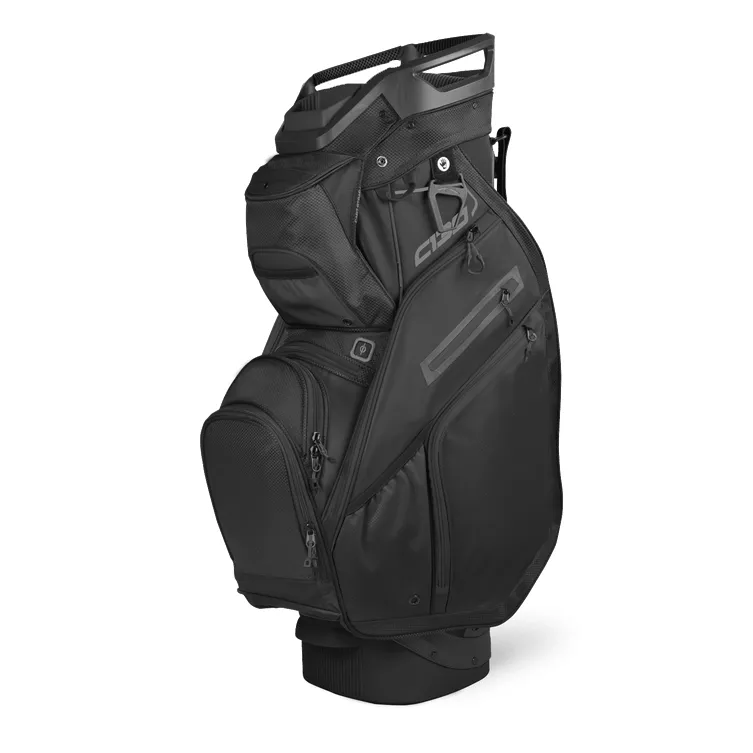
Carry bags and Sunday bags represent the most size-constrained category, designed to carry the minimum essentials for a focused round of golf. These bags typically measure 33 to 35 inches in height with 8 to 9 inch base diameters, providing enough internal depth for 8 to 12 clubs for golfers who prefer partial sets. The weight target of 1.5 to 3 pounds drives aggressive size minimization, with every dimension scrutinized for potential reduction without compromising basic functionality. The club compartment diameter is the tightest of any bag category, accommodating a simple open-top or 3-way divider configuration that groups clubs into broad categories. External dimensions are minimized by using shallow, form-fitting pockets that follow the bag's contour rather than protruding beyond the main body. For manufacturing, carry bags represent the most material-efficient product category, using 30 to 40 percent less fabric than comparable stand bags, with corresponding cost advantages that enable aggressive price positioning in the $60 to $150 retail range.
Stand Bags: The Balanced Sweet Spot
Standard stand bags occupy the dimension sweet spot that satisfies the broadest range of golfer requirements. Heights of 34 to 36 inches provide ample internal depth for 14 clubs with comfortable clearance, while base diameters of 9 to 10 inches balance carrying comfort with standing stability. The stand mechanism adds approximately 2 to 3 inches to the overall width when deployed, with leg spreads typically ranging from 16 to 20 inches for stable support on varied terrain. The total external volume, including pockets, typically ranges from 1,200 to 1,600 cubic inches, providing sufficient storage for a full round of essentials including rain gear, food, beverages, extra balls, and personal items. For OEM manufacturing, stand bag dimensions represent the most repeatable and well-understood specifications in the industry, with established benchmarks for every critical measurement that ensure consistent quality across production runs.
Cart Bags: Maximum Dimensions for Maximum Storage
Cart bags push dimensions to their maximum practical limits, with heights of 35 to 37 inches and base diameters of 10 to 12 inches creating the largest club compartment volume of any bag category. The larger base diameter accommodates 14-way full-length divider systems with individual tubes for every club, and the additional height provides space for full-length apparel pockets that extend nearly the entire bag length. Total external volume ranges from 1,600 to 2,400 cubic inches, with the additional volume primarily allocated to deep, full-featured pockets rather than a larger club compartment. Cart bag design has no weight constraints, allowing designers to use heavier fabrics and more robust construction without penalty. The larger dimensions also provide more surface area for branding elements, pocket organization systems, and specialized features like integrated cooler pockets, oversized valuables compartments, and dedicated electronics storage. Manufacturing cart bags requires 25 to 40 percent more fabric and 20 to 30 percent more labor time than stand bags, directly impacting production costs.
Tour Staff Bags: Premium Dimensions
Tour staff bags occupy a unique dimensional profile that prioritizes height and visual presence over base width. Heights of 36 to 38 inches make them the tallest bag category, creating an imposing presence on the tee box and throughout the course that communicates professional-level seriousness. Base diameters of 10 to 11 inches are intermediate between stand bags and cart bags, providing adequate stability for the heavier construction without the full width of a cart bag. The additional height compared to standard bags accommodates premium leather or synthetic leather construction with reinforced internal framing, full-length dividers, and the structural integrity required for a bag that weighs 8 to 12 pounds. For OEM manufacturers, tour staff bags represent the most demanding product category in terms of material quality and construction precision, as the premium construction materials and visible stitching details leave no room for manufacturing imperfections.
Club Count and Bag Size Matching
Full Set Configuration: 14 Clubs
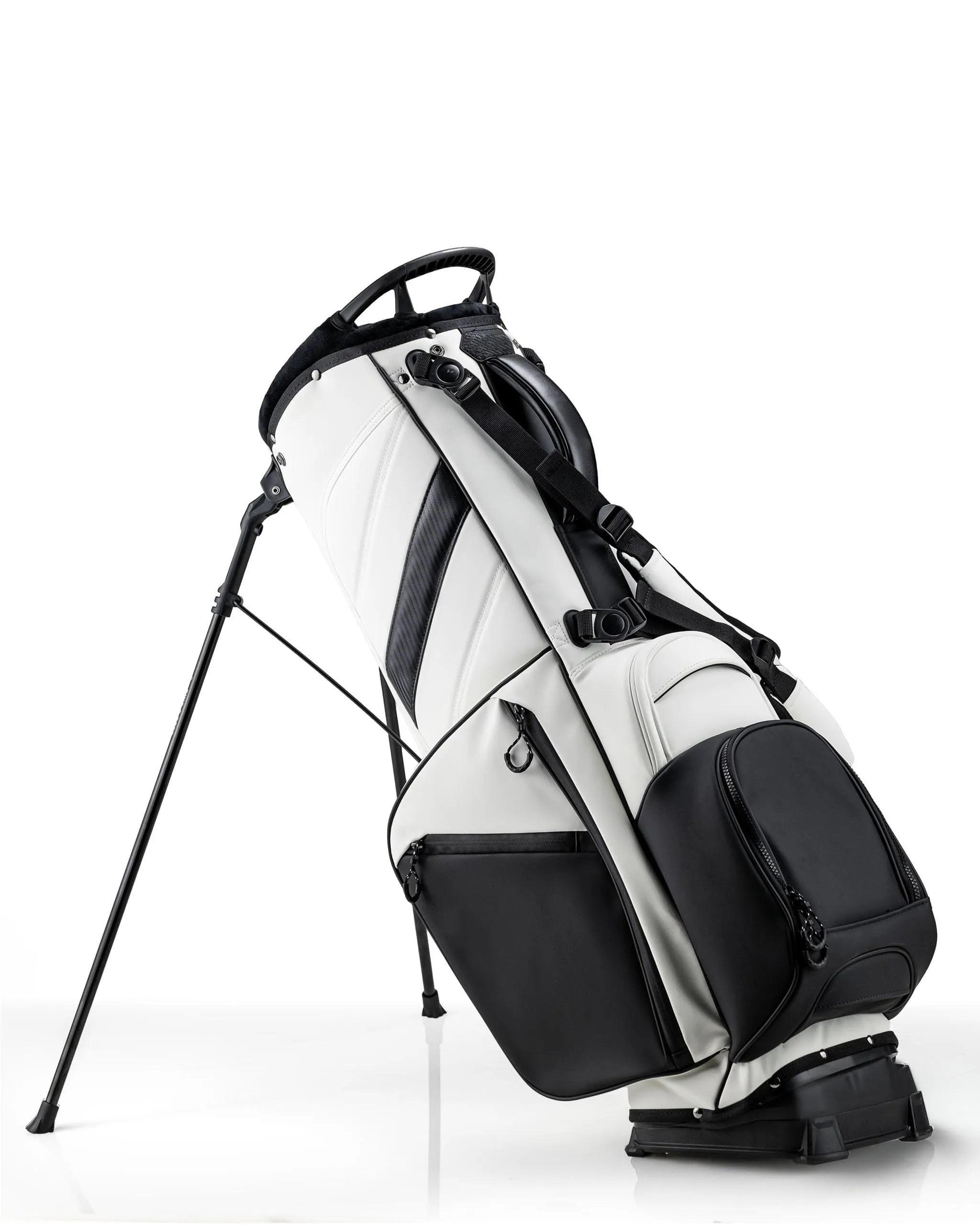
The USGA allows a maximum of 14 clubs in a player's bag during competition, and most golf bag sizes are designed to accommodate this maximum. A standard 14-club set typically includes a driver, one or two fairway woods, one hybrid, irons 4 through 9 or pitching wedge, three to four wedges, and a putter. The longest club (driver) measures 43 to 45 inches total length, requiring the bag to provide at least 30 to 32 inches of internal depth for the club head to seat properly with the grip extending above the cuff. The widest point of a modern driver head, typically 460cc with a face-to-back dimension of 4.5 to 5 inches, determines the minimum club compartment diameter. Bags designed for 14 clubs with 14-way dividers require compartment diameters of 9.5 to 10.5 inches, while bags with 5-way shared dividers function adequately with 8.5 to 9.5 inch diameters because clubs share space more efficiently in open compartments.
Partial Set Configuration: 8 to 12 Clubs
A growing segment of golfers chooses to carry partial sets of 8 to 12 clubs, simplifying their equipment and reducing bag weight significantly. Golfers carrying partial sets benefit from smaller, lighter bags that match their reduced equipment volume. A partial set of 10 clubs might include a driver, one fairway wood, hybrid, irons 5 through 9, pitching wedge, sand wedge, and putter, eliminating long irons and specialty wedges that many golfers rarely use. For these golfers, a carry bag or ultralight stand bag with dimensions optimized for 10 to 12 clubs provides ideal fit without excess bulk. Manufacturers are responding to this trend with bags specifically designed for partial sets, featuring slightly shorter heights and narrower compartment diameters that reduce weight by 200 to 400 grams compared to full-size equivalents.
Junior and Youth Golf Bag Sizing
Junior golfers using shorter clubs require proportionally smaller bags to maintain proper balance and carry comfort. Junior golf bags typically measure 30 to 33 inches in height, sized for clubs ranging from 26 to 38 inches in length. The base diameter of 7 to 8 inches is smaller than adult bags, reducing overall weight and making the bag manageable for younger golfers. Weight targets for junior bags range from 1.5 to 3 pounds, with construction simplified to reduce cost and weight. Divider systems are typically 3-way or open-top designs, adequate for the 8 to 12 clubs that junior golfers typically carry. For brands developing junior product lines, proper sizing relative to the intended age group is essential, as bags that are too large discourage young golfers from carrying their own equipment, undermining the developmental benefits of walking the course.
Golfer Body Type and Bag Size Optimization
Height and Proportion Considerations
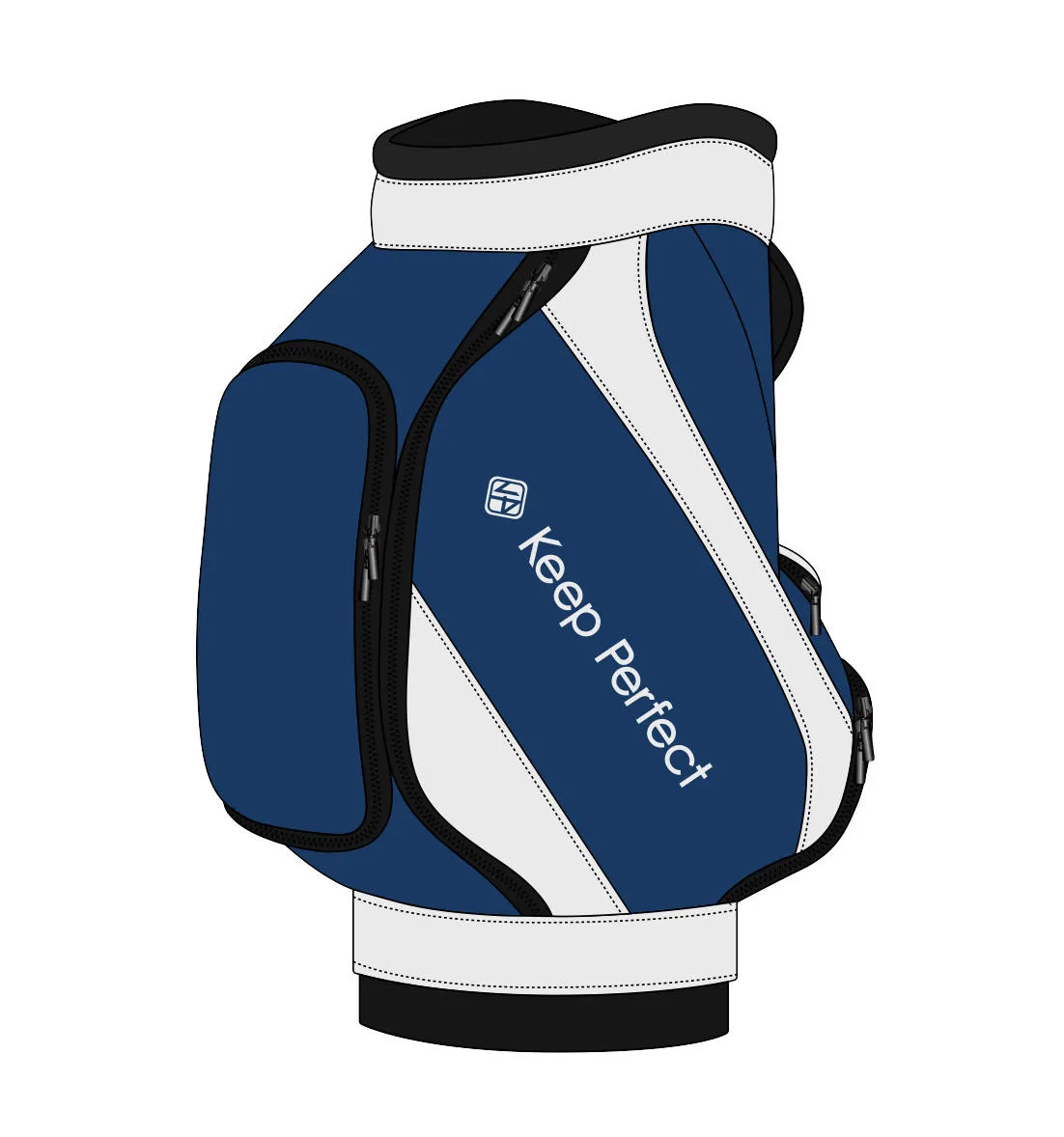
Golfer height influences bag size preferences in ways that brands should understand for product positioning. Golfers under 5 feet 6 inches benefit from slightly shorter bags, approximately 33 to 34 inches, that maintain better carry balance relative to their body proportions. A bag that extends too far above the shoulder creates an awkward carry profile that increases fatigue and reduces comfort. Golfers between 5 feet 6 inches and 6 feet 2 inches represent the standard range that fits comfortably with bags in the 34 to 36 inch height range. Golfers above 6 feet 2 inches may prefer taller bags of 35 to 37 inches that maintain proportional balance with their longer stride and higher shoulder height. For bag manufacturers, these preferences suggest that offering multiple size options within a product line, or designing adjustable strap systems that accommodate a wide range of body types, creates broader market appeal and higher customer satisfaction.
Carrying Comfort and Strap Geometry
Beyond bag height, the strap system design and adjustability range play critical roles in matching bags to different body types. Dual strap systems with independently adjustable shoulder straps accommodate different shoulder widths and torso lengths, ensuring even weight distribution across diverse body types. The hip belt, when present, should be adjustable to sit at the golfer's natural hip line regardless of torso length. Chest straps with sliding adjusters position correctly across different chest widths. For brands developing stand bags, investing in strap systems with wide adjustment ranges reduces the need for size-specific products and simplifies inventory management while improving fit for a broader range of golfers. Our manufacturing data shows that bags with comprehensive strap adjustment systems receive 22 percent higher satisfaction ratings from golfers of non-average body types compared to bags with limited adjustment capability.
Airline Travel Restrictions and Travel Bag Sizing
Standard Airline Requirements
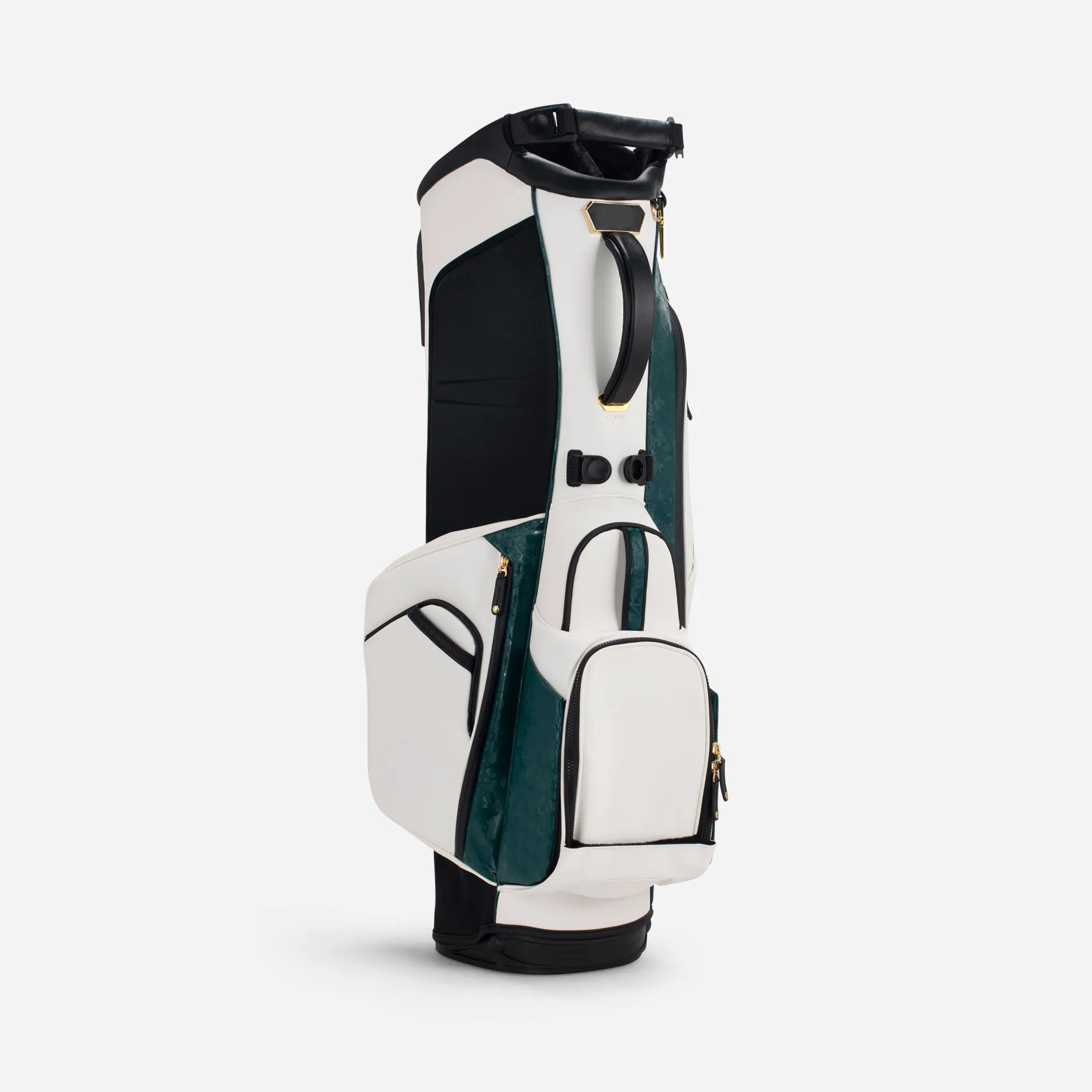
Golf bags traveling by air must comply with airline oversized baggage policies. Most major airlines classify golf bags as oversized sporting equipment, with fees ranging from $30 to $150 each way depending on the airline and fare class. The critical dimension constraint is 62 linear inches, calculated by adding length plus width plus height of the packed travel bag. A standard golf travel bag with a stand bag inside typically measures 50 to 55 linear inches, well within the standard oversized equipment threshold. However, travel bags containing tour staff bags or cart bags may approach or exceed 62 linear inches, triggering additional oversized baggage fees of $75 to $200. For golf bag brands developing travel bag products, designing to stay within the 62 linear inch limit for all bag types maximizes customer satisfaction by avoiding surprise fees.
Travel Bag Design and Protection
Travel bags must accommodate the full dimensions of golf bags plus clubs while providing protective padding and structural support for the rigors of air travel. Internal dimensions typically add 3 to 5 inches to every dimension of the contained golf bag, with padded walls absorbing impact and preventing club shaft damage. The total weight of a packed travel bag with a loaded golf bag inside typically ranges from 25 to 35 pounds, well within airline weight limits of 50 pounds for checked bags. Travel bag construction uses heavy-duty 600 to 1,200-denier polyester or ballistic nylon for abrasion and impact resistance, with internal stiffener panels that maintain shape during handling. For brands adding travel bags to their product lines, the dimensional design must accommodate the full range of golf bag sizes that your brand offers, or clearly specify which bag types are compatible with each travel bag model.
Size Specifications for OEM Manufacturing
Dimensional Tolerance Standards
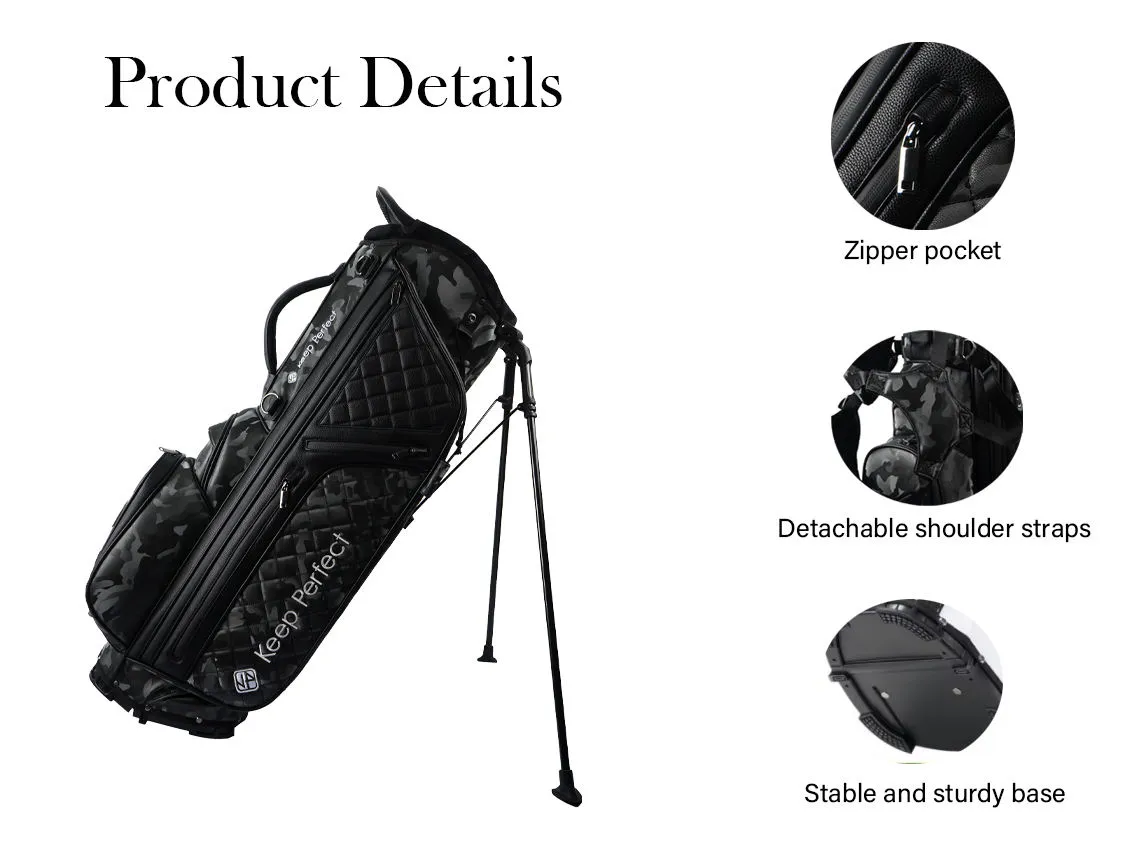
Manufacturing golf bags to consistent size specifications requires established tolerance standards that balance precision with production reality. Standard dimensional tolerances for golf bags include plus or minus 0.5 inches for height measurements, plus or minus 0.25 inches for base diameter measurements, plus or minus 5 percent for weight targets, and plus or minus 3 percent for volume calculations. These tolerances account for natural variation in fabric stretching, foam compression, and assembly alignment that occurs during production. Maintaining tolerances requires standardized cutting patterns, calibrated assembly jigs, and dimensional inspection at multiple points during assembly. Our quality control protocol includes dimensional verification at five checkpoints during bag assembly, with final inspection verifying all critical dimensions against specification before packaging.
Size Grading Across Product Lines
Brands offering multiple bag types can optimize their product lines through systematic size grading that creates clear differentiation between tiers. A typical size grading structure for a brand offering stand bags might include a compact model at 34 inches height with 9 inch base, a standard model at 35 inches with 9.5 inch base, and an oversized model at 36 inches with 10 inch base. Each size step adds approximately 100 to 200 cubic inches of volume, 200 to 400 grams of weight, and $3 to $8 of manufacturing cost. The retail price progression across sizes typically follows a 15 to 25 percent increase per size step, ensuring viable margins across the range while providing clear value differentiation for consumers. For OEM partners, systematic size grading simplifies production planning by using common construction methods and materials across size variants, reducing changeover time and improving production efficiency.
Size Trends and Market Evolution
The Downsizing Movement
The most significant size trend in the golf bag market is the movement toward smaller, lighter bags across all categories. Golfers are increasingly willing to sacrifice maximum storage for carrying comfort, driving demand for bags that are 5 to 15 percent smaller than their predecessors from five years ago. This trend is enabled by improved materials that maintain durability at lighter weights, smarter pocket designs that maximize usable storage in smaller dimensions, and the growing acceptance of partial sets that reduce the club volume requirements. For brands, responding to this trend means re-evaluating legacy size specifications and developing new products that embrace smaller dimensions as a feature rather than a compromise.
Equipment-Driven Size Changes
The evolution of golf club design directly influences golf bag dimensions. Modern oversized driver heads with 460cc volumes are larger than traditional designs, requiring slightly wider club compartments. The growing popularity of oversized mallet putters, some exceeding 5 inches in width, has driven demand for bags with wider putter compartments or dedicated oversized putter wells. Adjustable drivers and fairway woods with larger heads at the hosel connection point require divider tubes with slightly larger diameters. For manufacturers, staying current with equipment trends and adjusting bag dimensions accordingly ensures compatibility with the clubs that modern golfers actually carry, preventing fit issues that erode customer satisfaction and generate negative reviews.
Ready to Start Your Custom Golf Bag Project?
Partner with a BSCI & ISO 9001:2015 certified factory producing 200,000+ premium golf bags annually. We help you optimize size specifications for your target market. MOQ just 100 pieces.
Get a Free Quote TodayFrequently Asked Questions
What are the standard dimensions for golf bags?
Stand bags measure 34 to 36 inches tall with 9 to 10 inch base diameter. Cart bags measure 35 to 37 inches tall with 10 to 12 inch base. Tour staff bags measure 36 to 38 inches tall with 10 to 11 inch base. Carry bags measure 33 to 35 inches tall with 8 to 9 inch base.
What size golf bag can I take on an airplane?
Golf bags must be checked as oversized luggage. Most airlines accept golf travel bags up to 62 linear inches within standard fees. Bags exceeding 62 linear inches incur oversize fees of $75 to $200.
How does golfer height affect bag size choice?
Golfers under 5 feet 6 inches may prefer shorter bags around 33 to 34 inches. Golfers above 6 feet 2 inches may prefer bags of 35 to 37 inches. Strap system adjustability matters more than absolute bag height.
How many clubs can different golf bag sizes hold?
All standard golf bag sizes accommodate up to 14 clubs. Many carry bags comfortably hold 6 to 10 clubs for golfers who prefer partial sets.
What is the lightest golf bag size available?
Carry bags and Sunday bags are the lightest at 1.5 to 3 pounds. Ultralight stand bags in the 3 to 4 pound range offer more functionality for slightly more weight.
How do I measure a golf bag for proper fit?
Measure height from base to cuff top, base diameter across widest point, empty weight, and internal volume. For travel bags, measure total external dimensions to calculate linear inches.