How to Choose the Perfect Custom Golf Bag: Complete Buyer's Guide (2026)
Table of Contents
- Introduction: The Art and Science of Custom Golf Bag Selection
- The 12 Key Factors in Choosing a Custom Golf Bag
- Material Selection: The Foundation of Quality
- Divider System Configuration
- Brand Positioning and Design Strategy
- The OEM Custom Process: From Concept to Delivery
- Price Architecture and Cost Management
- Quality Control and Certification Requirements
- Frequently Asked Questions
Introduction: The Art and Science of Custom Golf Bag Selection
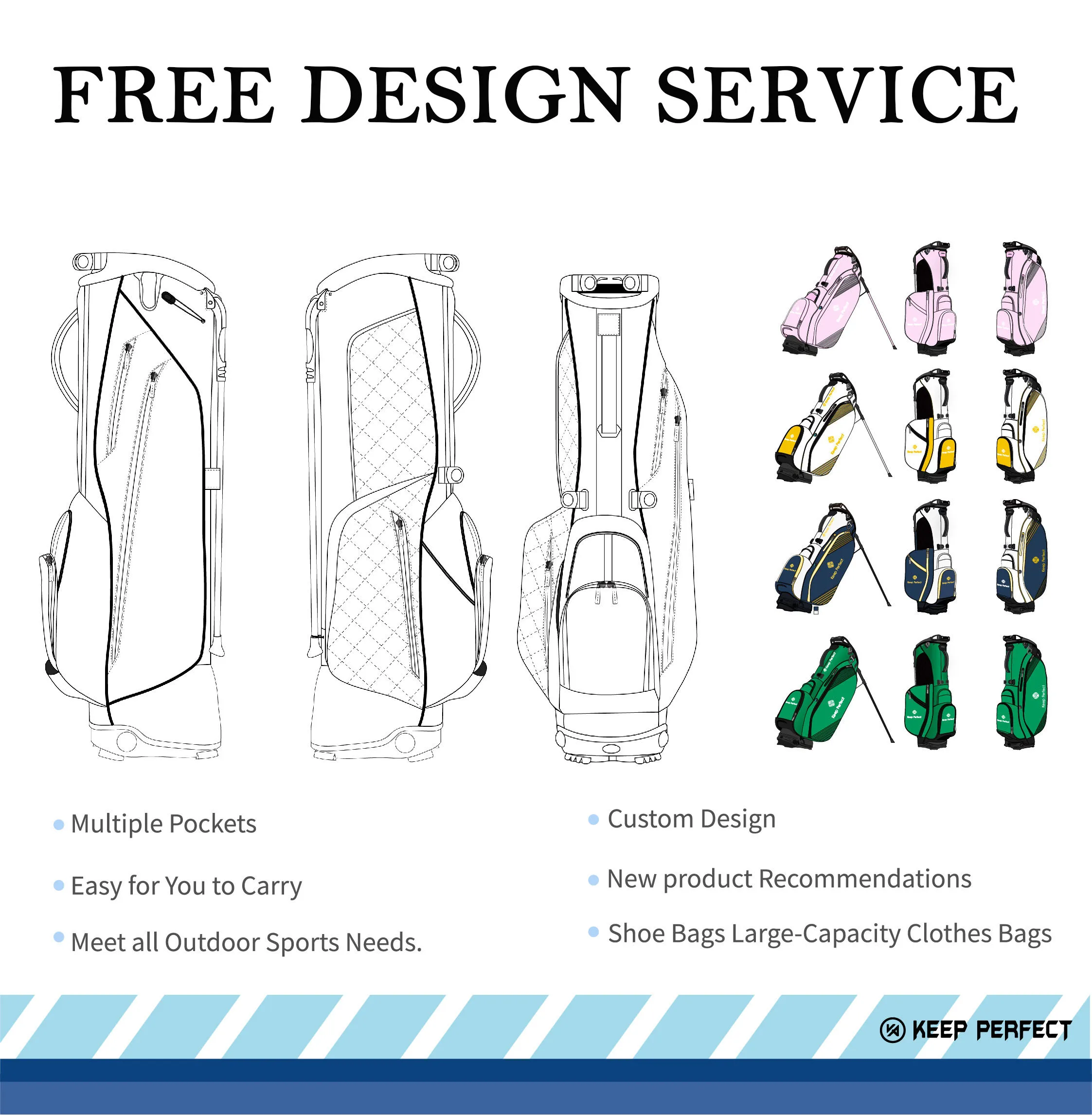
Selecting the perfect custom golf bag for your brand is one of the most consequential decisions in building a successful golf accessories business. Unlike many consumer products where branding and marketing can compensate for mediocre product design, golf bags occupy a unique position where functional performance, material quality, and manufacturing precision directly determine customer satisfaction, repeat purchase behavior, and brand reputation in the tight-knit golf community. Every stitch, every zipper pull, every fabric selection, and every design decision communicates something about your brand to the golfers who carry your products on the course where performance is visible and unforgiving. This comprehensive guide distills two decades of manufacturing expertise into a systematic framework that helps brand owners, product managers, and purchasing teams make confident decisions about every aspect of custom golf bag development.
As a BSCI and ISO 9001 certified manufacturer producing over 200,000 custom golf bags annually for more than 150 brand partners worldwide, we have guided companies from startup golf accessory labels to established sporting goods giants through the custom bag development process. This experience has revealed that successful custom golf bag selection is not about choosing the most expensive materials or the most feature-rich configuration; it is about making deliberate, aligned decisions across twelve key factors that collectively create a product that serves your target market, expresses your brand identity, achieves your price positioning goals, and can be manufactured consistently at quality standards that protect your brand reputation. Each factor influences every other, creating a complex optimization challenge that rewards systematic thinking and rewards it richly.
This guide addresses every dimension of custom golf bag selection, from the foundational decisions about bag type and material quality through the detailed specifications for dividers, pockets, hardware, and branding elements. We then walk you through the complete OEM development process, providing realistic timelines, cost expectations, and quality benchmarks at each stage. Whether you are launching your first golf bag product or expanding an existing line with new categories, this guide provides the framework and detailed information needed to make decisions that result in products you and your customers will be proud of.
The 12 Key Factors in Choosing a Custom Golf Bag
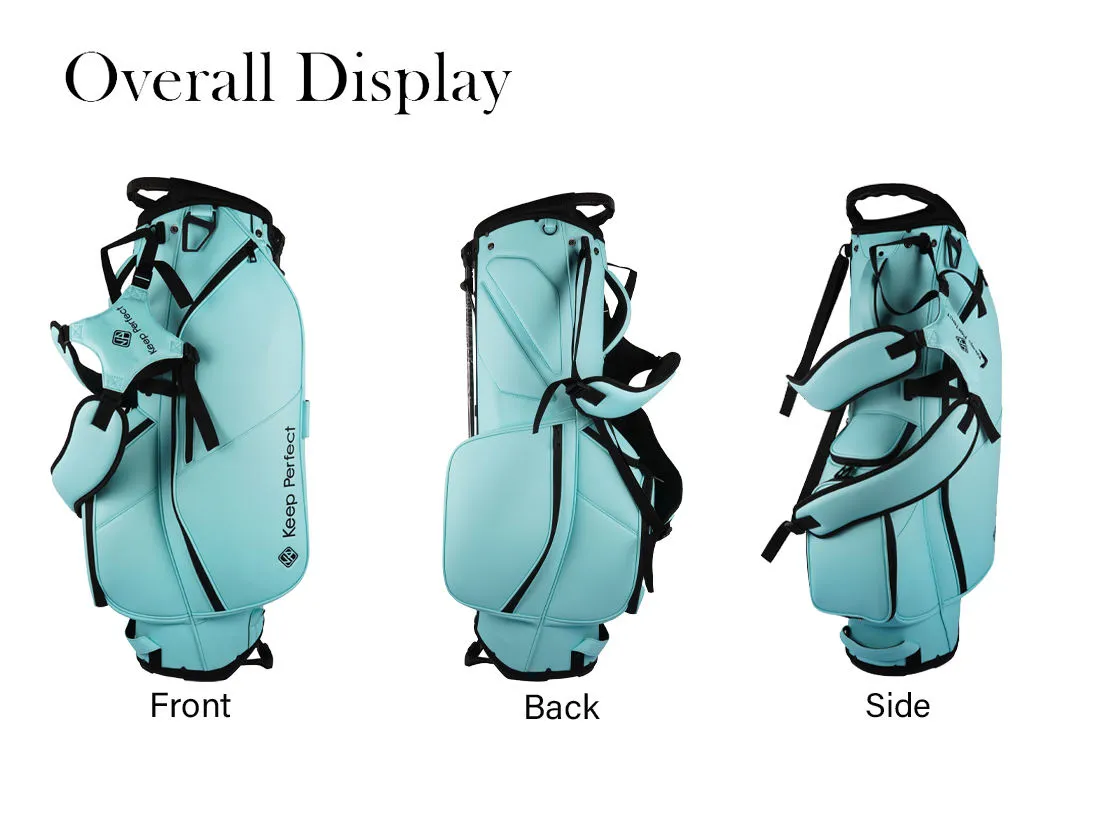
| Factor | Key Decision | Impact Level | Cost Influence |
|---|---|---|---|
| 1. Bag Type | Stand, Cart, Tour, Carry, Travel | Critical | High |
| 2. Material Choice | Polyester, Nylon, Cordura, Leather | Critical | High |
| 3. Divider System | 4-way, 5-way, 14-way, Hybrid | High | Medium-High |
| 4. Pocket Layout | Number, size, placement, features | High | Medium |
| 5. Weight Target | Ultralight, Mid-weight, Feature-rich | High | Medium |
| 6. Strap System | Single, Dual, Ergonomic, Convertible | Medium-High | Low-Medium |
| 7. Waterproofing | DWR coating, TPU lamination, Seam sealed | Medium | Medium |
| 8. Branding/Logos | Embroidery, Print, Heat transfer, Patches | High (brand) | Low-Medium |
| 9. Color/Design | Custom colors, patterns, graphics | High (brand) | Low |
| 10. Hardware Quality | Zippers, buckles, D-rings, adjusters | Medium-High | Medium |
| 11. Manufacturer Selection | Capability, certifications, MOQ, cost | Critical | Critical |
| 12. Price Positioning | Entry, Mid-range, Premium, Tour | Critical | Defines all |
Factor 1: Bag Type Selection
The bag type decision is the foundational choice that determines the direction of every subsequent specification. Stand bags, cart bags, tour staff bags, carry bags, and travel bags each serve different golfer needs and market segments. Your choice should be driven by thorough analysis of your target customer's playing habits, your brand positioning, competitive landscape in your target segment, and the manufacturing capabilities of your chosen production partner. Stand bags represent the fastest-growing category with 42 percent market share, making them the recommended starting point for most new brands. Cart bags offer higher per-unit margins and appeal to the riding golfer demographic. Tour staff bags command premium pricing but represent a smaller, more competitive market segment.
Factor 2: Material Selection
Material selection directly determines the durability, appearance, weight, water resistance, and cost of your custom golf bag. The primary fabric options include polyester in denier ratings from 210 to 600, nylon in standard and Cordura variants, and for premium products, genuine leather or high-quality synthetic leather. Each material offers distinct advantages and cost implications that we explore in detail in the following section on materials.
Factor 3 Through 6: Functional Specifications
The divider system, pocket layout, weight target, and strap system represent the functional core of your golf bag design. The divider system, whether 4-way, 5-way, or 14-way full-length, determines club organization and protection. Pocket layout defines storage capacity and accessibility, with decisions ranging from four minimalist pockets for ultralight stand bags to fourteen comprehensive pockets for premium cart bags. Your weight target constrains every other decision, as heavier fabrics, more pockets, larger dividers, and premium hardware all add weight. The strap system determines carry comfort for walking golfers, with options ranging from simple single straps to sophisticated dual-strap systems with memory foam padding, load-leveling technology, and magnetic quick-release clasps. These four factors must be optimized together, as changes in one directly impact the others.
Factor 7 Through 9: Weather Protection and Brand Expression
Waterproofing requirements, branding elements, and color/design decisions bridge the gap between functional performance and brand expression. Waterproofing ranges from basic DWR coating that repels light moisture to fully seam-sealed construction with waterproof zippers and TPU-laminated panels that provide complete weather protection. Branding elements including embroidered logos, heat-transferred graphics, woven patches, and custom hardware communicate your brand identity on the course. Color and design decisions, enabled by modern printing technologies including sublimation, screen printing, and custom dye lots, create visual differentiation that attracts attention in retail environments and on the course. These three factors are where brand personality emerges from the functional foundation, and where thoughtful decisions create products that golfers choose not just for performance but for identity expression.
Factor 10 Through 12: Quality, Partnership, and Price
Hardware quality, manufacturer selection, and price positioning represent the execution layer that determines whether your design vision translates into a consistently high-quality finished product. Hardware including zippers, buckles, D-rings, and adjusters represents 10 to 15 percent of manufacturing cost but disproportionately influences customer quality perception. Selecting a manufacturing partner with demonstrated capability in your target product category, relevant quality certifications, and appropriate scale for your volume requirements is the single most important decision in the custom golf bag development process. Price positioning ties everything together, establishing the cost budget that constrains material selection, feature sets, and manufacturing quality targets while ensuring viable margins throughout your distribution chain.
Material Selection: The Foundation of Quality
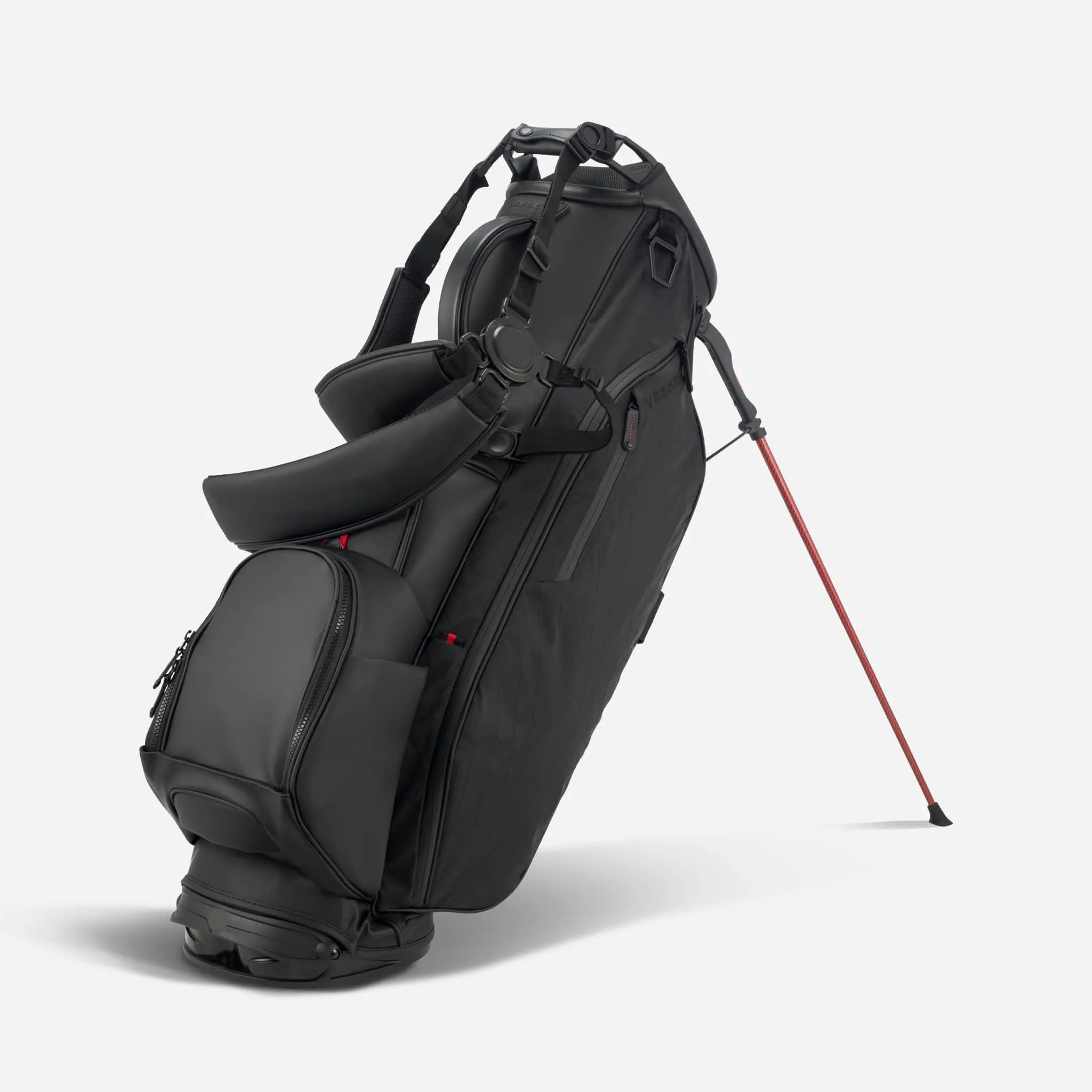
Polyester: The Versatile Workhorse
Polyester dominates golf bag manufacturing for good reason. It offers excellent UV resistance that prevents color fading during prolonged sun exposure, low moisture absorption that maintains dimensional stability in wet conditions, good abrasion resistance suitable for most golf bag applications, and a cost structure that makes it accessible across all price segments. Polyester fabrics for golf bags range from lightweight 210-denier variants weighing approximately 80 grams per square meter, ideal for ultralight stand bags, through mid-range 300 to 420-denier options suitable for mainstream products, to heavy-duty 600-denier constructions that provide cart bag-level durability. Polyester accepts dye sublimation printing exceptionally well, enabling vibrant full-color graphics that resist fading and cracking. The material also works well with standard DWR water repellent treatments and TPU lamination processes for enhanced weather resistance. For brands launching their first golf bag product, polyester at 420-denier represents the optimal balance of quality, durability, cost, and manufacturing familiarity.
Nylon: The Performance Upgrade
Nylon offers superior abrasion resistance and tensile strength compared to polyester at equivalent denier ratings, typically providing 30 to 50 percent more durability in high-wear areas. The trade-offs include higher cost, typically 25 to 40 percent more than polyester per meter, higher moisture absorption that can lead to slight dimensional changes in wet conditions, and reduced UV resistance that requires additional treatment for long-term color fastness. Standard nylon in 420-denier and 840-denier weights is used primarily in high-wear zones such as base panels and pocket bottoms, where its superior abrasion resistance provides meaningful durability improvement. Full-nylon construction is appropriate for premium products where performance justifies the cost premium. Nylon's naturally softer hand feel also contributes to perceived quality, making it a popular choice for brands targeting discerning golf consumers who evaluate products tactilely in retail environments.
Cordura: The Premium Standard
Cordura nylon, developed by INVISTA, represents the premium tier of nylon fabrics for golf bag manufacturing. The unique air-entwined fiber construction provides three to five times the abrasion resistance of standard nylon, with a distinctive textured surface that communicates quality and durability visually and tactilely. Cordura fabrics range from 300-denier lightweight variants to 1000-denier heavy-duty constructions, with 500-denier and 600-denier weights being most popular for golf bags. The cost premium over standard nylon ranges from 40 to 60 percent, and the premium over polyester reaches 80 to 120 percent. Cordura is specified for premium brand products where durability is a key brand promise, for tour-level bags subjected to demanding conditions, and for any application where the brand needs to justify premium pricing through demonstrably superior material quality. The textured Cordura surface also accepts embroidery exceptionally well, producing clean, raised logo applications that enhance brand visibility.
Leather and Synthetic Leather: The Luxury Tier
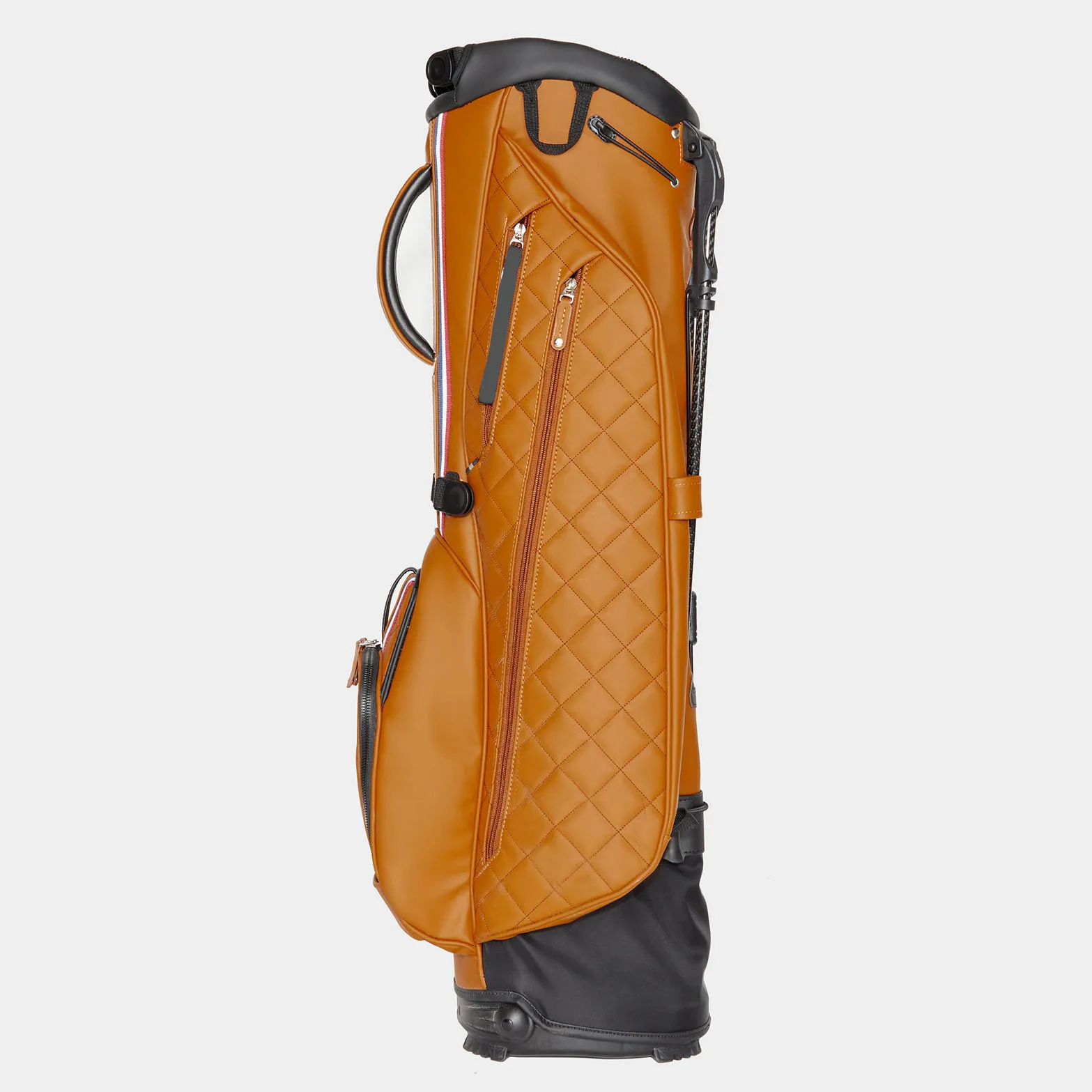
Genuine leather and high-quality synthetic leather materials occupy the luxury tier of golf bag construction, used primarily in tour staff bags and premium cart bags retailing above $400. Genuine full-grain leather develops a distinctive patina with use that many golfers find attractive, conveying heritage, craftsmanship, and exclusivity. However, genuine leather requires careful maintenance, adds significant weight, and demands specialized manufacturing processes including skiving, edge finishing, and leather-specific sewing techniques. Synthetic leather alternatives including PU leather and microfiber leather offer similar visual aesthetics at 40 to 60 percent lower cost, with improved water resistance, lighter weight, and easier maintenance. For brands targeting the luxury segment, the choice between genuine and synthetic leather involves balancing authenticity and heritage positioning against cost, weight, and practical considerations.
Divider System Configuration
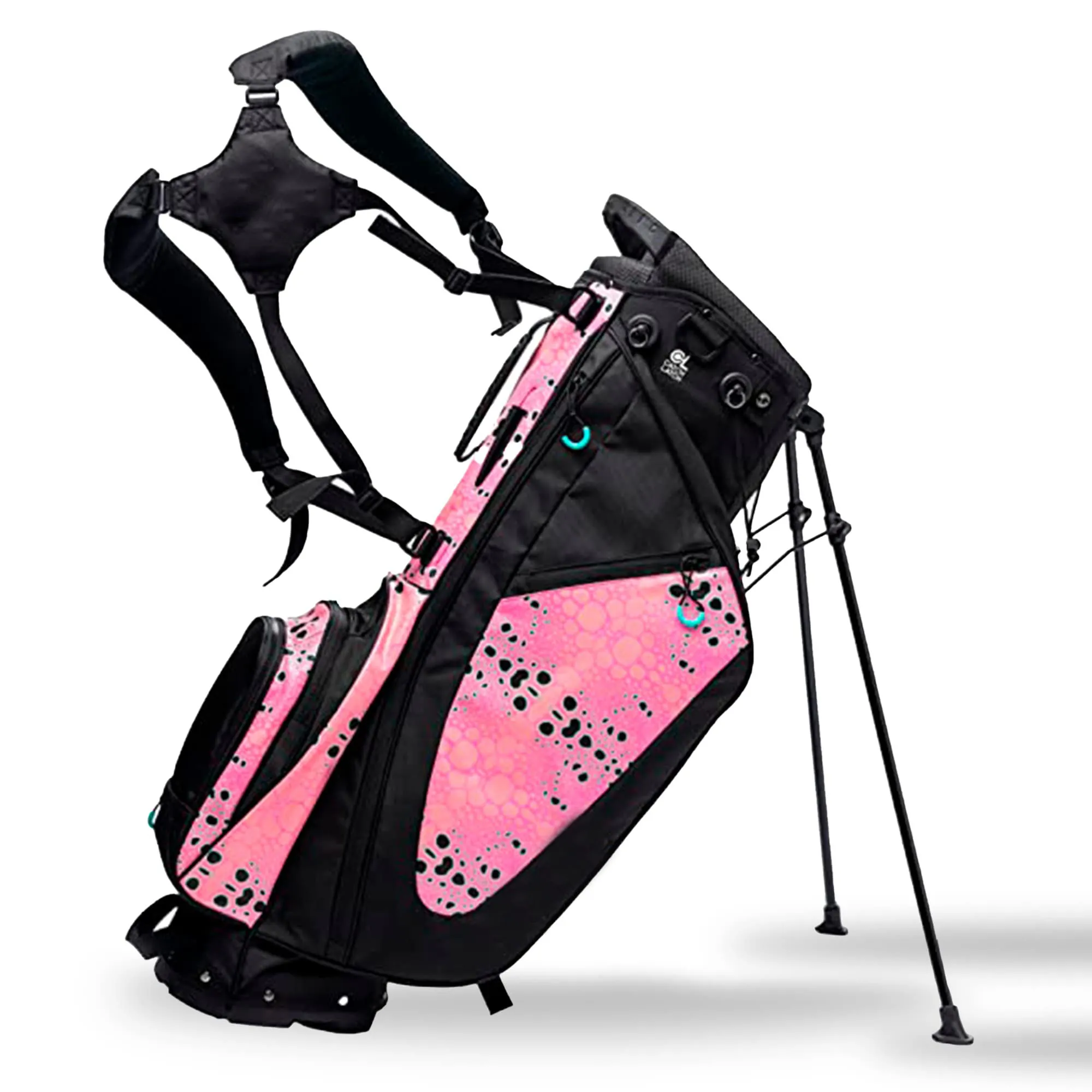
Open Top and Minimal Divider Designs
For ultralight and entry-level golf bags, open-top designs with minimal or no divider panels offer the lightest possible weight and simplest construction. These designs may include a single divider panel creating two compartments, or a simple three-way divider configuration. Manufacturing cost is minimal, adding only $0.50 to $2.00 in materials and labor. While club organization is limited, these designs serve the needs of golfers carrying fewer than 14 clubs, which represents a significant segment of recreational golfers who play with partial sets for simplicity and weight reduction. These designs work well for Sunday carry bags and entry-level products where price positioning is the primary competitive weapon.
4-Way and 5-Way Shared Compartment Systems
The 4-way and 5-way divider systems represent the mainstream standard for quality golf bags across all categories. These systems group clubs into four or five logical compartments: typically one large section for woods and hybrids, two sections for irons divided by shaft flex or club number, and dedicated sections for wedges and putter. The construction uses fabric or mesh divider panels sewn into the bag's top cuff, with each panel requiring precise alignment and secure attachment. Manufacturing a 5-way divider system adds $3 to $8 in materials and labor compared to open-top designs, but delivers dramatically improved club management and anti-tangle performance. This price-to-value ratio makes 5-way systems the recommended standard for most brand products, offering measurable quality improvement over minimal dividers at modest cost increase.
14-Way Full-Length Divider Systems
Full-length 14-way dividers provide individual tubes for each club extending the full length of the bag, delivering maximum club isolation, anti-tangle performance, and organizational clarity. This is the premium standard for cart bags and high-end stand bags. Manufacturing requires precision tube-forming equipment, individual tube insertion and alignment, and reinforced top cuff construction. The system adds $8 to $18 in manufacturing cost and 300 to 500 grams in weight compared to 5-way systems. The investment is justified for premium products targeting golfers who invest in quality club sets and expect proportional equipment protection. For stand bags, 14-way dividers position the product at the premium end of the category and require careful weight management in other areas to prevent the total weight from exceeding comfortable carrying thresholds.
Brand Positioning and Design Strategy
Logo Application Methods
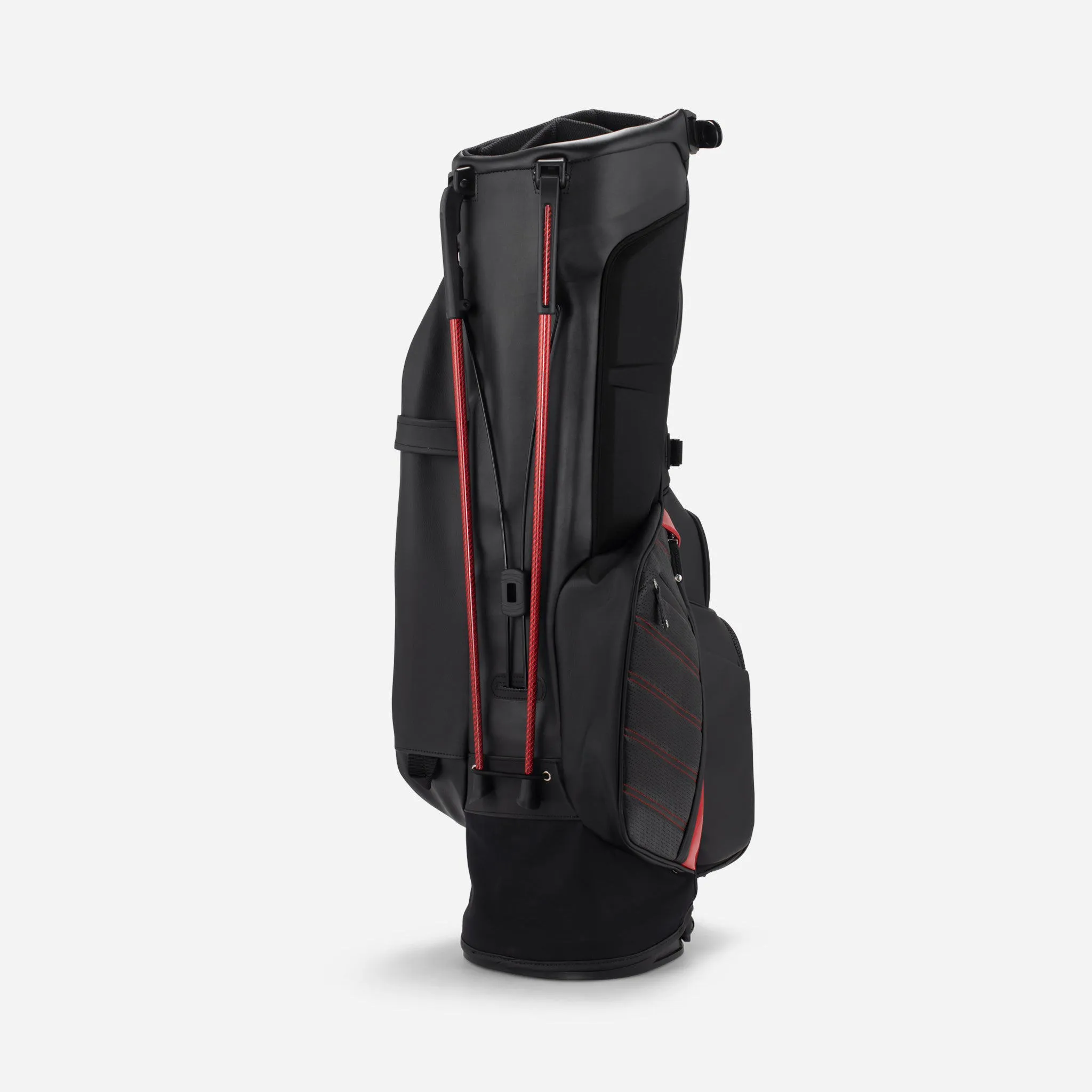
Custom logo application is the most visible brand element on any golf bag. The primary application methods include embroidery, which creates a premium raised texture with excellent durability, at a cost of $1 to $4 per application depending on stitch count and complexity; heat transfer printing, which enables full-color photographic-quality graphics at $0.50 to $2.00 per application; woven labels and patches, which convey heritage and craftsmanship at $0.80 to $3.00 per piece; and sublimation printing on fabric panels before assembly, enabling unlimited color designs with zero additional texture or weight at minimal incremental cost. For maximum brand impact, most successful golf bag brands combine multiple logo methods: an embroidered primary logo for premium perception, woven labels for heritage positioning, and custom zipper pulls or hardware for brand reinforcement at every touchpoint.
Color Strategy and Custom Dye Lots
Color decisions carry enormous brand significance in golf bag design. Custom dye lots allow brands to create signature colors that become associated with their brand identity, though minimum quantities of 500 to 1,000 meters typically apply for custom dye orders. Stock color fabrics in popular shades including black, navy, white, grey, and red are available with no minimum requirements, ideal for initial product launches. Color combinations and panel layouts create visual distinction; the most successful designs balance bold brand colors with neutral grounding tones that prevent visual fatigue over a full round. Sublimation printing opens unlimited design possibilities including gradient patterns, geometric designs, camouflage, and photographic imagery, all at similar cost to solid-color fabric with no durability concerns.
The OEM Custom Process: From Concept to Delivery
Phase 1: Design Consultation and Specification Development (10 to 15 Days)
The development process begins with comprehensive consultation between your brand team and the manufacturer's design engineers. This phase covers your target market analysis, competitive product review, price positioning targets, and preliminary design concepts. The manufacturer translates your brand vision into detailed technical specifications including material selections, construction drawings, component specifications, and quality standards. Deliverables from this phase include a complete specification package, material swatch cards for approval, and initial cost estimates based on the proposed specifications. This phase is critical because decisions made here cascade through every subsequent phase; thorough and thoughtful specification development prevents costly changes later in the process.
Phase 2: Prototype Creation (15 to 20 Days)
Based on approved specifications, the manufacturer creates a functional prototype that represents the final product as closely as possible. The prototype uses production-intent materials and construction methods, allowing your team to evaluate the product's look, feel, functionality, and quality before committing to mass production. The prototype undergoes internal quality evaluation against the specification package, and is then shipped to your team for hands-on assessment. Typical prototype evaluation criteria include material quality and hand feel, pocket layout functionality, divider system operation, strap comfort and adjustment range, stand mechanism deployment and stability, zipper quality and smooth operation, and overall aesthetic alignment with brand vision.
Phase 3: Sample Revision and Pre-Production (10 to 15 Days)
Based on your feedback from prototype evaluation, the manufacturer implements revisions and creates pre-production samples that incorporate all approved changes. This phase may involve multiple revision iterations if significant changes are requested, though most projects complete in one to two revision cycles. The pre-production sample represents the final product exactly, serving as the quality benchmark for mass production. Once approved, the manufacturer creates detailed production protocols including sewing operation sequences, quality control checkpoints, and packaging instructions that ensure every unit produced matches the approved sample.
Phase 4: Mass Production (30 to 45 Days)
Mass production follows established protocols with quality control at multiple stages. In-process inspections verify construction quality at critical assembly points, while final random inspection against AQL standards ensures batch quality meets requirements. Production timelines vary based on order quantity, with 100 to 300 pieces requiring 30 to 35 days and 500 to 1,000 pieces requiring 35 to 45 days. Upon completion, products are packaged according to specifications and prepared for shipment. Our facility maintains dedicated quality control teams that inspect every bag at 25 checkpoints throughout the assembly process, ensuring that the quality of the last bag off the line matches the approved pre-production sample.
Price Architecture and Cost Management
Understanding Total Landed Cost
Successful price positioning requires understanding the complete cost structure from manufacturing through final retail sale. The manufacturing cost, typically ranging from $28 to $85 per bag depending on specifications, represents only the beginning. Additional cost layers include shipping and logistics adding $2 to $8 per bag depending on volume and destination, import duties ranging from 5 to 17 percent depending on origin country and destination market, warehousing and distribution adding $1 to $3 per bag, and marketing and brand development costs allocated across units. The total landed cost before retail margin typically ranges from $40 to $120 per bag. With retail pricing typically set at 2.5 to 4 times the landed cost, this creates retail price ranges from $100 to $480 across the market spectrum.
Cost Optimization Strategies
Several strategies help optimize manufacturing costs without compromising quality. Volume commitments across multiple styles and colors spread fixed costs like custom tooling and dye lots across more units. Material standardization across your product line, using the same fabric in different colors across multiple bag types, reduces minimum order requirements and improves material pricing. Simplifying construction details that do not impact perceived quality, such as reducing internal pocket counts in non-visible areas or using standard zipper lengths instead of custom sizes, reduces labor costs. Choosing the right manufacturing location balances labor cost against quality capability, with China offering the optimal balance for most brands at current market conditions.
Quality Control and Certification Requirements
Essential Certifications for Golf Bag Manufacturing
Quality certifications demonstrate systematic commitment to manufacturing standards and are increasingly required by major retailers and distribution channels. ISO 9001 quality management certification verifies that the manufacturer maintains documented quality systems, follows consistent processes, and implements continuous improvement practices. BSCI or Sedex social compliance certification verifies ethical manufacturing practices including fair wages, safe working conditions, and environmental responsibility. OEKO-TEX Standard 100 certification verifies that materials are free from harmful substances, increasingly required for products sold in European markets. Product-specific testing for zipper durability, seam strength, fabric abrasion resistance, and color fastness provides additional quality assurance. Our facility maintains ISO 9001 and BSCI certifications, with comprehensive testing protocols covering every critical quality parameter that impacts product performance and brand reputation.
Ready to Start Your Custom Golf Bag Project?
Partner with a BSCI & ISO 9001:2015 certified factory producing 200,000+ premium golf bags annually. From concept to delivery in 60 to 90 days. MOQ just 100 pieces.
Get a Free Quote TodayFrequently Asked Questions
What are the 12 key factors in choosing a custom golf bag?
The 12 key factors include: bag type selection, material choice, divider system configuration, pocket layout design, weight target, strap system selection, waterproofing requirements, branding and logo application, color and design customization, hardware quality, manufacturing partner selection, and price positioning strategy.
What is the best material for custom golf bags?
Polyester is most versatile with excellent UV resistance. Nylon offers superior abrasion resistance. Cordura nylon provides premium durability. For luxury products, genuine leather or synthetic leather delivers premium aesthetics.
What is the minimum order quantity for custom golf bags?
Most factories require 100 to 300 pieces per colorway. Some offer trial orders as low as 50 pieces. Pricing becomes more competitive at volumes above 500 pieces.
How long does custom golf bag development take?
The complete cycle from concept to mass production typically takes 60 to 90 days, including design consultation, prototype creation, sample revision, pre-production approval, and mass production.
How do I determine the right price point for my custom golf bag?
Manufacturing costs should represent 25 to 35 percent of retail price to accommodate distribution, marketing, and profit targets. Research competitor pricing and calculate total landed cost.
Can I customize every aspect of the golf bag?
Yes, comprehensive OEM customization covers fabric, dividers, pockets, straps, hardware, logos, embroidery, colors, interior lining, base plates, and packaging.
What certifications should my golf bag manufacturer have?
Key certifications include ISO 9001 for quality management, BSCI or Sedex for social compliance, and OEKO-TEX for material safety.