Best Stand Golf Bags 2026: Ultimate Buying Guide for Brands
Table of Contents
- Introduction: Why Stand Bags Dominate the Market
- Top 10 Stand Golf Bags of 2026
- Materials and Construction Quality
- Divider Systems Deep Dive
- Weight Categories and Performance
- How to Choose OEM Stand Bags for Your Brand
- Pricing Strategy and Market Positioning
- 2026 Market Trends and Future Outlook
- Frequently Asked Questions
Introduction: Why Stand Bags Dominate the Market
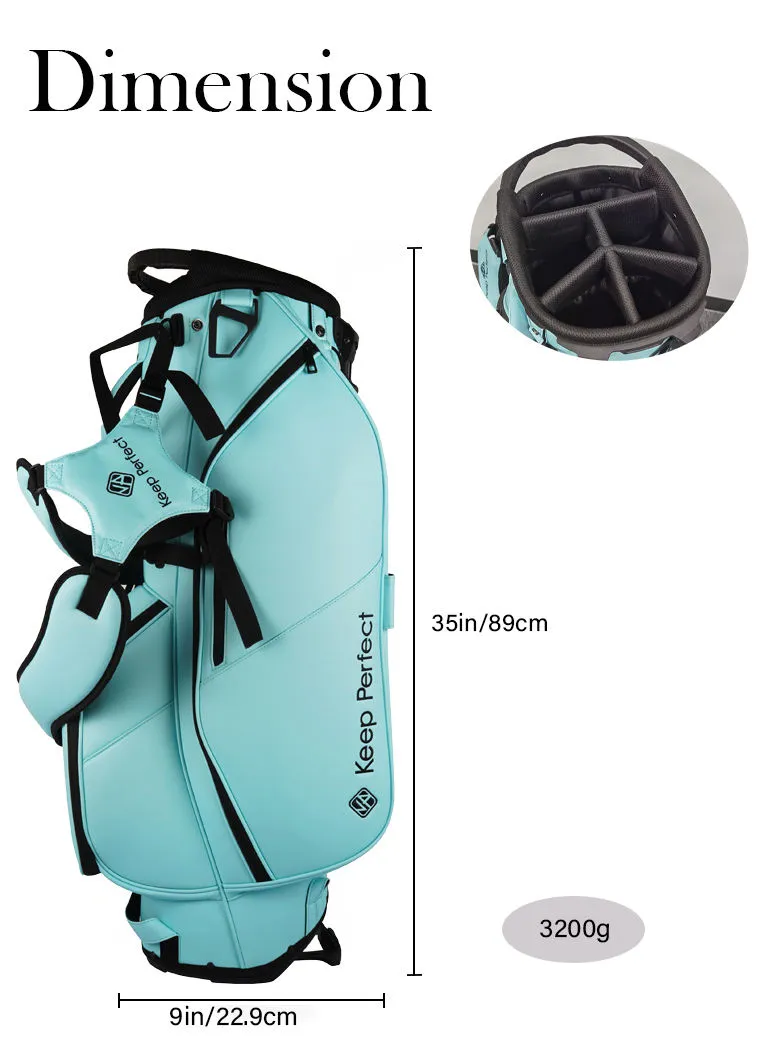
The stand golf bag category continues to reign as the fastest-growing segment in the global golf bag market, commanding an estimated 42 percent share of all golf bag sales worldwide in 2025. This remarkable growth trajectory reflects a fundamental shift in golfer behavior, with walking the course becoming increasingly popular among recreational and amateur players who value fitness, pace of play, and a more connected experience with the game. For golf bag brands, developing a compelling stand bag product line is no longer optional; it is essential to capturing market share and building brand loyalty among the fastest-growing demographic of golf consumers.
As a certified golf bag manufacturer producing over 200,000 bags annually across eight dedicated production lines, we have witnessed firsthand the surge in demand for stand bags from our OEM brand partners. Over the past three years, stand bag orders have grown by 67 percent, with brands ranging from established golf labels to lifestyle companies entering the golf accessories market. This comprehensive guide distills our manufacturing expertise, market intelligence, and deep understanding of stand bag engineering into a resource that helps brands make informed product development decisions.
The modern stand golf bag must satisfy an increasingly sophisticated set of requirements. Golfers expect lightweight construction that does not sacrifice durability, intelligent storage solutions that keep essentials accessible, club protection systems that prevent damage during transit, and aesthetic design elements that communicate brand identity on the course. Balancing these competing demands requires advanced materials science, precision manufacturing processes, and a deep understanding of how golfers interact with their equipment throughout a round. Our engineering team has spent years refining the formula that delivers on all these promises simultaneously, and in this guide, we share the insights that drive our development process.
Top 10 Stand Golf Bags of 2026: Detailed Reviews
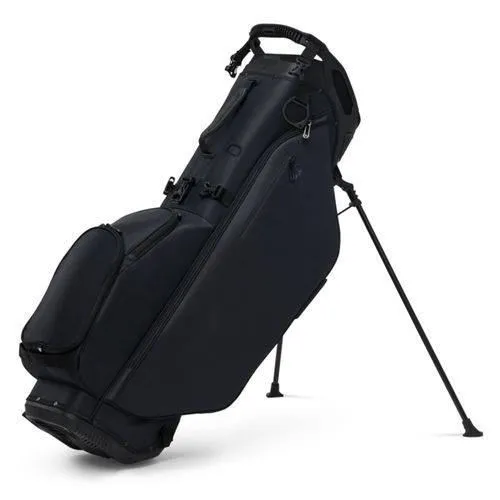
1. Titleist TSR1 Stand Bag
The Titleist TSR1 represents the pinnacle of stand bag engineering for 2026, weighing just 4.2 pounds while delivering exceptional club protection through its 14-way full-length divider system. The main body construction utilizes 420-denier ripstop nylon with a polyurethane water-resistant coating rated at 1,500 millimeters hydrostatic head, ensuring equipment stays dry during unexpected weather. The leg mechanism features a dual-hinge carbon fiber construction that deploys in under 0.3 seconds and maintains stability on uneven terrain with a leg spread of 19 inches. Storage includes seven pockets, with one full-length apparel pocket, one velour-lined valuables pocket, two ball pockets, one range finder pocket, and a dedicated water bottle sleeve. The dual strap system employs memory foam padding with a magnetic clasp for quick release, and the bag base incorporates a molded anti-snap design that prevents twisting during carry. For OEM brands seeking to replicate this caliber of performance, the manufacturing process requires precision cutting of individual nylon panels, heat-sealed seam construction on water-exposed areas, and rigorous leg mechanism testing rated for 10,000 deployment cycles.
2. TaylorMade FlexTech Lite Stand Bag
TaylorMakers FlexTech Lite continues to push the boundaries of lightweight stand bag design, achieving a remarkable 3.4-pound empty weight through innovative use of 210-denier ripstop polyester and strategic material reduction in non-critical areas. The 5-way divider system with full-length separators provides adequate club organization while saving 280 grams compared to a 14-way configuration. The FlexTech stand system utilizes a unique flexing leg design that absorbs shock when the bag is set down, reducing stress on both the mechanism and the clubs inside. Six pockets provide essential storage, including a waterproof lined valuables pocket sealed with a YKK Aquaguard zipper rated at IPX4 water resistance. The harness system features a single-pivot ergonomic design with EVA foam padding and breathable mesh contact surfaces. For brand partners interested in lightweight stand bag development, the key manufacturing considerations include selecting fabrics with optimal strength-to-weight ratios, employing bonded seam construction to eliminate thread weight, and engineering leg mechanisms from aerospace-grade aluminum alloys.
3. Callaway Chevron Stand Bag
The Callaway Chevron Stand Bag occupies the sweet spot of the mid-range market segment, offering premium features at an accessible price point that resonates with the widest range of golf consumers. Weighing 4.8 pounds, the bag features a 6-way divider system with individual club sleeves that provide excellent anti-tangle performance without the weight penalty of a full 14-way design. The 600-denier polyester construction with TPU-coated panels delivers outstanding durability, and the reinforced base plate incorporates integrated rubber grip pads that prevent slipping on wet cart surfaces. Nine pockets offer generous storage capacity, including an oversized apparel pocket with expandable gusset construction, a vented shoe pocket compatible with most golf shoe sizes, and a magnetic-closure rangefinder pocket with pass-through earphone routing. The OptiFit carry strap system features contoured shoulder pads with gel inserts that distribute pressure evenly across the upper back. Manufacturing this bag requires six separate pattern pieces for the main body, with reinforced stitching at 18 stress points and bar-tack reinforcement at strap attachment points rated for 150 pounds of pull force.
4. Ping Hoofer 15 Stand Bag
Ping has long been synonymous with stand bag innovation, and the Hoofer 15 continues that tradition with a design philosophy that prioritizes functional simplicity and reliable performance. At 4.5 pounds, the bag delivers excellent weight-to-feature ratio with a 14-way cuff divider system that provides full-length club separation. The construction utilizes a combination of 400-denier polyester and reinforced nylon panels in high-wear areas, with double-stitched seams throughout and waterproof zippers on all exterior pockets. The stand mechanism features Ping's proprietary single-rail design that deploys smoothly and reliably, with replaceable foot pads that extend the mechanism's service life. Eight pockets include a full-length clothing pocket, insulated beverage sleeve, and dedicated electronics pocket with cable management. The convertible dual strap system allows golfers to switch between carry and single-strap configurations based on personal preference. For OEM manufacturers, the Hoofer-style construction represents a well-understood and repeatable production process with established quality control benchmarks at each assembly stage.
5. Cobra Ultralight Pro Stand Bag
The Cobra Ultralight Pro targets the performance-oriented golfer who demands tournament-level features in a walking-friendly package. Weighing 4.0 pounds, the bag utilizes a hybrid 7-way divider with partial-length separators that reduce weight while maintaining meaningful club separation. The 300-denier UHMWPE ultra-high molecular weight polyethylene fabric provides exceptional tear resistance at minimal weight, with DWR durable water repellent finish that beads water on contact. The dual carbon fiber leg system deploys with a smooth, controlled motion and features oversized rubber feet for maximum stability. Seven pockets provide tournament-essential storage, including a magnetic rangefinder pocket, velour-lined valuables pouch, and a hydration sleeve compatible with standard water bladders. The ergonomic harness system features auto-adjusting shoulder straps with load-leveling technology that shifts weight based on walking terrain. Manufacturing considerations for bags in this category include precision laser cutting of fabric panels for consistent edge finishing, ultrasonic welding of seam joints in waterproof zones, and computer-controlled stitching for repeatable seam allowances.
6. Mizuno Bravo Stand Bag
The Mizuno Bravo stand bag delivers Japanese engineering precision in a package that weighs 5.0 pounds and offers unmatched organizational capability. The 14-way divider system features individually lined tubes with soft-touch fabric interiors that protect premium club finishes from scratches and abrasion. The main body construction employs a combination of 500-denier Cordura nylon in high-abrasion zones and 300-denier polyester in lighter-duty areas, creating a material map that optimizes both durability and weight. The stand mechanism uses precision-machined aluminum alloy legs with dual torsion springs rated for 15,000 cycles without performance degradation. Nine pockets provide comprehensive storage, including a fleece-lined electronics pocket, oversized apparel compartment, and a specialized cooler pocket lined with thermal-reflective material that keeps beverages cool for up to two hours. For OEM partners, the Mizuno-style construction approach emphasizes meticulous quality control with over 40 individual inspection checkpoints throughout the manufacturing process.
7. Sun Mountain 3.5 LS Stand Bag
Sun Mountain has carved out a loyal following among walking golfers with their commitment to lightweight performance and practical design. The 3.5 LS weighs just 3.5 pounds, making it one of the lightest full-featured stand bags available. The 4-way divider system prioritizes weight savings while providing sufficient club organization for most golfers, with each divider section lined with soft tricot fabric to prevent shaft scratches. The 210-denier ripstop nylon construction with reinforced base panels achieves the remarkable weight target without sacrificing structural integrity. Four external pockets keep storage minimal but functional, including a velour-lined valuables pocket, a beater ball pocket, and a zippered apparel pocket. The E-Z Fit dual strap system features quick-adjust buckles and contoured shoulder pads with perforated ventilation channels. Manufacturing the 3.5 LS category requires careful material selection, with every component evaluated for weight contribution; even zipper pulls and buckle hardware are specified in lightweight aluminum rather than standard steel.
8. Wilson Staff Platinum Stand Bag
The Wilson Staff Platinum represents tour-quality construction in a stand bag format, weighing 5.2 pounds with features that satisfy the most demanding golfers. The 14-way full-length divider system uses molded polymer tubes for smooth club insertion and removal, with individual tube diameters optimized for different club types. The 600-denier polyester shell with TPU lamination provides exceptional weather resistance and structural rigidity, while the reinforced polymer base plate incorporates integrated handles for easy lifting from cart surfaces. Ten pockets provide maximum storage, including a full-length ventilated apparel pocket, waterproof valuables compartment, and a magnetic-closure accessory pocket with built-in tee holder for six tees. The Premium dual strap system features memory foam padding with cooling gel inserts and a quick-release magnetic chest strap. For brands targeting the premium segment, manufacturing this tier of stand bag requires investment in molded component tooling, advanced lamination equipment, and comprehensive quality testing protocols including drop testing, zipper cycle testing, and strap fatigue testing.
9. Motocaddy Cube Stand Bag
The Motocaddy Cube represents the next generation of golf bag design, incorporating modern aesthetics with intelligent storage solutions in a 4.3-pound package. The 6-way divider with anti-twist technology prevents club rotation during carry, maintaining consistent club orientation for quick visual identification. The injection-molded base and structural frame utilize glass-reinforced nylon polymer that provides rigidity while contributing to the overall weight reduction compared to traditional aluminum-frame designs. The 420-denier diamond ripstop polyester exterior features welded seam construction in waterproof zones and heat-bonded pocket panels that eliminate needle holes. Seven pockets include a front-loading apparel pocket for easy access, a dedicated GPS holder with magnetic attachment, and an integrated USB charging pocket designed to accommodate portable battery packs. Manufacturing the Cube-style design requires investment in injection molding tooling for the structural frame components, with mold costs typically ranging from $8,000 to $15,000 per component, amortized over production volumes of 2,000 or more units.
10. Ogio Fuse Stand Bag
The Ogio Fuse brings bold visual design language to the stand bag category while maintaining serious performance credentials at 4.6 pounds. The 5-way divider system with full-length separators uses color-coded tube tops for quick club identification, a design innovation that enhances usability during competition. The 600-denier polyester construction with DWR coating and welded TPU waterproof panels provides comprehensive weather protection. The standout visual design is achieved through sublimation printing on select panels, allowing brands to create complex graphic patterns without the weight or durability concerns of traditional appliqué methods. Eight pockets feature Ogio's signature organized storage approach, with dedicated compartments for every essential item and internal mesh organizers within larger pockets. The ORGA strap system features load-distributing geometry that channels weight to the hips rather than the shoulders, reducing fatigue on longer rounds. For brands seeking distinctive visual identity in their stand bag line, sublimation printing technology offers virtually unlimited design possibilities with no additional manufacturing cost beyond the initial artwork setup.
Materials and Construction Quality: What Separates Premium from Average
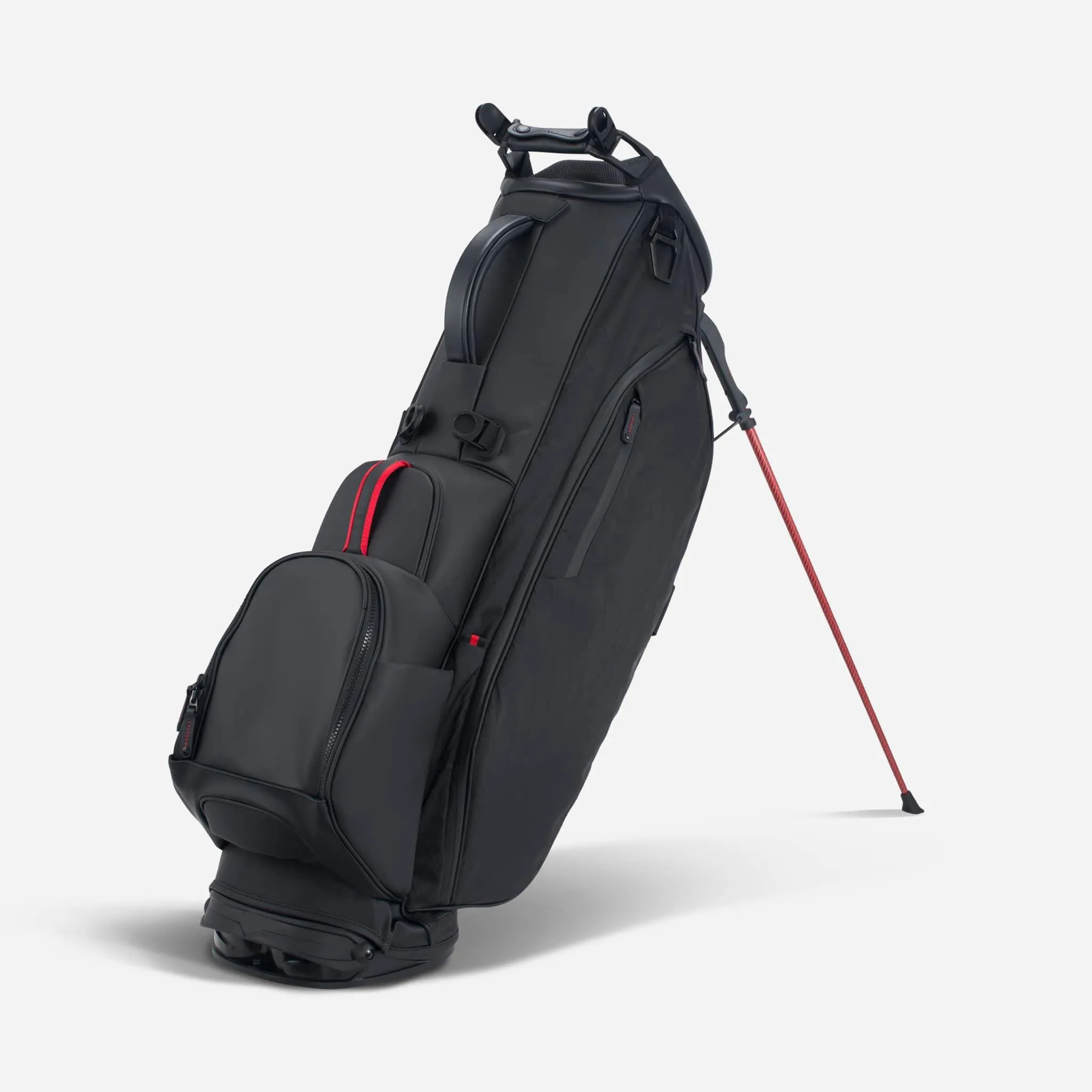
Primary Shell Fabrics
The choice of primary shell fabric fundamentally determines the durability, weight, water resistance, and cost of a stand golf bag. The most common materials used in quality stand bags include polyester ranging from 210 denier for ultralight models to 600 denier for premium cart-oriented stand bags, nylon including standard 420-denier and premium Cordura variants, and ripstop constructions incorporating reinforcement threads at regular intervals to prevent tear propagation. Polyester remains the dominant choice for stand bags due to its superior UV resistance, which prevents fading during prolonged sun exposure on the course, and its lower moisture absorption compared to nylon. However, nylon offers superior abrasion resistance and tensile strength at equivalent denier ratings, making it the preferred choice for base panels and high-wear zones. Cordura nylon, with its air-entwined fiber construction, provides three to five times the abrasion resistance of standard nylon at a cost premium of approximately 40 to 60 percent per meter of fabric. For brands developing stand bag lines, the optimal material strategy involves using different fabrics in different zones: durable Cordura or high-denier polyester on the base and lower panels, mid-range polyester for the main body, and lightweight ripstop for upper sections and pocket flaps.
Waterproofing and Weather Resistance
Modern stand bags employ multiple strategies for weather protection. The most common approaches include DWR durable water repellent coating applied to the outer fabric surface, TPU thermoplastic polyurethane lamination bonded to the fabric's inner surface, and seam sealing with heat-activated tape that covers needle holes along stitch lines. The effectiveness of these systems is measured in hydrostatic head ratings, with basic water resistance requiring 800 to 1,000 millimeters, reliable rain protection needing 1,500 to 3,000 millimeters, and full waterproof performance demanding 5,000 millimeters and above. Waterproof zippers, primarily YKK Aquaguard series, add 30 to 50 percent to zipper component costs but provide essential protection for valuables pockets. For OEM manufacturing, achieving consistent waterproofing requires investment in heat-sealing equipment, waterproof zipper sourcing, and quality control testing protocols that include spray testing finished bags under controlled conditions.
Zippers, Hardware, and Components
The quality of zippers, buckles, and hardware components directly impacts both the functional longevity and perceived quality of a stand bag. YKK zippers are the industry standard for premium golf bags, with the #5 and #8 coil zipper series used for main compartments and the #3 and #5 molded tooth series for smaller pockets. Each zipper upgrade from generic to YKK adds approximately $0.80 to $1.50 per zipper in component costs, with a full bag requiring 12 to 18 zippers. Buckle hardware ranges from basic nylon side-release buckles costing $0.15 each to premium aluminum alloy buckles at $0.80 to $1.20 each. Strap adjusters, D-rings, and attachment loops represent additional cost variables that significantly impact perceived quality. Our manufacturing data shows that brands investing in premium hardware components typically see 15 to 25 percent higher customer satisfaction ratings, justifying the additional $3 to $8 per bag in component costs.
Divider Systems: The Heart of Stand Bag Design
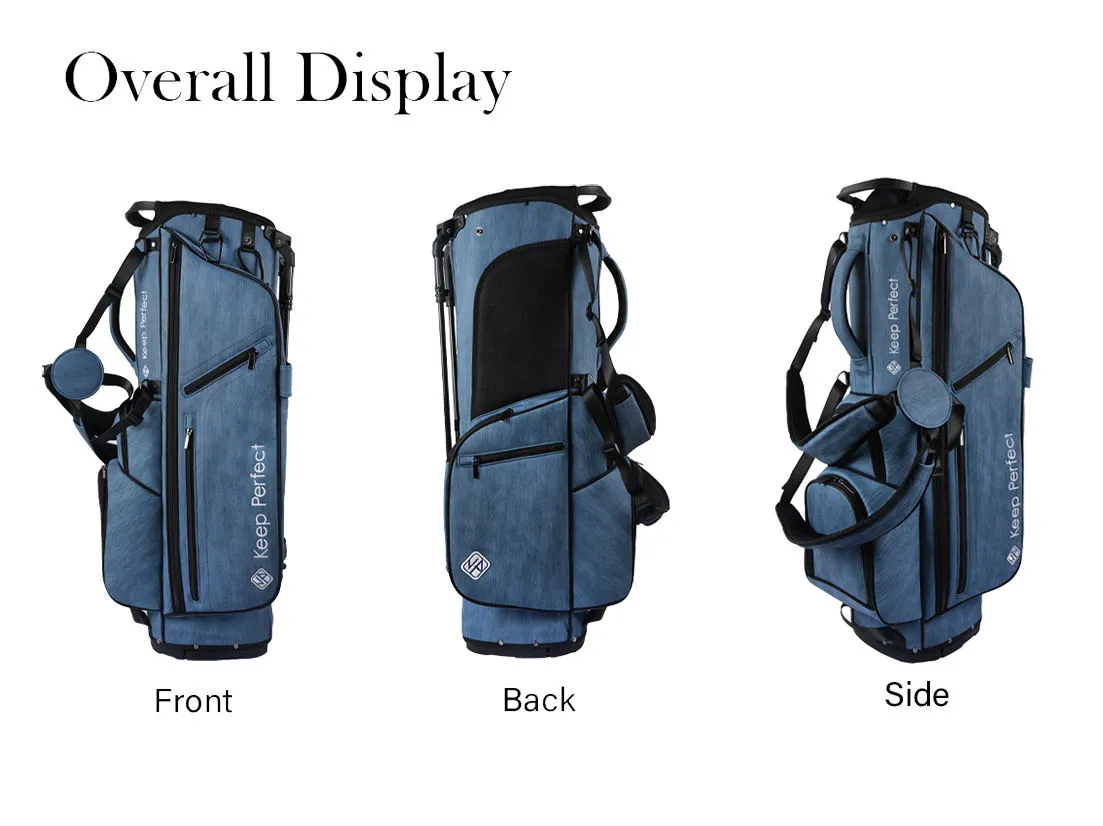
4-Way and 5-Way Divider Systems
The 4-way and 5-way divider systems represent the most popular configuration for stand bags, balancing club organization with weight efficiency. These systems use four or five shared compartments to separate clubs into logical groups: woods in the largest section, irons in the middle sections, and wedges plus putter in dedicated slots. The construction involves sewing fabric or mesh panels inside the bag's top cuff to create the compartments, with each divider panel requiring precise alignment and secure attachment to maintain structural integrity throughout the bag's service life. Manufacturing a 5-way divider adds approximately 120 to 180 grams compared to an open-top design, but provides dramatically improved club management and anti-tangle performance. The divider panels are typically constructed from 200-denier mesh with reinforced edges, and attachment to the bag body requires 20 to 30 individual stitch operations per divider panel.
14-Way Full-Length Divider Systems
Full-length 14-way dividers represent the premium end of stand bag configuration, providing individual tubes for each club that extend the full length of the bag. This configuration delivers superior club protection, eliminates tangling entirely, and creates the most organized storage arrangement possible. The weight penalty ranges from 300 to 500 grams compared to 5-way systems, primarily from the additional divider tube material and the structural reinforcement required to support the tubes. Manufacturing 14-way full-length dividers requires precision tube-forming equipment, individual tube insertion and alignment during assembly, and top cuff reinforcement to maintain tube positioning. The production complexity increases manufacturing time by approximately 35 to 45 percent compared to 5-way systems, with corresponding labor cost increases.
Hybrid and Innovative Divider Concepts
Several innovative divider concepts are emerging that challenge the traditional trade-off between organization and weight. Partial-length divider systems use full-length separators at the top cuff transitioning to shared compartments in the lower bag body, achieving 70 to 80 percent of the club isolation benefit at 50 to 60 percent of the weight penalty. Removable divider inserts allow golfers to switch configurations based on their needs, with the insert adding only 80 to 120 grams. Anti-twist technologies use offset divider angles or curved divider walls that prevent clubs from rotating within their compartments. For OEM partners developing differentiated products, these hybrid divider concepts offer compelling value propositions that can command premium pricing while addressing golfer concerns about weight.
Weight Categories and Performance Analysis

Ultralight Category: Under 3.5 Pounds
Ultralight stand bags weighing under 3.5 pounds prioritize minimal weight above all other considerations, appealing to fitness-focused golfers and those who play frequent quick nine-hole rounds. Achieving this weight target requires aggressive material selection, with 210-denier fabrics, minimal pocket counts of three to four, simplified divider systems, and lightweight aluminum or carbon fiber leg mechanisms. Manufacturing costs for ultralight bags can be paradoxically higher than mid-weight bags because the specialized lightweight materials and construction techniques command premium pricing. The retail price range for this category spans $120 to $250, with manufacturing costs between $28 and $55 depending on material quality and brand specifications.
Mid-Weight Category: 3.5 to 5.0 Pounds
The mid-weight category from 3.5 to 5.0 pounds represents the largest market segment and the sweet spot where weight, features, and price balance optimally. Bags in this range can accommodate 5-way to 7-way divider systems, six to eight pockets, full-featured leg mechanisms, and comfortable dual strap systems without excessive weight penalties. Construction typically uses 300 to 420-denier polyester with selective reinforcement in high-wear zones. This category offers the best margin opportunity for brands, with retail prices ranging from $150 to $300 and manufacturing costs between $32 and $65. The volume potential of this segment makes it the recommended starting point for new brands entering the stand bag market.
Feature-Rich Category: 5.0 to 6.5 Pounds
Feature-rich stand bags above 5.0 pounds target golfers who want maximum functionality in a carryable package. These bags incorporate 14-way divider systems, nine to eleven pockets, premium strap systems, integrated rain hoods, and reinforced bases that can double as cart-compatible platforms. The heavier construction uses 500 to 600-denier materials throughout, with extensive reinforcement at stress points. Retail pricing ranges from $200 to $400, with manufacturing costs between $45 and $85. These bags appeal to golfers transitioning between carrying and cart use, offering versatility that justifies their additional weight for many consumers.
How to Choose OEM Stand Bags for Your Brand
Defining Your Brand Positioning
Before engaging with OEM manufacturers, brands must clearly define their market positioning, target customer profile, and price architecture. A brand targeting tour-level golfers will require fundamentally different specifications, materials, and manufacturing processes than a brand targeting weekend recreational golfers. Key positioning decisions include the target retail price range, which determines the available manufacturing cost budget, the feature set prioritization between weight, storage, protection, and aesthetics, and the brand identity expressed through design language, color palette, and material quality perception. These decisions should be informed by competitive analysis of existing products in your target segment, direct input from your target customer demographic, and realistic assessment of your brand's manufacturing cost capabilities at your intended price point.
Manufacturer Selection Criteria
Selecting the right OEM manufacturing partner involves evaluating multiple criteria beyond unit price. Production capacity should match your volume requirements with room for growth; our facility produces over 200,000 bags annually across eight production lines, providing flexibility for brands at any stage of growth. Quality certifications including BSCI social compliance and ISO 9001 quality management demonstrate systematic commitment to manufacturing standards. Design and development capabilities including in-house pattern making, prototyping, and material sourcing reduce development time and improve communication efficiency. Minimum order quantity flexibility is crucial for new brands; look for manufacturers offering MOQs of 100 pieces or fewer for initial orders. Sample quality and turnaround time indicate the manufacturer's attention to detail and responsiveness. Finally, evaluate the manufacturer's experience with your target product category; a factory specializing in stand bags brings deeper process knowledge than a general-purpose bag manufacturer.
Customization Options and Branding
Modern OEM manufacturing offers extensive customization options that allow brands to create distinctive products. Custom fabric printing through sublimation or screen printing enables unique patterns and graphics. Custom hardware including zipper pulls, buckles, and D-rings in brand colors or with logo embossing reinforces brand identity. Custom divider systems, pocket layouts, and strap configurations allow product differentiation based on functional attributes. Embroidery, heat transfer labels, and woven patches provide logo application options at various price points. Custom packaging including hang tags, care cards, and retail-ready packaging completes the brand experience. Our design team works with brand partners to optimize the balance between customization and cost, ensuring every branding element contributes meaningfully to brand perception and product differentiation.
Pricing Strategy and Market Positioning
Manufacturing Cost Breakdown
The manufacturing cost of a stand golf bag typically breaks down into several key categories. Fabric and shell materials represent 25 to 35 percent of total cost, ranging from $8 to $22 per bag depending on fabric quality and quantity. Divider systems account for 10 to 20 percent of costs, from $4 to $15 per bag. Zippers and hardware constitute 10 to 15 percent, at $3.50 to $10 per bag. Strap systems add 5 to 10 percent, costing $2 to $7 per bag. Leg mechanisms represent 8 to 12 percent at $3 to $9 per bag. Labor and assembly account for 15 to 25 percent of costs, ranging from $5 to $18 per bag depending on construction complexity and manufacturing location. Packaging and logistics add $1.50 to $4 per bag. Understanding these cost drivers enables brands to make informed specification decisions that balance quality targets with budget constraints.
Retail Price Architecture
Successful golf bag brands typically structure their product lines across three to four price tiers. Entry-level models retail at $99 to $149, targeting value-conscious golfers and serving as the volume foundation of the product line. Mid-range models at $149 to $249 deliver the best balance of features and margin, representing the core of most brand portfolios. Premium models at $249 to $399 showcase brand capabilities and command higher margins through superior materials and features. Tour-level models above $399 serve aspirational positioning and professional endorsement purposes. Each tier requires distinct manufacturing specifications, with cost targets typically set at 25 to 35 percent of the intended retail price to accommodate distribution, marketing, and margin requirements throughout the supply chain.
2026 Market Trends and Future Outlook
Sustainability and Eco-Conscious Materials
The golf industry is increasingly demanding sustainable manufacturing practices and eco-conscious materials. Recycled polyester made from post-consumer plastic bottles now performs comparably to virgin polyester at a cost premium of 10 to 15 percent. Plant-based nylon alternatives derived from castor oil show promise for certain applications. Water-based coatings are replacing solvent-based DWR treatments to reduce environmental impact. Brands incorporating sustainable materials into their stand bag lines can access the growing segment of environmentally conscious golf consumers, who represent an estimated 34 percent of the golf market in North America and Europe.
Technology Integration
Smart features are beginning to appear in premium stand bags, including integrated GPS holder mounts, USB charging pockets for portable battery packs, Bluetooth tracking devices for lost bag location, and LED lighting systems for early morning or evening rounds. While currently representing less than 5 percent of stand bag sales, technology-integrated bags are growing at 40 percent annually and may represent a significant market segment within three to five years. For OEM partners, incorporating technology-ready features such as dedicated electronics pockets, cable routing channels, and secure device mounts positions products for future market evolution without significant current cost investment.
Ready to Start Your Custom Golf Bag Project?
Partner with a BSCI & ISO 9001:2015 certified factory producing 200,000+ premium golf bags annually. MOQ just 100 pieces.
Get a Free Quote TodayFrequently Asked Questions
What makes a stand golf bag the best choice for walking golfers?
Stand golf bags offer the ideal balance between carrying comfort and functionality, featuring integrated retractable legs that allow the bag to stand upright on any terrain, dual strap systems for ergonomic weight distribution, and weights typically between 3 and 6 pounds that make walking 18 holes comfortable for most golfers.
What is the ideal weight for a stand golf bag?
The ideal stand golf bag weight falls between 3.5 and 5.5 pounds for most golfers. Lightweight models under 4 pounds suit golfers who prioritize walking comfort, while bags between 4.5 and 5.5 pounds offer additional storage and features at a modest weight penalty.
How many dividers should a quality stand bag have?
Quality stand bags typically feature 4-way to 14-way divider systems. A 5-way divider provides the best balance of club organization and weight savings, while a 14-way full-length divider offers maximum club protection at the cost of additional weight.
What materials are best for stand golf bag construction?
The best stand golf bags use high-denier polyester or nylon for the main body, reinforced polymer or carbon fiber for the leg mechanism, and water-resistant coatings in high-moisture areas. Premium models incorporate ripstop nylon and Cordura fabric for enhanced durability.
What is the price range for quality stand golf bags?
Quality stand golf bags range from $100 for entry-level models to $400 for premium tour-quality bags. Manufacturing costs typically represent 25 to 35 percent of the retail price.
How do I choose the right stand bag for my brand?
Consider your target customer segment, price positioning, brand identity, and the specific needs of golfers in your market. Key factors include weight targets, divider configuration preferences, pocket layouts, and customization options available through your OEM manufacturing partner.
What is the minimum order quantity for custom stand bags?
Most OEM golf bag factories require minimum order quantities of 100 to 300 pieces per colorway. Some factories offer lower MOQs of 50 pieces for initial trial orders, with pricing becoming more competitive at volumes above 500 pieces.