Best Lightweight Golf Bags Under 2kg: The Complete Manufacturing and Design Guide for 2026
Table of Contents
- Introduction: The Quest for the Perfect Lightweight Bag
- Why Lightweight Matters: The Walking Golf Revolution
- Lightweight Materials: Engineering Every Gram
- Design Innovations for Sub-2kg Bags
- Manufacturing Challenges of Ultra-Lightweight Bags
- Lightweight Bag Categories and Recommendations
- Understanding the Trade-Offs
- Future of Lightweight Golf Bag Technology
- Frequently Asked Questions
Introduction: The Quest for the Perfect Lightweight Bag
The pursuit of the perfect lightweight golf bag is one of the most active areas of innovation in golf equipment manufacturing. Every year, brands push the boundaries of what is possible, shaving grams from bag weights while maintaining the features and durability that golfers demand. In 2026, the sub-2-kilogram weight category has emerged as the most competitive segment in the stand bag market, with dozens of new models competing for the attention of walking golfers who refuse to sacrifice functionality for weight savings.
As a certified manufacturer producing over 200,000 golf bags annually, including a growing portfolio of ultra-lightweight models, we have been at the forefront of this weight reduction revolution. Our engineering team has developed proprietary techniques for maintaining structural integrity and feature sets at weights that would have been considered impossible just five years ago. In this comprehensive guide, we share our manufacturing expertise on the materials, design principles, production challenges, and performance characteristics of lightweight golf bags under 2 kilograms.
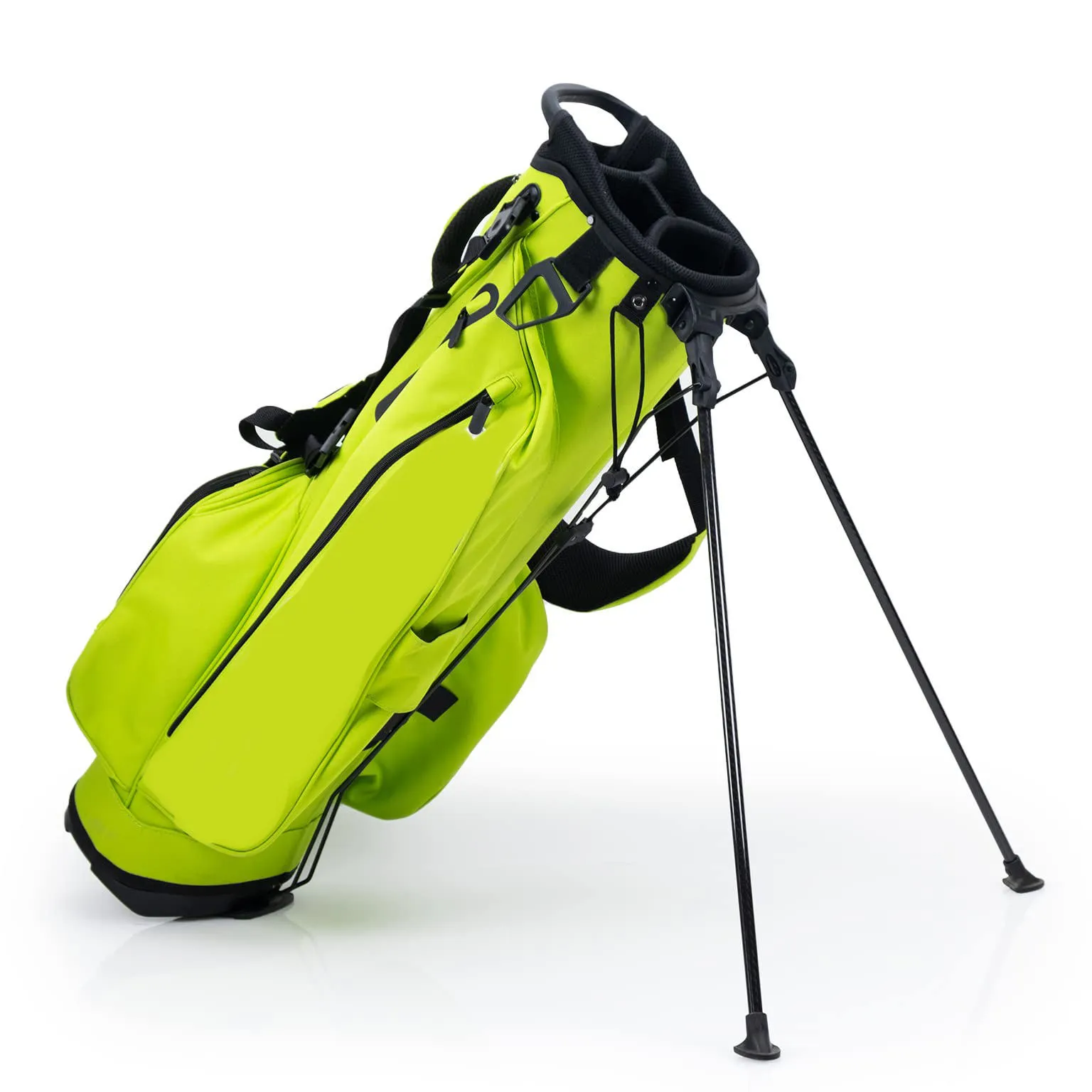
Whether you are a golfer searching for the lightest possible bag for your walking game, a brand owner developing an ultra-lightweight product line, or simply curious about the engineering behind modern lightweight golf bags, this guide provides the detailed technical knowledge you need. We will cover everything from the specific fabrics and materials used to achieve sub-2-kilogram weights, through the design innovations that maximize features at minimal weight, to the manufacturing processes that make it all possible.
Why Lightweight Matters: The Walking Golf Revolution
Health Benefits Driving the Trend
The walking golf movement has gained tremendous momentum in recent years, driven by growing awareness of the health benefits associated with walking 18 holes. Research published in multiple sports medicine journals has confirmed that golfers who walk their rounds burn between 1,400 and 2,000 calories per round, compared to approximately 900 calories for those who ride in a cart. Walking golfers also demonstrate lower rates of cardiovascular disease, reduced blood pressure, and improved mental health outcomes compared to their riding counterparts.
These health benefits have attracted a new generation of golfers who approach the sport with a fitness-first mindset. For these golfers, every gram of carry weight matters. Research in sports ergonomics has consistently shown that reducing carried weight by even 500 grams can reduce perceived exertion by 5 to 8 percent over a four-hour round, which translates to a measurably more enjoyable experience. This demand for lighter equipment has been the primary driver behind the rapid evolution of lightweight golf bag technology.
Market Growth Data
The lightweight golf bag segment has grown by approximately 15 to 20 percent annually since 2022, now accounting for over 40 percent of all stand bag sales globally. Within the lightweight category, bags weighing under 2 kilograms represent the fastest-growing sub-segment, with year-over-year growth rates exceeding 25 percent. This growth has attracted significant investment from both established brands and new market entrants, driving rapid innovation in materials and design.

Our factory production data reflects this market shift clearly. In 2024, lightweight bags under 2.5 kilograms accounted for 30 percent of our total production volume. By 2025, this had grown to 42 percent, and our forecasts for 2026 project a further increase to 50 percent of total production. This trend is not limited to any single geographic market but is observed across North America, Europe, Asia-Pacific, and emerging golf markets in the Middle East and Latin America.
Lightweight Materials: Engineering Every Gram
Ultralight Outer Fabrics
The single largest contributor to golf bag weight is the outer shell fabric, making fabric selection the most critical decision in lightweight bag design. In 2026, the leading ultralight fabrics include:
70D Ripstop Nylon is the lightest viable fabric for golf bag construction, weighing approximately 40 grams per square meter. This ultra-fine nylon uses a ripstop weave pattern where thicker reinforcement threads are interwoven at regular intervals to prevent small tears from propagating. While extremely lightweight, 70D nylon requires careful handling during manufacturing due to its delicate nature and is typically reserved for the lightest Sunday bags that carry fewer than 10 clubs.
210D Ripstop Nylon is the sweet spot for lightweight stand bags, weighing approximately 70 grams per square meter while offering significantly better abrasion resistance than 70D alternatives. This fabric is used in the majority of sub-2-kilogram stand bags and provides a good balance between weight savings and durability. The ripstop grid pattern adds approximately 5 percent to the fabric weight but increases tear resistance by 300 percent, making it an essential engineering feature.
Dyneema Composite Fabric (DCF) represents the absolute cutting edge of lightweight golf bag materials. Originally developed for the sailing and mountaineering industries, DCF uses ultra-high-molecular-weight polyethylene (UHMWPE) fibers that are 15 times stronger than steel on a weight-for-weight basis. DCF fabrics weigh as little as 30 to 50 grams per square meter and are completely waterproof without additional coating. However, the material cost is 8 to 12 times higher than standard nylon, limiting its use to ultra-premium bags priced above 400 USD retail.
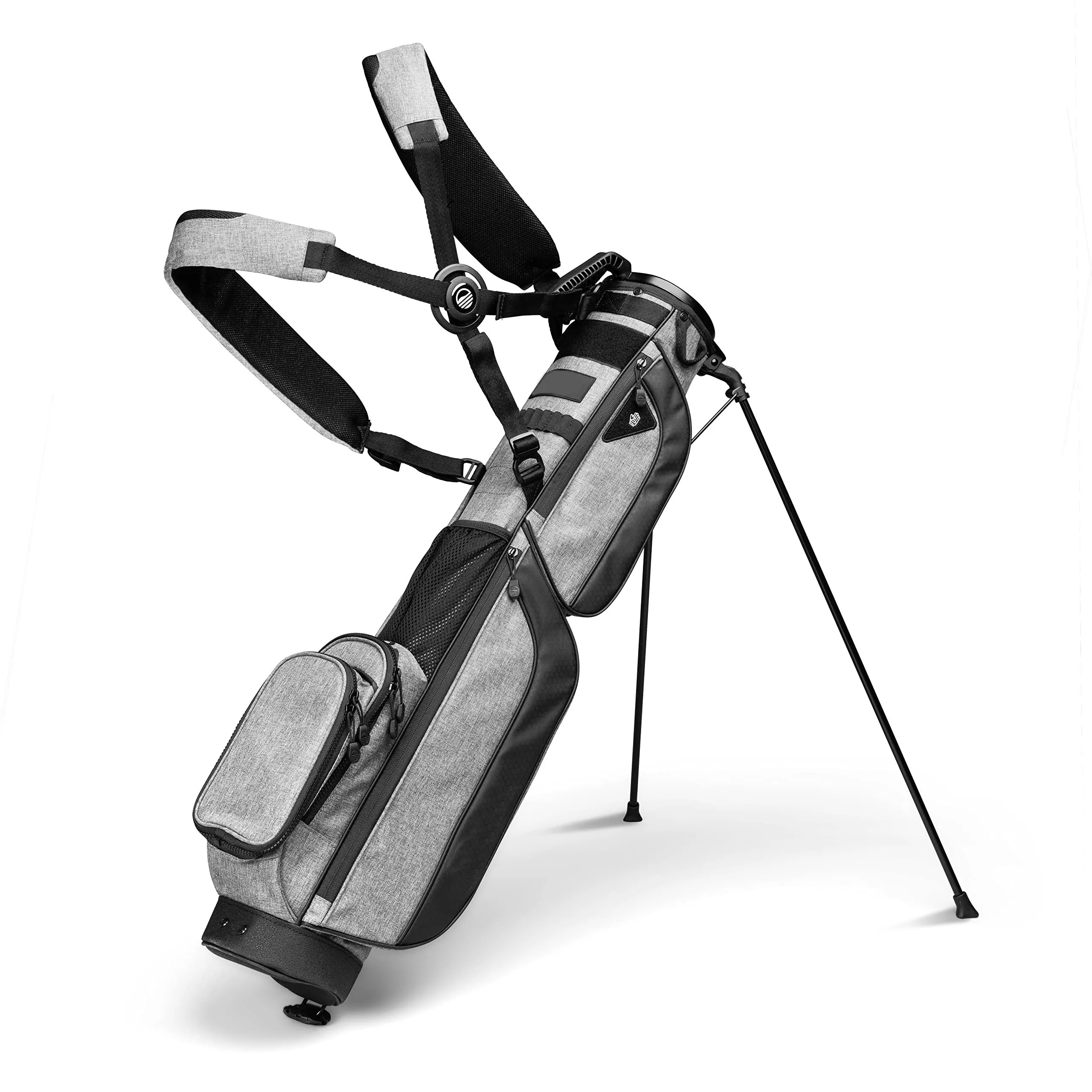
Lightweight Frame and Structural Materials
Beyond the fabric, the frame structure of a lightweight bag must be carefully engineered to minimize weight while maintaining the rigidity needed to support a full set of clubs. Traditional bag frames use medium-density fiberboard (MDF) or ABS plastic sheets, but these materials are too heavy for sub-2-kilogram designs. Instead, we use thin-wall aluminum tubing (0.6 to 0.8 millimeter wall thickness) for the main structural members, combined with fiberglass-reinforced nylon brackets at connection points.
The base plate of lightweight bags is manufactured from carbon-fiber-reinforced thermoplastic, which provides the necessary rigidity to support club weights without bending or flexing at a fraction of the weight of traditional injection-molded plastic bases. A carbon fiber base plate weighs approximately 40 to 60 grams compared to 120 to 180 grams for a standard ABS base plate, saving 60 to 120 grams from the total bag weight.
Lightweight Divider Systems
As discussed in our companion article on divider systems, the divider assembly can account for 300 to 500 grams in a 14-way full-length configuration. For sub-2-kilogram bags, we use lightweight 3-way to 5-way fabric divider systems that weigh only 60 to 120 grams. These fabric dividers use mesh panels sewn into the bag body to create basic club compartments without the rigid plastic tubes of heavier designs.
Weight-Optimized Hardware
Every zipper, buckle, D-ring, and eyelet contributes to the total bag weight, and in a sub-2-kilogram design, each component is scrutinized for weight optimization. We use lightweight aluminum zippers from YKK's Vislon series that weigh 40 percent less than standard metal zippers. Buckles are injection-molded from glass-fiber-reinforced nylon rather than metal, saving 10 to 15 grams per buckle across the four to six buckles on a typical lightweight bag. Even the stitching thread is specified with lighter Tex 40 weight instead of the Tex 70 used in standard bags, saving approximately 15 to 20 grams across all seams.
Design Innovations for Sub-2kg Bags
Minimalist Pocket Architecture
Pockets are one of the largest contributors to bag weight, with each pocket adding fabric, zippers, lining, and sewing operations. In lightweight bag design, the challenge is to provide essential pocket functionality while minimizing the number and size of pockets. Our design approach for sub-2-kilogram bags typically includes four to five strategically placed pockets:
A full-length apparel pocket on the side of the bag provides storage for rain gear or extra layers without adding excessive weight, as the pocket fabric is shared with the main body panel. A valuables pocket with a fleece-lined interior protects phones, keys, and wallets. A rangefinder pocket on the front provides quick access to the most frequently used accessory. A ball pocket and a tee pocket complete the set, providing essential on-course storage.

Integrated Strap System Design
Traditional strap systems add significant weight through separate padding, adjustment hardware, and attachment webbing. In lightweight bag design, the strap system is integrated into the bag structure to eliminate redundant components. Our 2026 designs use a monocoque strap concept where the strap attachment points are formed as part of the bag's internal frame structure rather than being sewn-on components. This eliminates the need for separate attachment plates and reduces the total strap system weight from the typical 250 to 350 grams down to 150 to 200 grams.
Advanced Stand Mechanism for Lightweight Applications
Standard stand mechanisms add 350 to 550 grams, which is a significant portion of the total weight budget for a sub-2-kilogram bag. For lightweight applications, we use carbon fiber stand legs paired with compact torsion springs that reduce the mechanism weight to approximately 200 to 280 grams. The carbon fiber legs provide the necessary strength and rigidity at approximately 40 percent less weight than aluminum alternatives. The springs are calibrated for the lighter bag weight, requiring less spring force and therefore less spring material.
Manufacturing Challenges of Ultra-Lightweight Bags
Fabric Handling Difficulties
Working with ultralight fabrics presents unique manufacturing challenges. The 70D and 210D nylon fabrics used in lightweight bags are significantly more delicate than the 600D and 1200D polyester used in standard bags. These thin fabrics can be easily damaged by sewing machine feed dogs, can shift or stretch during cutting, and require specialized presser foot pressure settings to prevent puckering. Our factory has invested in servo-motor sewing machines with electronic presser foot control that allows operators to fine-tune the pressure for each fabric weight.
Heat management is another critical concern. Ultralight nylon fabrics are susceptible to heat damage from sewing machine needles that become hot during extended operation. We use titanium-coated needles with reduced friction coefficients to minimize heat generation, and operators are trained to change needles every two hours to maintain sharp cutting edges that pass through the fabric cleanly rather than generating friction heat.
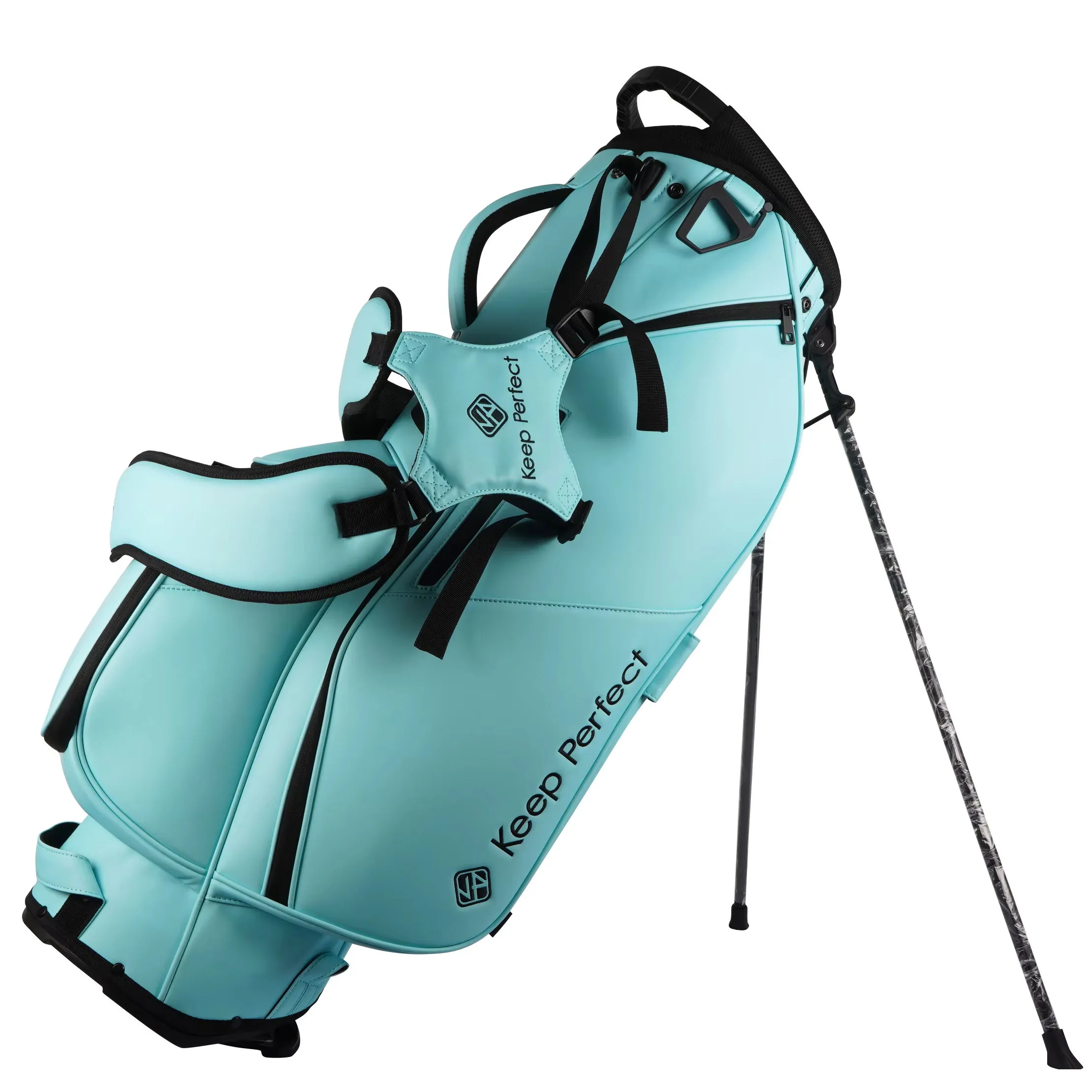
Quality Control for Lightweight Construction
The thinner fabrics and reduced material margins used in lightweight bags leave less room for manufacturing error. A bar-tack stitch that penetrates 1 millimeter too deep in a standard bag might cause a minor cosmetic issue, but the same stitch in a lightweight bag could punch through the fabric and create a structural weakness. Our quality control protocols for lightweight bags include 100 percent inspection of all load-bearing seams using both visual examination and a light transmission test that reveals any needle holes that deviate from specifications.
Weight Tolerance Management
For bags specified at under 2 kilograms, every component must be controlled to tight weight tolerances. We establish a weight budget for each component during the design phase, with the total of all component weights summing to the target bag weight. During production, each component is weighed on calibrated scales before being released to the assembly floor. If a component exceeds its weight budget, it is either rejected or the excess must be offset by savings elsewhere in the build. This rigorous approach to weight management ensures that every finished bag meets the specified weight target.
Lightweight Bag Categories and Recommendations
Ultra-Minimalist Sunday Bags (Under 1.2kg)
At the extreme light end of the spectrum, Sunday bags weighing under 1.2 kilograms sacrifice stand mechanisms, multiple pockets, and rigid frame structures to achieve maximum weight savings. These bags are designed to carry 6 to 10 clubs and minimal accessories, making them ideal for quick nine-hole rounds, practice sessions, or golf travel where weight is at a premium. The typical Sunday bag uses 70D ripstop nylon, a simple drawstring closure, a single unpadded strap, and no internal divider system beyond a basic fabric separator.
Lightweight Stand Bags (1.2kg to 1.8kg)
This is the sweet spot for most walking golfers, offering a complete feature set including stand mechanism, divider system, multiple pockets, and comfortable straps at a weight that is comfortable to carry for 18 holes. Our production data shows that this category accounts for approximately 65 percent of all lightweight bag sales, reflecting the strong demand for bags that provide full functionality without the weight penalty of traditional designs. The key to achieving sub-2-kilogram weight in this category is the strategic selection of lightweight materials for every component without sacrificing any essential features.
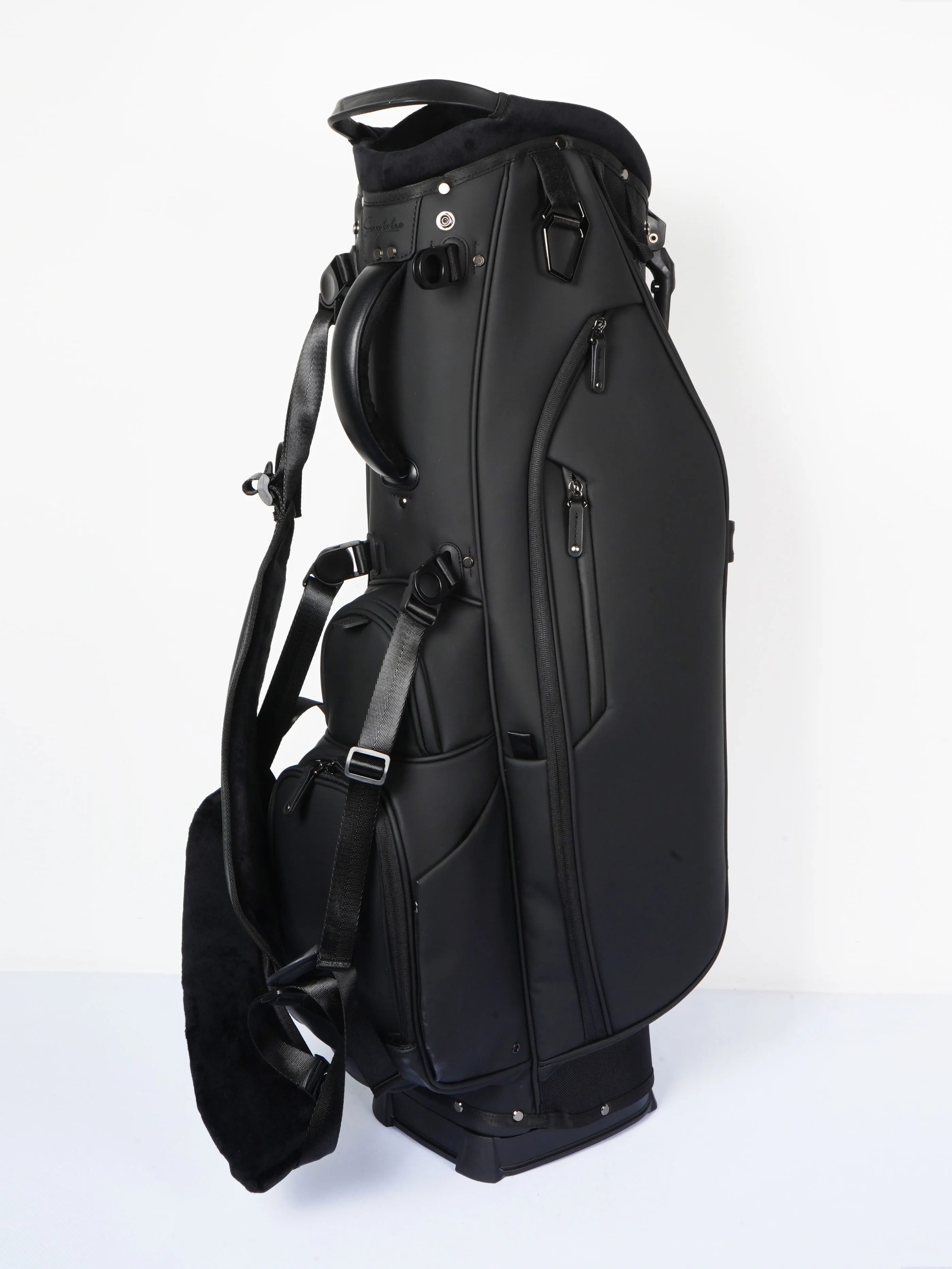
Performance Lightweight Bags (1.8kg to 2.5kg)
Golfers who want additional features such as 14-way divider systems, insulated cooler pockets, or premium materials at a slightly higher weight point will find options in the 1.8 to 2.5 kilogram range. While technically above the sub-2-kilogram threshold, these bags still represent a significant weight reduction compared to traditional stand bags that weigh 2.5 to 3.5 kilograms. This category is popular among golfers who walk frequently but also occasionally use a push cart or riding cart, as the additional features provide benefits in those configurations as well.
Understanding the Trade-Offs
Durability Versus Weight
The most significant trade-off in lightweight bag design is between durability and weight. Thinner fabrics are inherently less resistant to abrasion and puncture than heavier alternatives. A 70D nylon bag will not withstand the same level of rough handling as a 1200D polyester bag. However, this trade-off is less severe than it might appear. Modern ripstop fabrics and high-tenacity yarns have dramatically narrowed the durability gap, and the typical lightweight bag owner, who tends to be more equipment-conscious than the average golfer, often subjects their bag to less abusive handling in practice.
Feature Set Versus Weight
Every pocket, zipper, divider, and padding element adds weight. Golfers pursuing the absolute lightest bags must accept a more minimal feature set than is available in heavier designs. The key is identifying which features are essential to your golfing experience and which can be sacrificed. For most walking golfers, the essential features are a stand mechanism, a basic divider system, a valuables pocket, a rangefinder pocket, and comfortable straps. Everything beyond these essentials is optional and can be removed to save weight.
Cost Versus Weight
Achieving ultra-lightweight construction typically requires more expensive materials and more precise manufacturing processes. Carbon fiber components, Dyneema fabrics, and titanium hardware all command significant price premiums over their conventional alternatives. As a general rule, each 100 grams of weight reduction in the sub-2-kilogram range adds approximately 20 to 40 USD to the manufacturing cost, which translates to 80 to 160 USD at retail with a standard 4x markup. Golfers and brand owners must evaluate whether the marginal weight savings justify the cost at each step.
Future of Lightweight Golf Bag Technology
Next-Generation Materials
Several emerging materials promise to further reduce golf bag weights in the coming years. Aerogel-insulated fabrics could provide thermal protection for valuables pockets at a fraction of current insulation weights. Self-healing polymer coatings could repair minor fabric abrasions automatically, extending the lifespan of ultralight materials. Graphene-infused nylon fibers, currently in development, could provide 15 to 20 percent better strength-to-weight ratios than current high-tenacity nylon.
Additive Manufacturing
3D printing technology is beginning to influence golf bag component manufacturing. Custom-molded base plates, hinge brackets, and strap attachment hardware can now be produced through additive manufacturing with complex geometries that remove material from low-stress areas while reinforcing high-stress zones. This topology optimization approach, borrowed from aerospace engineering, can reduce component weight by 20 to 30 percent compared to conventionally manufactured equivalents while maintaining the same structural performance.
Frequently Asked Questions
What is the lightest golf bag available in 2026?
The lightest production golf bags in 2026 weigh between 1.1 and 1.5 kilograms empty. These ultra-lightweight Sunday bags achieve their weight through the use of ultralight nylon fabrics, carbon fiber or aluminum stand legs, minimalist pocket configurations, and simplified divider systems. The absolute lightest bags on the market weigh approximately 900 to 1,100 grams.
Are ultra-lightweight golf bags less durable than standard bags?
Not necessarily. Modern lightweight materials like ripstop nylon and high-tenacity polyester offer excellent durability relative to their weight. The key durability factor is the denier count and weave construction of the fabric. Lightweight bags using 210D to 420D ripstop nylon with reinforced stitching at stress points can last 5 to 8 years with regular use, comparable to standard bags.
How do manufacturers reduce golf bag weight below 2 kilograms?
Weight reduction below 2kg is achieved through: ultralight fabrics (70D to 210D nylon), carbon fiber or thin-wall aluminum stand legs, minimalist 3-way to 5-way fabric dividers, removal of non-essential pockets and features, lightweight foam padding in strategic locations, simplified strap systems, and weight-optimized hardware. Every gram is scrutinized in the design process.
Can a lightweight bag carry a full set of 14 clubs?
Yes, most lightweight stand bags under 2 kilograms are designed to carry a full set of 14 clubs. They achieve this with 3-way to 5-way divider systems that provide adequate club organization without the weight of individual 14-way tubes. Some ultra-minimalist Sunday bags may be designed for 6 to 10 clubs only, so buyers should verify the intended club capacity.
What is the ideal weight for a golf bag for walking?
For golfers who walk the course, the ideal empty bag weight is between 1.5 and 2.5 kilograms. This range provides sufficient features (pockets, stand mechanism, comfortable straps) while keeping the total loaded weight (bag plus clubs and accessories) under 15 kilograms. Most experienced walking golfers target a total carry weight of 12 to 14 kilograms.
Do lightweight golf bags sacrifice pocket space?
Lightweight bags inherently have less pocket volume than full-size cart bags, but 2026 designs have made significant improvements. The best lightweight stand bags now feature 4 to 6 pockets including a full-length apparel pocket, insulated valuables pocket, and dedicated rangefinder pocket, providing adequate storage for a full round without adding significant weight.
Ready to Start Your Custom Golf Bag Project?
Partner with a BSCI & ISO 9001:2015 certified factory producing 200,000+ premium golf bags annually. MOQ just 100 pieces.
Get a Free Quote Today