Golf Bag Stand Mechanism: The Complete Engineering and Manufacturing Guide for 2026
Table of Contents
Introduction: The Engineering Marvel Behind Stand Bags
The golf bag stand mechanism is one of the most elegantly simple yet mechanically complex features in golf equipment design. When a golfer sets their stand bag down and it automatically deploys two legs to stand upright at the perfect angle, the experience feels almost magical. But behind that effortless motion lies a carefully engineered system of springs, hinges, levers, and structural tubes that must operate reliably thousands of times under demanding conditions.
As a certified manufacturer producing over 200,000 stand bags annually, we have developed deep expertise in every aspect of stand mechanism design, manufacturing, and testing. The stand mechanism is often the single most failure-prone component of a golf bag, making its engineering and quality control absolutely critical to product satisfaction. In this comprehensive guide, we will deconstruct the stand mechanism component by component, explain the engineering principles that govern its design, detail the manufacturing processes we use, and explore the innovations shaping the future of stand bag technology in 2026.
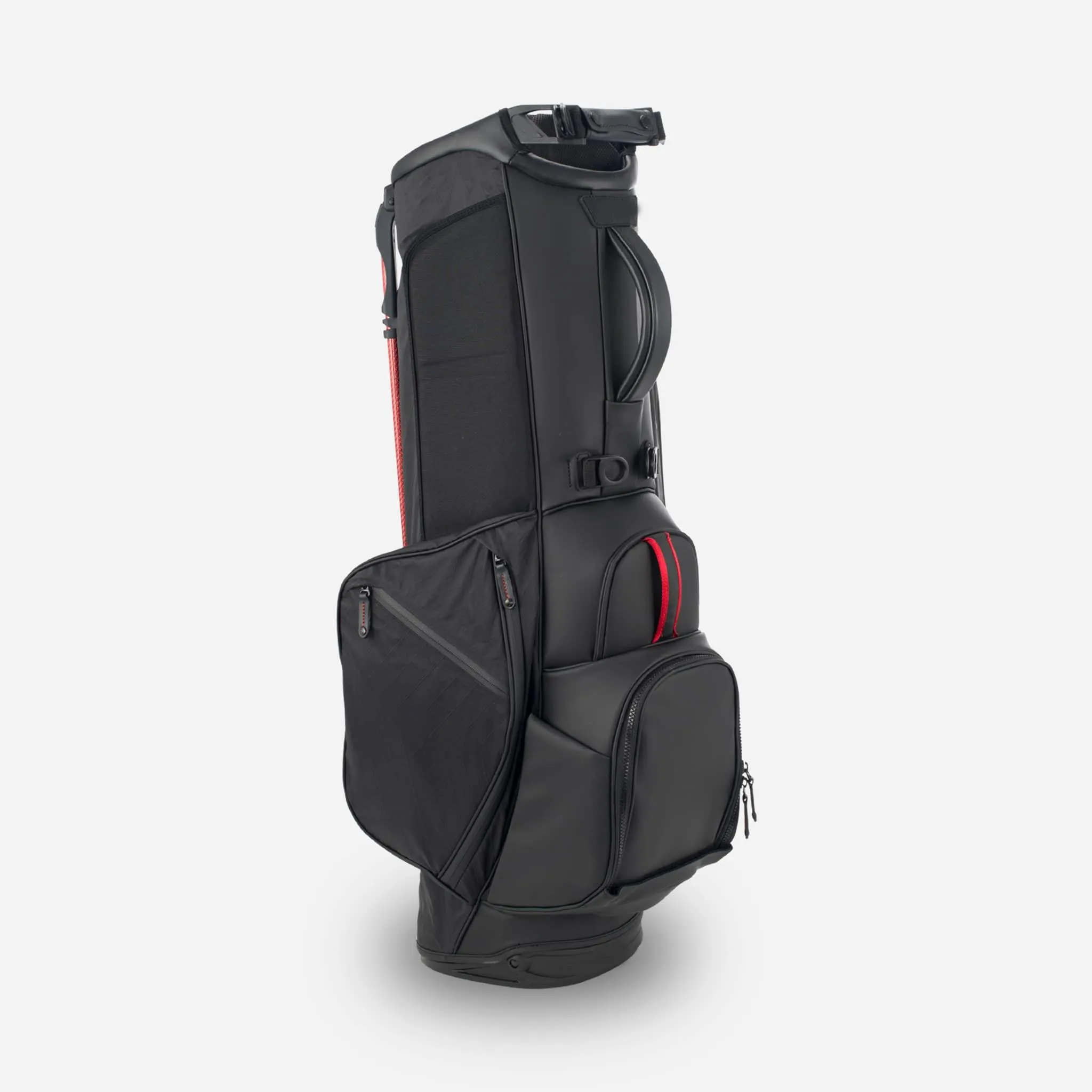
Whether you are a brand owner developing a new stand bag line, an engineer looking to understand competitor designs, or a golfer curious about how your bag works, this guide provides the detailed technical knowledge you need. The stand mechanism is where mechanical engineering meets practical golfing needs, and understanding its complexity helps explain the wide range of quality and performance found across different products on the market.
Anatomy of a Stand Mechanism
Core Components Overview
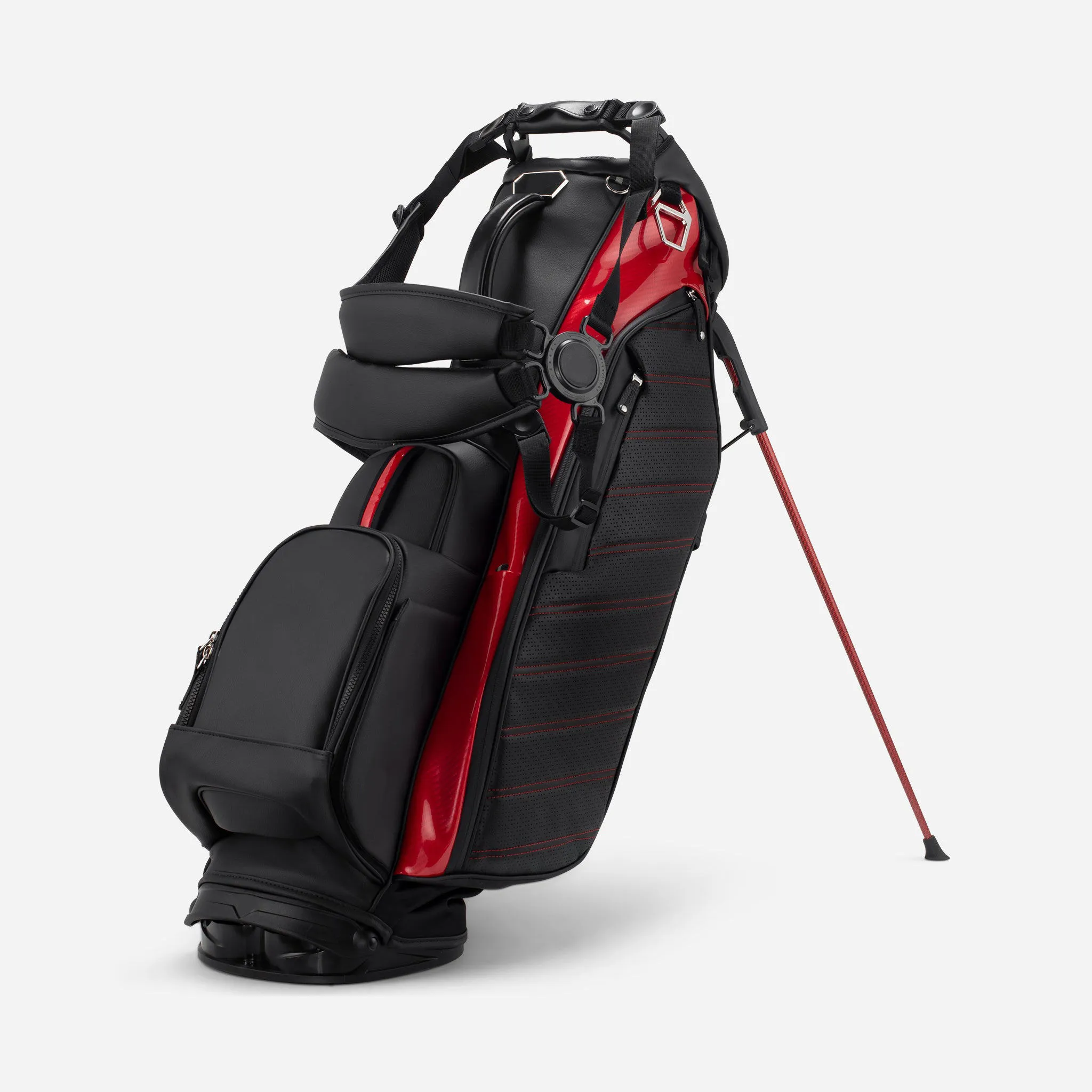
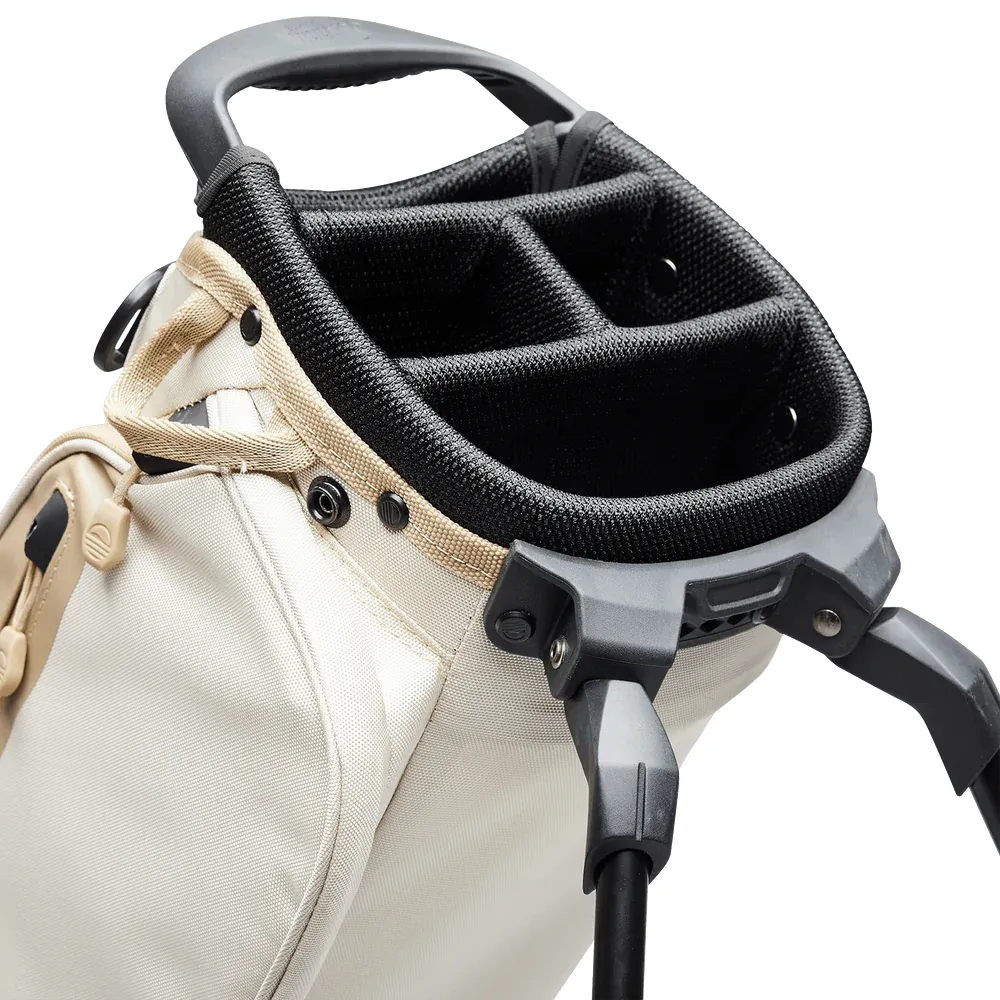
A golf bag stand mechanism consists of four primary subsystems: the legs, the hinge assembly, the spring system, and the mounting brackets that connect the mechanism to the bag frame. Each subsystem must work in precise coordination with the others to achieve reliable deployment and retraction over the product's expected lifespan.
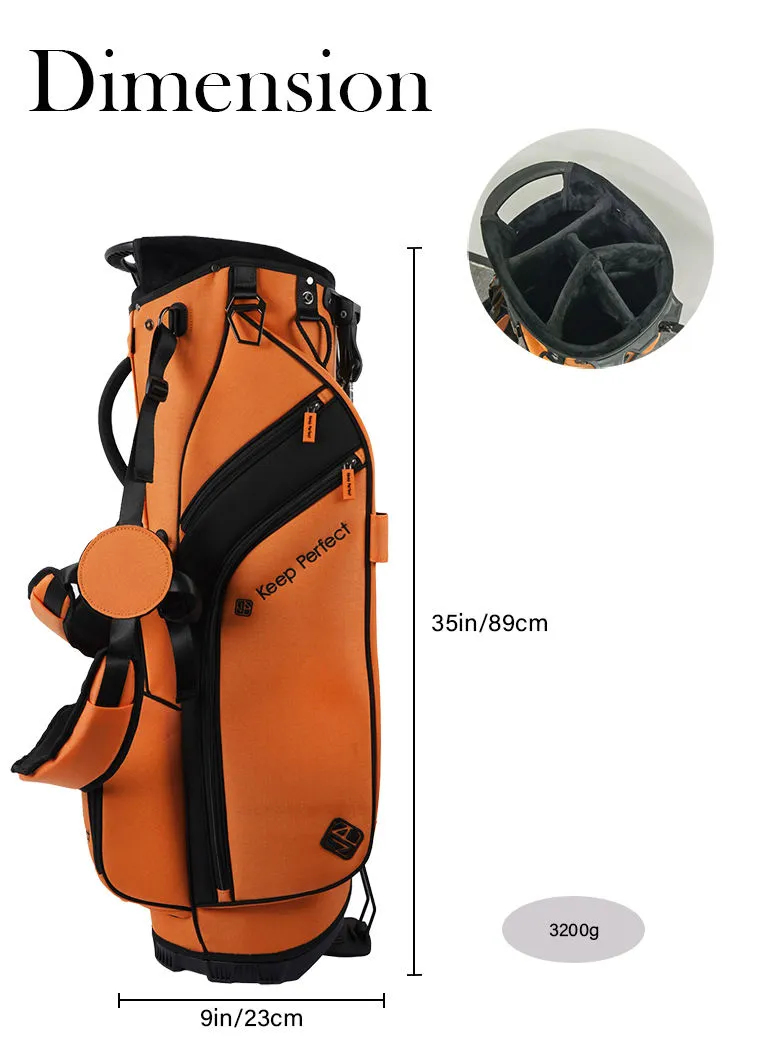
The legs are the visible tubes that extend from the bag body and contact the ground. They must be long enough to create a stable stance angle of 20 to 30 degrees from vertical, yet compact enough to fold flat against the bag during carry. Modern stand legs typically measure 380 to 480 millimeters in length when deployed, with telescoping designs that reduce the stowed length to approximately 200 to 260 millimeters.
The hinge assembly is the pivot point where the legs connect to the bag frame. It consists of a pair of mounting brackets permanently attached to the bag's internal frame structure, connected to the legs through hardened steel pivot pins. The hinge must provide smooth, unrestricted rotation while maintaining precise alignment between the legs to prevent binding or uneven deployment.
The spring system provides the force that drives leg deployment. Most modern stand bags use torsion springs mounted on the hinge pin that are pre-loaded during assembly. When the bag is tilted past a critical angle, the spring torque overcomes the friction holding the legs in their retracted position and drives the legs outward until they reach their mechanical stop. The spring force must be carefully calibrated to deploy the legs reliably even with a fully loaded bag weighing up to 18 kilograms.
Deployment Mechanics
The deployment sequence follows a precise mechanical sequence. When a golfer tilts the bag to approximately 15 to 20 degrees from vertical, the gravitational force on the legs creates a moment about the hinge pin that, combined with the spring torque, overcomes the detent force holding the legs in the retracted position. The legs rotate outward in a smooth arc, accelerating as they move past the midpoint of their travel. Upon reaching the fully deployed position, the legs contact rubber or silicone bumpers that absorb the kinetic energy and prevent a jarring impact.
The design of this deployment sequence requires careful balancing of multiple forces. The spring must be strong enough to deploy the legs reliably in all conditions, including cold weather when lubricants become more viscous and the bag is loaded with heavy clubs. However, the spring must not be so strong that deployment becomes violent or that excessive force is required to retract the legs manually. Our engineering team typically iterates through three to five spring prototypes, adjusting wire diameter, coil count, and preload angle, before finalizing the spring specification for a new bag model.
Stand Leg Materials and Manufacturing
Aluminum Alloy Legs
Aluminum alloy 6061-T6 is the most widely used material for stand bag legs, accounting for approximately 70 percent of all stand bags produced globally. This alloy offers an excellent combination of strength, lightness, corrosion resistance, and manufacturability. The tubes are produced through an extrusion process where heated aluminum billets are forced through a die to create the desired cross-sectional profile. After extrusion, the tubes undergo T6 heat treatment to achieve the required mechanical properties.
The typical aluminum stand leg has an outer diameter of 12 to 14 millimeters with a wall thickness of 1.0 to 1.5 millimeters. The weight per pair of legs ranges from 180 to 240 grams depending on length and wall thickness. The legs are finished with an anodized coating that provides both corrosion protection and an attractive appearance. We offer a range of anodizing colors including black, silver, red, blue, and gold to match different bag designs.
Carbon Fiber Composite Legs
For premium stand bags targeting weight-conscious golfers, carbon fiber composite legs represent the pinnacle of stand leg technology. These legs are manufactured using a roll-wrapping process where pre-impregnated carbon fiber sheets are wrapped around a mandrel and cured in an autoclave under heat and pressure. The resulting tubes have outer diameters comparable to aluminum legs but weigh 30 to 40 percent less.
A pair of carbon fiber stand legs typically weighs between 110 and 150 grams, compared to 180 to 240 grams for aluminum equivalents. The weight savings of 70 to 90 grams may seem modest on paper, but for golfers focused on minimizing every gram in their carry setup, this represents a meaningful reduction in the total bag weight. The primary trade-off is cost: carbon fiber legs cost approximately 4 to 6 times more than aluminum legs to manufacture, which translates to a 15 to 30 USD increase in the retail price of the finished bag.
Reinforced Nylon Legs
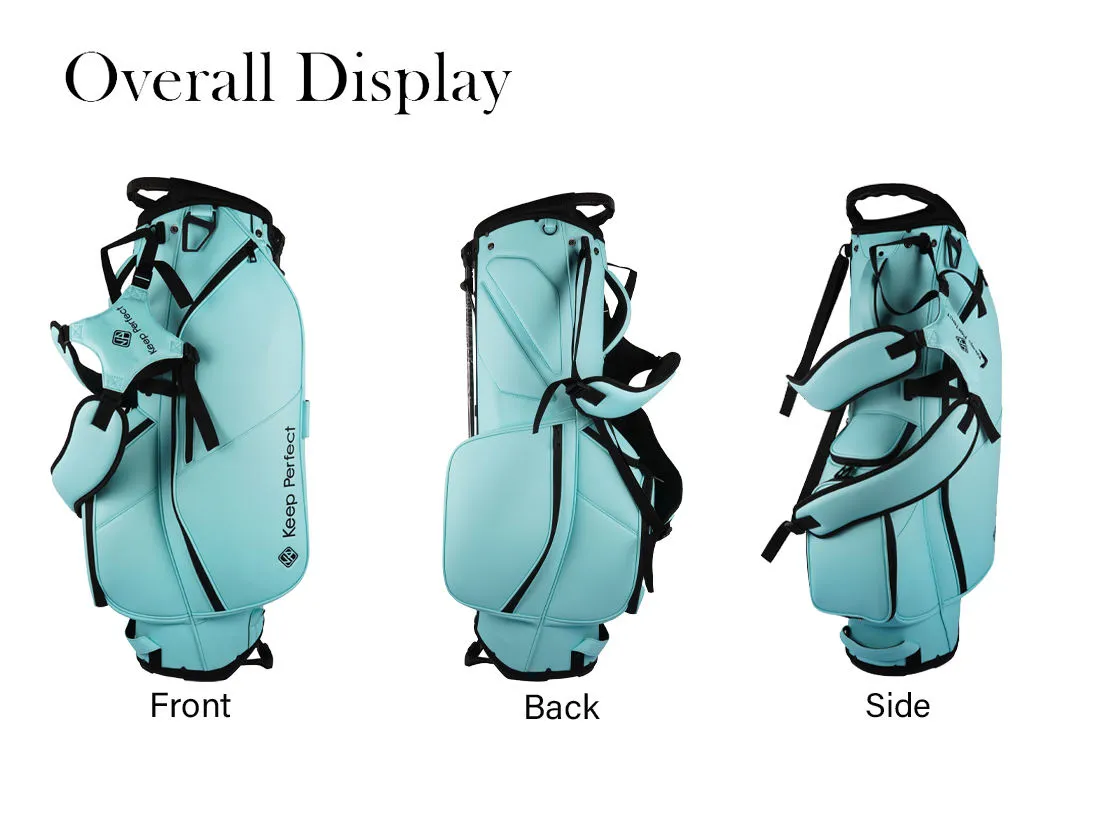
Budget-oriented stand bags sometimes use glass-fiber-reinforced nylon legs as a cost-effective alternative to metal. These injection-molded legs offer adequate strength for the loads they encounter, though they lack the premium feel and precise tolerances of aluminum or carbon fiber. Reinforced nylon legs are typically used in bags priced under 100 USD where cost optimization is the primary driver. The legs weigh approximately 160 to 200 grams per pair, falling between aluminum and carbon fiber in terms of weight performance.
Foot Pads and Ground Contact
The foot pad is the component that contacts the ground and must provide reliable traction across a wide range of surfaces including grass, sand, gravel, wet pavement, and artificial turf. We use thermoplastic rubber (TPR) foot pads with a Shore A hardness of 55 to 65, which provides an optimal balance between grip and durability. The foot pad geometry features a concave surface pattern that channels water away for improved wet-surface traction, and a slightly wider footprint than the leg diameter to increase stability on soft ground.
Spring and Hinge Systems
Torsion Spring Design
The torsion spring is the heart of the stand mechanism's deployment system. Our springs are manufactured from high-carbon spring steel wire (ASTM A227 music wire) that provides consistent spring rates over the required temperature range of minus 10 to plus 50 degrees Celsius. The wire diameter ranges from 1.5 to 2.5 millimeters depending on the bag size and deployment force requirements. Each spring is wound to precise specifications with typically 8 to 14 active coils and is stress-relieved after winding to eliminate residual stresses that could cause spring rate variation over time.
The spring rate is calculated based on the total deployment force required, which must account for the weight of the legs themselves, the friction in the hinge system, and a safety margin to ensure reliable deployment in adverse conditions. For a typical stand bag, the required deployment torque is 2.5 to 4.0 Newton-meters. The spring is pre-loaded to approximately 40 to 60 percent of its maximum safe torsion angle during assembly, ensuring that adequate reserve force remains throughout the product's lifespan even as the spring gradually relaxes with use.
Hinge Bracket Engineering
The hinge brackets are the structural interface between the stand mechanism and the bag frame. They must be strong enough to withstand the forces generated during deployment and retraction, as well as the loads encountered when the bag stands with a full complement of clubs. We manufacture hinge brackets from stainless steel (grade 304) using a combination of stamping and CNC machining operations. The brackets are designed with integrated spring pockets that precisely locate the torsion springs and provide the pivot axis for leg rotation.
The pivot pin that passes through the hinge bracket and leg attachment point is manufactured from hardened and tempered alloy steel with a surface finish of Ra 0.4 micrometers or better. This mirror-smooth surface minimizes friction during leg rotation and extends the service life of the pivot joint. We use a press-fit installation method to secure the pivot pins in the hinge brackets, ensuring that they cannot loosen or work free during use.
Retraction and Locking Mechanism
Retracting the stand legs requires the golfer to manually push the legs back toward the bag body against the spring tension. Most modern stand bags use a simple friction detent system where a spring-loaded plunger engages a notch in the leg when the leg reaches the fully retracted position. The detent force is set at approximately 15 to 25 Newtons, which is strong enough to hold the legs securely during carry but light enough to release smoothly when the bag is tilted for deployment.
Some premium bags feature a more sophisticated auto-retract system where a cam mechanism automatically guides the legs into the retracted position as the bag is lifted from the ground. This eliminates the need for the golfer to manually push the legs in, improving the user experience particularly for golfers with hand strength limitations. The auto-retract mechanism adds approximately 40 to 60 grams to the mechanism weight and 2.00 to 3.50 USD to the manufacturing cost.
Stand Mechanism Assembly Process
Pre-Assembly Preparation
Before the stand mechanism can be installed in a bag, all components must be prepared and inspected. Our pre-assembly process begins with a 100 percent inspection of every hinge bracket for dimensional accuracy, surface finish, and absence of burrs or defects. Each spring is tested for free length, spring rate, and load at specified deflection angles. Leg tubes are inspected for straightness within 0.5 millimeters over their full length, and foot pads are checked for secure bonding to the leg tips.
Assembly Sequence
The assembly sequence follows a precise 12-step process developed through years of production experience. First, the torsion springs are installed onto the hinge pins of the mounting brackets. The legs are then attached to the hinge pins through their pivot holes, with grease applied to the pivot surfaces. The detent mechanism is installed and tested for proper engagement force. Finally, the complete hinge assembly is mounted to the bag frame using stainless steel bolts torqued to specification, and the deployment and retraction function is tested.
The entire stand mechanism assembly operation takes approximately 8 to 12 minutes per bag, depending on the complexity of the design. This represents a significant portion of the total assembly time for a stand bag, which typically ranges from 45 to 75 minutes. The stand mechanism is one of the most skill-sensitive operations on our production floor, and we assign our most experienced technicians to this station. Training a new operator to achieve the required proficiency typically takes three to four weeks of supervised production.
Durability Testing and Quality Control
Cycle Testing
The primary durability test for stand mechanisms is the cycle test, which simulates repeated deployment and retraction over the product's expected lifespan. Our standard cycle test machine holds the bag at a fixed tilt angle and uses a pneumatic actuator to alternately deploy and retract the legs at a rate of 12 cycles per minute. The test continues until the specified number of cycles is reached or a failure occurs, whichever comes first.
We maintain three different test standards based on product positioning: the standard grade requires 15,000 cycles without failure, the premium grade requires 30,000 cycles, and the tour grade requires 50,000 cycles. For reference, a golfer playing three rounds per week for 10 years would cycle the stand approximately 4,500 times. This means that even our standard grade specification provides a 3x safety margin over the expected product lifespan.
Load and Stability Testing
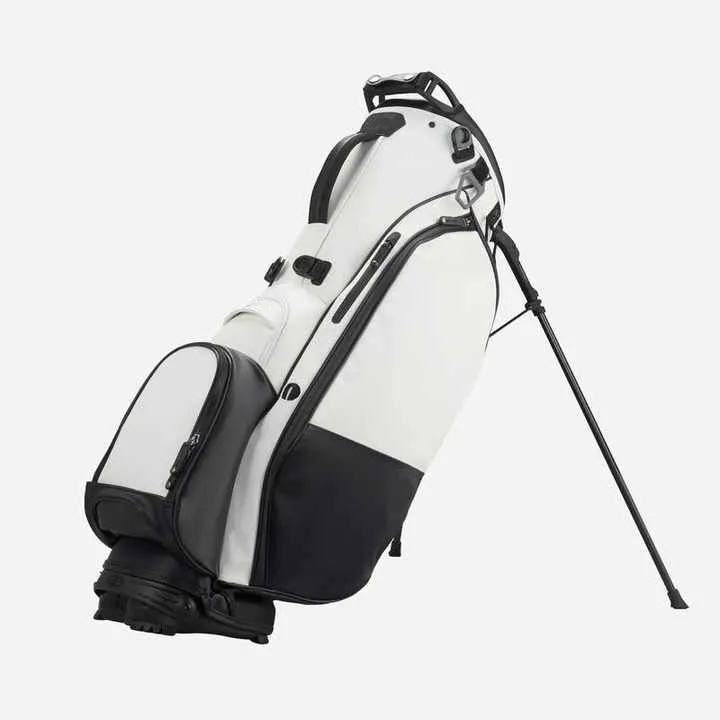
Stand bags are also tested for load-bearing capacity and stability when standing. We fill the bag with 18 kilograms of weighted test clubs and set it on a surface inclined at 5 degrees to simulate uneven terrain. The bag must stand stably for a minimum of 60 seconds without tipping or the legs collapsing. Additional testing involves dropping a 2-kilogram weight onto the bag from a height of 100 millimeters while it is in the standing position, verifying that the mechanism can absorb the impact without permanent deformation or failure.
Environmental Testing
Stand mechanisms must function reliably across a wide range of environmental conditions. Our environmental test protocol includes salt spray exposure (ASTM B117) for 200 hours to verify corrosion resistance of metal components, UV exposure for 500 hours to check for material degradation, temperature cycling between minus 20 and plus 60 degrees Celsius to verify that springs and lubricants function at temperature extremes, and water immersion testing to ensure that the hinge joints do not seize after exposure to moisture.
Innovation and Future Trends in Stand Mechanism Technology
Advanced Materials
The stand mechanism industry is seeing rapid innovation in materials science. Titanium alloy legs are being prototyped for ultra-premium bags, offering strength comparable to steel at roughly half the weight. Shape memory alloy (SMA) actuators are being researched as potential replacements for mechanical springs, which could enable electrically-controlled stand deployment triggered by a button on the bag handle. While these technologies remain in the development stage, they represent the direction of future innovation.
Integrated Sensor Technology
Several manufacturers are exploring the integration of sensors into the stand mechanism. Accelerometers embedded in the hinge assembly could track how frequently the stand is used, providing data for warranty analytics and product development. Load cells in the foot pads could measure ground contact pressure distribution, enabling the development of adaptive stand systems that automatically adjust leg angles based on terrain conditions. These smart stand systems represent a convergence of the broader IoT trend with traditional golf bag engineering.
Sustainability in Stand Mechanism Manufacturing
Sustainability considerations are increasingly influencing stand mechanism design and manufacturing. We are transitioning to recycled aluminum alloys for our standard leg production, which reduces the carbon footprint by approximately 60 percent compared to virgin aluminum. Biodegradable lubricants are replacing petroleum-based greases in hinge assemblies. And end-of-life recycling programs are being developed that allow stand mechanism components to be recovered and remanufactured rather than discarded. These sustainability initiatives align with the growing demand from environmentally conscious golfers and brand partners.
Frequently Asked Questions
How does a golf bag stand mechanism work?
A golf bag stand mechanism uses two retractable legs connected to the bag frame through a hinge system with torsion springs. When the bag is tilted to a specific angle, the spring tension causes the legs to deploy outward, creating a stable tripod with the bag base. Pulling the legs back manually compresses the springs and locks them into the retracted position until the next deployment.
What materials are used for golf bag stand legs?
Stand legs are primarily made from aluminum alloy (6061-T6), carbon fiber composite tubes, or glass-fiber-reinforced nylon. Aluminum alloy offers the best balance of strength, weight, and cost. Carbon fiber provides the lightest weight at a premium price point. Reinforced nylon is used in budget models where weight is less critical.
How many times can a golf bag stand mechanism be deployed before failing?
Quality stand mechanisms are tested to a minimum of 30,000 deployment cycles in factory quality control labs. Premium mechanisms from certified manufacturers are rated for 50,000 or more cycles, which corresponds to approximately 10 to 15 years of regular use assuming three rounds per week.
Why does my golf bag stand mechanism stop working?
Common causes of stand mechanism failure include spring fatigue or breakage, hinge pin wear causing excessive play, dirt and debris accumulation in the pivot joints, cracked leg tubes from impact damage, and failure of the latch mechanism that holds legs in the retracted position. Regular cleaning and lubrication of pivot points can significantly extend mechanism life.
Can the stand mechanism angle be adjusted?
Yes, the stand angle is determined by the geometry of the leg attachment points and the length of the legs. Some premium bags feature adjustable leg stop positions that allow the golfer to set the bag lean angle. Factory adjustments are made during assembly by setting the hinge bracket position and spring preload to achieve the specified stand angle of 20 to 30 degrees from vertical.
What is the weight penalty of adding a stand mechanism to a golf bag?
A complete stand mechanism including legs, springs, hinges, and mounting hardware typically adds 350 to 550 grams to the bag weight. Advanced carbon fiber stand systems can reduce this to approximately 200 to 280 grams, though at roughly double the cost of aluminum systems.
Ready to Start Your Custom Golf Bag Project?
Partner with a BSCI & ISO 9001:2015 certified factory producing 200,000+ premium golf bags annually. MOQ just 100 pieces.
Get a Free Quote Today