Golf Bag Divider Systems: The Complete Engineering and Manufacturing Guide for 2026
Table of Contents
- Introduction: The Critical Role of Divider Systems
- Types of Golf Bag Divider Systems
- Divider Materials and Manufacturing Methods
- 14-Way Full-Length Dividers: Engineering Deep Dive
- 5-Way and Shared Divider Systems
- Emerging Hybrid and Modular Designs
- How to Select the Right Divider for Your Market
- Frequently Asked Questions
Introduction: The Critical Role of Divider Systems
The divider system is the backbone of any golf bag. It is the structural element that organizes clubs, protects them from damage during transport, and defines the user experience every time a golfer reaches for a club. Despite its critical importance, the divider system is often overlooked in consumer purchasing decisions, with most golfers focusing on aesthetics, weight, and pocket configuration. Yet from a manufacturing perspective, the divider system is one of the most complex and cost-significant components of the entire golf bag.
In our factory, the divider system accounts for approximately 18 to 25 percent of the total material cost of a golf bag and requires some of the most skilled assembly operations on our production floor. The design and execution of a divider system directly influences customer satisfaction scores, warranty claim rates, and brand reputation. In this comprehensive guide, we will explore every aspect of golf bag divider systems as they stand in 2026, including the different types available, the materials and manufacturing methods used, performance characteristics, and guidance for selecting the right system for your target market.
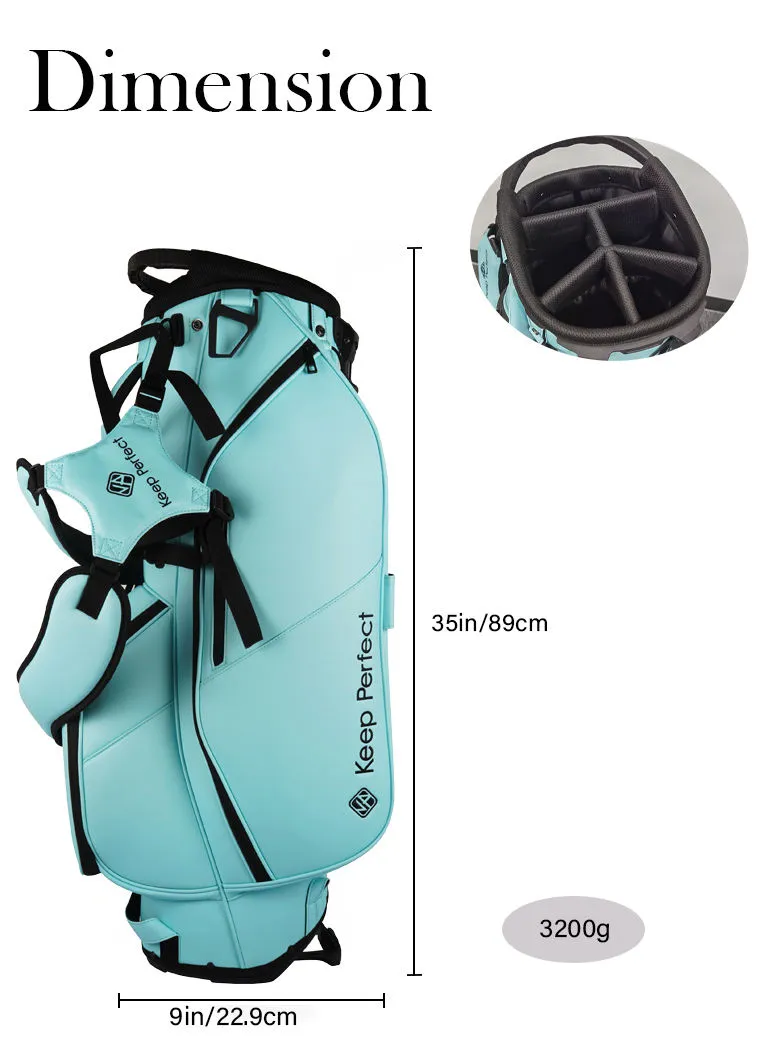
Understanding divider technology is particularly important for brand owners and product managers who are developing new golf bag lines. The choice of divider system affects not only the functional performance of the bag but also the manufacturing tooling investment, unit production cost, minimum order quantities, and lead times. Making the right decision requires a thorough understanding of the trade-offs involved and the specific needs of your target customers.
Types of Golf Bag Divider Systems
14-Way Full-Length Individual Dividers
The 14-way full-length divider system represents the gold standard for club organization and protection. Each of the 14 clubs has its own dedicated tube that runs the entire length of the bag from the top opening to the base. These individual tubes completely isolate each club, preventing any contact between clubs during transport. The result is zero club rattling, no shaft scratches, and perfect organization that allows golfers to instantly identify and retrieve any club.
This system is predominantly used in premium cart bags and staff bags where weight is not a primary concern. The full-length tubes add approximately 300 to 500 grams to the overall bag weight and require more complex assembly operations. However, for golfers who invest in high-end club sets worth thousands of dollars, the protection provided by 14-way full-length dividers is considered essential insurance against preventable damage.
14-Way Top-Only Dividers
A variation on the full-length system, 14-way top-only dividers feature individual tubes only in the upper portion of the bag, typically extending 15 to 20 centimeters below the collar. Below this point, the tubes merge into a shared cavity. This hybrid approach provides the organizational benefits of individual dividers at the top where clubs are inserted and removed most frequently, while reducing weight and complexity in the lower section. The weight savings compared to full-length systems are modest, typically 100 to 200 grams, but the manufacturing simplification is more significant.
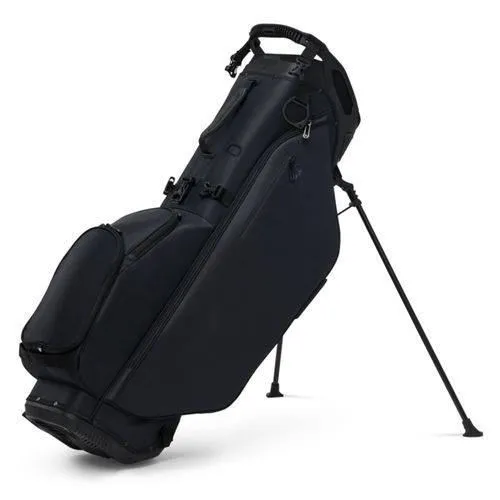
5-Way and 6-Way Shared Compartment Dividers
Shared compartment systems group clubs into five or six larger compartments, each of which holds two to four clubs. This is the most common divider configuration for stand bags and lightweight carry bags, where weight reduction is a priority. The compartments are typically separated by fabric panels or flexible mesh dividers that are lightweight and easy to manufacture.
While shared compartments do not provide the same level of club isolation as individual tubes, well-designed systems position the compartments strategically to prevent the most common sources of club damage. For example, the driver compartment is typically the largest and positioned at the front of the bag to accommodate the oversized head of a modern driver. Iron compartments are sized to hold three to four clubs comfortably without being so large that clubs can tangle with each other.
Full-Top Dividers (No Internal Walls)
At the simplest end of the spectrum, some ultra-lightweight bags forgo internal dividers entirely, using only a single open top with a full-top ring. While this minimizes weight to the greatest possible extent, it provides no club organization and allows clubs to tangle freely. These systems are typically found only on minimalist Sunday bags and practice bags designed to hold a few clubs rather than a full set.
Divider Materials and Manufacturing Methods
Rigid Plastic Tubes
The most common material for 14-way individual divider tubes is rigid plastic, typically ABS (acrylonitrile butadiene styrene) or polypropylene. These thermoplastic materials are injection molded into thin-walled tubes with precise inner diameters designed to accommodate various club shaft sizes. Driver tubes typically have an inner diameter of 48 to 50 millimeters, while iron tubes are 32 to 36 millimeters in diameter. The tubes are manufactured in sets of 14 and bundled together during the bag assembly process.
In 2026, we have seen a growing trend toward using glass-fiber-reinforced nylon for divider tubes in premium bags. This material offers superior strength-to-weight ratios compared to standard ABS, allowing tube walls to be reduced from 1.2 millimeters to 0.8 millimeters while maintaining the same structural rigidity. The weight savings per tube set is approximately 80 to 120 grams, which is significant in the context of a lightweight stand bag.
Fabric and Mesh Dividers
For shared compartment systems and lightweight divider configurations, fabric-based dividers are the standard choice. These dividers are constructed from high-tenacity nylon or polyester mesh panels that are sewn into the bag body during assembly. The mesh provides sufficient rigidity to keep clubs separated while adding minimal weight, typically only 50 to 80 grams for a complete 5-way divider set.
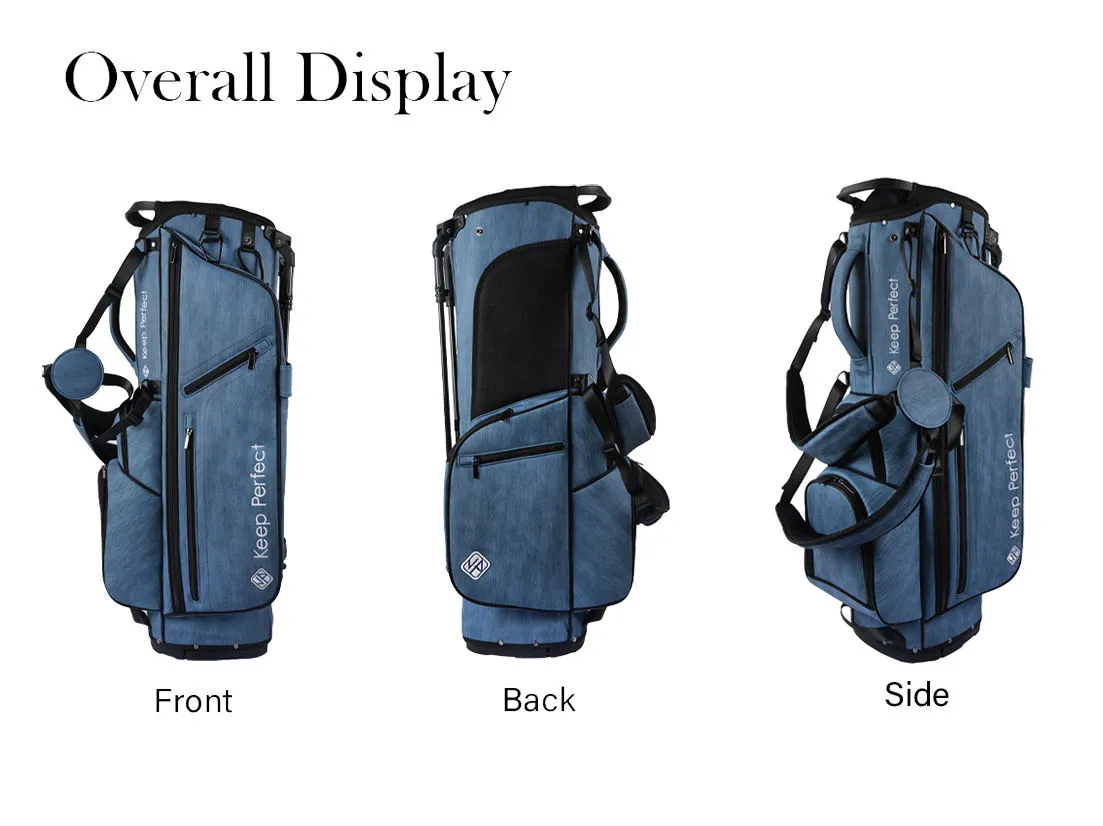
The quality of fabric dividers depends heavily on the sewing construction. Poorly constructed fabric dividers can sag, collapse, or tear over time, leading to clubs tangling in shared compartments. Our factory uses reinforced seam construction with bar-tack stitching at all stress points to ensure that fabric dividers maintain their shape and integrity throughout the product's lifespan. We also apply a thin coating of polyurethane to the fabric panels to add rigidity without significantly increasing weight.
Molded Foam and EVA Inserts
Premium divider systems sometimes incorporate molded EVA (ethylene vinyl acetate) foam inserts that provide cushioning between clubs within individual tubes. These inserts serve a dual purpose: they protect club shafts from contact with the hard plastic tube walls, and they hold clubs in a fixed position within the tube, further reducing movement and potential damage. The EVA inserts are thermoformed to match the exact contour of the tube interior and are typically 3 to 5 millimeters thick.
Carbon Fiber Reinforced Dividers
The cutting edge of divider technology in 2026 involves carbon fiber reinforced polymer (CFRP) divider systems. These advanced dividers use carbon fiber strands embedded in a polymer matrix to create tubes that are 40 to 50 percent lighter than standard ABS equivalents while offering superior impact resistance. The manufacturing process for CFRP dividers involves filament winding or pultrusion techniques that are more expensive than traditional injection molding, limiting their use to ultra-premium bag lines. However, as production methods become more efficient, we expect CFRP dividers to become increasingly common in the premium segment over the next few years.
14-Way Full-Length Dividers: Engineering Deep Dive
Tube Layout and Club Mapping
The design of a 14-way divider system requires careful engineering of the tube layout to ensure that all 14 clubs fit securely and can be inserted and removed without obstruction. The standard layout features one oversized tube for the driver, two to three tubes for fairway woods and hybrids, seven to eight tubes for irons (typically shared between two irons per tube or one per tube depending on the configuration), and two to three tubes for wedges and the putter.
The exact layout varies by manufacturer and is often tailored to the intended user. Tour-level bags may feature dedicated putter tubes with larger diameters to accommodate oversized putter grips, while game-improvement bags designed for amateur golfers may have wider iron tubes that accept clubs more easily. Our design team works with brand clients to optimize the tube layout based on their target market's typical club configurations and preferences.
Anti-Tangle Features
One of the most important engineering considerations in 14-way divider design is preventing club heads from tangling at the top of the bag. When clubs are inserted, the larger heads of drivers and fairway woods can catch on adjacent tubes, making it difficult to fully seat the club. To address this, we engineer the top plate of the divider with graduated tube heights, where tubes for larger-headed clubs are positioned slightly higher to provide a clear insertion path. Additionally, the top plate is often angled at 3 to 5 degrees to create a staggered arrangement that further reduces interference.

Full-Length Divider Installation Process
Installing a 14-way full-length divider system is one of the most technically demanding operations in golf bag assembly. The process begins with the divider cage being pre-assembled outside the bag body. The 14 tubes are arranged in their designated positions and secured to a top plate and base plate using a combination of adhesive bonding and mechanical fasteners. The complete cage assembly is then carefully inserted into the bag body through the top opening and secured to the bag's internal frame using additional adhesive and stitching attachment points.
Alignment is critical during this operation. Even a 2-millimeter deviation in tube positioning can result in clubs catching or scraping against adjacent tubes during insertion. Our technicians use precision jigs that hold the cage assembly in perfect alignment while the adhesive cures, ensuring consistent positioning across every unit in a production run. Each completed divider system is individually inspected for tube straightness, alignment, and smooth operation before the bag proceeds to the next assembly stage.
5-Way and Shared Divider Systems: Design Philosophy
Compartment Sizing Strategy
The engineering challenge with shared divider systems lies in determining the optimal compartment sizes to maximize club protection within the constraints of fewer divisions. Our design approach begins with analyzing the typical club head dimensions across all major club manufacturers. Driver heads have grown significantly in recent years, with some models exceeding 460 cubic centimeters in volume. The driver compartment must be sized to accommodate these oversized heads without forcing the club at an angle that stresses the shaft.
We typically design the five compartments with the following allocation: one full-width compartment for the driver, one for fairway woods and hybrids, two compartments for irons (each holding three to four clubs), and one for wedges and the putter. The fabric dividers between compartments are positioned to create natural groupings that mirror how most golfers organize their clubs, reducing the need for conscious sorting when loading the bag.
Weight Optimization
The primary advantage of shared divider systems is weight reduction. A well-engineered 5-way fabric divider system adds only 80 to 120 grams to the bag weight, compared to 350 to 500 grams for a 14-way rigid plastic system. For lightweight stand bags targeting the sub-2-kilogram weight category, this difference is decisive. Every gram saved in the divider system is a gram that does not need to be carried by the golfer over 18 holes of walking, which can total 6 to 8 kilometers of distance covered.
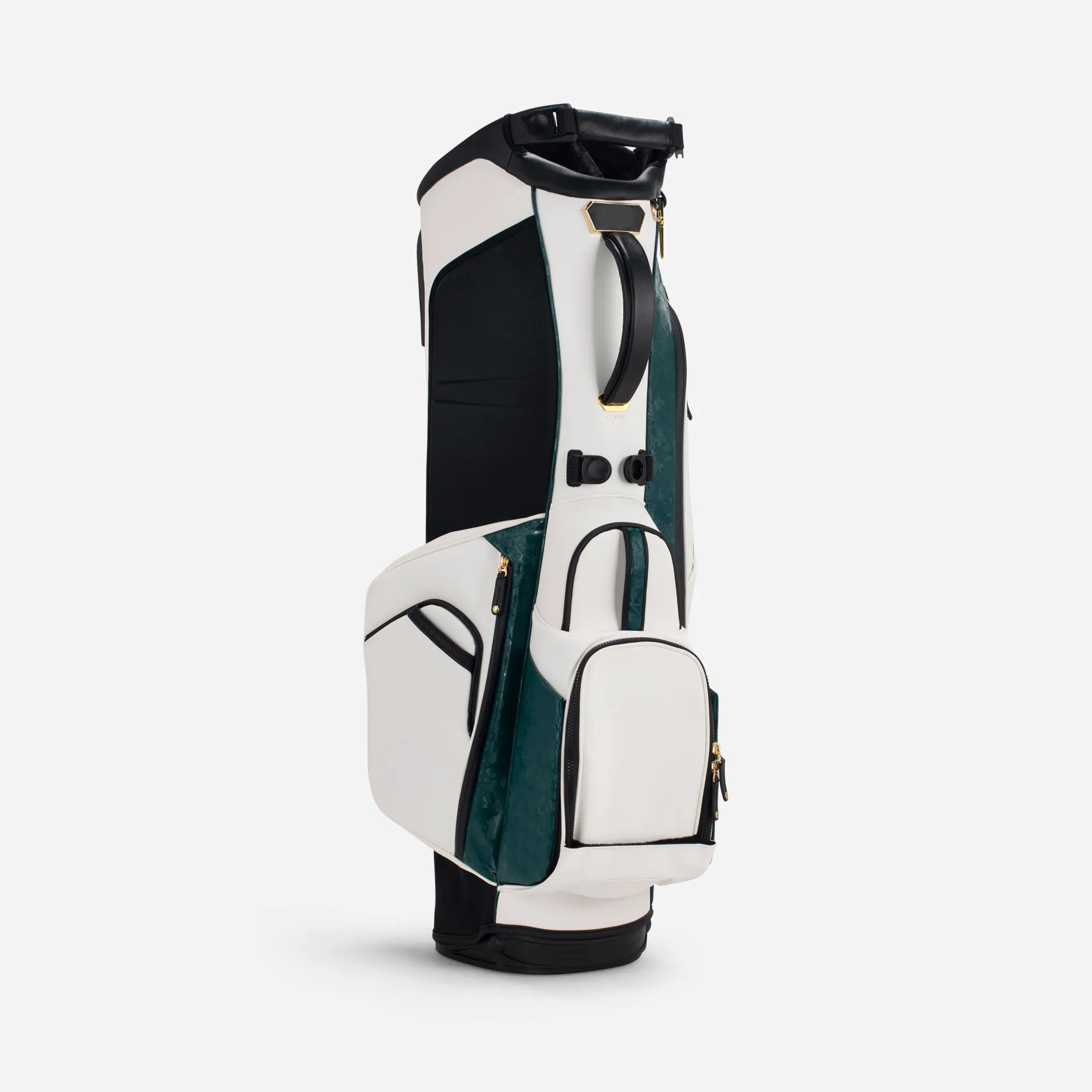
Emerging Hybrid and Modular Designs in 2026
Convertible Divider Systems
One of the most exciting developments in divider technology is the emergence of convertible or modular divider systems. These innovative designs allow golfers to switch between different divider configurations based on their needs for a particular round. For example, a golfer might use a full 14-way configuration for a tournament round where maximum club protection is desired, then switch to a 5-way configuration for a casual practice session where quick club access is prioritized.
Our engineering team has developed a modular divider system that uses removable divider panels secured with quick-release fasteners. The system includes a base 5-way configuration with four additional removable panels that create individual tubes for the most valuable clubs. While still in the early stages of commercialization, we anticipate that convertible divider systems will become a significant differentiator in the premium stand bag segment within the next two to three years.
Smart Divider Technology
Looking further ahead, several manufacturers are exploring the integration of smart technology into divider systems. Concepts include divider tubes with built-in weight sensors that automatically track which clubs are in the bag, Bluetooth-enabled collar rings that connect to a smartphone app for club inventory management, and even divider tubes with adjustable internal diameters that automatically expand or contract to grip different shaft sizes. While these concepts are still in the prototype stage, they represent the direction in which divider technology is heading as the Internet of Things continues to penetrate into golf equipment.
How to Select the Right Divider for Your Market
Market Segment Analysis
Selecting the appropriate divider system for a golf bag product line requires careful analysis of the target market segment. Tour-level and premium cart bags almost universally use 14-way full-length dividers, as the users in this segment prioritize club protection and are willing to accept the additional weight. Stand bags for walking golfers typically use 5-way or 6-way shared dividers to minimize carry weight. Sunday bags and ultra-lightweight bags may use 3-way or even full-top configurations for maximum weight reduction.
Understanding the preferences of your target demographic is essential. Survey data from 2025 shows that approximately 62 percent of golfers who walk the course prefer shared divider systems for the weight savings, while 78 percent of golfers who primarily ride in carts prefer 14-way individual dividers for the superior club protection and organization. These statistics suggest that the divider configuration should be matched not only to the bag type but also to the expected usage pattern of the target customer.
Cost Considerations for Brand Owners
From a manufacturing cost perspective, the divider system is one of the most significant cost drivers in golf bag production. A 14-way full-length divider system using injection-molded plastic tubes typically adds 3.50 to 6.00 USD to the material cost compared to a basic 5-way fabric divider system. When the additional assembly labor and quality control costs are factored in, the total cost differential can reach 5.00 to 9.00 USD per unit.
For brands developing products at specific retail price points, these cost differences are substantial. At a standard 4x retail markup, a 5 USD increase in manufacturing cost translates to a 20 USD increase in the retail price. This means that the choice between a 14-way and a 5-way divider can determine whether a bag is positioned at 199 USD or 219 USD retail, which may place it in a different competitive set and appeal to a different customer profile. Our team provides detailed cost modeling to help brand clients optimize their divider specifications against target price points.
Frequently Asked Questions
What are the main types of golf bag divider systems?
The main types are 14-way full-length individual dividers, 14-way top-only dividers, 5-way shared compartment dividers, 6-way shared dividers, and hybrid configurations. Each system offers different trade-offs between club protection, weight, organizational clarity, and manufacturing cost.
How are golf bag dividers manufactured?
Golf bag dividers are manufactured through several processes: injection molding for plastic tube dividers, thermoforming for molded divider plates, tube-and-fabric assembly for full-length individual systems, and die-cutting plus sewing for fabric-based shared divider configurations. The process depends on the divider type and material specification.
Do 14-way dividers significantly increase bag weight?
Yes, 14-way full-length dividers typically add 300 to 500 grams compared to a 5-way shared divider system. However, recent innovations in lightweight mesh and carbon-fiber-reinforced polymers have reduced this penalty to approximately 150 to 250 grams in premium 2026 models.
Which divider system provides the best club protection?
14-way full-length individual dividers provide the best club protection because each club is completely isolated in its own tube, preventing shaft-to-shaft contact, grip abrasion, and club head damage throughout the full length of the bag.
Can divider systems be customized for OEM brands?
Absolutely. Divider systems are one of the most customizable components in golf bag manufacturing. OEM brands can specify the number of dividers, tube diameter, divider material, full-length versus top-only configuration, color of divider fabric, and branding placement on the divider top.
Ready to Start Your Custom Golf Bag Project?
Partner with a BSCI & ISO 9001:2015 certified factory producing 200,000+ premium golf bags annually. MOQ just 100 pieces.
Get a Free Quote Today