How to Import Golf Bags to the USA in 2026: Complete Step-by-Step Guide
Table of Contents
- The US Golf Bag Import Market in 2026
- US Import Regulations and Compliance Requirements
- Essential Documentation for US Customs Clearance
- Product Labeling Requirements for the US Market
- Duty Rates, Tariffs, and Total Cost Calculation
- Shipping Logistics and Supply Chain Management
- Common Challenges and How to Overcome Them
- Frequently Asked Questions
The US Golf Bag Import Market in 2026
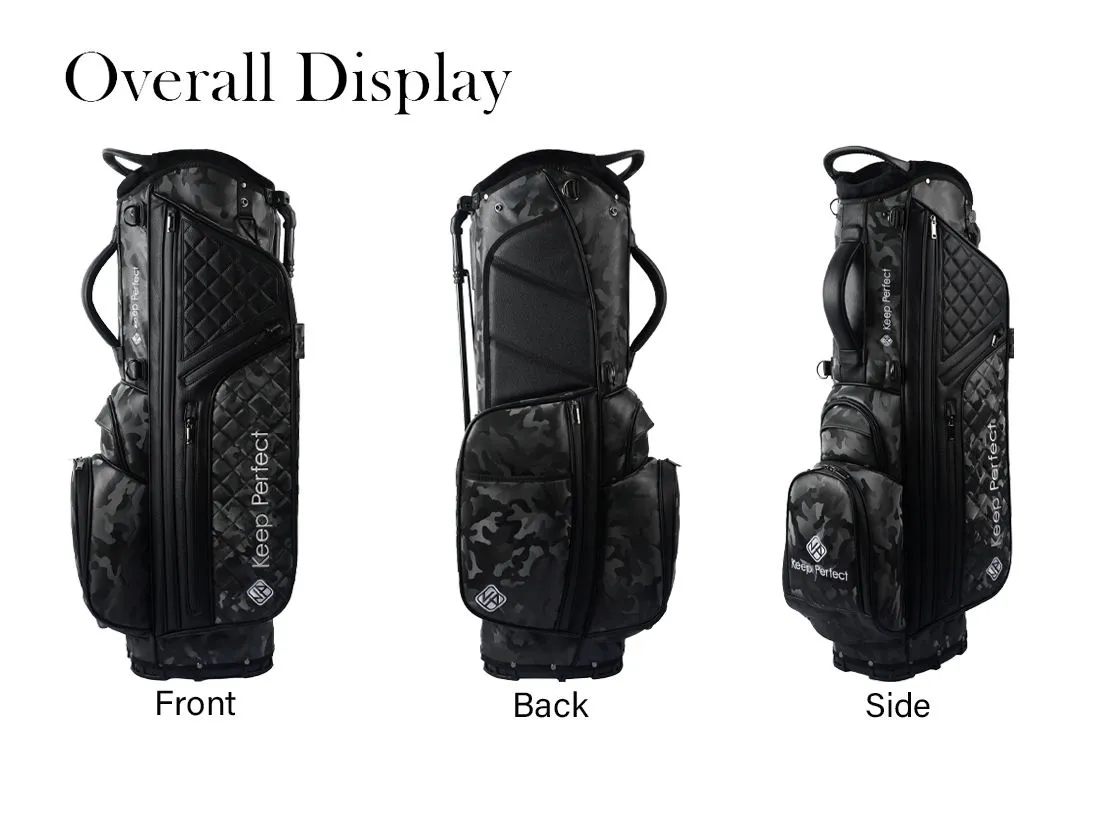
The United States represents the single largest market for imported golf bags globally, consuming approximately 35 to 40 percent of all internationally traded golf bags. In 2026, the US golf bag import market continues to grow steadily, driven by increasing golf participation rates that reached a record 37.6 million players in 2025 and show no signs of slowing. This growing demand creates significant opportunities for brands, retailers, and distributors who can effectively navigate the import process from manufacturing sources in Asia to the American consumer.
The US golf bag market presents a unique landscape where quality expectations are high, brand loyalty is strong, and regulatory compliance is rigorously enforced. Unlike some markets where basic functionality suffices, US consumers and retail buyers demand premium construction, thoughtful feature design, and reliable durability from their golf bags. Successful importers must source from factories capable of meeting these quality expectations while maintaining competitive pricing that allows healthy retail margins in a market where premium stand bags retail from $200 to $500 and cart bags from $300 to $700.
This comprehensive guide walks through every step of the golf bag import process to the United States, from initial supplier selection and compliance planning through customs clearance and final delivery. Drawing on two decades of experience as a BSCI and ISO 9001:2015 certified manufacturer exporting over 200,000 golf bags annually, we provide practical insights that help both first-time importers and experienced buyers optimize their import operations, minimize costs, and avoid costly compliance mistakes.
US Import Regulations and Compliance Requirements
Importing golf bags into the United States requires compliance with regulations administered by several federal agencies, primarily US Customs and Border Protection (CBP) for customs procedures and duty collection, the Consumer Product Safety Commission (CPSC) for general product safety, and the Federal Trade Commission (FTC) for labeling requirements. While golf bags are not subject to the intensive pre-market approval requirements that apply to categories like food, pharmaceuticals, or children's products, importers must still meet specific regulatory obligations to ensure smooth customs clearance and avoid enforcement actions.
Importer of Record Requirements
Every shipment of golf bags entering the United States must have a designated Importer of Record (IOR) who takes legal responsibility for the entry. The IOR must possess a valid IRS number (Employer Identification Number for businesses or Social Security Number for individuals) and must maintain a customs bond for shipments valued over $2,500. The customs bond, typically a continuous bond covering all entries throughout the year, costs approximately $500 to $800 annually for most golf bag importers and protects the government against potential duty shortfalls or penalties.
Most golf bag importers engage a licensed customs broker to handle the technical aspects of customs entry filing, duty calculation, and compliance documentation. Customs brokers serve as intermediaries between the importer and CBP, leveraging their expertise in tariff classification, valuation, and regulatory requirements to ensure accurate and efficient clearance. For first-time importers, selecting an experienced customs broker is one of the most important decisions in establishing a reliable import operation.
ISF (10+2) Filing Requirements
The Importer Security Filing, commonly known as the 10+2 rule, requires importers or their agents to submit specific cargo information to CBP at least 24 hours before the cargo is loaded onto a vessel destined for the United States. The filing includes ten data elements from the importer (such as manufacturer name and address, ship-to address, and country of origin) and two from the carrier (vessel stow plan and container status messages). Failure to file ISF timely or accurately can result in penalties of $5,000 per violation and cargo holds that delay delivery.
For golf bag importers, the ISF filing process begins well before the goods leave the factory. Importers must collect manufacturer and supplier information, country of origin declarations, and HTS classification numbers from their factory partners and submit this information to their customs broker or ISF filing agent at least 48 to 72 hours before vessel loading to allow time for review and correction. Our factory provides complete ISF data packages with every shipment, including detailed manufacturer information, HTS codes, and container loading details that enable timely and accurate ISF filing.
Product Safety Compliance
Golf bags are not classified as children's products, textiles requiring specific flammability testing, or electronic devices subject to FCC regulations. However, they must still meet general product safety standards enforced by the CPSC. Specifically, golf bags must not contain excessive levels of lead or other restricted substances in surface coatings or accessible components, must not present sharp edge or puncture hazards, and must not contain small parts that could pose choking hazards if detachable components are present (such as decorative zipper pulls or logo plates that might separate from the bag).
California Proposition 65 imposes additional requirements for golf bags sold within the state. Products containing chemicals on the Proposition 65 list above safe harbor levels must carry clear and reasonable warning labels. For golf bags, the most commonly triggered Proposition 65 chemicals are lead in metal hardware components, phthalates in PVC-coated materials, and certain azo dyes in textile materials. Testing for Proposition 65 compliance is essential for any golf bag brand targeting the California market, which represents the largest single-state golf market in the United States.
Essential Documentation for US Customs Clearance
Proper documentation is the foundation of smooth customs clearance for golf bag imports into the United States. Missing, incomplete, or inaccurate documentation causes delays, triggers customs examinations, and can result in penalties. Understanding the complete documentation package required for golf bag imports and ensuring that every element is prepared correctly before the goods arrive at the US port prevents costly disruptions in your supply chain.
Core Import Documentation Package
| Document | Purpose | Key Requirements |
|---|---|---|
| Commercial Invoice | Establishes customs value | Must include seller, buyer, description, quantity, unit price, total value, Incoterm, country of origin |
| Packing List | Details shipment contents | Carton count, dimensions, gross/net weight, contents per carton, markings |
| Bill of Lading | Evidences contract of carriage | Shipper, consignee, notify party, vessel name, port of loading/discharge, container numbers |
| Certificate of Origin | Supports duty rate claims | Country of origin certification, may require notarization for trade agreement claims |
| ISF Filing | Security screening | 10 data elements filed 24 hours before vessel loading |
| Customs Bond | Financial guarantee | Continuous bond for regular importers, single entry for occasional shipments |
| Power of Attorney | Authorizes broker | Granting customs broker authority to file entries on importer's behalf |
Each document in this package plays a specific role in the customs clearance process, and inconsistencies between documents trigger CBP scrutiny. The commercial invoice value must match the packing list quantities and the bill of lading descriptions. Country of origin declarations must be consistent across all documents. HTS codes claimed on the entry must align with the product descriptions in the commercial invoice. Our documentation team prepares complete, consistent packages for every shipment, cross-referencing all data elements to prevent discrepancies that could delay your cargo at the US port.
Valuation Documentation
CBP requires importers to declare the correct customs value of imported golf bags, which generally equals the transaction value (the price actually paid or payable) plus certain additions such as assists, royalties, and subsequent proceeds. For straightforward FOB purchases between unrelated parties, valuation is simple: the invoice price plus any applicable additions. However, when the importer and factory have a corporate relationship, or when the pricing involves complex structures such as target pricing with year-end rebates, additional valuation documentation may be required to support the declared value.
Transfer pricing documentation becomes especially important for brand owners who manufacture through captive factories or have equity relationships with their suppliers. CBP may question whether the declared value reflects an arm's length price when the buyer and seller are related parties. Maintaining contemporaneous transfer pricing studies and benchmarking data provides evidence that the declared customs value represents an acceptable transaction value even between related entities.
Product Labeling Requirements for the US Market
Golf bags sold in the United States must comply with several federal labeling requirements that protect consumers and provide essential product information. These labeling requirements are enforced by different agencies depending on the type of information required, and non-compliance can result in goods being refused entry, forced relabeling at the port, or post-importation enforcement actions. Golf bag importers must address all labeling requirements before goods leave the manufacturing factory, as correcting labeling deficiencies after arrival in the United States is expensive and disruptive.
Country of Origin Marking
Every imported golf bag must be marked with its country of origin in a conspicuous place that is legible, indelible, and permanent as determined by the character of the article. For golf bags, the standard practice is to permanently attach a label or print the country of origin on the interior lining or on a sewn-in tag that remains visible during normal use. The marking must use the English name of the country (e.g., "Made in China," "Made in Vietnam," "Product of Indonesia"). Acceptable variations include "Manufactured in China" or the abbreviation of the country name where it clearly indicates the full name.
CBP enforcement of country of origin marking is rigorous and systematic. Inspectors at the port of entry routinely examine samples from incoming shipments to verify proper marking. Goods found to be improperly marked are subject to additional marking requirements at the importer's expense, or in severe cases, may be refused entry and required to be exported. The cost of forced relabeling at a US port facility can exceed $1.50 per bag, making it far more economical to ensure proper marking at the manufacturing factory where the cost is typically $0.05 to $0.10 per bag.
Fiber Content Labeling
If a golf bag contains textile materials, it may be subject to the Textile Fiber Products Identification Act administered by the FTC. This act requires disclosure of the generic fiber content of textile products sold in the United States. For golf bags, the labeling requirement depends on whether the bag is classified as a textile article or as a travel bag under FTC guidelines. Golf bags with predominantly textile outer surfaces are generally required to carry fiber content labels disclosing the percentage of each fiber present in the outer shell material.
Fiber content labels must disclose fibers in descending order of predominance by weight, with fibers under 5 percent listed as "other fiber" unless they have a specific functional significance. The label must also identify the country where the product was manufactured and the name or registered identification number of the responsible company. Our factory produces compliant fiber content labels for all textile golf bags destined for the US market, working with brand clients to ensure that the label accurately reflects the actual material composition of each bag model.
California Proposition 65 Warnings
For golf bags distributed in California, Proposition 65 warning labels may be required if the product contains chemicals on the state's list at levels exceeding safe harbor thresholds. The most common Proposition 65 triggers for golf bags include lead in metal zipper pulls and buckles, di(2-ethylhexyl)phthalate (DEHP) in PVC-coated materials, and formaldehyde in certain adhesive bonding agents used in bag construction. Testing specific to Proposition 65 thresholds is the only way to determine whether warning labels are required for a specific product.
Proposition 65 warning language must meet specific regulatory requirements established in 2018, including identification of at least one listed chemical present in the product, the standard warning symbol (a yellow equilateral triangle with a black exclamation mark), and the URL for the Proposition 65 website. Our factory can arrange Proposition 65 testing for your golf bag products and provides compliant warning labels when testing results indicate their necessity. For brands selling nationwide, including California, pre-emptive Proposition 65 compliance testing eliminates the risk of enforcement actions or consumer lawsuits.
Duty Rates, Tariffs, and Total Cost Calculation
Understanding the full duty and tariff structure for golf bag imports into the United States is essential for accurate landed cost calculation and profitable pricing strategy. The US duty structure for golf bags involves base Harmonized Tariff Schedule rates, additional Section 301 tariffs for Chinese-origin products, and various processing fees that collectively can add 25 to 45 percent to the FOB factory price.
Base Duty Rates by Material Type
The base duty rate for golf bags depends on the outer surface material. Textile outer surface golf bags classified under HTS 4202.92.33 carry a base duty rate of 17.6 percent ad valorem, while plastic sheeting outer surface bags under HTS 4202.92.15 carry only 6.5 percent. This significant differential makes material selection a strategic decision with direct cost implications. For a nylon golf stand bag with an FOB value of $25, the base duty ranges from $1.63 (plastic sheeting classification) to $4.40 (textile classification).
Section 301 Additional Tariffs
Golf bags manufactured in China face additional Section 301 tariffs of 7.5 percent on top of the base HTS rate, bringing the total duty for Chinese-origin textile golf bags to approximately 25.1 percent. This additional tariff applies regardless of material type, adding $1.875 to the duty cost for our earlier $25 FOB nylon bag example. The total duty on this bag from China would be $6.275 versus $4.40 for the same bag from Vietnam.
Calculating Total Landed Cost
The total landed cost of imported golf bags extends beyond duty to include all costs from factory delivery to warehouse receipt. For a typical shipment of 1,500 golf stand bags from China to a Los Angeles warehouse at an FOB price of $25 per bag:
| Cost Element | Per Unit Cost | Calculation Basis |
|---|---|---|
| FOB factory price | $25.00 | Invoice price |
| Ocean freight (40HQ) | $2.20 | $3,300 divided by 1,500 bags |
| Marine insurance | $0.15 | 0.1% of CIF value |
| Import duty (25.1%, China origin) | $6.28 | 25.1% of FOB value |
| Merchandise processing fee | $0.09 | 0.35% of value |
| Harbor maintenance fee | $0.03 | 0.125% of value |
| Customs brokerage | $0.17 | $250 divided by 1,500 bags |
| Inland delivery to warehouse | $0.40 | $600 divided by 1,500 bags |
| Total landed cost | $34.32 | 37.3% above FOB price |
This landed cost analysis reveals the true total cost structure that determines the importer's available margin for wholesale and retail pricing. At a wholesale price of $75 and a total landed cost of $34.32, the gross margin is $40.68 or 54.2 percent, which must cover overhead, marketing, and profit. Understanding this full cost structure enables importers to make informed decisions about product positioning, pricing strategy, and sourcing location optimization.
Shipping Logistics and Supply Chain Management
Efficient logistics management is critical for golf bag importers who must balance inventory availability against carrying costs while navigating the 60 to 90-day supply chain from Chinese factory to American warehouse. The extended lead times inherent in trans-Pacific ocean freight require careful demand forecasting, strategic safety stock management, and proactive communication with factory partners to ensure timely delivery that meets seasonal selling windows.
Timing and Seasonal Planning
The golf industry operates on a seasonal cycle that directly impacts import timing. Spring selling season inventory must arrive at US warehouses by December or January to ensure availability for the February through April peak retail period. This means production must begin in October or November and ocean freight must ship no later than December to clear customs and deliver before the new year. Failure to meet this timeline means missing the most profitable selling months of the golf season.
Ocean carrier capacity tightens significantly during the third quarter as retailers prepare for holiday deliveries, creating potential space constraints and rate increases that affect golf bag shipments. Importers who plan their production and shipping schedules to move goods during the first quarter benefit from lower freight rates and more readily available carrier space. Our factory coordinates production scheduling with customer shipping timelines to ensure optimal timing, and our dedicated logistics team monitors carrier schedules and capacity conditions to recommend the most cost-effective shipping windows.
Inventory Management for Import Lead Times
The 60 to 90-day total import lead time requires golf bag importers to maintain sophisticated inventory management systems that balance the risk of stockouts against the cost of excess inventory. Safety stock levels should account for lead time variability, demand forecast accuracy, and the cost impact of emergency air freight if stockouts occur. A typical golf bag importer maintaining a 10,000-unit annual program with quarterly replenishment shipments should carry safety stock of 500 to 1,000 units to buffer against demand variability and supply chain disruptions.
Common Challenges and How to Overcome Them
Importing golf bags to the United States presents several recurring challenges that can derail even well-planned sourcing programs. Understanding these challenges in advance and implementing proactive mitigation strategies protects your supply chain from costly disruptions.
Customs Examinations and Delays
CBP selects a percentage of all import shipments for examination, ranging from non-intrusive X-ray scanning to intensive physical examinations that require unstuffing the entire container. For golf bags, customs examinations typically focus on verifying country of origin declarations, checking for proper marking, confirming the accuracy of declared values, and screening for intellectual property violations. Examinations add 5 to 15 business days to delivery timelines and incur fees of $500 to $1,500 for container handling and storage at the examination facility.
While importers cannot prevent customs examinations, they can minimize the probability and impact through documentation accuracy, consistent valuation practices, proper marking, and maintaining a clean import history with CBP. Importers with low examination rates and clean compliance records benefit from programs like the Customs-Trade Partnership Against Terrorism (C-TPAT), which provides expedited processing for certified importers.
Intellectual Property Concerns
The golf industry is heavily brand-conscious, and CBP actively seizes goods that infringe on registered trademarks and design patents. Golf bags that bear unauthorized logos, mimic protected design elements of established brands, or use confusingly similar trade dress face confiscation and potential penalties. Importers must ensure that their product designs are either original creations or properly licensed, and that all branding elements are authorized before goods ship from the factory. Our factory maintains strict intellectual property compliance protocols, requiring written authorization for any brand logo or trademark reproduction and refusing to produce goods that may infringe on third-party rights.
Frequently Asked Questions
What permits or licenses are needed to import golf bags to the USA?
Importing golf bags to the USA requires a valid importer bond, an importer of record number (either IRS EIN or SSN), and a customs broker to file entries on your behalf. Golf bags do not require specific product licenses but must comply with general product safety regulations, proper labeling requirements, and any applicable chemical restrictions.
What labeling requirements must golf bags meet for US import?
Golf bags must include country of origin marking, fiber content labels if textile materials are used per FTC requirements, and care instructions if applicable. For California sales, Proposition 65 warnings may be required. All labels must be in English and permanently attached to the product.
How long does the golf bag import process take from China to USA?
The complete import process typically takes 60 to 90 days, including 35 to 45 days production, 14 to 18 days ocean freight to US West Coast or 28 to 35 days to East Coast, 3 to 7 days customs clearance, and 2 to 5 days inland delivery. Peak seasons may add additional time.
Do golf bags need to pass CPSC safety testing for US import?
Golf bags are not subject to specific CPSC mandatory safety standards but must comply with general product safety requirements including no sharp edges, lead content limits for surface coatings, and Proposition 65 compliance for California sales.
What is the total cost structure for importing golf bags to the USA?
Total landed cost includes factory price (FOB), ocean freight, marine insurance, import duty (17.6 to 25.1 percent), customs brokerage, processing fees, and inland delivery. Typical total landed cost adds 30 to 45 percent to the FOB factory price.
Can I use a customs broker for golf bag imports and how much does it cost?
Yes, using a licensed customs broker is highly recommended. Brokerage fees typically range from $150 to $350 per entry for standard shipments. Many brokers also offer ISF filing, duty drawback, and trade compliance consulting as additional services.
Ready to Start Your Custom Golf Bag Project?
Partner with a BSCI & ISO 9001:2015 certified factory producing 200,000+ premium golf bags annually. MOQ just 100 pieces.
Get a Free Quote Today