How to Import Golf Bags to the EU in 2026: Complete Compliance and Logistics Guide
Table of Contents
- The European Golf Bag Import Market in 2026
- REACH Compliance: Chemical Safety Requirements
- EU Packaging and Labeling Regulations
- EU Customs Procedures and Documentation
- VAT, Duties, and Total Cost Structure
- Extended Producer Responsibility and Environmental Compliance
- European Distribution and Logistics Management
- Frequently Asked Questions
The European Golf Bag Import Market in 2026

Europe represents the second-largest market for golf bags globally, with approximately 5.3 million golfers across the continent supporting a steady demand for quality golf equipment including bags, covers, and accessories. The European market is characterized by its diversity, encompassing mature golf markets like the United Kingdom, Germany, Sweden, and France alongside growing markets in Southern and Eastern Europe. For importers, this diversity creates both opportunity and complexity, as each member state maintains its own VAT rates, customs administration procedures, and supplementary regulatory requirements layered on top of the harmonized EU framework.
In 2026, the European golf bag import landscape has evolved significantly with the maturation of post-Brexit trading arrangements for the United Kingdom, the implementation of new environmental regulations under the European Green Deal framework, and the expansion of Extended Producer Responsibility schemes to cover additional product categories. Importers must navigate not only the traditional customs and duty requirements but also an increasingly complex web of sustainability regulations, chemical safety standards, and packaging waste obligations that distinguish the EU market from other major golf markets around the world.
This comprehensive guide covers every aspect of importing golf bags to the European Union in 2026, from REACH chemical compliance and customs procedures through VAT optimization and distribution logistics. Drawing on our factory's extensive experience exporting to customers in over 30 European countries, we provide practical guidance that helps importers navigate the EU regulatory environment efficiently while maintaining competitive product costs and reliable supply chain operations.
REACH Compliance: Chemical Safety Requirements
The REACH regulation, or Registration, Evaluation, Authorization, and Restriction of Chemicals, represents the most significant product safety compliance requirement for golf bags imported into the European Union. Enforced since 2007 and continuously updated with new substance restrictions, REACH governs the chemical composition of virtually all consumer products sold in the EU, including golf bags. Unlike the US system, which focuses on specific product categories and performance standards, REACH takes a substance-based approach that requires importers to understand and verify the chemical composition of every material component in their golf bags.
Key REACH Restrictions Affecting Golf Bags
Several REACH restrictions directly affect materials commonly used in golf bag manufacturing. Azo dyes, which are widely used in textile dyeing processes, are restricted under REACH Entry 43 to levels below 30 milligrams per kilogram for aromatic amines that may be released during use. This restriction applies to all dyed textile components including the bag shell, lining fabric, pocket materials, and strap padding covers. Metal hardware components including zippers, buckles, D-rings, and snap hooks must comply with nickel release restrictions under REACH Entry 27, limiting nickel release to below 0.5 micrograms per square centimeter per week for components with prolonged skin contact.
Phthalates used as plasticizers in PVC-coated materials, synthetic leather, and waterproof liners face restrictions under REACH Entry 51, limiting DEHP, DBP, BBP, and DIBP to below 0.1 percent by weight in individual articles. Given that many golf bags use PVC-coated polyester for water resistance and synthetic leather accents for premium appearance, phthalate compliance requires careful material selection and testing verification. Short-chain chlorinated paraffins, used as flame retardants and plasticizers, face restrictions under REACH Entry 42 at levels below 0.15 percent by weight.
Substances of Very High Concern (SVHC) Obligations
Beyond specific substance restrictions, REACH imposes obligations related to Substances of Very High Concern. The SVHC Candidate List currently includes over 230 substances, and any article containing an SVHC above 0.1 percent by weight triggers communication and notification obligations. Importers must inform purchasers about the presence of SVHCs above this threshold and, upon request from consumers, provide adequate information about safe use conditions. If the total annual quantity of SVHC-containing articles imported exceeds one ton, the importer must also notify the European Chemicals Agency (ECHA).
For golf bag manufacturers and importers, SVHC compliance requires comprehensive material testing and supplier declarations. Our factory maintains detailed material composition records for every component used in golf bag production and conducts regular SVHC screening testing through accredited third-party laboratories. We provide SVHC compliance certificates with every shipment to EU customers, documenting that all materials in the finished product comply with the 0.1 percent SVHC threshold. This documentation protects importers from enforcement actions and supports their due diligence obligations under REACH.
REACH Testing Strategy and Cost Management
Comprehensive REACH testing across all restricted substances can be expensive, with a full panel test costing $800 to $1,500 per product sample. Smart importers manage testing costs through a risk-based approach that focuses testing on the highest-risk materials and components. For golf bags, the highest-risk materials typically include dyed textile components (azo dye testing), metal hardware (nickel release testing), PVC-coated elements (phthalate testing), and glued or bonded assemblies (solvent residue testing). Testing can be conducted on representative material samples rather than the complete finished product, reducing sample preparation costs while maintaining compliance coverage.
Our factory offers REACH testing services as part of our pre-shipment quality assurance package, coordinating with accredited laboratories such as SGS, Bureau Veritas, and Intertek to conduct the necessary chemical safety testing. For brand clients with multiple bag models using common material platforms, we can conduct platform-level testing that covers multiple finished products simultaneously, significantly reducing the per-product testing cost while maintaining comprehensive compliance coverage.
EU Packaging and Labeling Regulations
The European Union maintains comprehensive packaging regulations that govern materials, labeling, and waste management requirements for all products sold within the single market. For golf bag importers, compliance with these regulations is essential for both customs clearance and market access. The EU packaging regulatory framework addresses material restrictions, mandatory labeling elements, and packaging waste recovery obligations that collectively impact product cost, packaging design, and import logistics.
Packaging Material Restrictions
The EU Packaging and Packaging Waste Directive (94/62/EC, as amended) sets limits on heavy metals including lead, cadmium, mercury, and hexavalent chromium in packaging materials. The combined concentration of these four heavy metals must not exceed 100 parts per million by weight in any packaging component. For golf bag export packaging, this means that carton board, plastic wrap, foam inserts, poly bags, and any other packaging elements must be verified for heavy metal content. Our factory uses packaging materials sourced from suppliers that provide regular heavy metal compliance certifications, ensuring that all export packaging meets the 100 ppm threshold.
The EU is also moving toward more ambitious packaging sustainability requirements under the proposed Packaging and Packaging Waste Regulation (PPWR), which is expected to replace the current directive with directly applicable regulation across all member states. The PPWR introduces recyclability requirements, minimum recycled content targets, and packaging minimization standards that will affect golf bag packaging design. While full implementation is still underway, forward-looking importers should begin designing packaging that anticipates these coming requirements to avoid costly redesigns in the near future.
Mandatory Labeling for EU Market
Golf bags sold in the European Union must carry several mandatory labeling elements. Country of origin marking, while not required by EU-wide regulation for golf bags specifically, is required by most member states' national legislation and is essential for customs clearance. The labeling must use a language understood by consumers in the destination member state, which typically means the national language or languages of that country. For multi-market distribution, importers often use multilingual labels covering all target markets.
Textile fiber content labeling is required under Regulation 1007/2011 for golf bags containing textile materials. The label must state the fiber composition using standardized fiber names, with fibers listed in descending order of mass percentage. Components below 30 percent of the total textile weight may be grouped under "other fibers" unless they serve a specific technical function. Our factory produces compliant textile labels in multiple language combinations, working with brand clients to ensure that fiber content declarations accurately reflect the tested composition of each bag model.
WEEE and Electronic Component Considerations
While standard golf bags do not contain electronic components and are not subject to the Waste Electrical and Electronic Equipment (WEEE) directive, some premium golf bag models incorporate electronic features such as built-in GPS holders with electronic tracking, USB charging ports connected to battery packs, or LED lighting systems. These electronic components, even when integrated into an otherwise non-electronic product, may bring the entire product within the scope of WEEE registration and reporting obligations. Importers developing golf bags with electronic features should seek specialist advice on WEEE classification and registration requirements in each target member state.
EU Customs Procedures and Documentation

The EU customs framework, governed by the Union Customs Code (UCC), provides a harmonized set of procedures and requirements that apply across all 27 member states. While the fundamental customs rules are uniform, implementation details such as customs office locations, processing timelines, and administrative procedures vary by member state. Understanding both the harmonized framework and the country-specific implementation details is essential for efficient golf bag import operations into the EU.
Customs Declaration and Entry Procedures
Importing golf bags into the EU requires filing a customs declaration with the customs authorities of the member state where the goods first enter EU territory or where the importer is established. The declaration must classify the goods under the correct Combined Nomenclature (CN) code, declare the customs value according to EU valuation rules, specify the origin of the goods, and calculate the applicable duty and VAT amounts. Most importers engage a customs agent or freight forwarder to handle the technical aspects of declaration filing, leveraging their expertise in classification and valuation to ensure accurate declarations.
The customs value for golf bag imports is generally determined by the transaction value method, which uses the price actually paid or payable for the goods when sold for export to the EU, plus additions for commissions, packing costs, assists, royalties, and transport costs to the EU border. This CIF-based valuation differs from the US system, which uses FOB-based valuation, meaning that EU customs value includes ocean freight and insurance costs while US customs value typically does not. This difference results in a higher duty base in the EU compared to the US for identical shipments.
Essential Documentation for EU Customs
| Document | Purpose | Key Requirements for Golf Bags |
|---|---|---|
| Customs Declaration (SAD) | Official import entry | CN code, customs value, origin, quantity |
| Commercial Invoice | Establishes transaction value | Seller, buyer, description, value, Incoterm, origin |
| Packing List | Details shipment contents | Carton count, weights, dimensions, markings |
| Bill of Lading / Air Waybill | Transport document | Carrier, vessel, ports, container details |
| Certificate of Origin | Supports origin claims | Required for preferential rate claims under FTAs |
| REACH Compliance Declaration | Chemical safety evidence | SVHC screening results, restricted substance compliance |
| EORI Number Registration | Importer identification | Required for all EU customs operations |
The Economic Operators Registration and Identification (EORI) number is mandatory for any business conducting customs operations in the EU. This unique identifier, issued by the customs authority of the member state where the importer first registers, is required on all customs declarations and communications with customs authorities. EU-based importers obtain their EORI number from their national customs authority, while non-EU importers typically obtain it from the member state of first import. The EORI registration process typically takes 5 to 10 business days and must be completed before any customs declarations can be filed.
VAT, Duties, and Total Cost Structure
The cost structure for golf bag imports into the EU differs significantly from the US market, primarily due to the substantial Value Added Tax component that applies in addition to customs duty. While US importers focus primarily on duty rates, EU importers must equally consider VAT obligations that represent the single largest tax cost in the import process.
EU Common Customs Tariff for Golf Bags
The EU applies a uniform Common Customs Tariff rate of 16 percent ad valorem for golf bags classified under CN code 4202.92, regardless of the outer surface material. This simplification compared to the US system means that textile, plastic sheeting, and leather golf bags all face the same 16 percent base duty rate. The duty is calculated on the CIF value of the goods (cost plus insurance plus freight to the EU border), which includes the FOB factory price plus ocean freight and insurance costs.
| EU Country | Customs Duty | VAT Rate | Combined Rate Impact on $30 CIF Bag |
|---|---|---|---|
| Germany | 16.0% | 19.0% | $4.80 duty + $6.61 VAT = $11.41 |
| France | 16.0% | 20.0% | $4.80 duty + $6.96 VAT = $11.76 |
| Netherlands | 16.0% | 21.0% | $4.80 duty + $7.21 VAT = $12.01 |
| Italy | 16.0% | 22.0% | $4.80 duty + $7.46 VAT = $12.26 |
| Spain | 16.0% | 21.0% | $4.80 duty + $7.21 VAT = $12.01 |
| Sweden | 16.0% | 25.0% | $4.80 duty + $8.70 VAT = $13.50 |
| Denmark | 16.0% | 25.0% | $4.80 duty + $8.70 VAT = $13.50 |
| UK (post-Brexit) | 16.0% | 20.0% | $4.80 duty + $6.96 VAT = $11.76 |
The VAT component is reclaimable for registered businesses selling to business or consumer customers within the EU, but it represents a significant cash flow requirement at the point of import. For a container of 1,500 golf bags with a CIF value of $45,000, the VAT payable at import ranges from $8,550 in Germany to $11,250 in Sweden or Denmark. While this VAT is ultimately recoverable through periodic VAT returns, the timing gap between payment at import and reclamation through VAT returns creates a working capital requirement that importers must plan for.
VAT Optimization Strategies
Several legitimate strategies exist for optimizing the VAT cash flow impact on golf bag imports. Deferred VAT accounting, available in the Netherlands, Belgium, UK, and several other member states, allows importers to account for import VAT on their periodic VAT return rather than paying it at the border. This eliminates the cash flow impact entirely for importers with valid VAT numbers, as the import VAT and deductible input VAT are netted on the return with no cash payment required. Choosing a port of entry in a member state that offers deferred VAT accounting can therefore provide significant working capital benefits.
Fiscal representation arrangements allow non-EU manufacturers and brand owners to import directly into the EU without establishing a local legal entity. The fiscal representative, typically a customs broker or logistics provider, takes joint liability for VAT compliance and handles VAT registration, return filing, and payments on behalf of the non-EU principal. While fiscal representation involves service fees of $200 to $500 per month plus per-transaction charges, it enables non-EU companies to maintain direct control over their EU import operations without the administrative burden of establishing EU subsidiaries.
Extended Producer Responsibility and Environmental Compliance
Extended Producer Responsibility, or EPR, represents one of the most rapidly evolving regulatory areas affecting golf bag imports to the EU. EPR schemes place the financial and operational responsibility for end-of-life waste management on the producers who place goods on the market, including importers. For golf bags, EPR obligations primarily relate to packaging waste, but some member states are expanding EPR coverage to include the products themselves under textile or general consumer goods waste schemes.
Packaging Waste EPR Obligations
Every EU member state operates packaging waste EPR schemes that require companies placing packaged goods on their market to register with designated packaging compliance organizations and pay eco-contributions based on the type and quantity of packaging materials used. For golf bag importers, the relevant packaging includes the export carton, any inner packing materials such as polyethylene bags, foam inserts, cardboard stiffeners, and the hang tags or labels attached to the product.
EPR registration must be completed in each member state where the importer sells products. For a brand distributing golf bags across five EU countries, five separate EPR registrations may be required, each with its own reporting requirements, fee schedules, and compliance timelines. Alternatively, importers can engage packaging compliance service providers that manage multi-country EPR registration and reporting on their behalf, typically charging $500 to $1,500 per country per year for the service. The eco-contributions themselves are modest, typically ranging from EUR 0.05 to EUR 0.30 per kilogram of packaging material, translating to EUR 0.10 to EUR 0.50 per golf bag depending on packaging complexity.
EU Textile Strategy and Future Requirements
The European Commission's Strategy for Sustainable and Circular Textiles, published as part of the broader European Green Deal initiative, signals coming regulatory changes that will affect golf bag importers. While the strategy primarily targets clothing and household textiles, golf bags with significant textile content may eventually fall within its scope. Proposed measures include mandatory digital product passports containing material composition and supply chain information, durability and recyclability requirements, and restrictions on the destruction of unsold goods.
Forward-looking golf bag importers should begin preparing for these coming requirements by documenting material compositions, establishing traceability systems for supply chain components, and evaluating the recyclability of their current product designs. Our factory actively monitors EU textile strategy developments and is developing product designs that anticipate coming sustainability requirements, including mono-material constructions that simplify recycling, mechanical fastening methods that replace bonded assemblies, and material selections that align with emerging circular economy standards.
European Distribution and Logistics Management
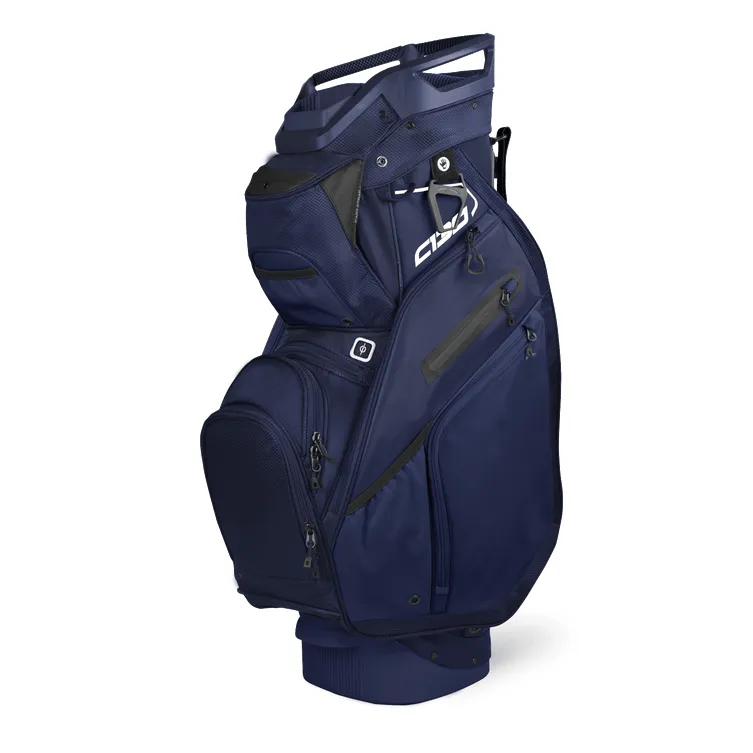
European distribution logistics for golf bags involves navigating a complex network of ports, inland transportation infrastructure, and warehousing facilities spread across 27 member states. Unlike the US market, where goods typically enter through a few major ports and distribute domestically, the EU market often requires multi-country distribution from a single import point, creating logistics optimization challenges that experienced importers address through strategic warehouse location selection and transportation mode planning.
Port Selection and Inland Distribution
Major European ports handling golf bag imports from Asia include Rotterdam (Netherlands), Hamburg (Germany), Antwerp (Belgium), Bremerhaven (Germany), Felixstowe and Southampton (UK), and Piraeus (Greece). Port selection depends on the importer's primary market, inland transportation costs, available deferred VAT schemes, and carrier service schedules. The port of Rotterdam offers particular advantages for golf bag importers due to its extensive shipping connections from Asian ports, its position as a logistics hub with abundant warehousing capacity, and the Dutch deferred VAT accounting scheme that eliminates the cash flow impact of import VAT.
Inland transportation costs within Europe vary significantly by distance and mode. Road transport from Rotterdam to Germany costs approximately $400 to $800 per container, while transport to Southern European destinations such as Spain or Italy can cost $800 to $1,500 per container. Rail transport offers cost savings for longer distances, with intermodal rail services from Rotterdam to Southern Germany costing 20 to 30 percent less than road transport while adding one to two days of transit time. Importers distributing across multiple EU countries should evaluate centralized warehousing locations that minimize total inland transportation costs across their distribution network.
Post-Brexit Considerations for UK Distribution
Since the UK's departure from the EU, importing golf bags to the United Kingdom follows a separate customs process from EU imports. The UK maintains its own Global Britain tariff schedule, which sets the golf bag duty rate at 16 percent, identical to the EU rate. However, separate customs declarations, separate EORI registrations (UK EORI and EU EORI), and separate VAT obligations mean that importers serving both UK and EU markets must maintain two parallel import operations with distinct compliance requirements.
For brands distributing across both UK and EU markets, the choice of initial import point has strategic implications. Importing through a UK port for UK-bound goods and through a continental European port for EU-bound goods avoids the need for transit procedures between the two customs territories. Alternatively, importing everything through a continental port and using transit procedures to move UK-bound goods through the EU without paying EU duty offers operational consolidation benefits but adds administrative complexity. Most importers find that separate import channels for UK and EU markets provide the simplest compliance structure despite the additional administrative overhead.
Frequently Asked Questions
What is REACH compliance and why does it matter for golf bags imported to the EU?
REACH is EU regulation governing chemical substances in products. Golf bags must comply with restrictions on azo dyes, nickel in hardware, phthalates in PVC components, and SVHCs above 0.1 percent threshold. Non-compliance can result in market withdrawal, fines up to EUR 50,000 per violation, and customs rejection.
What VAT rates apply to golf bag imports in EU countries?
EU VAT rates vary by member state: Germany 19 percent, France 20 percent, Netherlands 21 percent, Italy 22 percent, Spain 21 percent, Sweden 25 percent, Denmark 25 percent. VAT is charged on CIF value plus duty. Registered businesses can reclaim VAT on imported goods sold to customers.
Do golf bags need CE marking for EU import?
Golf bags do not require CE marking as they are not covered by any CE marking directive. However, golf bags with integrated electronic components like GPS holders or USB charging ports may require CE marking for those specific components.
What customs procedures apply to golf bag imports in the EU?
Golf bag imports require a customs declaration, payment of 16 percent Common Customs Tariff duty, payment of applicable VAT, and submission of supporting documentation including commercial invoice, packing list, bill of lading, and certificate of origin if claiming preferential origin. An EORI number is required for all importers.
How does the EU carbon border adjustment mechanism affect golf bag imports?
As of 2026, the EU CBAM primarily targets energy-intensive industrial goods like steel and aluminum. Golf bags are not currently within CBAM scope. However, importers should monitor regulatory developments as CBAM may expand to additional product categories over time.
What are the EU Extended Producer Responsibility requirements for golf bags?
EPR regulations require producers to fund packaging waste recycling. Golf bag importers must register with national EPR organizations in each member state, declare packaging quantities, and pay eco-contributions. Average costs range from EUR 0.05 to EUR 0.30 per bag depending on packaging configuration.
Ready to Start Your Custom Golf Bag Project?
Partner with a BSCI & ISO 9001:2015 certified factory producing 200,000+ premium golf bags annually. MOQ just 100 pieces.
Get a Free Quote Today