Golf Bag Duties and Tariffs in 2026: Complete Import Tax Guide by Country
Table of Contents
- Understanding HS Codes and Golf Bag Classification
- United States Import Duties and Tariffs for Golf Bags
- European Union Import Duties and VAT for Golf Bags
- Duty Rates Across Other Major Golf Markets
- Section 301 Tariffs and China-Specific Considerations
- Legal Strategies for Reducing Golf Bag Import Duties
- Customs Compliance and Documentation Requirements
- Frequently Asked Questions
Understanding HS Codes and Golf Bag Classification
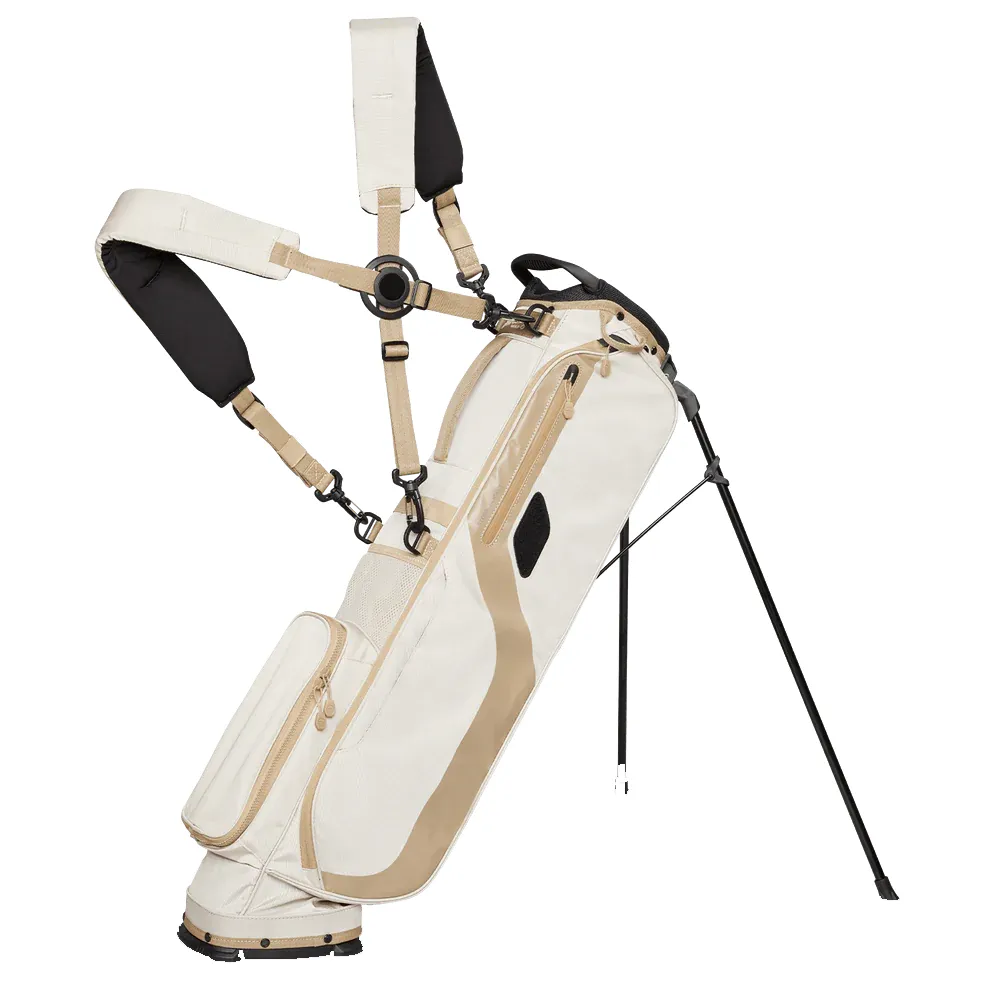
The Harmonized System code, or HS code, serves as the universal language of international trade classification. Every product crossing an international border must be assigned an HS code that determines the applicable duty rate, regulatory requirements, and statistical tracking category. For golf bags, correct HS code classification is the single most important factor in determining total import duty exposure, with differences of 10 percentage points or more possible between alternative classifications depending on material composition and product design.
Golf bags fall under heading 4202 of the Harmonized System, which covers trunks, suitcases, vanity cases, executive cases, briefcases, school satchels, camera cases, gun cases, holsters, and similar containers. Within this heading, golf bags are most commonly classified under subheading 4202.92, which covers travel bags, sports bags, and similar containers with outer surface of textile materials. However, the specific classification depends on the outer surface material of the golf bag, creating important variations in duty treatment.
Key HS Code Classifications for Golf Bags
| HS Code | Description | Material Requirement |
|---|---|---|
| 4202.92.15 | Travel bags with outer surface of plastic sheeting | PVC, TPU, or coated textile with visible plastic coating |
| 4202.92.3315 | Travel bags with outer surface of textile materials (cotton) | Cotton or cotton blend outer surface |
| 4202.92.3331 | Travel bags with outer surface of textile materials (man-made) | Nylon, polyester, or synthetic textile outer surface |
| 4202.92.90 | Travel bags with outer surface of other textile materials | Other natural fibers or mixed materials |
| 4202.91 | Travel bags with outer surface of leather | Natural or composition leather outer surface |
The classification between these subheadings is not always straightforward. Golf bags with textile outer surfaces that have a visible plastic or rubber coating on the exterior surface may qualify for classification under 4202.92.15 with the lower 6.5 percent duty rate, while identical bags without such coating are classified under 4202.92.33 at 17.6 percent. This distinction makes material selection a strategic decision that directly impacts landed costs, particularly for high-volume importers into the United States.
Our manufacturing team works closely with importers to understand these classification nuances and can advise on material specifications that may qualify for more favorable duty treatment while meeting the product design and performance requirements of the target market. The outer surface material determination must be made based on the visible exterior surface of the finished product, considering any coatings, laminations, or treatments applied to the base textile material.
United States Import Duties and Tariffs for Golf Bags
The United States represents the largest single market for imported golf bags, and its duty structure reflects both standard tariff schedules and trade policy measures that specifically affect Chinese-origin products. Understanding the full landscape of US import charges for golf bags requires examining the base Harmonized Tariff Schedule rates, additional Section 301 tariffs, merchandise processing fees, and state-level sales tax obligations that apply upon importation.
Standard HTS Duty Rates for Golf Bags (2026)
| Product Category | HTS Code | General Rate | China Rate (with Sec. 301) |
|---|---|---|---|
| Golf bags, textile outer surface (man-made) | 4202.92.3331 | 17.6% | 25.1% |
| Golf bags, textile outer surface (cotton) | 4202.92.3315 | 17.6% | 25.1% |
| Golf bags, plastic sheeting outer surface | 4202.92.15 | 6.5% | 14.0% |
| Golf bags, leather outer surface | 4202.91.00 | 8.0% | 15.5% |
| Golf bags, other materials | 4202.92.90 | 17.6% | 25.1% |
These rates reveal the significant impact of both material selection and country of origin on US duty exposure. A nylon golf bag from China faces a combined duty rate of 25.1 percent (17.6 percent base rate plus 7.5 percent Section 301 tariff), while the same bag from Vietnam faces only the 17.6 percent base rate. A PVC-coated golf bag from China faces 14.0 percent total duty, while the identical bag from Vietnam faces just 6.5 percent. These differentials translate directly to competitive advantage or disadvantage in the US market.
Additional US Import Charges Beyond Duty
Beyond the ad valorem duty rate, golf bag importers into the United States must account for several additional charges. The Merchandise Processing Fee, or MPF, is assessed at 0.3464 percent of the declared customs value, with a minimum of $31.67 and maximum of $614.35 per entry for formal entries. The Harbor Maintenance Fee, or HMF, applies to ocean freight shipments at 0.125 percent of the cargo value. For a container of golf bags valued at $40,000 with ocean freight of $3,500, the MPF would be $138.40 and the HMF would be $4.38, representing relatively modest additional costs.
State sales tax obligations may arise when imported golf bags are warehoused in states that impose use tax on imported goods. Most states exempt goods held for resale from sales tax, but importers maintaining their own retail operations should verify their specific obligations. Additionally, anti-dumping duties or countervailing duties could theoretically apply to golf bags if trade remedy petitions are filed, though no such measures are currently in effect for golf bags specifically.
European Union Import Duties and VAT for Golf Bags
The European Union maintains a Common Customs Tariff that applies uniformly across all 27 member states, simplifying duty rate analysis for importers serving the European golf market. However, the EU duty structure must be considered alongside Value Added Tax obligations that vary by member state and represent a significantly larger cost element than customs duty for most golf bag imports.
EU Common Customs Tariff Rates for Golf Bags (2026)
| Product Category | CN Code | Duty Rate |
|---|---|---|
| Golf bags, textile outer surface | 4202.92.19 | 16.0% |
| Golf bags, plastic sheeting outer surface | 4202.92.11 | 16.0% |
| Golf bags, leather outer surface | 4202.91.80 | 16.0% |
| Golf travel covers (accessories) | 4202.92.98 | 16.0% |
Unlike the US system, the EU applies a uniform 16 percent duty rate across all material categories for golf bags under heading 4202.92, eliminating the material-based classification strategy available in the US market. This simplification comes at the cost of generally higher rates than the US plastic sheeting classification, but lower rates than the US textile classification for non-Chinese origin products.
EU VAT Treatment of Imported Golf Bags
Value Added Tax represents the largest tax component for golf bag imports into the EU. VAT is charged on the CIF value (cost plus insurance plus freight) plus the customs duty amount. Standard VAT rates across major EU golf markets range from 19 percent in Germany to 25.5 percent in Denmark and 27 percent in Hungary. For a golf bag with a CIF value of $30 and duty of $4.80 (16 percent), the VAT at the German rate of 19 percent would be $6.61, while at the Hungarian rate of 27 percent it would be $9.40.
Registered businesses can generally reclaim VAT paid on imported goods that are subsequently sold to customers, making VAT a cash flow consideration rather than a permanent cost for legitimate trading operations. However, the timing of VAT payment and reclamation creates working capital requirements that importers must factor into their financial planning. Deferred VAT accounting schemes, available in several EU member states including the UK, Netherlands, and Belgium, allow importers to account for import VAT on their periodic VAT return rather than paying at the border, significantly improving cash flow management.
Duty Rates Across Other Major Golf Markets
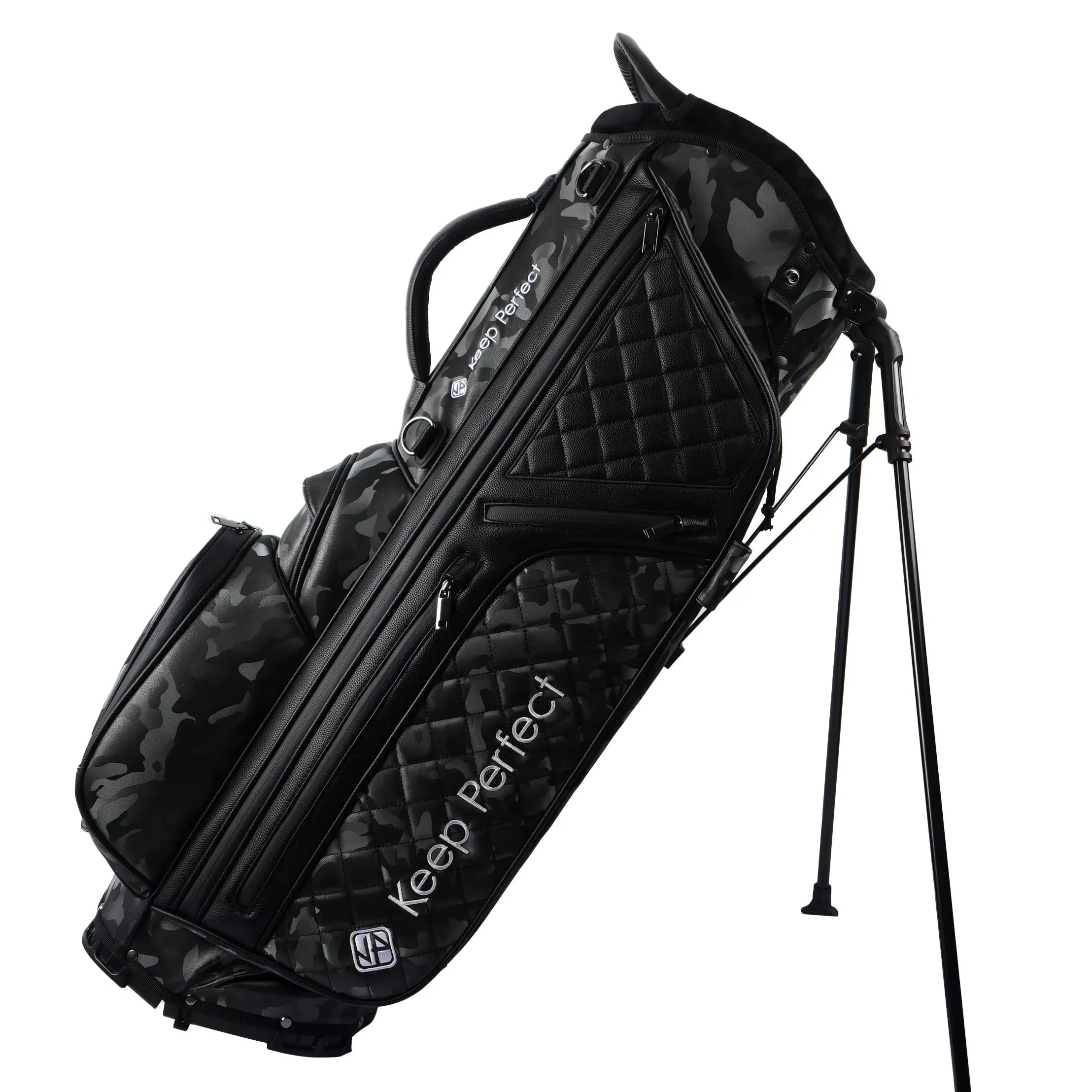
Beyond the United States and European Union, several other countries represent significant markets for imported golf bags. Each market maintains its own tariff schedule, trade agreement preferences, and regulatory requirements that affect the total cost of importing golf bags. Understanding these market-specific duty structures enables importers to evaluate the total cost of serving different geographic markets and optimize their sourcing and distribution strategies accordingly.
| Country | HS Code | Base Duty Rate | VAT/GST | Notes |
|---|---|---|---|---|
| United Kingdom | 4202.92 | 16.0% | 20.0% | Post-Brexit UKCA marking may apply |
| Australia | 4202.92 | 5.0% | 10.0% GST | China-Australia FTA: 0% for qualifying goods |
| Japan | 4202.92 | 16.0% or specific rate | 10.0% | CPTPP preference available for qualifying origins |
| Canada | 4202.92 | 16.0% | 5.0% GST | CUSMA benefits for qualifying North American content |
| South Korea | 4202.92 | 16.0% | 10.0% | Korea-EU FTA and Korea-US FTA preferences available |
| India | 4202.92 | 35.0% | 18.0% GST | High protectionist tariff regime |
| Brazil | 4202.92 | 20.0% | 17-25% ICMS | Complex multi-layer tax structure |
The variation across these markets is substantial. Australia offers the lowest duty rate at 5 percent, further reduced to zero for qualifying goods under the China-Australia Free Trade Agreement. India imposes the highest duty at 35 percent, reflecting its protectionist trade policy. Japan and the EU maintain similar rates around 16 percent. These differentials significantly affect the competitive dynamics in each market and should inform pricing strategy, market entry sequencing, and sourcing decisions.
Free Trade Agreement Benefits for Golf Bag Importers
Free trade agreements offer the most significant opportunity for legal duty reduction, but require strict compliance with rules of origin to qualify. The key trade agreements affecting golf bag imports include the USMCA for North American trade, the EU-Vietnam FTA for European imports from Vietnam, CPTPP for trans-Pacific trade, RCEP for Asia-Pacific trade, and numerous bilateral agreements. Golf bags manufactured in a CPTPP member country and imported into another CPTPP member country may qualify for reduced or zero duty, provided they meet the applicable rules of origin requirements.
Rules of origin for golf bags typically require a change in tariff classification at the heading level, meaning that non-originating materials must be sufficiently transformed during production in the beneficiary country to result in a heading change. For golf bags, this generally means that cutting and sewing of textile materials into finished bag configurations in the beneficiary country satisfies the origin requirement, even if some raw materials such as zippers, buckles, or specialized fabrics are sourced from non-member countries.
Section 301 Tariffs and China-Specific Considerations
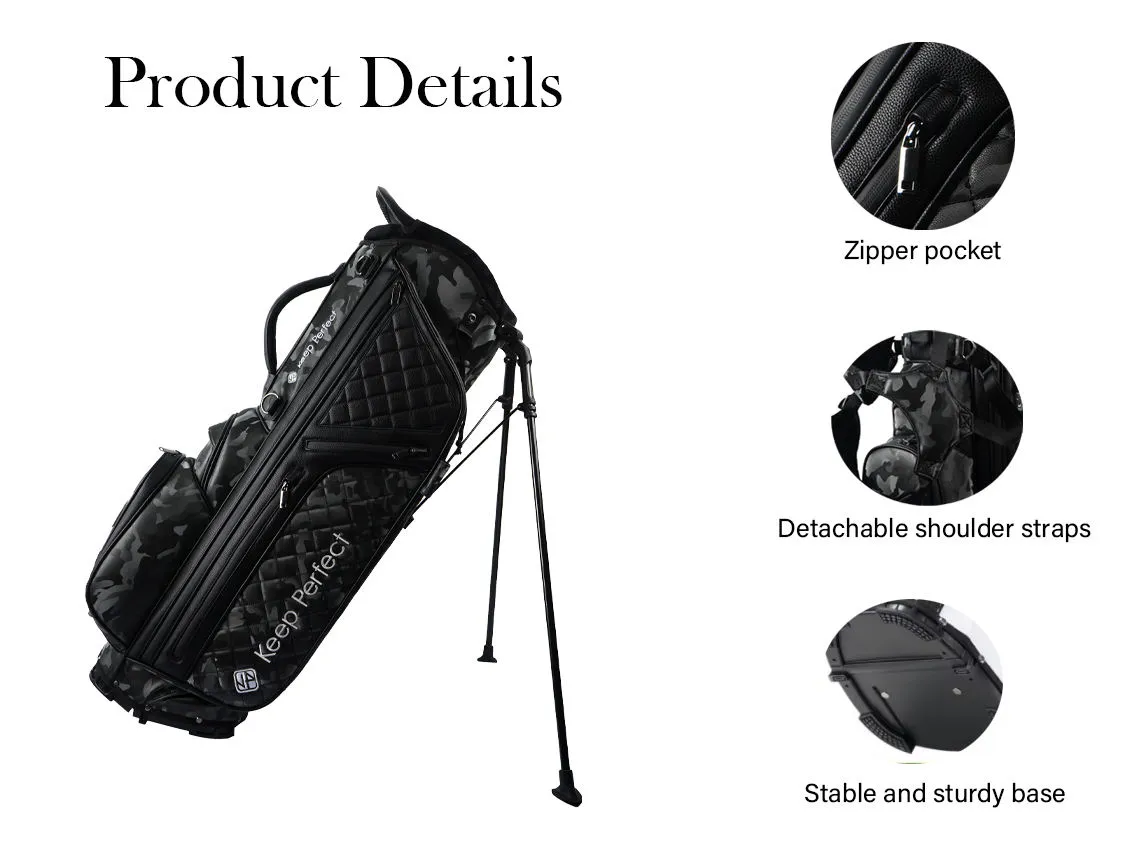
For golf bag importers into the United States, Section 301 tariffs imposed on Chinese-origin products represent a critical cost factor that distinguishes Chinese sourcing from alternative manufacturing locations. These tariffs, imposed under the authority of Section 301 of the Trade Act of 1974, were initially implemented in 2018 and have evolved through multiple rounds of modification. As of 2026, golf bags from China remain subject to additional duties that significantly impact the competitiveness of Chinese sourcing versus alternatives such as Vietnam, Cambodia, or Indonesia.
Current Section 301 Tariff Status for Golf Bags
Golf bags classified under HTS 4202.92 fall under Section 301 List 4A, which was implemented in September 2019 at an initial rate of 15 percent. This rate was reduced to 7.5 percent in February 2020 as part of the Phase One trade agreement between the United States and China. As of 2026, this 7.5 percent additional tariff remains in effect for golf bags from China, with no announced schedule for further reduction or elimination.
The practical impact of Section 301 tariffs on golf bag landed costs is substantial. For a nylon golf stand bag with an FOB value of $25, the base duty of 17.6 percent equals $4.40, while the Section 301 tariff of 7.5 percent equals $1.875, bringing total duty to $6.275 or 25.1 percent of the FOB value. From Vietnam, the same bag incurs only $4.40 in base duty, creating a $1.875 per unit cost advantage for Vietnamese origin. Across an annual import volume of 50,000 bags, this differential amounts to $93,750 in additional duty costs for Chinese versus Vietnamese sourcing.
Evaluating Sourcing Location in Light of Tariff Differentials
The tariff differential between Chinese and alternative sourcing locations must be weighed against other cost factors including production labor costs, material availability, quality consistency, supply chain infrastructure, and minimum order quantities. While Vietnam offers tariff advantages for US imports, Chinese factories generally offer superior material sourcing infrastructure, broader product range capabilities, and more established quality control systems. The decision to source from China versus alternative locations should be based on total landed cost analysis incorporating all factors, not solely duty rate differentials.
Legal Strategies for Reducing Golf Bag Import Duties
While import duties represent a necessary cost of international trade, several legitimate strategies exist for minimizing duty exposure within the bounds of customs law and regulatory compliance. These strategies require proactive planning, careful documentation, and often collaboration with the manufacturing factory to implement product or process changes that qualify for more favorable duty treatment.
Material-Based Classification Optimization
As discussed in the HS codes section, golf bag outer surface material determines the applicable duty rate in the United States. A golf bag with plastic sheeting outer surface faces 6.5 percent duty versus 17.6 percent for textile outer surface. For brand owners with flexibility in material specification, using PVC-coated or TPU-laminated textile materials as the outer surface can potentially reduce US duty rates by 11.1 percentage points, representing a savings of $2.78 per bag at an FOB value of $25.
This strategy requires careful compliance with customs classification rules. The outer surface must be visible to the naked eye as plastic, not merely textile with invisible water-repellent treatment. Our material science team can advise on coating and lamination specifications that achieve the desired classification while meeting performance requirements for durability, water resistance, and aesthetic quality. It is essential to obtain a binding ruling from US Customs and Border Protection before implementing this strategy to ensure the classification withstands scrutiny.
First Sale Valuation Strategy
For importers purchasing through trading companies or intermediaries rather than directly from the factory, the first sale valuation rule can reduce the dutiable value of golf bag imports. Under this principle, when there are multiple sales transactions in a supply chain (factory to trader to importer), customs value may be based on the first sale (factory to trader) rather than the last sale (trader to importer). This reduces the declared customs value and consequently the duty amount.
For example, if a factory sells golf bags to a trading company at $20 and the trading company sells to the US importer at $25, first sale valuation allows duty to be calculated on the $20 price rather than $25, saving 17.6 percent times $5 equals $0.88 per bag in duty. While modest per unit, this savings accumulates across large volumes. Implementation requires proper documentation of the first sale transaction, including evidence that the goods were clearly destined for export to the United States at the time of the first sale.
Duty Drawback and Foreign Trade Zones
Importers who export golf bags after importing them, or who use imported golf bags as components in larger assembled products, may qualify for duty drawback, receiving a refund of up to 99 percent of duties paid on imported merchandise that is subsequently exported or destroyed. This mechanism benefits golf bag distributors who maintain international sales operations or golf equipment companies that incorporate bags into larger product kits.
Foreign Trade Zones, or FTZs, offer another mechanism for duty optimization. Goods imported into an FTZ are not subject to duty until they leave the zone and enter US customs territory. If golf bags are stored, processed, or repackaged within an FTZ and subsequently exported, no US duty is ever paid. Even for goods entering the US market, FTZ status allows importers to defer duty payment until the goods leave the zone, improving cash flow by eliminating the need to pay duty at the time of importation.
Customs Compliance and Documentation Requirements
Proper documentation forms the foundation of customs compliance and duty optimization. Incomplete or inaccurate documentation not only risks penalties and delays but may also cause importers to forfeit legitimate duty benefits available under trade agreements or special programs. Golf bag importers must maintain comprehensive documentation packages for every shipment to support their customs declarations and duty rate claims.
Essential Documentation for Golf Bag Imports
The core documentation package for golf bag imports includes a commercial invoice detailing the transaction value, packing list specifying quantities and weights, bill of lading evidencing the contract of carriage, certificate of origin supporting any preferential duty claims, and any required test reports or compliance certificates. Each document must contain consistent information regarding the description of goods, quantities, values, and country of origin to avoid customs queries or rejection of preferential duty claims.
For preferential duty claims under free trade agreements, the certificate of origin must be issued by an authorized body in the exporting country and must specifically identify the goods, their origin-conferring production processes, and the applicable rules of origin. Missing or defective certificates of origin are among the most common reasons for denial of preferential duty treatment, resulting in the full most-favored-nation duty rate being applied despite the goods potentially qualifying for preferential rates.
Record Keeping Requirements
US Customs and Border Protection requires importers to maintain all records related to import transactions for a minimum of five years from the date of entry. This retention requirement covers not just the basic import documentation but also all supporting materials including correspondence with suppliers, cost breakdowns supporting declared values, samples of products imported, and any rulings or decisions received from customs authorities. Failure to maintain adequate records can result in penalties even if the original declarations were accurate, and makes it impossible to defend against post-entry audits or challenges.
EU customs regulations similarly require comprehensive record retention, with most member states requiring documentation to be maintained for three to seven years. The specific retention period varies by member state, and importers serving multiple EU markets should adopt the longest applicable period across all jurisdictions to ensure compliance everywhere. Digital record keeping systems with proper backup and search capabilities are essential for managing the volume of documentation generated by regular golf bag import operations.
Frequently Asked Questions
What is the HS code for golf bags and what duty rates apply?
Golf bags are classified under HS code 4202.92 as travel bags with outer surface of textile materials. The general duty rate in the USA is 17.6 percent for textile golf bags and 6.5 percent for plastic sheeting golf bags. In the EU, the duty rate is 16 percent ad valorem.
Are there additional tariffs on Chinese-made golf bags in 2026?
In the USA, Chinese-origin golf bags face the standard 17.6 percent duty under HTS 4202.92.3315 plus Section 301 tariffs of 7.5 percent, bringing the total US duty to approximately 25.1 percent for Chinese-origin products. Trade agreement sourcing from Vietnam or other beneficiary countries can eliminate these additional tariffs.
How can importers reduce golf bag import duties legally?
Legal duty reduction strategies include sourcing from countries with favorable trade agreements, optimizing product classification through proper material selection, utilizing duty drawback programs for returned goods, structuring transfer pricing for related-party transactions, and taking advantage of first sale valuation rules.
What is the difference between golf bag duty rates for different materials?
Textile outer surface golf bags face 17.6 percent US duty, while plastic sheeting outer surface bags face only 6.5 percent. Leather outer surface bags face 8 percent duty. Selecting materials strategically can significantly reduce duty exposure while maintaining product quality.
Do free trade agreements reduce golf bag import duties?
Yes, free trade agreements can significantly reduce or eliminate golf bag import duties. Under the EU-Vietnam FTA, duties are reduced to zero. CPTPP member countries benefit from preferential rates in multiple markets. The Australia-China FTA reduces duties to zero for qualifying goods. Country of origin and rules of origin compliance are critical for claiming preferences.
Ready to Start Your Custom Golf Bag Project?
Partner with a BSCI & ISO 9001:2015 certified factory producing 200,000+ premium golf bags annually. MOQ just 100 pieces.
Get a Free Quote Today