Golf Bag Budget Planning: Complete Financial Blueprint for Brands 2026
Table of Contents
- Introduction: Financial Planning for Golf Bag Success
- Startup Budget: From Zero to First Production
- Production Budget Planning and Cash Flow
- Pricing Strategy and Margin Optimization
- Ongoing Operational Costs After Launch
- Financial Risk Management
- ROI Timeline and Profitability Projections
- Budget Optimization Strategies
- Frequently Asked Questions
Introduction: Financial Planning for Golf Bag Success
Launching and growing a successful golf bag brand requires more than great design and passionate marketing. It requires rigorous financial planning that accounts for every cost from initial concept through profitability and beyond. The golf bag manufacturing business carries unique financial characteristics including significant upfront development costs, extended production and shipping lead times, international currency exposure, and seasonal demand patterns that all must be incorporated into a comprehensive financial plan. Brands that approach budget planning systematically consistently outperform those that rely on rough estimates and optimistic assumptions.
As a certified manufacturer producing over 200,000 golf bags annually for hundreds of brands worldwide, we have witnessed the full spectrum of brand financial planning from meticulous multi-year projections to dangerously undercapitalized launches. The brands that succeed consistently share common financial characteristics: realistic cost estimates, adequate cash reserves for working capital cycles, clear pricing strategies that maintain healthy margins, and contingency reserves for inevitable unexpected costs. This guide provides the financial framework and specific cost data needed to build a comprehensive budget plan for your golf bag brand in 2026.
The numbers in this guide reflect actual 2026 costs based on our factory's production data across entry-level, mid-range, premium, and luxury golf bag categories. Whether you are budgeting for your first production run as a startup brand or planning the expansion of an established line, these realistic cost benchmarks will support informed financial decision-making. We cover every budget category from development through ongoing operations, providing both the specific numbers and the strategic framework needed to allocate your capital effectively.
Financial planning for golf bag brands operates on multiple time horizons. The startup phase requires concentrated investment in development, sampling, and initial production with no revenue to offset costs for 4 to 8 months. The launch phase demands significant marketing investment to generate initial sales velocity. The growth phase requires working capital to finance expanding inventory while revenue builds. Understanding these phase-specific financial requirements enables realistic planning that prevents the cash flow crises that eliminate undercapitalized brands.
Startup Budget: From Zero to First Production
Phase One: Design and Development (2,000 to 10,000 dollars)
The design and development phase transforms your golf bag concept into production-ready specifications. For brands using ODM factory designs with customization, development costs range from 2,000 to 5,000 dollars including design selection, color customization, sampling rounds, and branding application. For brands pursuing full OEM custom designs, development costs range from 5,000 to 10,000 dollars per style covering industrial design, technical design, pattern development, multiple sampling rounds, and production validation. Most new brands launch with 2 to 3 styles, bringing total development investment to 4,000 to 30,000 dollars depending on the manufacturing model chosen.
Development costs must be treated as sunk investments that generate returns over the product's commercial life rather than costs that are recovered per unit. A 7,000-dollar design investment amortized over 3,000 units sold during the product's first two years adds just 2.33 dollars per unit to the effective cost. This perspective helps brands understand that development investments, while significant upfront, represent modest per-unit cost additions that generate substantial value through product differentiation and brand identity creation.
Phase Two: Sampling and Validation (1,000 to 5,000 dollars)
Sampling costs accumulate across multiple rounds of design refinement before production approval is granted. Each sampling round costs 200 to 500 dollars per style for materials, labor, and factory setup. International shipping of samples adds 50 to 150 dollars per round. Most designs require 3 to 5 sampling rounds, bringing total sampling costs to 1,000 to 3,500 dollars per style. For a 3-style initial launch, budget 3,000 to 10,500 dollars for complete sampling and validation across all products.
Sampling is where budget discipline must balance against quality ambition. Every sampling round improves the product but also delays market entry and consumes capital. Experienced brands set clear approval criteria for each round, focusing revisions on priority improvements rather than pursuing perfection through unlimited iterations. Our factory typically sees 4 sampling rounds before production approval for OEM designs and 2 rounds for ODM customization, providing realistic benchmarks for budget planning.
Phase Three: Tooling and Pre-Production (2,000 to 10,000 dollars)
Custom tooling represents a one-time capital investment that enables your specific design to be manufactured. Custom base plate molds cost 500 to 2,000 dollars each. Proprietary buckle molds range from 300 to 1,500 dollars per design. Custom logo hardware molds add 200 to 800 dollars. Divider system tooling for unique configurations costs 500 to 2,000 dollars. For a fully custom bag with proprietary components, total tooling investment ranges from 2,000 to 8,000 dollars per style. Brands utilizing standard catalog components can reduce tooling costs to 500 to 2,000 dollars per style by limiting custom tooling to logo elements only.
Tooling investment should be evaluated against planned production volume. A 5,000-dollar tooling investment amortized across 300 units adds 16.67 dollars per unit, while the same investment across 1,000 units adds only 5 dollars per unit. This economics strongly favors launching with higher initial order quantities when capital allows, as the per-unit cost advantage of larger tooling amortization compounds across every production run throughout the product's life.
Phase Four: Branding, Photography, and Marketing Setup (3,000 to 15,000 dollars)
Before your first golf bag sells, you must invest in the brand presentation infrastructure that enables effective marketing. Logo design and brand identity development costs 1,000 to 5,000 dollars for professional design services. Product photography requires 500 to 2,000 dollars per style for comprehensive image sets. Website development for e-commerce ranges from 2,000 to 8,000 dollars. Social media setup, content creation, and initial marketing campaigns require 2,000 to 5,000 dollars for professional execution. Total branding and launch preparation investment typically ranges from 5,500 to 20,000 dollars for a new brand entering with 2 to 3 product styles.
Total Startup Budget Summary
Combining all phases, a new golf bag brand using ODM with 2 to 3 styles should budget 15,000 to 30,000 dollars for complete startup through first production. Brands pursuing full OEM custom designs with proprietary tooling should budget 30,000 to 55,000 dollars. These figures exclude first production inventory costs, which are addressed in the production budget section. Including first production inventory, total investment to generate first revenue ranges from 25,000 to 80,000 dollars depending on bag category, customization level, and order quantities.
Production Budget Planning and Cash Flow
First Production Run Investment
The first production run represents the largest single capital expenditure in the startup phase. At our factory, production costs per unit range from 15 to 25 dollars for entry-level stand bags, 30 to 60 dollars for mid-range cart bags, 60 to 100 dollars for premium bags, and 100 to 200 dollars for luxury products. At MOQ quantities of 300 units per style, first production investment ranges from 4,500 to 7,500 dollars for entry-level products, 9,000 to 18,000 dollars for mid-range, and 18,000 to 60,000 dollars for premium products per style.
Payment terms significantly affect cash flow timing. Standard terms require 30 percent deposit upon order confirmation with 70 percent balance before shipment. This means you must fund the full production cost before receiving any revenue from the products. For a 15,000-dollar production order, you pay 4,500 dollars upfront and 10,500 dollars upon completion, typically 60 to 90 days later. This cash flow gap must be planned for in your working capital reserves.
Shipping and Landed Cost Calculation
Shipping costs from China to major markets must be included in production budget calculations. Sea freight for a partial container load of golf bags costs 4 to 10 dollars per bag depending on volume and timing. Import duties add 17.6 percent for US imports or 3 to 5 percent for EU imports. Customs brokerage, harbor fees, and inland transportation add 1 to 3 dollars per bag. Total shipping and duty costs typically add 25 to 35 percent to the manufacturing cost for US-bound products.
Understanding your true landed cost per unit, which includes manufacturing, shipping, duties, and local delivery, is essential for calculating accurate gross margins and setting appropriate retail prices. A bag manufactured for 35 dollars with shipping, duties, and delivery adding 12 dollars has a landed cost of 47 dollars. At a retail price of 189 dollars, the gross margin before distribution costs is approximately 75 percent for direct-to-consumer sales or 50 percent if selling through wholesale channels at 95 dollars wholesale price.
Cash Flow Cycle Management
Golf bag manufacturing operates on extended cash flow cycles that create working capital requirements between expenditure and revenue collection. The typical cycle from deposit payment to warehouse receipt spans 90 to 120 days. If selling wholesale, another 30 to 60 days may pass before retailer payment is received. This 4 to 6 month cash flow cycle means brands must maintain adequate working capital reserves to fund operations during the gap between manufacturing expenditure and revenue collection.
Effective cash flow management requires maintaining 3 to 6 months of operating expenses in reserve, timing production orders to align with revenue collection from previous orders, and negotiating payment terms with both suppliers and customers to minimize cash flow gaps. Our factory offers flexible payment structures for established clients, including reduced deposits and milestone-based payments that ease cash flow pressure during growth phases.
Pricing Strategy and Margin Optimization
Retail Price Calculation Framework
Setting the right retail price requires balancing manufacturing costs, competitive positioning, target customer expectations, and desired profit margins. The standard framework calculates retail price as 4 to 6 times the landed manufacturing cost. This multiplier accounts for all business costs beyond manufacturing including marketing, operations, overhead, and profit. A bag with 47 dollars landed cost priced at 189 dollars uses a 4x multiplier. The same bag at 235 dollars uses a 5x multiplier. The appropriate multiplier depends on brand positioning, distribution channel costs, and competitive pricing in the target segment.
Direct-to-consumer brands can use lower multipliers because they capture full retail margin. A 4x multiplier on 47 dollars landed cost yields 188 dollars retail with approximately 75 percent gross margin. Wholesale brands must use higher multipliers because wholesale pricing at 50 percent of retail means the brand receives only half the retail price. A 6x multiplier on 47 dollars yields 282 dollars retail, 141 dollars wholesale, providing approximately 67 percent gross margin at wholesale after deducting landed cost.
Margin Optimization Strategies
Several strategies can optimize margins without compromising product quality. Order quantity scaling reduces per-unit manufacturing costs by 15 to 30 percent when increasing from 300 to 1,000 units. Material standardization across multiple styles enables bulk purchasing discounts of 5 to 15 percent on fabric costs. Direct-to-consumer distribution eliminates wholesale margin sharing, potentially increasing per-unit profit by 40 to 50 percent compared to wholesale. Premium pricing through strong brand positioning can support 20 to 30 percent higher retail prices than equivalent products with weaker brand presence.
Competitive Pricing Analysis
Before finalizing retail prices, conduct thorough competitive analysis of comparable products in your target market segment. Analyze pricing across all major distribution channels including brand websites, Amazon, specialty retailers, and big-box stores. Understand the feature sets, material quality, and brand positioning of products at each price point in your target range. Your pricing should reflect genuine quality and positioning advantages over products at lower price points while maintaining value perception relative to premium competitors above your price point.
Ongoing Operational Costs After Launch
Inventory Replenishment and Growth
After initial launch, the largest ongoing cost is inventory replenishment. Most successful golf bag brands reorder every 3 to 4 months to maintain inventory levels, with each reorder typically 50 to 100 percent larger than the previous as sales data supports increased confidence. Working capital requirements grow proportionally with sales volume, making cash flow management increasingly important as the business scales. Budget for 2 to 3 inventory cycles per year, each requiring full production cost payment months before revenue is collected.
Marketing and Customer Acquisition
Marketing costs represent the second largest ongoing expense for golf bag brands. Digital marketing including social media advertising, search engine marketing, content marketing, and influencer partnerships typically costs 10 to 20 percent of revenue for growing brands. Trade show participation at PGA Show, Golf Demo Day, and regional events costs 5,000 to 20,000 dollars per event including booth space, travel, and materials. Product seeding to professional golfers and influencers costs 500 to 2,000 dollars per ambassador in product value plus potential endorsement fees. Budget 15 to 25 percent of projected revenue for comprehensive marketing activities during the growth phase.
Operations and Infrastructure
Ongoing operational costs include warehousing and fulfillment (2 to 5 dollars per unit or 1,000 to 3,000 dollars monthly for third-party logistics), e-commerce platform fees (50 to 300 dollars monthly), customer service operations (1,000 to 3,000 dollars monthly for growing brands), accounting and legal services (500 to 2,000 dollars monthly), insurance coverage (200 to 500 dollars monthly), and miscellaneous business expenses. Total ongoing operational costs typically range from 3,000 to 10,000 dollars monthly for brands generating 50,000 to 200,000 dollars in annual revenue.
Financial Risk Management
Currency Exchange Risk
Golf bag manufacturing involves transactions primarily in US dollars and Chinese yuan, creating currency exchange exposure that can affect costs by 3 to 8 percent annually. When the yuan strengthens against the dollar, manufacturing costs in dollar terms increase. When the dollar strengthens, costs decrease. Brands can manage this risk through forward contracts that lock exchange rates for future payments, diversified supplier relationships across currency zones, or building currency fluctuation reserves of 3 to 5 percent into cost projections. Our factory provides pricing in US dollars, insulating US-based brands from direct currency management but incorporating currency considerations into our pricing stability.
Tariff and Trade Policy Risk
Import duties on golf bags from China to the United States have fluctuated significantly in recent years, ranging from standard rates of 17.6 percent to elevated rates exceeding 25 percent during trade dispute periods. Brands must monitor trade policy developments and build duty rate scenarios into financial projections. Some brands mitigate tariff risk by developing manufacturing capabilities in Vietnam or other countries with lower duty rates, though this introduces complexity in supply chain management. Budgeting for potential 5 to 10 percent duty increases provides a conservative buffer against adverse trade policy changes.
Inventory Risk and Demand Uncertainty
Inventory represents the largest asset and the largest risk for golf bag brands. Products that sell through plan generate healthy margins. Products that do not sell tie up capital, incur storage costs, and eventually require markdown clearance that erodes margins. New brands face particular demand uncertainty because they lack historical sales data for forecasting. Conservative initial ordering, rapid reorder capability for successful styles, and maintaining capital reserves for unexpected inventory needs are essential risk management strategies.
Quality Risk and Warranty Costs
Quality issues that trigger warranty claims or customer returns represent both direct financial costs and brand reputation damage. Budget 1 to 3 percent of revenue for warranty and returns processing, which covers replacement products, return shipping, and refurbishment costs. Selecting certified manufacturers with robust quality control systems like our BSCI and ISO 9001:2015 certified facility reduces quality risk significantly compared to uncertified factories. The modest cost premium for certified manufacturing pays dividends through reduced warranty costs and preserved brand reputation.
ROI Timeline and Profitability Projections
Year One: Investment Phase
Year one of a golf bag brand is overwhelmingly an investment phase. Revenue from initial sales typically covers only a portion of total investment. For a brand investing 40,000 dollars in startup costs and first production, first-year revenue of 60,000 to 100,000 dollars with 50 to 60 percent gross margins generates 30,000 to 60,000 dollars in gross profit. After deducting marketing costs of 15,000 to 25,000 dollars and operational costs of 12,000 to 20,000 dollars, year-one net profit ranges from negative 25,000 to positive 25,000 dollars depending on execution effectiveness and market reception.
Year Two: Growth and Stabilization
Year two typically brings meaningful revenue growth as brand awareness builds, product reviews accumulate, and distribution relationships develop. Revenue growth of 50 to 150 percent over year one is achievable for well-executed brands. At 100,000 to 250,000 dollars in year-two revenue with improved operational efficiency, brands typically achieve modest profitability of 5,000 to 30,000 dollars net profit. The critical milestone in year two is establishing reliable reorder cycles and predictable sales velocity that enable accurate production planning and inventory management.
Year Three and Beyond: Scale and Profitability
By year three, established golf bag brands typically generate 200,000 to 500,000 dollars in annual revenue with net profit margins of 10 to 20 percent. At this stage, the brand has validated product-market fit, established efficient supply chain relationships, optimized its pricing strategy, and developed repeat customer bases that reduce customer acquisition costs. The focus shifts from survival and validation to scaling, product line expansion, and market share growth. Brands reaching this stage have demonstrated the business model viability needed for sustainable long-term profitability.
Budget Optimization Strategies
Start with ODM, Transition to OEM
New brands with limited capital should consider launching with ODM products to minimize upfront development investment, then transitioning successful styles to OEM designs as revenue supports the investment. This phased approach reduces initial risk while building toward the proprietary product portfolio that supports long-term brand differentiation. Our factory supports this transition seamlessly, helping brands identify which ODM products have sufficient sales performance to justify OEM development investment.
Consolidate Material Specifications
Using consistent materials across multiple product styles enables bulk purchasing discounts, reduces minimum purchase requirements for custom materials, and simplifies inventory management. A brand launching 3 styles can reduce total material costs by 10 to 15 percent by specifying the same main body fabric, lining material, and standard hardware across all three styles, reserving differentiation for color schemes, pocket configurations, and branding elements.
Negotiate Payment Terms Strategically
As order volume and relationship duration increase, negotiate improved payment terms that ease cash flow pressure. Moving from 30/70 to 20/80 payment terms reduces the upfront deposit requirement, preserving working capital for marketing and operations. Some factories offer net 30 terms for established clients, allowing payment after goods receipt rather than before shipment. These term improvements compound in financial impact as order volumes grow.
Leverage Factory Expertise for Cost Efficiency
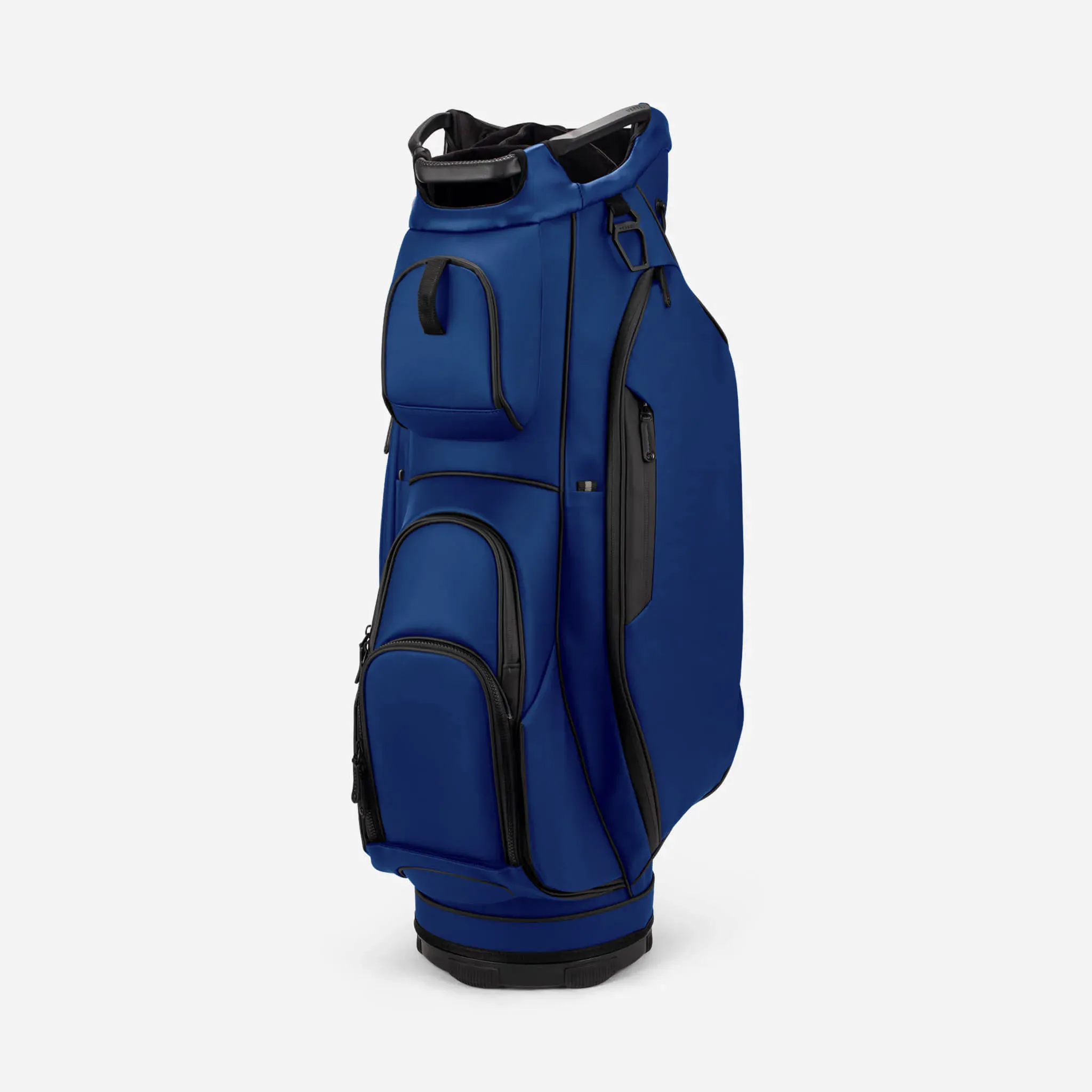
Experienced golf bag factories offer cost optimization guidance that brands cannot easily develop independently. Our engineering team reviews every OEM design for manufacturing efficiency improvements that reduce production costs without affecting visible quality. We recommend material substitutions that deliver equivalent quality at lower cost. We identify standard components that replace custom alternatives, saving tooling investment and per-unit expense. Leveraging this manufacturing expertise is one of the most effective budget optimization strategies available to golf bag brands.
Budget planning for golf bag brands is both a financial discipline and a strategic capability. The brands that thrive in this market are those that approach financial planning with the same rigor and commitment they apply to product design and marketing. Understanding the true cost structure, planning for cash flow cycles, setting appropriate prices, managing risks proactively, and optimizing costs strategically all contribute to financial sustainability that enables long-term brand building.
Our factory is committed to transparent pricing and comprehensive cost guidance that supports your brand's financial planning process. We provide detailed cost breakdowns for every quotation, explain cost drivers clearly, and offer optimization recommendations that help you achieve your quality and price targets within your available budget. With 200,000+ bags annual production capacity, BSCI and ISO 9001:2015 certifications, and 20 years of manufacturing experience, we are equipped to support brands at every stage of financial development from startup launches to scaled operations. Contact us through our contact page, email service@junyuanbags.com, or WhatsApp +8617750020688 to begin planning your golf bag budget with expert manufacturing guidance.
Frequently Asked Questions
How much budget do I need to start a golf bag brand?
Starting a golf bag brand requires 15,000 to 50,000 dollars minimum including product development, sampling, first production run, branding, packaging, photography, and initial marketing. Entry-level brands using ODM designs can start with 15,000 to 25,000 dollars, while OEM brands with custom designs should budget 30,000 to 50,000 dollars minimum.
What is the typical payment structure for golf bag manufacturing?
Standard payment terms require 30 percent deposit upon order confirmation and 70 percent balance before shipment. For new clients, some factories require 50/50 terms. Established relationships may negotiate more favorable terms like 20/80 or net payment arrangements for repeat orders.
How do I calculate the retail price for custom golf bags?
Retail price is typically calculated as 4 to 6 times the landed manufacturing cost. A bag costing 30 dollars to manufacture and ship should retail between 120 and 180 dollars. The specific multiplier depends on distribution channel margins, brand positioning, and competitive pricing in the target market segment.
What are the ongoing costs after launching a golf bag brand?
Ongoing costs include reorders and inventory replenishment, marketing and advertising, website maintenance, customer service operations, warehousing and fulfillment, photography updates, trade show participation, and continuous product development. Budget 30 to 50 percent of projected revenue for ongoing operational costs beyond product manufacturing.
How long until a golf bag brand becomes profitable?
Most golf bag brands achieve profitability within 12 to 24 months of launch if they maintain adequate gross margins above 45 percent and manage overhead costs effectively. Direct-to-consumer brands typically reach profitability faster than wholesale brands because they capture full retail margin without distributor and retailer markups.
Should I invest in one expensive bag or multiple affordable designs?
For new brands, launching with 2 to 3 carefully designed styles at a mid-range price point offers the best balance of market coverage and capital efficiency. A single hero product concentrates risk while too many styles dilute limited marketing budgets across insufficient inventory depth per style.
What financial risks should I anticipate in golf bag manufacturing?
Key financial risks include currency exchange fluctuations affecting manufacturing costs, tariff changes impacting import duties, inventory obsolescence from slow-selling styles, quality issues requiring rework or replacement, shipping delays disrupting cash flow timing, and demand uncertainty in the first 12 months of operation.
Ready to Start Your Custom Golf Bag Project?
Partner with a BSCI & ISO 9001:2015 certified factory producing 200,000+ premium golf bags annually. MOQ just 100 pieces.
Get a Free Quote Today