Custom Golf Bag Cost Breakdown: Every Expense Explained 2026
Table of Contents
- Introduction: The True Cost of Custom Golf Bag Manufacturing
- Development and Design Costs
- Material Costs: The Largest Cost Component
- Labor and Production Costs
- Tooling and Equipment Costs
- Shipping, Logistics, and Landed Costs
- Hidden Costs Most Brands Overlook
- Strategies to Optimize Your Cost Structure
- Frequently Asked Questions
Introduction: The True Cost of Custom Golf Bag Manufacturing
Understanding exactly what it costs to produce a custom golf bag is the single most important piece of knowledge for any brand owner entering this market. Without a clear picture of every expense involved in bringing a custom golf bag from concept to warehouse, entrepreneurs either overestimate their required capital and never start, or dangerously underestimate costs and find themselves unable to complete their first production run. This guide eliminates that uncertainty by providing a comprehensive, transparent breakdown of every cost category involved in custom golf bag manufacturing as of 2026.
As a BSCI and ISO 9001:2015 certified factory producing over 200,000 golf bags annually, we have manufactured custom bags for hundreds of brands across every market segment and price tier. This experience gives us unique visibility into the complete cost structure that determines whether a golf bag brand will be financially viable. The numbers in this guide reflect actual 2026 manufacturing costs, not theoretical estimates, and they apply across stand bags, cart bags, and tour staff bags with appropriate adjustments for each category.
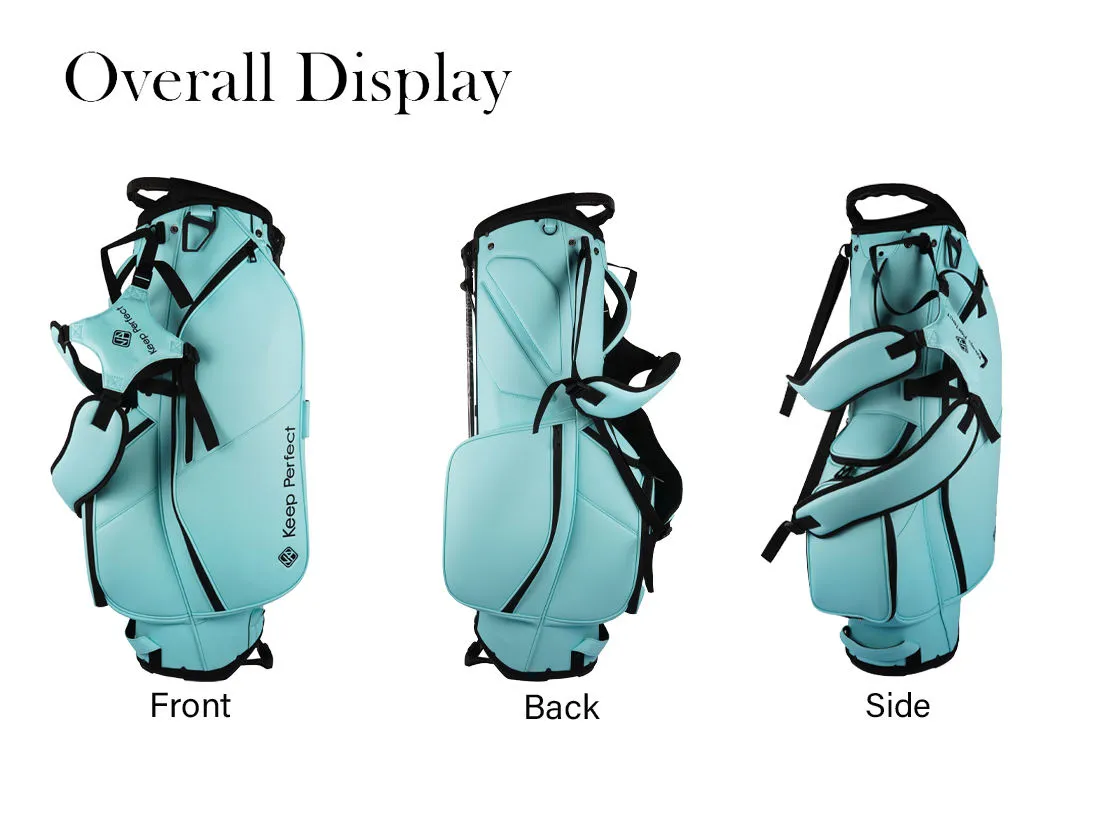
The cost of manufacturing a custom golf bag encompasses far more than the per-unit factory price that most initial inquiries focus on. A complete cost picture must include design and development expenses, sampling costs, custom tooling investment, material procurement, labor, quality control, packaging, shipping, duties, and various ancillary expenses. When all of these elements are properly accounted for, brands can develop accurate financial models that support sound business decisions about product pricing, order quantities, and profitability targets.
This guide systematically addresses every cost component, providing specific dollar ranges based on actual manufacturing data. We break down costs by bag category where relevant, explain how order quantity affects per-unit pricing, identify hidden costs that frequently catch new brands by surprise, and offer practical strategies for optimizing your cost structure without sacrificing quality. Whether your target retail price is 99 dollars or 699 dollars, understanding these cost components is essential for building a sustainable golf bag business.
Development and Design Costs
Industrial Design and Concept Development
The design phase is where your golf bag vision takes tangible form, and it represents a significant upfront investment that must be budgeted before any physical product exists. Professional industrial design for a single golf bag style typically costs between 1,500 and 5,000 dollars, depending on the designer's experience level, the complexity of the design, and whether the designer specializes in golf products. This cost covers initial concept sketches, 3D renderings, color explorations, and the final design presentation package.
For brands hiring design consultants with specific golf bag manufacturing expertise, costs typically range from 3,000 to 8,000 dollars per style. These experienced designers understand construction feasibility, material limitations, and production optimization from the start, reducing costly redesign cycles later in the process. While this represents a higher initial investment, experienced golf bag designers typically deliver production-ready designs faster and with fewer revisions than generalist designers who lack manufacturing-specific knowledge.
Technical Design and Pattern Making
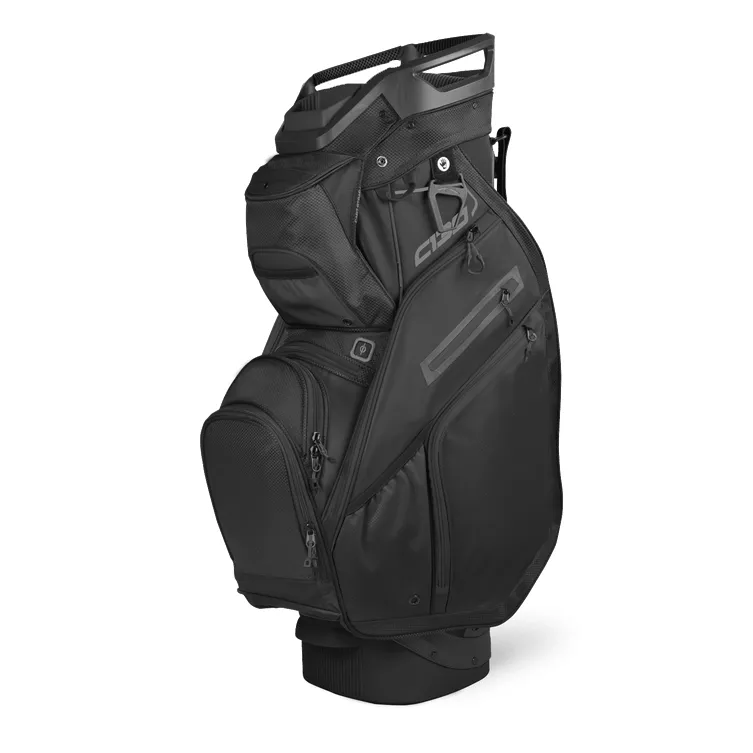
Translating an industrial design concept into production-ready technical specifications requires specialized skills and typically costs 800 to 2,000 dollars per style. Technical designers create detailed construction drawings specifying every seam, panel, reinforcement, and attachment point with precise measurements. Pattern makers then develop the flat patterns that will be used to cut fabric panels, a process requiring deep understanding of how two-dimensional materials form three-dimensional structures. For complex bags with 20 or more pattern pieces, pattern development alone can consume 40 to 60 hours of skilled labor.
Technical design documentation also includes the bill of materials, which specifies every component needed to produce the bag including fabric types and quantities, zipper specifications, buckle types, rivet sizes, thread specifications, foam densities, and plastic or metal hardware details. This document becomes the manufacturing blueprint that ensures consistent production quality across every unit produced. Developing a comprehensive bill of materials typically requires 20 to 40 hours of detailed specification work.
Sampling and Prototyping Costs
Sampling is where design concepts are tested against physical reality, and it almost always reveals necessary adjustments. Each sampling round costs between 200 and 500 dollars for a single style, covering materials, labor, and machine setup for producing a one-off prototype. Most designs require 3 to 5 sampling rounds before achieving production approval, meaning total sampling costs typically range from 600 to 2,500 dollars per style. Each round addresses fit, proportion, functionality, structural integrity, and aesthetic refinements identified during review of the previous sample.
International shipping of samples adds 50 to 150 dollars per round depending on the shipping method and destination. Express courier services like DHL or FedEx can deliver samples from China to the United States or Europe within 5 to 7 business days, while sea freight reduces cost to 20 to 40 dollars but extends delivery to 4 to 6 weeks. Most brands prefer express shipping for sampling rounds because the time savings accelerate the overall development timeline significantly.
Material Costs: The Largest Cost Component
Main Body Fabrics
The main body fabric represents the single largest material cost in golf bag manufacturing, typically accounting for 25 to 35 percent of total material expenses. Fabric selection spans a wide range of options with dramatically different price points. Standard 600D polyester, the most common entry-level material, costs approximately 1.50 to 2.50 dollars per meter. Mid-range 1200D ballistic nylon costs 3.50 to 6.00 dollars per meter, while premium 1680D ballistic nylon commands 7.00 to 12.00 dollars per meter. Specialty materials like Cordura fabric, waterproof laminated textiles, or recycled PET fabrics add 20 to 50 percent premiums over conventional equivalents.
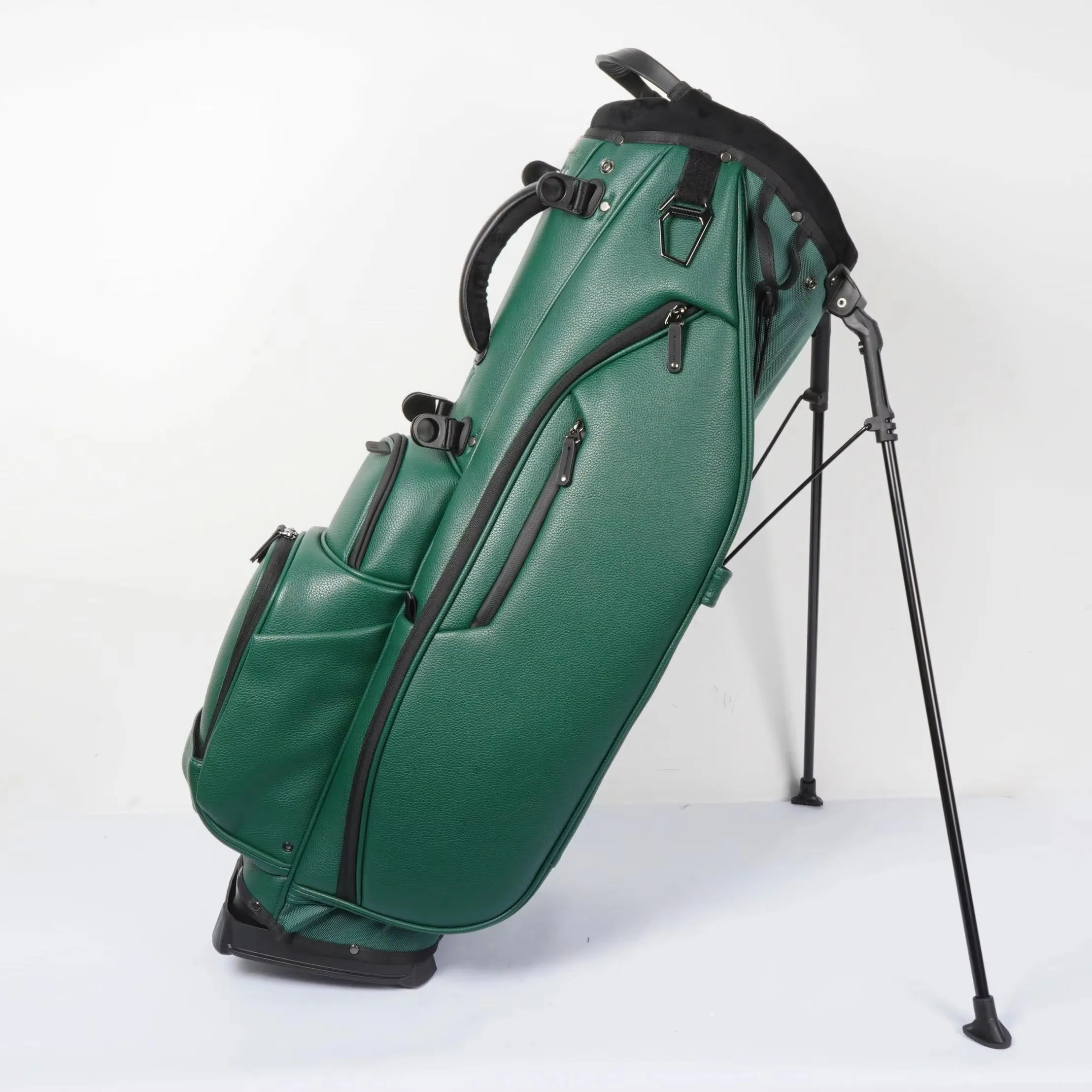
A typical stand bag requires 3 to 5 meters of main body fabric depending on panel configuration, while cart bags require 5 to 8 meters and tour staff bags may consume 8 to 12 meters. At standard material quantities, this translates to fabric costs of 5 to 13 dollars for entry-level stand bags, 18 to 50 dollars for premium cart bags, and 55 to 145 dollars for luxury tour staff bags using top-tier materials.
Lining Materials and Internal Components
Interior lining materials represent a smaller but still significant cost component. Basic polyester taffeta lining costs 0.80 to 1.50 dollars per meter, while premium fleece-lined or velvet-lined interiors cost 2.50 to 5.00 dollars per meter. Waterproof bag constructions require specialized sealed linings that cost 4.00 to 8.00 dollars per meter. The internal divider system material, whether lightweight mesh, foam-padded fabric, or rigid molded plastic, adds 2 to 15 dollars depending on complexity and material quality.
Additional internal components include foam padding for club protection (1 to 4 dollars), velour or fleece panels for scratch prevention (0.50 to 2 dollars), internal pocket fabrics (1 to 3 dollars), and reinforced bottom panels (1 to 3 dollars). These internal materials collectively add 5 to 25 dollars to the total material cost depending on the bag's protection features and quality level.
Zippers, Hardware, and Components
Zippers are a critical quality component that significantly affects both cost and user experience. Standard SBS zippers cost 0.30 to 0.80 dollars each, while premium YKK zippers cost 0.80 to 2.50 dollars each depending on type and length. A typical golf bag uses 8 to 15 zippers, making zipper selection a meaningful cost factor. Waterproof zippers add 50 to 100 percent to standard zipper costs but are essential for weather-resistant bag constructions. Molded custom zipper pulls add 0.10 to 0.30 dollars each in tooling amortization costs.
Other hardware components include buckle systems (0.20 to 1.50 dollars each for 4 to 8 buckles), D-rings and attachment points (0.10 to 0.50 dollars each), rivets and Chicago screws (0.05 to 0.20 dollars each for 10 to 30 pieces), and strap adjustment hardware (0.30 to 1.00 dollars per strap assembly). Premium branded or custom-designed hardware with proprietary molds can multiply these costs by 3 to 5 times compared to standard catalog components. Total hardware costs typically range from 5 to 15 dollars for standard bags and 15 to 40 dollars for premium constructions.
Labor and Production Costs
Cutting and Preparation
The cutting phase transforms flat fabric rolls into precisely shaped panels ready for assembly. This process requires skilled operators, computer-controlled cutting equipment for consistency, and careful material management to minimize waste. Cutting labor typically costs 1.50 to 4.00 dollars per bag depending on panel complexity and the number of pieces. Bags with 30 or more pattern pieces require significantly more cutting time than simpler designs with 15 to 20 pieces. Material waste during cutting typically ranges from 10 to 20 percent of total fabric consumed, representing an indirect cost that should be factored into material budgeting.
Sewing and Assembly
Sewing is the most labor-intensive phase of golf bag manufacturing, typically accounting for 40 to 55 percent of total production labor costs. A standard stand bag requires 6 to 10 hours of skilled sewing labor, while premium cart bags require 10 to 16 hours and tour staff bags with complex constructions can demand 15 to 25 hours. At competitive manufacturing labor rates, this translates to sewing costs of 4 to 8 dollars for stand bags, 8 to 16 dollars for cart bags, and 12 to 25 dollars for tour staff bags.
The skill level required for golf bag sewing is significantly higher than for most sewn products because bags combine multiple material types, must withstand substantial loads, and require precise alignment of structural elements. Our factory's 200+ craftsmen average 8 years of experience in bag construction, enabling the consistent stitch quality and structural integrity that premium brands require. Training new operators to this proficiency level requires 6 to 12 months of supervised production work, representing a significant investment in human capital that is reflected in production labor rates.
Finishing, Inspection, and Packaging
The final production phases include trimming loose threads, final assembly of removable components, comprehensive quality inspection, cleaning, stuffing for shape retention, and retail packaging preparation. These finishing operations typically add 1.50 to 4.00 dollars per bag depending on packaging complexity. Premium retail packaging with custom insert cards, protective bags, branded tags, and premium cartons can add 2 to 5 dollars per unit beyond basic poly bag packaging.
Tooling and Equipment Costs
Mold and Die Development
Custom golf bag components often require specialized molds and dies that represent one-time capital investments amortized across production runs. Custom base plate molds cost 500 to 2,000 dollars each depending on complexity and material. Custom buckle molds range from 300 to 1,500 dollars per design. Custom divider system molds, particularly for full-length rigid dividers, cost 1,000 to 3,500 dollars. Logo embossing dies add 200 to 800 dollars per design. For a fully custom bag with proprietary hardware, total tooling investment typically ranges from 3,000 to 10,000 dollars.
These tooling costs are typically amortized across the first production order. At MOQ quantities of 300 pieces, a 5,000-dollar tooling investment adds approximately 17 dollars per unit to the first-order cost. At 1,000-piece orders, this drops to 5 dollars per unit, and at 3,000-piece orders, it becomes just 1.67 dollars per unit. This economies-of-scale dynamic is a primary reason why larger orders achieve significantly lower per-unit costs.
Standard vs Custom Components
Brands can significantly reduce tooling costs by utilizing standard catalog components for non-visible elements while reserving custom tooling investment for customer-facing features like logo hardware, unique base designs, or proprietary buckle systems. This strategic approach to tooling allocation delivers brand differentiation where it matters most to consumers while maintaining cost efficiency in structural areas where customization provides no perceptible benefit to end users.
Shipping, Logistics, and Landed Costs
Freight Options and Costs
Shipping costs from Chinese manufacturing facilities to major markets vary dramatically based on shipping method, volume, and timing requirements. Sea freight in a full 40-foot container costs approximately 2,500 to 5,000 dollars and can hold 800 to 1,200 golf bags depending on packaging, translating to 2 to 6 dollars per bag. Less-than-container-load shipments cost 4 to 10 dollars per bag. Air freight costs 8 to 15 dollars per bag but delivers in 7 to 10 days versus 30 to 45 days for sea freight. Most brands use sea freight for production orders and air freight only for urgent samples or small supplementary shipments.
Import Duties and Taxes
Import duties represent a significant cost component that varies by destination country. The United States imposes duties of 17.6 percent on golf bags imported from China under normal trade relations, though tariff rates can change based on trade policy developments. The European Union applies duties of 2.7 to 4.7 percent depending on material composition. Additional costs include customs brokerage fees (100 to 300 dollars per shipment), harbor maintenance fees, and merchandise processing fees. Total duty and tax costs typically add 20 to 25 percent to the manufacturing cost for US-bound shipments and 5 to 10 percent for EU-bound shipments.
Hidden Costs Most Brands Overlook
Quality Control and Compliance
Third-party quality inspection services cost 200 to 400 dollars per inspection visit, with most production runs requiring 2 to 3 inspections during production and before shipment. Material compliance testing for substances like REACH, Prop 65, or CPSIA requirements costs 300 to 1,000 dollars per test series. BSCI or social compliance audit costs, if not already held by the factory, range from 1,500 to 3,000 dollars. These quality and compliance costs are frequently omitted from initial budget calculations but are essential for brands selling through reputable retail channels.
Marketing and Photography
Professional product photography for golf bags costs 500 to 2,000 dollars per style for comprehensive image sets including white background product shots, lifestyle imagery, and detail close-ups. E-commerce listing creation, A+ content development, and marketing material production add another 300 to 800 dollars per style. While these are not manufacturing costs per se, they are essential investments required to effectively bring custom products to market and should be included in the total product launch budget. Many brands underestimate these costs and find themselves unable to effectively present their products to potential customers.
Bank Fees, Currency Exchange, and Communication
International business transactions carry costs that accumulate across the development and production process. Wire transfer fees typically range from 25 to 50 dollars per transaction, with multiple transfers required for deposits, balance payments, and sample shipping. Currency exchange fluctuations can affect costs by 2 to 5 percent over the course of a production program. Travel costs for factory visits, while optional, typically range from 3,000 to 8,000 dollars per trip. Budgeting 3 to 5 percent of total project cost for these ancillary expenses provides adequate coverage for most programs.
Strategies to Optimize Your Cost Structure
Material Optimization Without Quality Compromise
The most effective cost optimization strategy focuses on intelligent material selection. Using premium materials only where customers can see and feel them while specifying cost-effective materials in hidden structural areas delivers perceived quality without unnecessary expense. For example, using 1680D ballistic nylon for the main body panels visible to consumers while using standard 600D polyester for internal pocket bags and hidden reinforcement panels can reduce total fabric costs by 15 to 25 percent with zero impact on perceived quality.
Another effective approach is standardizing materials across multiple bag styles. When three or more styles share the same main body fabric, the factory can purchase larger quantities at better pricing, reduce material waste through optimized cutting across styles, and streamline production by reducing material changeovers. This cross-style material standardization is one of the most powerful cost reduction strategies available to brands developing multiple product lines simultaneously.
Design for Manufacturing Efficiency
Working with your factory's engineering team to optimize designs for manufacturing efficiency can reduce production costs by 10 to 20 percent without any visible changes to the finished product. Simplifying seam constructions, reducing the total number of pattern pieces, standardizing stitch types, and designing pocket configurations that minimize assembly steps all reduce labor costs while maintaining functional performance. Our engineering team reviews every OEM design specifically for these manufacturing optimization opportunities, typically identifying 5 to 10 cost-saving modifications that are invisible to end consumers.
Order Quantity Strategy
Order quantity has a profound impact on per-unit cost, and strategic planning around order sizing can significantly improve cost efficiency. Increasing from MOQ of 300 to 500 units typically reduces per-unit cost by 10 to 15 percent. Moving to 1,000 units achieves 20 to 30 percent reductions. The optimal order quantity balances the per-unit cost savings against inventory carrying costs and cash flow constraints. Brands with strong demand forecasting should consider ordering 6 to 12 months of projected volume in a single production run to maximize per-unit cost advantages, even if this means holding inventory for future orders.
Total Cost Summary by Bag Category
To provide concrete reference points, here are typical all-in development and first production costs for custom golf bags at MOQ quantities. Entry-level stand bags using standard materials require 8,000 to 15,000 dollars total investment including development, tooling, and 300-unit production run. Mid-range cart bags with premium materials and 14-way dividers require 15,000 to 30,000 dollars for a 500-unit first order. Premium tour staff bags with top-tier materials and custom hardware require 25,000 to 50,000 dollars including development, tooling, and initial production. These figures include all costs from design through landed warehouse delivery, providing the comprehensive cost picture needed for sound financial planning.
Understanding the complete cost structure of custom golf bag manufacturing empowers brands to make informed decisions about product positioning, pricing strategy, and investment requirements. The difference between a successful golf bag brand and one that struggles financially often comes down to how accurately the founders understood and planned for these costs before launching. We encourage every prospective client to use this guide as a framework for developing detailed financial projections for their specific product plans.
Our team welcomes the opportunity to provide detailed cost estimates for your specific custom golf bag project. With transparent pricing, comprehensive cost breakdowns, and no hidden fees, we help brands develop accurate financial models that support sound business decisions. Contact us through our contact page, email service@junyuanbags.com, or WhatsApp +8617750020688 to begin discussing your project requirements and receive a detailed cost estimate tailored to your specifications.
The investment required to bring custom golf bags to market is substantial but entirely manageable with proper planning and realistic budgeting. Brands that approach cost planning systematically, leverage their factory partner's expertise for optimization, and maintain quality standards that support their target price positioning consistently achieve successful product launches and sustainable business growth. We look forward to supporting your custom golf bag manufacturing project.
Frequently Asked Questions
How much does it cost to make a custom golf bag?
The total cost to develop and produce a custom golf bag ranges from 8,000 to 25,000 dollars including design, sampling, tooling, and first production run. Per-unit production costs range from 18 to 120 dollars depending on bag type, materials, and order quantity.
What is the most expensive component of a custom golf bag?
The main body fabric and structural materials typically represent 30 to 40 percent of per-unit production cost. Premium materials like 1680D ballistic nylon, genuine leather accents, or waterproof laminated fabrics command the highest material costs in golf bag manufacturing.
How much do sampling and tooling cost for custom golf bags?
Sampling costs typically range from 200 to 500 dollars per sample round with 3 to 5 rounds needed before production approval. Custom tooling for proprietary buckles, base plates, and dividers ranges from 500 to 5,000 dollars depending on complexity.
What factors most affect custom golf bag pricing?
The five most significant cost factors are material quality, construction complexity, order quantity, customization level, and finishing details like logo methods and packaging. Material selection alone can cause a 3x difference in per-unit cost between entry-level and premium bags.
How does order quantity affect per-unit cost?
Increasing order quantity from 100 to 1,000 units typically reduces per-unit cost by 25 to 35 percent because fixed costs like tooling, sampling, and setup are amortized across more units, and material purchasing power increases at higher volumes.
Are there hidden costs in custom golf bag manufacturing?
Yes, common hidden costs include shipping samples internationally, customs duties on samples, bank transfer fees, quality inspection third-party fees, packaging design costs, product photography, and compliance testing certification fees.
What is the profit margin on custom golf bags?
Retail profit margins on custom golf bags typically range from 45 to 65 percent for entry-level products and 55 to 75 percent for premium products. Brand owners selling direct-to-consumer can achieve even higher margins by eliminating wholesale intermediary costs.
Ready to Start Your Custom Golf Bag Project?
Partner with a BSCI & ISO 9001:2015 certified factory producing 200,000+ premium golf bags annually. MOQ just 100 pieces.
Get a Free Quote Today