Smart Golf Bags Technology: The Complete 2026 Guide
Table of Contents
- Introduction: The Connected Golf Bag Era
- GPS Tracking and Anti-Theft Systems
- Integrated Charging and Power Management
- RFID Club Inventory and Usage Tracking
- Environmental and Performance Sensors
- Bluetooth Connectivity and Mobile Integration
- Manufacturing Challenges and Solutions
- Market Analysis and Consumer Demand
- Smart Bag Production in Our Factory
Introduction: The Connected Golf Bag Era
The golf bag, a companion to golfers for over a century, is undergoing its most significant transformation since the invention of the golf cart. Smart golf bag technology, integrating electronic sensors, wireless connectivity, and intelligent software systems, is redefining what a golf bag can do for the modern golfer. In 2026, smart golf bags have evolved from novelty items into practical, desirable products that address real pain points experienced by golfers during their rounds.
As a certified golf bag manufacturer producing over 200,000 bags annually, we have been at the forefront of integrating smart technology into our product lines. Our experience spans from initial concept development through mass production, giving us unique insights into the design challenges, manufacturing complexities, and market dynamics of smart golf bag technology. This comprehensive guide covers every aspect of smart golf bag technology, providing essential information for brand owners considering smart features for their product lines and golfers evaluating smart bag options.
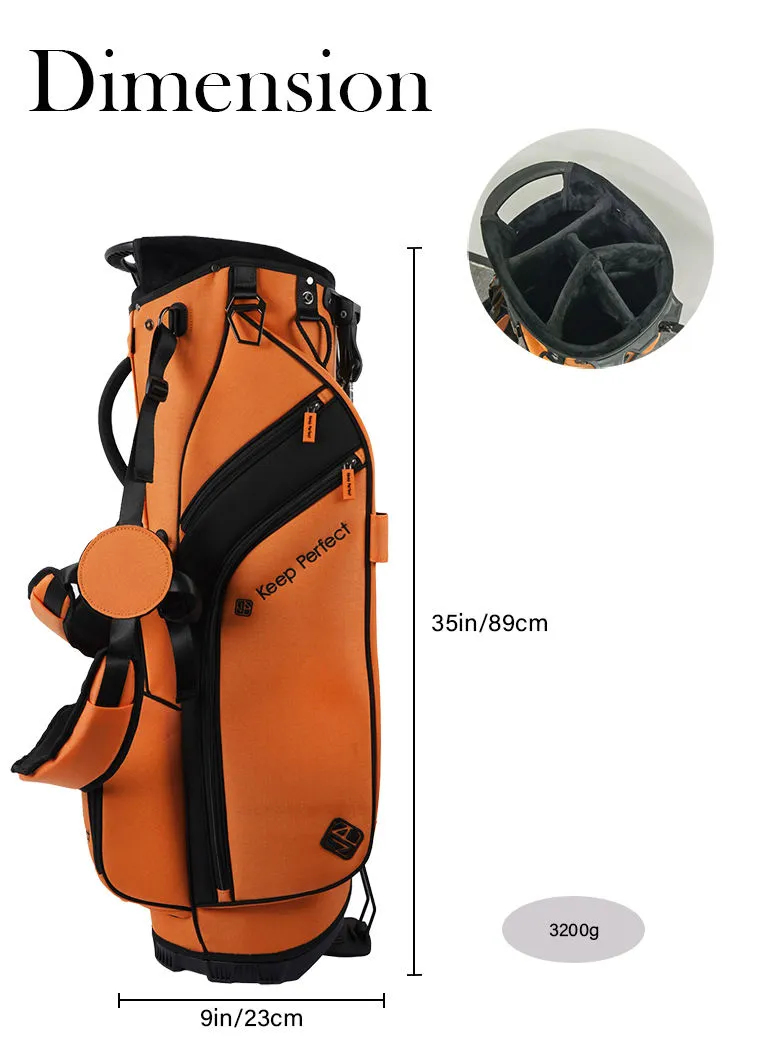
The smart golf bag market has grown from an estimated 85 million dollars in 2023 to approximately 310 million dollars in 2025, with projections indicating continued growth at 28 percent annually through 2028. This growth is driven by increasing consumer comfort with connected devices, declining component costs, improving battery technology, and the broader Internet of Things trend that has seen smart technology permeate every category of consumer products. Golf, a sport that has historically embraced technology from titanium drivers to GPS rangefinders, represents a natural extension for smart connected products.
GPS Tracking and Anti-Theft Systems
Golf bag location tracking represents the most immediately useful smart feature for consumers. Golf course environments present unique theft and loss risks: bags left on carts during bathroom breaks, bags accidentally loaded onto wrong carts, bags forgotten at practice ranges or clubhouses. GPS tracking provides peace of mind and practical security that resonates strongly with golf consumers.
GPS Module Integration
Modern golf bag GPS modules use low-power wide-area network connectivity, combining GPS positioning with cellular or Bluetooth Low Energy location reporting. The tracking module, typically measuring just 45 by 30 by 12 millimeters and weighing approximately 45 grams, is embedded within the bag structure in a location that provides adequate satellite reception while remaining protected from impact and moisture. Common integration points include the top cuff area, the base plate, or a dedicated compartment along the spine of the bag.
Our GPS integration process involves careful antenna placement optimization to ensure consistent satellite acquisition even when the bag is positioned on a golf cart with clubs installed. Testing protocols verify signal acquisition within 30 seconds of activation and positional accuracy within 3 meters under typical golf course canopy conditions. The GPS module activates automatically when it detects motion, conserving battery power during storage and transit.
Geofencing and Alert Systems
Advanced smart bags implement geofencing capabilities that send alerts to the owner's smartphone if the bag moves outside a predefined boundary. Golfers can set geofence perimeters around their expected location on the course, receiving immediate notifications if their bag is moved without authorization. This feature has proven particularly popular among golfers who participate in tournaments and group events where bag mix-ups are common.
Our geofencing implementation supports multiple active zones, allowing golfers to maintain separate geofence settings for their home course, practice facilities, and travel scenarios. The system also includes a location history feature that records the bag movement pattern throughout a round, providing useful data for golfers who want to analyze their movement patterns and pace of play.
Integrated Charging and Power Management
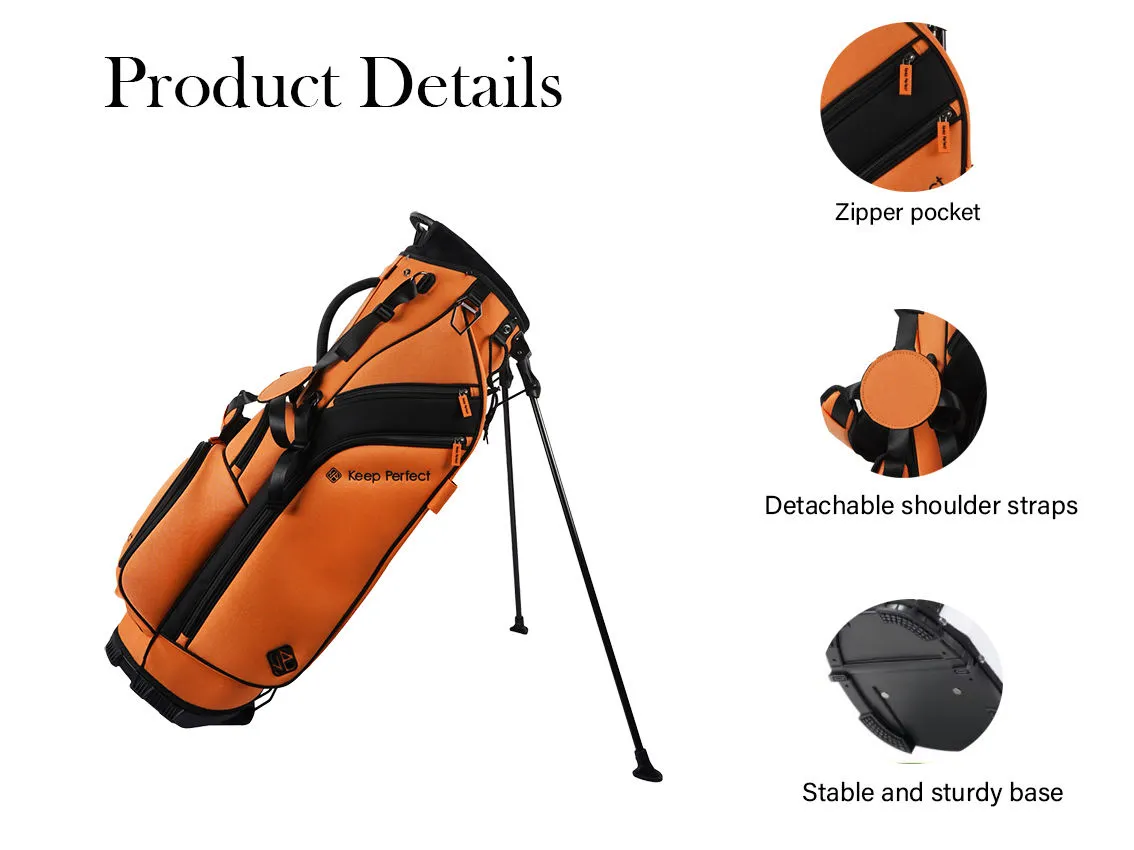
Golf rounds typically last four to five hours, during which golfers increasingly need to charge smartphones, GPS watches, rangefinders, and other electronic devices. Integrated charging capabilities eliminate the need to carry separate battery packs and charging cables, providing a seamless power solution built directly into the bag.
Battery Pack Specifications and Integration
Smart golf bags incorporate lithium-polymer battery packs ranging from 5,000 to 10,000 milliamp-hours, providing one to three full smartphone charges per golf bag charge cycle. Battery packs are housed in waterproof compartments with dedicated ventilation for thermal management during charging. Our standard configuration uses a 7,500 mAh battery pack that provides approximately 2.5 smartphone charges, weighing 145 grams and measuring 90 by 65 by 15 millimeters.
Battery management systems include overcharge protection, temperature monitoring, and automatic shutoff when connected devices reach full charge. USB-C output ports are positioned in accessible locations on the bag exterior, typically within the valuables pocket or in a dedicated charging pocket with cable routing channels that keep charging cables organized and protected. Input charging ports for the bag battery are also USB-C, supporting fast charging to full capacity within 90 minutes.
Solar Charging Integration
Emerging solar charging technology represents the next evolution of smart bag power management. Flexible solar panels integrated into the bag exterior surface can supplement battery power during sunny rounds, extending charge capacity by 15 to 25 percent under optimal conditions. Our solar integration research has developed panels that conform to the curved surfaces of golf bags without adding significant weight or compromising the bag aesthetic.
The challenge with solar integration lies in balancing energy generation with practical constraints. A typical golf bag surface area receives approximately 0.3 to 0.5 square meters of direct sun exposure. Current flexible solar cell efficiency of 22 to 25 percent generates approximately 4 to 6 watts under direct sunlight, sufficient to power low-drain functions like Bluetooth beacons and GPS tracking but insufficient for rapid device charging. Solar integration is most valuable as a maintenance charging system that keeps the bag battery topped up during play rather than as a primary charging source.
RFID Club Inventory and Usage Tracking
Radio-Frequency Identification technology enables smart golf bags to automatically identify and track the clubs stored within them. This capability serves multiple purposes: inventory verification to ensure no clubs are lost during a round, usage tracking to record which clubs are selected for each shot, and security against theft.
RFID Tag Integration with Golf Clubs
Each golf club in a smart bag system carries a small RFID tag, typically embedded in the grip end of the club or integrated into a custom ferrule. These passive RFID tags require no battery power and last indefinitely. When a club is inserted into or removed from the bag, an RFID reader integrated into the bag top cuff detects the change and updates the inventory status in real-time.
Our RFID system uses ultra-high frequency readers operating at 860 to 960 megahertz, capable of reading all 14 clubs simultaneously within 200 milliseconds. The reader antenna is integrated into the divider top cuff, positioned to maintain consistent read range regardless of club position within the divider tubes. Testing validates reliable detection across varying club configurations, environmental conditions, and bag orientations.
Usage Analytics and Performance Insights
By recording which clubs are selected for each shot throughout a round, smart bags with RFID tracking generate valuable usage analytics. Golfers can review detailed breakdowns of club selection patterns, identifying tendencies such as over-reliance on certain clubs or underutilization of others. When combined with GPS distance data, these analytics provide insights into distance gaps between clubs, helping golfers make more informed club selection decisions.
Advanced analytics platforms correlate club selection data with round scores, identifying patterns that may indicate when specific clubs are performing outside expected ranges. For example, if a golfer consistently scores worse when forced to use their 5-iron from a particular distance range, the data might suggest replacing that club with a hybrid that performs better at that distance. These insights transform the golf bag from a passive carrying device into an active performance improvement tool.

Environmental and Performance Sensors
Smart golf bags incorporate various sensors that provide environmental data and performance insights, enhancing the golfer's decision-making process during rounds.
Weather and Environmental Monitoring
Integrated environmental sensor arrays measure temperature, humidity, barometric pressure, and UV index at the golfer's exact location on the course. This real-time weather data helps golfers make informed decisions about clothing layers, hydration needs, and sun protection. Barometric pressure trends provide early warning of approaching weather changes, alerting golfers to seek shelter if thunderstorms are developing.
Our environmental sensor packages are calibrated to golf-specific thresholds and integrated with companion applications that provide actionable recommendations. When UV index exceeds safe exposure limits, the application reminds golfers to apply sunscreen. When temperature and humidity combine to create heat stress risk, the system recommends hydration intervals. These contextual recommendations transform raw sensor data into practical guidance that improves the golfing experience and promotes health and safety.
Weight Distribution and Balance Sensors
Pressure sensors integrated into the bag frame measure weight distribution and center of gravity in real-time. When the bag is being carried, these sensors provide feedback through the companion application about load distribution, alerting golfers to imbalanced configurations that may cause shoulder or back strain during extended walking rounds. For stand bags, weight distribution data helps golfers optimize pocket loading to achieve stable stand behavior on uneven terrain.
The sensor system uses four load cells positioned at the strap attachment points, measuring force distribution with 5-gram resolution. The data reveals patterns such as excessive weight in one side pocket, heavy items placed too high or too low in the bag profile, and total bag weight approaching ergonomic limits. Over time, golfers learn to configure their bags for optimal carrying comfort based on objective sensor data rather than subjective guesswork.
Bluetooth Connectivity and Mobile Integration
Bluetooth Low Energy connectivity serves as the communication backbone for smart golf bags, linking the bag's sensor systems with the golfer's smartphone application and, through the phone, with cloud-based analytics platforms.
Companion Application Ecosystem
The companion mobile application serves as the primary interface between golfers and their smart bag's capabilities. Application features typically include real-time bag location display, battery charge status monitoring, club inventory verification, environmental data dashboard, usage analytics review, and system configuration options. Premium applications also integrate with popular golf GPS applications, scorekeeping platforms, and swing analysis systems to create comprehensive golf technology ecosystems.
For OEM brand partners, we offer fully customizable companion applications that feature brand-specific user interfaces, custom color schemes, branded push notification content, and integration with existing brand applications and loyalty programs. White-label application development enables brands to offer smart bag functionality under their own technology platform, maintaining consistent brand experience across all customer touchpoints.
Over-the-Air Firmware Updates
Smart golf bag systems receive firmware updates over-the-air through Bluetooth connectivity, enabling continuous improvement of features, bug fixes, and security patches after products ship. This capability ensures that smart bags become more capable over time rather than becoming obsolete. Our update protocol includes integrity verification and rollback capability, ensuring that failed updates cannot render bag electronics inoperable.
The over-the-air update capability also enables feature activation after purchase. Brands can offer basic smart functionality at launch and introduce premium features through paid application updates, creating recurring revenue opportunities beyond the initial bag sale. Features like advanced analytics, premium course mapping, or enhanced security monitoring can be activated through subscription models, generating ongoing value for both brands and consumers.
Manufacturing Challenges and Solutions
Integrating electronic components into golf bags introduces manufacturing complexities that traditional bag production does not encounter. Addressing these challenges requires specialized processes, equipment, and quality control protocols.
Electronic Component Integration in Production
The primary manufacturing challenge is integrating delicate electronic components into a product that undergoes significant mechanical stress during use. Golf bags are dropped, dragged, compressed, and exposed to extreme temperatures, moisture, and UV radiation. Electronic components must survive these conditions while maintaining reliable connectivity and accurate sensor readings throughout the product lifecycle.
Our production process addresses these challenges through several strategies. Electronic modules are housed in impact-resistant enclosures with vibration-damping mounting systems. Cable connections use locking connectors rated for 1,000-plus mating cycles. Solder joints are reinforced with conformal coating to prevent cracking under flex conditions. Each electronic sub-assembly undergoes pre-installation testing to verify functionality before being integrated into the bag, preventing costly rework if defective components are discovered only after assembly.
Waterproofing Electronic Compartments
Electronic components require protection from moisture while maintaining accessibility for charging and connectivity. Our waterproofing approach uses a combination of sealed gaskets, ultrasonic welding for permanent seals, and waterproof membrane vents that equalize air pressure while blocking liquid water. Electronic compartments achieve IP67 water resistance ratings, surviving 30-minute submersion at 1-meter depth without water ingress.
Production testing includes water spray testing of every sealed compartment, verifying gasket integrity and seal effectiveness. Automated test equipment pressurizes compartments and monitors pressure decay rates to detect micro-leaks that visual inspection would miss. This testing protocol has achieved a water ingress failure rate of less than 0.2 percent across our smart bag production lines.

Market Analysis and Consumer Demand
Understanding market dynamics and consumer demand patterns is essential for brands considering smart golf bag products. The market shows strong growth indicators across multiple segments and demographics.
Consumer Adoption Drivers
Market research indicates that smart golf bag adoption is driven primarily by three factors: security concerns motivating GPS tracking adoption, convenience needs driving charging feature demand, and technology enthusiasm motivating early adoption of advanced analytics features. Security-driven adoption represents the broadest market segment, as golf bag theft and loss affect golfers across all skill levels and demographics. Charging convenience appeals particularly to younger golfers who carry multiple electronic devices during rounds. Analytics features attract the performance-improvement focused golfer who already uses technology like launch monitors and GPS watches to improve their game.
Consumer willingness to pay premium prices for smart features varies by market. North American and European consumers show willingness to pay 15 to 25 percent premium for smart-enabled bags compared to equivalent non-smart models. Asian market consumers demonstrate even higher premium acceptance, with 30 to 40 percent premium tolerance for smart features, driven by the region's strong technology adoption culture.
Competitive Landscape
The smart golf bag market in 2026 features a mix of dedicated smart bag startups, established golf bag manufacturers adding smart features to existing product lines, and technology companies entering the golf equipment market with connected bag offerings. The market remains fragmented with no single brand holding more than 15 percent market share, indicating significant opportunity for new entrants with differentiated value propositions.
Our position as a manufacturing partner enables brand clients to enter this growing market without the capital investment required to develop smart bag manufacturing capabilities from scratch. Our turnkey smart bag solutions include component sourcing, system integration, testing protocols, and application development, reducing the barrier to entry for brands seeking to offer smart golf bag products.
Smart Bag Production in Our Factory
Our BSCI and ISO 9001:2015 certified facility has developed comprehensive smart golf bag production capabilities, enabling us to offer full-service smart bag manufacturing from concept through mass production.
Production Line Configuration
Our smart bag production lines incorporate dedicated electronic assembly stations alongside traditional sewing and assembly workstations. Electronic sub-assembly areas feature electrostatic discharge protection, climate-controlled soldering stations, and automated optical inspection systems for circuit board quality verification. Finished electronic modules are tested on burn-in racks that simulate 72 hours of operation before approval for bag integration.
We currently operate two dedicated smart bag production lines capable of producing 5,000 smart-enabled bags monthly. These lines maintain the same quality standards as our conventional production lines, verified through our ISO 9001:2015 quality management system with additional inspection criteria specific to electronic component functionality. Our production team includes certified electronics technicians who work alongside our experienced bag assembly craftsmen to produce integrated products that meet both textile and electronic quality standards.
Customization and Development Services
Our smart bag development team works with brand partners to define feature specifications, select appropriate technology components, develop custom application interfaces, and establish testing protocols tailored to specific market requirements. Our engineering team has developed modular smart platform architectures that enable brands to create tiered product offerings with different smart feature combinations at different price points, maximizing market coverage while minimizing development investment.
With over 200,000 total bags produced annually and growing smart bag production experience across multiple brand partnerships, we offer the manufacturing scale, quality assurance infrastructure, and technical expertise needed to bring smart golf bag products to market successfully. Contact us via WhatsApp at +8617750020688 or email at service@junyuanbags.com to explore how smart technology can differentiate your next golf bag product line.
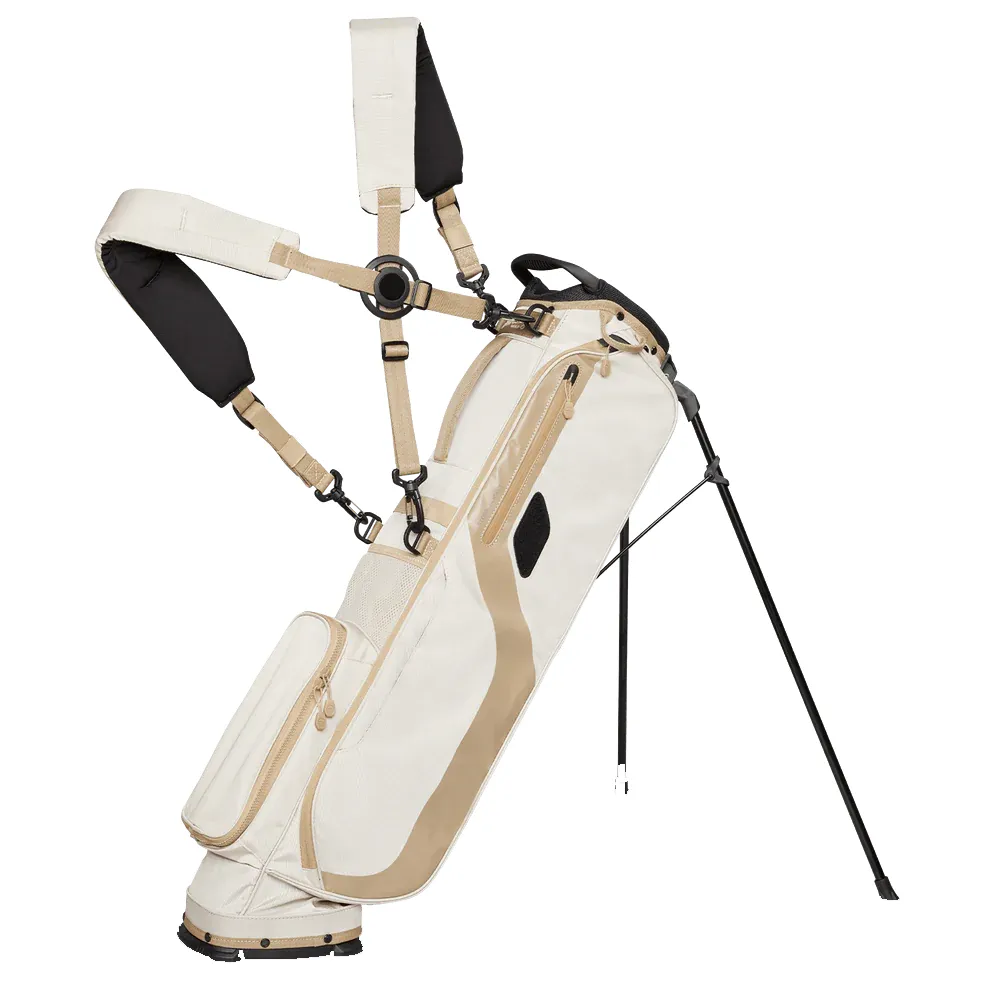
Frequently Asked Questions
What makes a golf bag smart?
A smart golf bag integrates electronic components including GPS tracking modules, Bluetooth connectivity, USB charging ports, RFID club inventory systems, environmental sensors, and companion mobile applications. These technologies enable features like real-time location tracking, club identification, battery charging for devices, distance measurements, and usage analytics that traditional golf bags cannot provide.
How much does smart technology add to golf bag weight?
Current smart technology adds between 180 and 400 grams to a golf bag depending on the feature set. GPS modules add approximately 45 grams, battery packs range from 80 to 200 grams, Bluetooth chips add under 10 grams, and sensor arrays contribute 50 to 150 grams. Next-generation components are reducing these weights by 20 to 30 percent annually.
How long do smart golf bag batteries last?
Smart golf bag batteries typically provide 18 to 36 holes of continuous use on a single charge. GPS tracking modules consume the most power at approximately 15 to 25 milliamps, while Bluetooth beacons draw only 2 to 5 milliamps. Most systems charge via USB-C and reach full charge in 90 to 120 minutes.
Are smart golf bags waterproof?
Premium smart golf bags achieve IP65 or IP67 water resistance ratings for their electronic components, meaning the electronics can withstand rain exposure and brief submersion. The bag body uses the same waterproof fabrics and sealed seam construction as non-smart waterproof bags. Electronic compartments feature waterproof gaskets and drainage channels.
What is the manufacturing cost impact of smart features?
Smart technology adds 15 to 40 dollars in component costs to a golf bag at manufacturing scale. GPS modules cost 8 to 15 dollars, Bluetooth chips 3 to 6 dollars, battery packs 12 to 30 dollars, and sensor arrays 5 to 12 dollars. Assembly and integration add 5 to 10 dollars. Total smart feature premium ranges from 33 to 73 dollars depending on specification.
Can smart golf bag technology be customized for OEM brands?
Yes, smart golf bag technology is highly customizable for OEM brands. Component selection, mobile application branding, feature sets, sensor configurations, and connectivity protocols can all be customized. Minimum order quantities for smart-enabled bags typically start at 300 pieces due to electronic component procurement requirements.
What is the future of smart golf bag technology?
The future includes solar-integrated charging surfaces, AI-powered swing analysis sensors built into bag frames, augmented reality displays on bag-mounted screens, automatic club usage tracking with performance correlation, health monitoring sensors in grip areas, and seamless integration with autonomous golf caddies and course management systems.
Ready to Start Your Custom Golf Bag Project?
Partner with a BSCI & ISO 9001:2015 certified factory producing 200,000+ premium golf bags annually. MOQ just 100 pieces.
Get a Free Quote Today