How AI Is Revolutionizing Golf Bag Design in 2026
Table of Contents
- Introduction: The Artificial Intelligence Design Revolution
- Generative Design for Golf Bag Structures
- AI-Powered Consumer Insight and Trend Prediction
- Machine Learning in Quality Control Systems
- AI-Enhanced Design Workflow and Collaboration
- Intelligent Material Selection and Optimization
- Smart Production Planning and Optimization
- AI Integration in Our Manufacturing Facility
Introduction: The Artificial Intelligence Design Revolution
Artificial intelligence is no longer a futuristic concept in golf bag manufacturing. In 2026, AI systems are actively designing, optimizing, and improving every aspect of golf bag development, from initial concept sketches to final production quality control. The convergence of advanced machine learning algorithms, massive computational power, and comprehensive golf equipment databases has created a new paradigm where AI serves as an indispensable design partner for golf bag manufacturers and brand owners.
At our certified factory, we have integrated artificial intelligence across multiple stages of our golf bag design and manufacturing process. Our experience demonstrates that AI does not replace human creativity and expertise. Instead, it amplifies the capabilities of our design team, enabling them to explore more design options, identify optimization opportunities that human analysis alone would miss, and deliver better products in shorter timelines. This guide provides an in-depth exploration of how AI technologies are being applied to golf bag design and manufacturing, offering practical insights for brands seeking to leverage these capabilities.
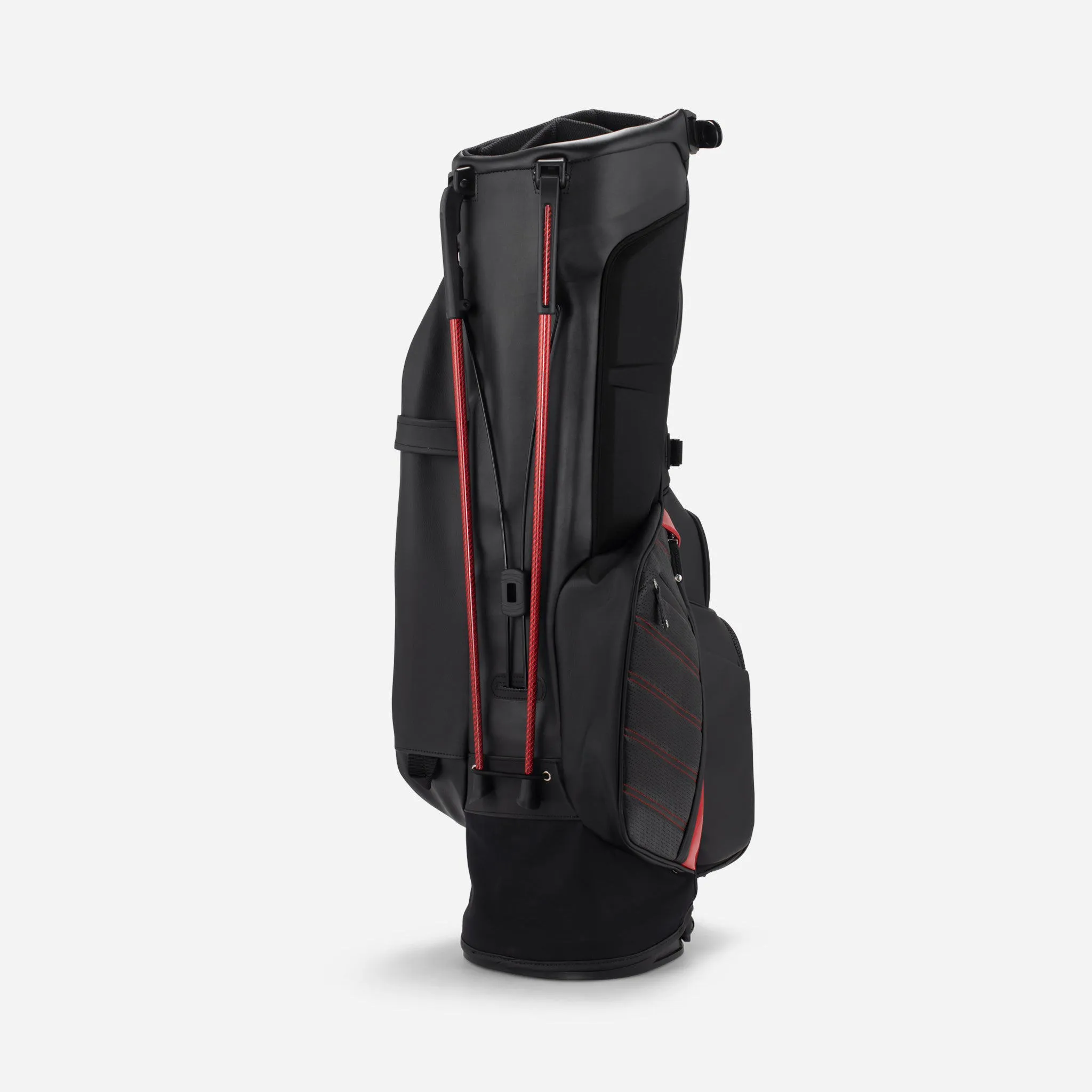
The economic impact of AI in golf bag manufacturing is substantial. According to industry analysis, factories that have implemented AI-assisted design and quality systems report average productivity improvements of 23 percent, material waste reduction of 18 percent, and product development cycle time reduction of 35 to 50 percent. For brand owners partnering with AI-equipped manufacturers, these improvements translate into faster market launches, lower unit costs, and products that better match consumer preferences.
Generative Design for Golf Bag Structures
Generative design represents the most transformative application of AI in golf bag engineering. Unlike traditional design processes where a human engineer creates a single design solution and then validates it through testing, generative design algorithms explore thousands of possible configurations within defined constraint parameters, identifying optimal solutions that human designers would never independently conceive.
Structural Frame Optimization
Golf bag frames and internal structures are ideal candidates for generative design optimization. The design challenge involves balancing multiple competing objectives: minimizing weight, maximizing structural rigidity, ensuring even load distribution across the shoulder strap attachment points, maintaining adequate internal volume for club and accessory storage, and meeting manufacturing constraints for cost-effective production. Human designers can typically explore a handful of frame configurations before selecting the most promising candidate for detailed development. Generative design algorithms can evaluate over 10,000 variations in the same timeframe, identifying solutions that achieve superior performance across all criteria simultaneously.
Our engineering team has used generative design to develop a stand bag frame structure that achieved 22 percent weight reduction compared to our previous generation design while actually improving torsional rigidity by 8 percent. The algorithm discovered an asymmetric rib pattern that distributes load more efficiently than the symmetric patterns human designers had traditionally specified. This counterintuitive solution would likely never have been developed through conventional design processes.
Pocket Layout and Accessibility Optimization
AI algorithms can also optimize pocket configurations based on data about how golfers actually access and use their equipment during rounds. By analyzing thousands of hours of video footage of golfers interacting with their bags, machine learning models identify optimal pocket positions, sizes, and closure orientations that minimize the time and effort required to access frequently used items while maintaining secure storage for valuables.
Our pocket optimization system considers over 40 variables including golfer anthropometrics, typical club usage patterns, accessory storage requirements, and access frequency data. The resulting pocket layouts consistently outperform human-designed configurations in user testing, with golfers reporting 15 to 20 percent faster access times for frequently needed items and higher satisfaction scores for overall organization logic.
AI-Powered Consumer Insight and Trend Prediction
Understanding what golf consumers want is fundamental to successful product design. Artificial intelligence has dramatically enhanced our ability to analyze consumer preferences, predict market trends, and translate market intelligence into actionable design specifications.
Social Media and Review Analysis
Natural language processing algorithms analyze thousands of golf bag reviews, social media posts, forum discussions, and expert evaluations to identify emerging consumer preferences and pain points. These systems process far more data than human analysts could review, identifying patterns and trends that inform product development priorities. In 2025, our AI analysis system detected growing consumer demand for integrated device charging capabilities six months before it became a mainstream feature request, enabling us to develop solutions ahead of the competition.
The system monitors sentiment across multiple languages and markets, identifying regional preference variations that inform market-specific design decisions. For example, AI analysis revealed that European golfers prioritize waterproof performance significantly more than North American golfers, while Asian market consumers place greater emphasis on lightweight construction. These insights directly influence the design specifications we develop for region-specific product variants.
Predictive Trend Modeling
Machine learning models trained on decades of golf equipment sales data, fashion trend indicators, and demographic shift patterns provide predictive forecasts for golf bag design trends 12 to 24 months ahead. Color palette preferences, material finish trends, feature demand patterns, and price point sensitivities are all modeled with increasing accuracy. Brand clients benefit from this predictive capability through product designs that align with emerging market preferences rather than reflecting conditions that existed when the design process began.
Our trend prediction models achieved 83 percent accuracy in forecasting the top five design features that would drive purchasing decisions in the 2025 season, validated against actual retail sales data. This predictive accuracy enables our brand partners to bring products to market that better match consumer expectations at launch, reducing the risk of costly mid-cycle design revisions and inventory markdowns.
Machine Learning in Quality Control Systems
Quality control represents one of the most immediate and measurable applications of artificial intelligence in golf bag manufacturing. Machine vision systems powered by deep learning algorithms can inspect golf bags with speed and consistency that far exceeds human visual inspection capabilities.
Automated Visual Inspection
Our factory has deployed AI-powered visual inspection stations at critical quality checkpoints throughout the production line. High-resolution cameras capture images of every bag at multiple stages, and machine learning algorithms analyze these images for stitching defects, color inconsistencies, hardware alignment issues, surface blemishes, and dimensional deviations. The system processes each bag in under 3 seconds, checking over 500 individual quality parameters against defined acceptance criteria.
The AI inspection system has achieved a defect detection rate of 99.4 percent, compared to approximately 92 percent for experienced human inspectors working at comparable speed. More importantly, the system maintains consistent performance across entire production runs without the fatigue-related degradation that affects human inspectors after extended shifts. This consistency has reduced our customer complaint rate by 34 percent since implementing the AI inspection system.
Predictive Quality Analytics
Beyond real-time inspection, machine learning models analyze production process data to predict quality outcomes before defects occur. By monitoring sewing machine tension patterns, adhesive application temperatures, material batch characteristics, and environmental conditions, the system identifies process drift that could lead to quality issues and alerts operators to make corrections proactively. This predictive approach has reduced our rework rate by 28 percent and decreased material waste by 15 percent.
AI-Enhanced Design Workflow and Collaboration
Artificial intelligence is transforming not just the design outputs but the entire workflow and collaboration process between manufacturers, brand owners, and their design teams.
Natural Language to Design Translation
Advanced language models can now translate written design briefs into preliminary three-dimensional design concepts. Brand clients submit design requirements in natural language, describing desired features, aesthetic preferences, target price points, and performance specifications. AI systems interpret these briefs and generate preliminary design concepts that address the stated requirements, providing a starting point for collaborative refinement between the brand design team and our engineering staff.
This capability has reduced the initial concept development phase from 2 to 3 weeks down to 2 to 3 days. Brand clients receive visual design concepts for review within days of submitting their briefs, accelerating the entire development timeline and enabling more iterative exploration of design directions before finalizing specifications.
Real-Time Design Feedback Systems
AI systems provide real-time feedback during the design process, alerting designers when proposed modifications may create manufacturing challenges, cost overruns, or performance compromises. This immediate feedback prevents costly downstream issues by catching problems at the design stage rather than during prototyping or production. The system draws on a knowledge base accumulated from over 200,000 bags of production experience, identifying potential issues that designers without this institutional knowledge might overlook.
For example, if a designer specifies a pocket dimension that would require fabric cutting at an angle that generates excessive material waste, the system immediately suggests alternative dimensions that achieve the same functional objective while reducing material waste by 12 percent. These micro-optimizations accumulate across the entire design, contributing to significant cost savings in production.
Intelligent Material Selection and Optimization
Material selection for golf bags involves complex trade-offs between weight, durability, water resistance, UV stability, tactile quality, environmental impact, and cost. Artificial intelligence systems can navigate this multi-dimensional optimization space far more efficiently than traditional material selection approaches.
Multi-Criteria Material Optimization
Our AI material selection system evaluates over 200 candidate materials against weighted criteria including tensile strength, abrasion resistance, water absorption, UV degradation rate, weight per square meter, cost per unit area, environmental certification status, and availability lead times. The system generates optimized material recommendations that balance these competing criteria according to the specific priorities of each project. For a lightweight stand bag project prioritizing weight reduction, the system might recommend a specific high-tenacity nylon with a lightweight polyurethane coating. For a premium cart bag emphasizing durability and tactile quality, it might suggest a different combination optimized for those priorities.
The material optimization system also identifies opportunities for material consolidation, where a single material can serve multiple functions, reducing the total number of distinct materials in a bag design. Fewer distinct materials simplify procurement, reduce inventory complexity, and decrease the risk of material-related quality issues. Our analysis shows that AI-optimized material specifications typically reduce the number of distinct materials per bag by 15 to 25 percent while improving overall performance characteristics.
Sustainable Material Intelligence
With growing consumer demand for environmentally responsible products, AI systems help identify sustainable material alternatives that meet performance requirements while reducing environmental impact. The system maintains databases of material certifications, recycled content percentages, biodegradability ratings, and supply chain sustainability scores. When a brand requests a more sustainable product line, the AI system rapidly identifies viable material substitutions that maintain the performance characteristics consumers expect.
Smart Production Planning and Optimization
Artificial intelligence extends beyond design into production planning and optimization, ensuring that efficiently designed products are manufactured with equal efficiency.
Production Scheduling Intelligence
Machine learning algorithms optimize production scheduling by analyzing order priorities, material availability, machine capacity, workforce skills, and delivery deadlines simultaneously. The system continuously re-optimizes schedules in response to real-time conditions such as material delivery delays, equipment maintenance requirements, or urgent order additions. This dynamic scheduling has improved our on-time delivery rate from 94 percent to 98.5 percent while reducing average production lead times by 12 percent.
Material Cutting Optimization
AI-driven nesting algorithms optimize fabric cutting patterns to minimize material waste. By analyzing thousands of possible cutting layouts, the system identifies configurations that reduce fabric waste by 8 to 15 percent compared to human-planned cutting patterns. Across our annual production of over 200,000 bags, this optimization saves hundreds of thousands of dollars in material costs while simultaneously reducing environmental impact through decreased material consumption.
AI Integration in Our Manufacturing Facility
Our BSCI and ISO 9001:2015 certified facility has invested heavily in AI technology integration across design, production, and quality management systems. Our approach ensures that AI enhances rather than replaces the skilled craftsmanship that defines premium golf bag manufacturing.
Design Center Capabilities
Our dedicated design center houses AI workstations running generative design software, computer vision analysis systems, and predictive modeling platforms. The design team includes both experienced golf bag engineers and AI systems specialists who work collaboratively to develop optimized products for our brand partners. This integrated approach ensures that AI-generated designs are not only computationally optimal but also practically manufacturable within our production capabilities.
Continuous Learning and Improvement
Every golf bag we produce generates data that feeds back into our AI systems, creating a continuous improvement cycle. Production data informs design optimization algorithms. Quality inspection data refines defect detection models. Consumer feedback data enhances trend prediction accuracy. After producing over 200,000 bags annually since 2004, our AI systems have accumulated one of the most comprehensive golf bag manufacturing knowledge bases in the industry, providing our brand partners with an expanding competitive advantage.
We invite brand owners and product developers to explore how our AI-enhanced design and manufacturing capabilities can accelerate their next golf bag project. From initial concept development through production and quality assurance, our integrated AI systems deliver measurable advantages in speed, cost, and product quality. Contact us via WhatsApp at +8617750020688 or email at service@junyuanbags.com to discuss your project requirements and discover how artificial intelligence can transform your golf bag development process.
Frequently Asked Questions
How is AI used in golf bag design?
AI is used in golf bag design through generative design algorithms that optimize structural layouts, computer vision systems that analyze golf equipment ergonomics, predictive analytics that forecast market trends, and natural language processing tools that translate brand briefs into detailed design specifications. AI reduces design cycle time by up to 60 percent while improving performance outcomes.
Can AI replace human golf bag designers?
AI augments rather than replaces human designers. Artificial intelligence excels at exploring vast design spaces, optimizing structural parameters, and analyzing consumer preference data. However, human designers provide creative vision, brand interpretation, aesthetic judgment, and emotional intelligence that AI cannot replicate. The most effective golf bag design teams combine AI computational power with human creative expertise.
What AI tools are used for golf bag manufacturing?
Manufacturing AI tools include computer vision systems for automated quality inspection, predictive maintenance algorithms for production equipment, generative design software for structural optimization, machine learning models for demand forecasting, and robotic process automation for repetitive assembly tasks. Leading factories process over 500 quality data points per bag using AI-powered inspection systems.
How does generative design improve golf bag performance?
Generative design algorithms explore thousands of structural configurations that human designers might not consider, optimizing weight distribution, material usage, and load-bearing efficiency. Golf bags designed with generative methods have achieved 18 to 25 percent weight reduction while maintaining structural integrity, and improved weight distribution patterns that reduce shoulder strain during carrying.
Does AI-designed golf bag production cost more?
AI design tools add minimal cost to the design phase, typically 5 to 15 percent of total development budget. However, the optimized designs produced by AI often reduce material costs by 10 to 20 percent and decrease prototyping iterations by 40 to 60 percent. The net effect is typically lower total development costs and faster time-to-market.
How long does AI-assisted golf bag development take?
AI-assisted development typically reduces the design-to-production timeline from 6 to 8 months down to 3 to 4 months. Generative design exploration that would take human designers weeks is completed by AI algorithms in hours. Automated quality prediction reduces the number of physical prototypes needed from 5 or 6 to 2 or 3.
What data does AI need to design a golf bag?
AI design systems require input data including target weight specifications, club count and dimensions, material properties, manufacturing constraints, ergonomic parameters, brand aesthetic guidelines, and target cost parameters. Consumer preference data from market research and sales analytics further refines the design optimization process.
Ready to Start Your Custom Golf Bag Project?
Partner with a BSCI & ISO 9001:2015 certified factory producing 200,000+ premium golf bags annually. MOQ just 100 pieces.
Get a Free Quote Today