Golf Bag Logo Design Guide 2026: Branding, Placement, Embroidery & Print Techniques
Table of Contents
- Introduction: Logo Design as Brand Strategy in Golf Bags
- Core Design Principles for Golf Bag Logos
- Logo Placement Strategy and Visibility Optimization
- Embroidery Techniques for Golf Bag Logos
- Printing and Transfer Methods
- Hardware-Based Branding Solutions
- Technical Specifications and File Requirements
- Implementation Workflow for Brand Clients
- Frequently Asked Questions
Introduction: Logo Design as Brand Strategy in Golf Bags
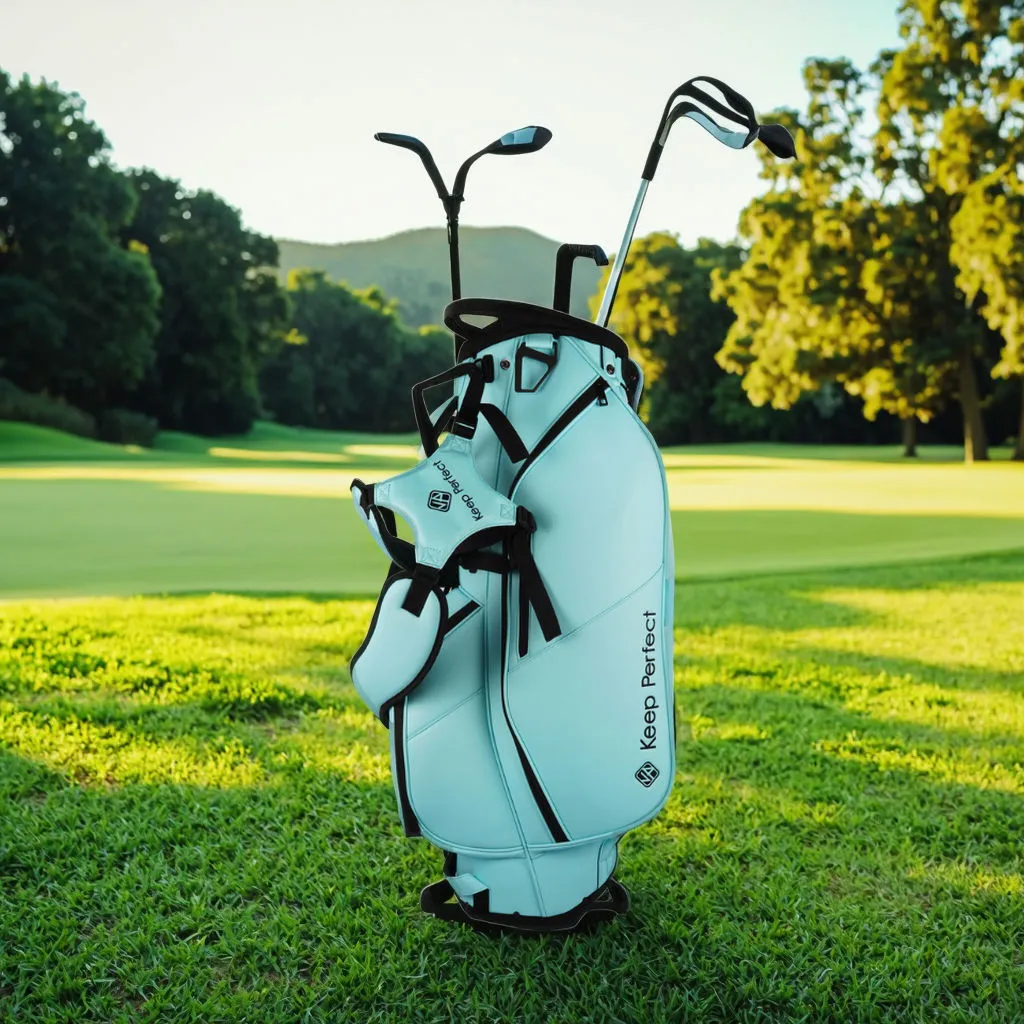
The golf bag logo is far more than a decorative element stitched onto a piece of sporting equipment. It is the visual distillation of brand identity, the primary recognition marker in a sport where equipment choices communicate personal taste and social affiliation, and a design challenge that must balance aesthetic impact with manufacturing precision. For golf bag brands, OEM clients, and the manufacturers who bring their visions to life, mastering logo design and application is a critical competency that directly influences brand perception, product differentiation, and commercial success.
The golf bag presents unique challenges for logo design that distinguish it from other sporting goods categories. Unlike a golf ball or golf shirt where a simple mark suffices, the golf bag is a large, multi-panel product with diverse surfaces ranging from coated nylon fabric to leather panels to molded plastic base plates, each requiring different logo application techniques. The logo must perform across this material diversity while maintaining visual consistency, brand recognition, and aesthetic harmony with the bag's overall design language.
At our certified manufacturing facility, we process over 500 unique logo designs annually across our 8 production lines, applying logos through embroidery, screen printing, heat transfer, debossing, laser engraving, and molded hardware attachment. This diverse experience across multiple application methods, materials, and brand positioning levels provides us with a comprehensive understanding of what works and what does not work in golf bag logo design. This guide distills that experience into the most detailed resource available for golf bag logo design, covering design principles, placement strategy, application techniques, technical specifications, and implementation workflows.
The evolution of golf bag logo design reflects broader shifts in branding philosophy and manufacturing technology. The early era of golf bags featured simple, small logos placed inconspicuously on pocket flaps, reflecting a time when equipment branding was considered somewhat vulgar in the traditionally understated golf culture. Today's golf bags embrace logos as central design elements, with brands investing significant resources in creating distinctive marks that command attention on the course, in the clubhouse, and on social media. This shift has raised the bar for logo quality, requiring manufacturing partners who can deliver consistent, precise logo application at production scale.
Core Design Principles for Golf Bag Logos
Simplicity and Scalability
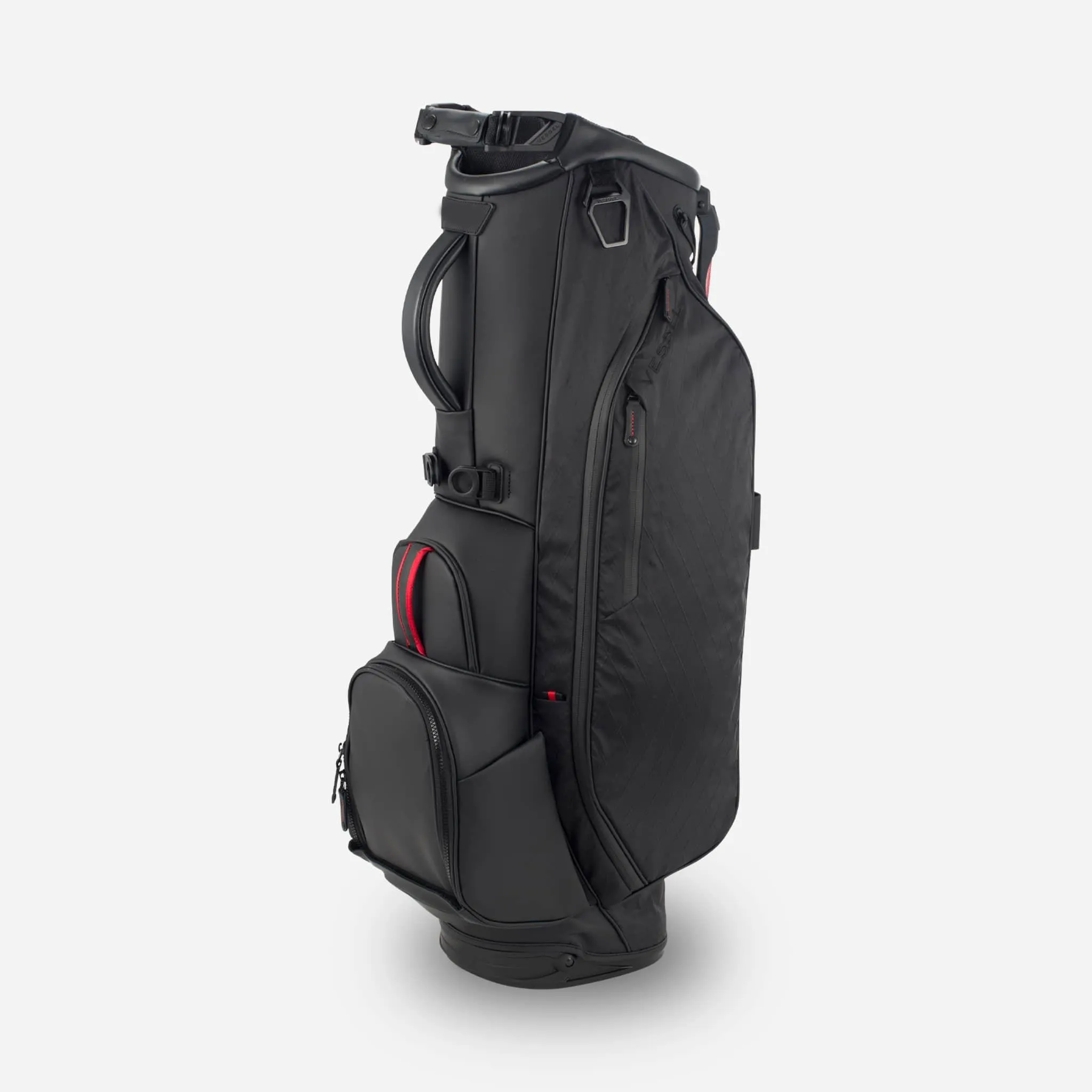
The first and most critical principle of golf bag logo design is simplicity. Logos must communicate the brand's identity clearly and immediately, functioning effectively at sizes ranging from a 20-millimeter zipper pull to a 150-millimeter chest pocket panel. Complex designs with fine details, thin lines, and intricate typefaces that look impressive on a computer screen inevitably lose definition when reproduced in thread, ink, or embossed leather at production scale. The most successful golf bag logos in the market feature bold, geometric forms with generous negative space and typefaces designed for legibility at small sizes.
Scalability testing should be an integral part of the logo design process for any golf bag brand. Designers must evaluate the logo at its intended application size, at half size, and at one-quarter size to ensure that critical elements remain distinguishable and the overall mark retains its character across the range of applications the brand will require. Our embroidery team regularly encounters designs that appear elegant in digital format but become illegible masses of thread when stitched at 40mm width, necessitating redesign that preserves the brand identity while achieving practical manufacturability.
Material-Aware Design
Effective golf bag logos are designed with an understanding of the materials and application methods they will encounter. A logo that will be primarily embroidered should be designed with stitch direction and fill patterns in mind, using areas large enough for satin stitch borders and avoiding features smaller than 1.5mm that cannot be reliably reproduced in thread. A logo intended for screen printing can incorporate finer details and tighter registration requirements but must account for fabric texture that can cause slight dot gain in printed areas.
The relationship between logo color and substrate material is another critical design consideration. Colors that appear vibrant on white paper may look completely different on dark nylon fabric, where the substrate color influences the perceived color of the logo. Designers must evaluate logo color options on actual production materials, not just on screen, to ensure that the chosen palette delivers the intended visual impact on the specific fabric or leather that will carry the logo.
Brand Hierarchy and Logo Systems
Most golf bag brands develop logo systems rather than single marks, creating primary logos, secondary marks, and typographic treatments that serve different functions across the product range. The primary logo, typically used for the most prominent bag placement, should be the most distinctive and recognizable mark. Secondary marks, often simplified versions or monogram treatments, serve applications where the full logo would be too large or complex, such as zipper pulls, small pocket panels, and hardware engravings.
Logo Placement Strategy and Visibility Optimization
Primary Placement Zones
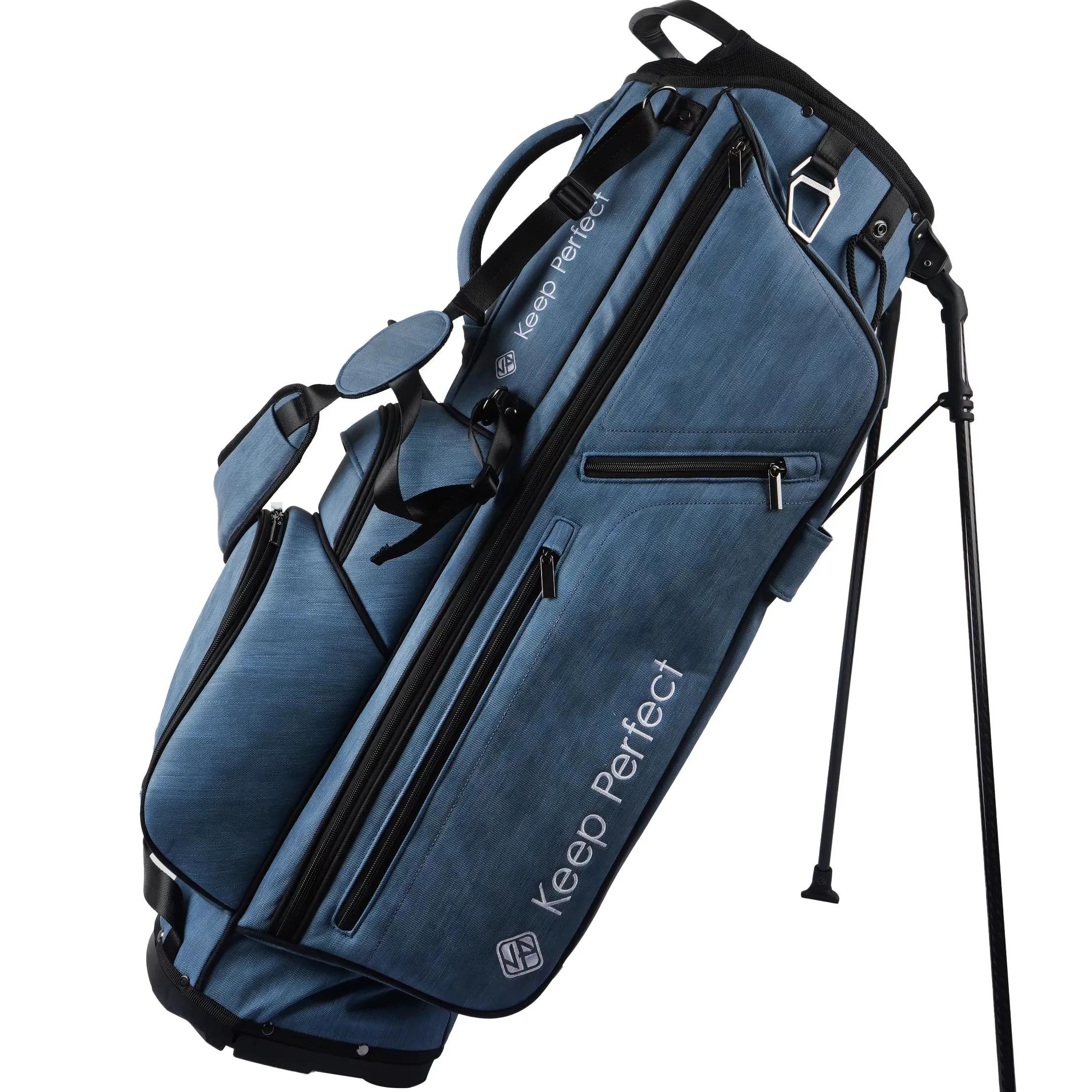
The front pocket panel represents the primary logo placement zone on virtually all golf bag types, offering the largest uninterrupted surface area visible when the bag is standing upright. This placement zone captures maximum visibility during play, in the clubhouse, and in retail environments. The recommended logo size for front pocket panels ranges from 80mm to 120mm in width for stand bags and 100mm to 150mm for cart bags, positioned in the upper third of the pocket panel with balanced margins on all sides.
The top cuff area, visible from above when looking down into the bag, offers a secondary placement zone that is particularly effective for cart bags where the top of the bag faces the golfer when mounted on a riding cart. This placement is also used for collar branding on stand bags, providing additional brand visibility from the golfer's perspective when carrying or setting down the bag.
Secondary and Tertiary Placement Zones
Secondary logo placements include the side pockets, ball pocket, valuables pocket, and strap padding areas. These zones receive smaller logos typically ranging from 40mm to 80mm in width, serving to reinforce brand presence without competing with the primary placement. The side panel placement is particularly valuable for riding golfers who see the side of the bag from the cart, while strap logos provide visibility when the bag is being carried.
Embroidery Techniques for Golf Bag Logos
Embroidery Digitizing for Golf Bag Applications
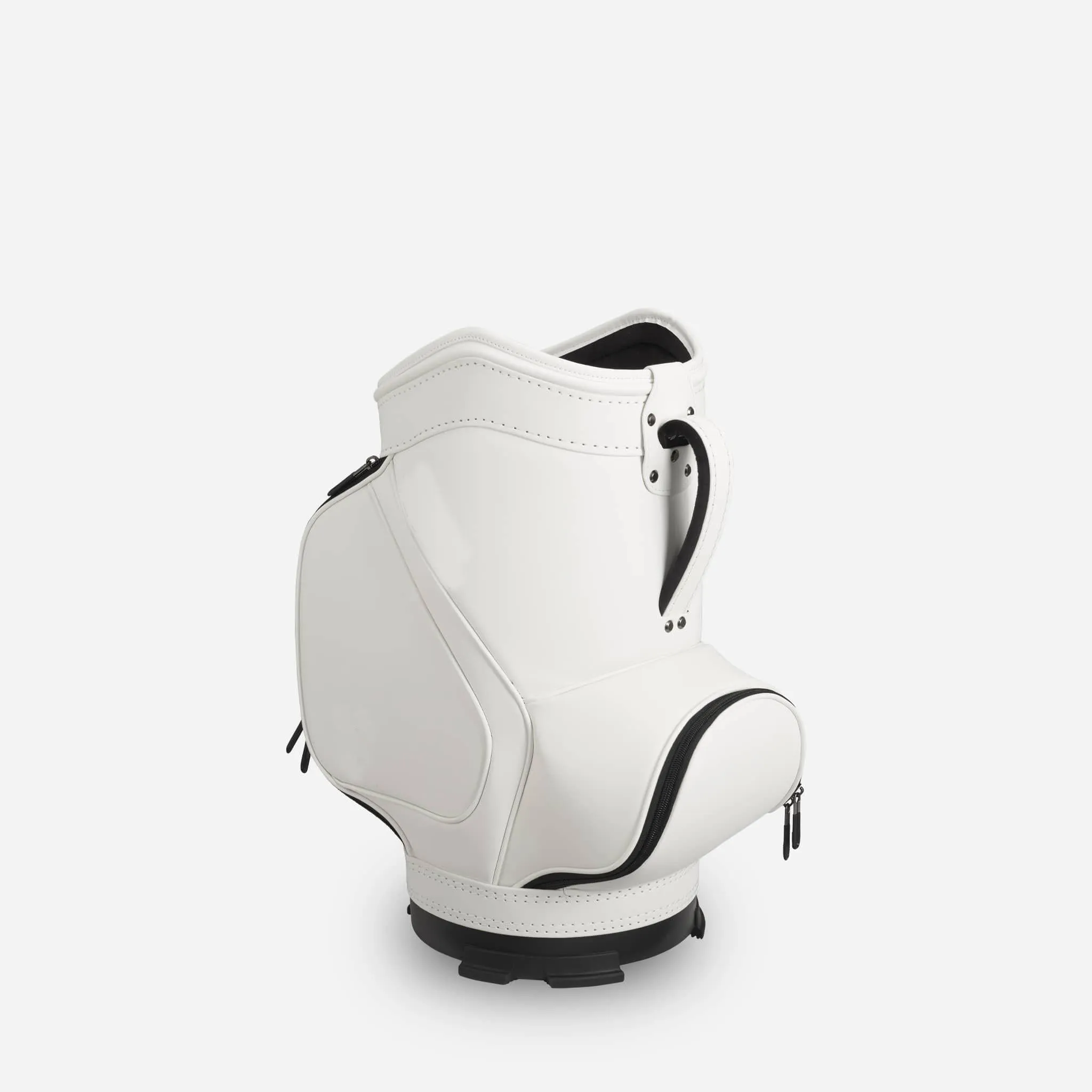
Embroidery digitizing, the process of converting a logo design into machine-readable stitch instructions, is the most technically demanding aspect of golf bag logo production. Unlike digital printing where the output directly mirrors the digital file, embroidery requires the digitizer to translate visual elements into physical thread movements that account for fabric push and pull, thread tension, stitch type selection, and underlay structure. A poorly digitized logo produces puckered fabric, distorted shapes, and loose thread connections that undermine the premium perception the brand is trying to project.
The digitizing process for golf bag logos must consider the specific fabric construction of the target application areas. Nylon fabrics with PU coating behave differently than polyester mesh or leather during embroidery, requiring adjustments to stitch density, pull compensation, and underlay strategy. Experienced digitizers maintain material-specific digitizing profiles that optimize stitch parameters for each substrate type, ensuring consistent quality regardless of the application surface. Our digitizing team maintains profiles for over 30 different fabric constructions commonly used in golf bag production.
Thread Selection and Color Matching
Thread selection for golf bag embroidery involves balancing color matching accuracy, durability requirements, and visual effect. Polyester embroidery thread, used for approximately 85 percent of golf bag applications, offers excellent UV resistance, colorfastness, and tensile strength at a moderate cost. Rayon thread provides a distinctive lustrous sheen that enhances premium perception but sacrifices some UV resistance and strength compared to polyester. Cotton thread, while offering an authentic heritage aesthetic, is rarely used in performance golf bags due to its poor moisture resistance and limited colorfastness.
Printing and Transfer Methods
Screen Printing for Golf Bag Logos
Screen printing remains the dominant logo application method for golf bags in terms of volume, particularly in the mid-market segment where cost efficiency and bold visual impact are paramount. The process involves creating a stencil (screen) for each color in the logo design and pushing ink through the screen mesh onto the fabric surface using a squeegee. Each color requires a separate screen and a separate pass through the press, making screen printing most economical for logos with 1 to 4 colors and production runs exceeding 200 units.
Plastisol inks, the standard for golf bag screen printing, deliver opaque, vibrant coverage on dark fabrics and excellent washfastness. Water-based inks, increasingly demanded by sustainability-conscious brands, provide a softer hand feel by penetrating the fabric rather than sitting on the surface, though they require more careful process control to achieve equivalent opacity on dark substrates. Discharge printing, a water-based technique that bleaches and replaces the fabric's existing dye, enables a no-hand-feel print that becomes part of the fabric itself, particularly effective for premium bags targeting the walking golfer who values lightweight, natural fabric hand feel.
Heat Transfer and Dye Sublimation
Heat transfer technology offers unique advantages for golf bag logos that cannot be achieved through direct printing or embroidery. The process uses heat and pressure to transfer a design from a carrier film or paper onto the fabric surface, enabling photographic-quality reproduction with unlimited colors and gradient effects. Heat transfers are particularly valuable for complex logos with photographic elements, gradient color transitions, or metallic and reflective effects that add visual interest and functional safety benefits.
Hardware-Based Branding Solutions
Metal Plates and Badges
Metal logo plates represent the premium end of golf bag branding, delivering a distinctive tactile and visual quality that elevates the perceived value of the finished product. Stamped metal plates, typically manufactured from zinc alloy, stainless steel, or brass, feature raised or recessed logo elements that catch light and create shadows, producing a three-dimensional effect impossible to achieve with flat printing or embroidery. The metal's weight adds perceptible substance to the bag, reinforcing the impression of quality and durability.
Our hardware production capabilities include custom metal plate manufacturing with minimum orders of 500 pieces per design, encompassing design sculpting, mold creation, die casting, polishing, plating, and enamel fill application. Common finishing options include chrome plating for a bright silver appearance, brushed nickel for a sophisticated matte metallic look, gold PVD coating for premium positioning, and antique finishes that create a heritage aesthetic. Enamel fills in brand colors add additional visual interest and enable the metal plate to incorporate the brand's complete color palette.
Technical Specifications and File Requirements
File Formats and Resolution Requirements
Proper logo file preparation is essential for achieving production-quality results across all application methods. Vector files in AI, EPS, or SVG format are mandatory for all golf bag logo submissions, as they provide resolution-independent artwork that can be scaled to any size without quality loss. Raster files in PSD, TIFF, or PNG format may supplement vector files for complex designs incorporating photographic elements, but should be provided at a minimum of 300 DPI at actual production size.
Color Specification and Pantone Matching
Every color in the logo design must be specified using Pantone Matching System codes to ensure accurate reproduction regardless of application method. Thread colors for embroidery should reference the Pantone TCX (cotton) system, while ink colors for screen printing should reference Pantone Solid Coated. Providing both systems ensures that the colorist can match accurately across material types. Our color laboratory maintains complete Pantone libraries updated annually and can develop custom color matches within Delta-E 1.0 of any specified Pantone reference.
Implementation Workflow for Brand Clients
From Design to Production: The Logo Implementation Timeline
Successful golf bag logo implementation follows a structured workflow that typically spans 4 to 8 weeks from initial design submission to first production unit. The process begins with design review, where our technical team evaluates the submitted artwork for manufacturability and identifies any modifications needed for optimal production results. This review considers application method suitability, minimum feature sizes, color count optimization, and placement recommendations based on the specific bag model.
Following design approval, the appropriate production files are created: digitized stitch files for embroidery, screen separations and film positives for screen printing, transfer artwork for heat applications, or CNC programs for laser engraving. Sample production creates physical proofs for brand approval, with up to three revision rounds included in standard pricing. Once samples are approved, production tooling is fabricated and the logo application process is integrated into the bag's production workflow.
Logo design and application in golf bag manufacturing represents the critical intersection of brand identity, aesthetic design, and production engineering. The most successful golf bag logos are those that balance bold brand expression with manufacturing pragmatism, creating distinctive marks that look exceptional in digital presentations and perform flawlessly when stitched, printed, engraved, or embossed onto the diverse materials that constitute a premium golf bag. Our factory's investment in advanced embroidery equipment, screen printing stations, heat transfer systems, and metal fabrication capabilities ensures that we can deliver any logo application method at the quality level that premium brands demand, with the production capacity and consistency that large-volume programs require. Whether your brand calls for the timeless quality of embroidery, the bold impact of screen printing, or the sophisticated refinement of metal hardware, our team brings the technical expertise and production discipline to bring your vision to life with precision and consistency.
Frequently Asked Questions
What is the recommended logo size for golf bag embroidery?
The recommended logo size for golf bag embroidery depends on the placement area and design complexity. For front pocket panels, logos between 60mm and 100mm in width provide optimal visibility without overwhelming the design. For side panels and ball pockets, 40mm to 80mm widths work well. The minimum text height for legible embroidery is 5mm, requiring design simplification of intricate logos to maintain clarity at production scale.
How many colors can be used in a golf bag embroidered logo?
Commercial embroidery machines typically support 15 needle positions, allowing up to 15 thread colors in a single design without manual rethreading. However, best practice for golf bag logos limits the palette to 3 to 5 colors for visual clarity, production efficiency, and cost control. Each additional color increases production time by 8 to 12 percent and thread change frequency, adding both cost and risk of registration errors.
What is the difference between embroidery and printing for golf bag logos?
Embroidery creates a raised, textured logo using thread stitched directly into the fabric, offering premium perception, exceptional durability lasting the bag's lifetime, and a tactile quality that print cannot replicate. Printing applies ink or transfer film to the fabric surface, enabling photographic detail, gradient effects, and complex color reproduction at lower cost. Embroidery is preferred for premium products and simple logos; printing excels for complex multi-color designs and budget-conscious programs.
How much does logo setup cost for golf bag production?
Logo setup costs vary significantly by application method. Embroidery digitizing typically ranges from USD 50 to USD 200 per design depending on complexity and stitch count. Screen printing screen creation costs USD 30 to USD 80 per color per size. Heat transfer film creation costs USD 100 to USD 300 for the master artwork. These one-time setup costs are amortized across the production run, making larger quantities more cost-effective on a per-unit basis.
Can logos be applied to recycled or sustainable golf bag materials?
Yes, logos can be applied to recycled and sustainable materials with appropriate method selection. Embroidery works excellently on recycled nylon and polyester fabrics without any modification. Screen printing with water-based inks on rPET polyester delivers both the branding impact and the sustainability story. Heat transfers on recycled materials require testing to ensure adhesion to the specific fabric coating chemistry used in sustainable constructions.
What is the most durable logo method for golf bags?
Embroidery is the most durable logo application method for golf bags, with thread expected to outlast the bag fabric itself under normal use conditions. High-quality embroidery using UV-resistant polyester thread maintains color integrity for 8 to 10 years of regular outdoor use. Laser engraving on metal hardware and debossing on leather also offer exceptional durability. Heat transfers rank lowest in durability, typically lasting 3 to 5 years before visible degradation occurs.
Ready to Start Your Custom Golf Bag Project?
Partner with a BSCI & ISO 9001:2015 certified factory producing 200,000+ premium golf bags annually. MOQ just 100 pieces.
Get a Free Quote Today