Golf Bag Size Comparison Chart: All Types Explained (2026)
Table of Contents
- Introduction: Why Size Matters in Golf Bag Selection
- Complete Size Comparison Chart: All Six Bag Types
- Bag Size and Club Capacity Relationships
- Choosing the Right Size for Your Height and Build
- Travel and Storage Size Considerations
- Brand Size Variations and Tolerance Analysis
- How Size Impacts Manufacturing Cost
- Complete Unit Conversion Reference Table
- Frequently Asked Questions
Introduction: Why Size Matters in Golf Bag Selection

Golf bag dimensions represent one of the most overlooked yet consequential factors in the purchasing decision, influencing everything from how comfortably a golfer carries their equipment to whether the bag fits properly on a push cart, riding cart, or inside a travel case. Unlike clubs, where fitting specifications receive extensive attention and professional measurement, golf bag sizing often receives cursory attention at best, with many golfers purchasing bags based primarily on appearance and brand rather than dimensional compatibility with their physical requirements and equipment ecosystem. This oversight leads to a predictable pattern of frustration: bags that seem fine in the showroom become burdensome on the course, bags that look impressive on a cart do not fit properly in travel cases, and bags purchased online arrive with dimensions that differ from the buyer's expectations. As a manufacturer producing golf bags across every category and size specification for over two decades, we possess unique insight into how dimensional design decisions impact every aspect of the user experience, from ergonomics and weight distribution to manufacturing cost and material efficiency.
The golf bag market offers six primary size categories, each engineered around specific dimensional profiles that balance club capacity, storage volume, portability, and intended use scenarios. Carry bags and Sunday bags occupy the compact end of the spectrum, prioritizing lightweight minimalism over storage capacity, while tour staff bags command the opposite extreme with maximum dimensions that accommodate every club, every accessory, and every piece of personal gear a professional golfer might need during a tournament round. Stand bags, cart bags, and hybrid bags occupy the middle ground with dimensions optimized for their respective carrying scenarios, and travel bags add another dimensional dimension entirely with oversized profiles designed to encase and protect standard bags during transport. Understanding the complete dimensional landscape across all these categories enables golfers, retailers, and brand managers to make precisely calibrated decisions about which size specification delivers the optimal balance of capacity, comfort, and practical utility for their specific application.
This comprehensive size comparison guide provides the most detailed dimensional analysis available anywhere in the golf bag industry. Every measurement is drawn from our production data across over 200,000 bags annually, representing real manufacturing specifications rather than marketing estimates. We present both imperial and metric measurements for global accessibility, explain how each dimensional parameter impacts real-world usability, and reveal the manufacturing cost implications that drive size decisions at the factory level. Whether you are a golfer comparing bags, a retailer advising customers, or a brand manager developing specifications for your next product line, this guide delivers the dimensional intelligence needed to make informed, effective decisions.
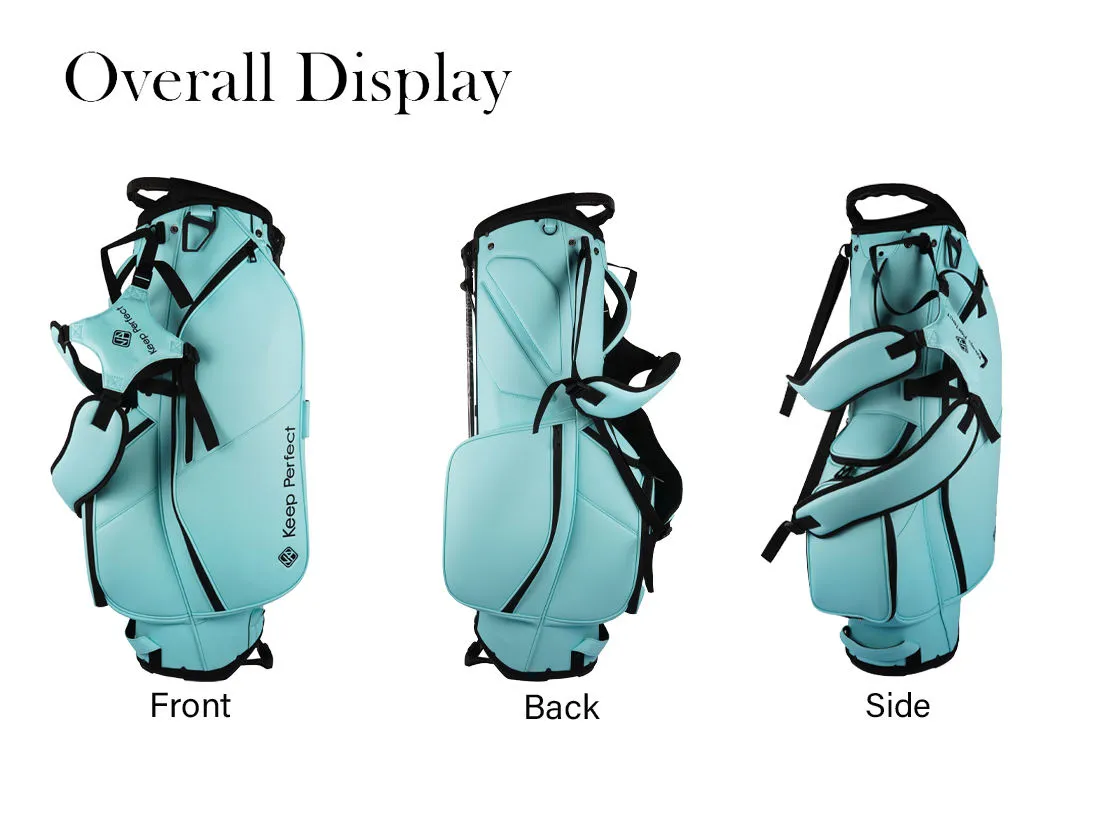
Complete Size Comparison Chart: All Six Bag Types
The following comprehensive chart presents the dimensional specifications for all six primary golf bag types, measured from our standard production models. These measurements represent typical ranges observed across the market; individual models may vary by one to two inches depending on specific design features, pocket configurations, and structural elements. All height measurements are taken from the base to the top of the cuff, all width measurements at the widest point of the bag body, and all depth measurements from front to back at the bag's fullest dimension.
| Bag Type | Height (inches) | Top Diameter (inches) | Base Width (inches) | Base Depth (inches) | Empty Weight (lbs) | Loaded Weight (lbs) | Club Capacity |
|---|---|---|---|---|---|---|---|
| Sunday/Carry Bag | 34-36 | 8-10 | 9-11 | 7-9 | 1.5-3.0 | 8-15 | 6-10 clubs |
| Stand Bag | 35-37 | 9-11 | 10-12 | 8-10 | 3.0-5.0 | 15-22 | 14 clubs |
| Cart Bag | 35-37 | 11-13 | 12-14 | 10-12 | 5.0-8.0 | 20-30 | 14 clubs |
| Hybrid Bag | 35-37 | 10-12 | 11-13 | 9-11 | 4.0-6.0 | 17-25 | 14 clubs |
| Tour Staff Bag | 38-40 | 12-14 | 13-16 | 11-14 | 8.0-12.0 | 25-38 | 14+ clubs |
| Travel Case | 52-56 | 13-15 | 13-15 | 12-14 | 7.0-18.0 | 30-50 | Encases bag + clubs |
These dimensional ranges reflect the current market standard across major brands and manufacturers. Height consistency across stand, cart, and hybrid bags exists because all three must accommodate standard-length golf clubs, which measure between 43 and 46 inches depending on the club. The bag height is necessarily shorter than the clubs it carries because the cuff extends above the bag body, allowing club grips to protrude while the bag body supports the shaft and head sections. The critical differentiator between bag types is therefore not height but rather the width and depth dimensions that determine storage volume, pocket capacity, and overall profile bulk.
Height: The Consistent Dimension
Across nearly all playing bag types (excluding travel cases), height remains remarkably consistent in the 34 to 40 inch range. This consistency exists because the fundamental constraint of club length dictates bag height: any bag must be tall enough to protect club shafts from bending while allowing grip ends to extend above the cuff for easy identification and access. Sunday bags trend toward the shorter end at 34 to 36 inches because they often carry shorter or fewer clubs, while tour staff bags extend to 38 to 40 inches to accommodate the full length of tour-spec clubs with additional protection material above and below the club head zone. The height dimension matters most for travel case compatibility, storage rack fit, and vehicle trunk clearance, where even two inches of difference can determine whether a bag fits in a designated space.
Width and Depth: Where Bag Types Diverge
The width and depth dimensions create the most significant differentiation between bag types, directly correlating with storage capacity and physical bulk. A Sunday bag with a base width of 9 inches and depth of 7 inches presents a slim, streamlined profile that minimizes carried weight and wind resistance during walking. A tour staff bag at 16 inches wide and 14 inches deep creates a substantial, imposing presence that provides maximum storage but demands correspondingly larger cart platforms, travel cases, and storage spaces. The width dimension also affects how the bag sits on riding carts: bags wider than 13 inches may extend beyond the cart platform edges on compact cart models, requiring careful positioning or strap routing to secure properly without interference.
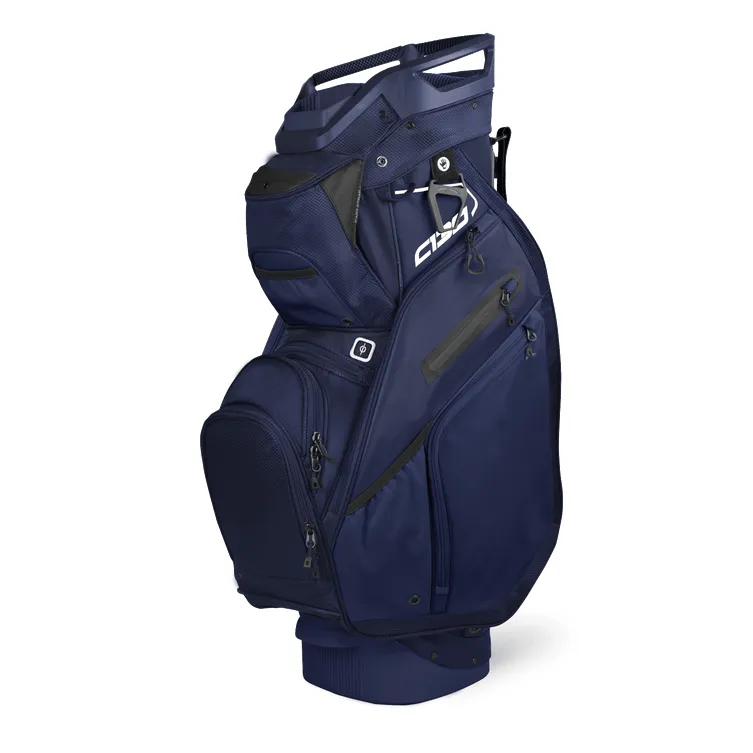
Bag Size and Club Capacity Relationships
The relationship between bag dimensions and club capacity is direct but not absolute: larger bags can hold more clubs, but design choices around divider systems, pocket placement, and profile shape also influence how many clubs fit comfortably and accessibly. Understanding this relationship helps golfers select bags that match their equipment configuration without paying for unused capacity.
Standard 14-Club Accommodation
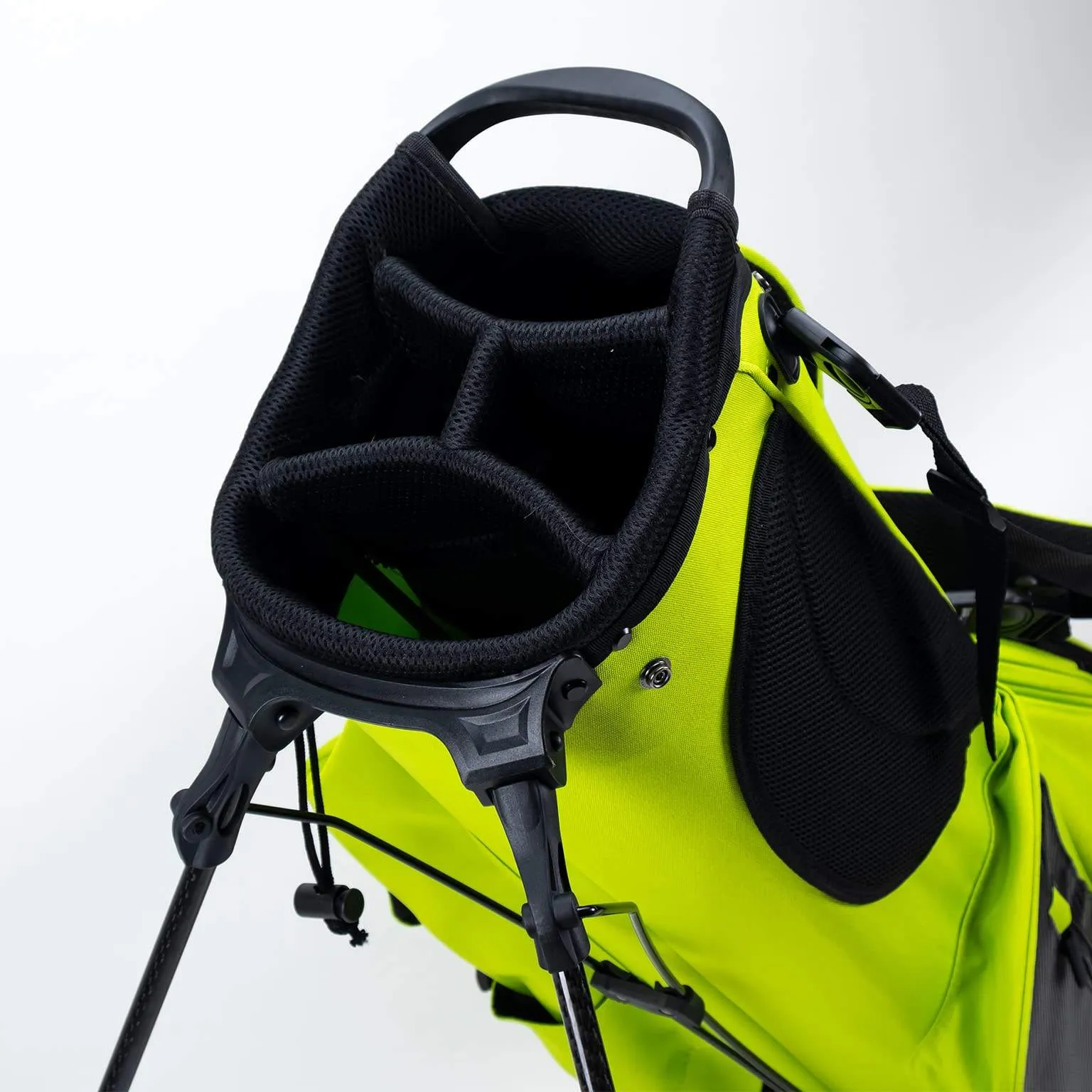
The Rules of Golf permit a maximum of 14 clubs in a player's bag during competitive play, and this standard has shaped golf bag design for decades. Virtually all stand bags, cart bags, hybrid bags, and tour staff bags are designed to accommodate 14 clubs as their primary capacity specification, with the difference between types lying in how those 14 clubs are organized, protected, and accessed rather than whether they physically fit. A stand bag with a 5-way divider compresses 14 clubs into shared compartments, requiring a top diameter of approximately 10 inches, while a cart bag with a 14-way full-length divider provides each club its own individual tube, requiring a top diameter of 12 to 13 inches to maintain adequate tube diameters for easy club insertion and removal. The dimensional cost of individual club protection is therefore approximately 2 to 3 additional inches of top diameter, which propagates through the entire bag body to increase overall width and weight proportionally.
Reduced Club Configurations
A growing trend among walking golfers involves carrying fewer than 14 clubs, typically between 8 and 12, to reduce weight and simplify decision-making on the course. This approach enables the use of compact Sunday bags or reduced-profile stand bags that sacrifice some capacity for meaningful weight savings. A Sunday bag designed for 8 clubs with a top diameter of 8 inches weighs approximately 1 to 2 pounds less than a full 14-club stand bag with a 10-inch top, and the dimensional reduction also improves push cart compatibility and vehicle storage. Golf instructors increasingly recommend that beginners start with 10 to 12 clubs in a compact bag, focusing on fundamentals without the complexity of managing a full equipment set, then expanding to 14 clubs as skill development justifies the additional specialization.
Choosing the Right Size for Your Height and Build
Golf bag dimensions interact directly with the golfer's physical dimensions, and selecting a bag that matches your height and build enhances comfort, reduces fatigue, and improves the overall carrying experience. The key dimensional interactions involve strap geometry relative to torso length, bag balance relative to hip width, and overall weight distribution relative to center of gravity.
Torso Length and Strap Fit
The most critical ergonomic interaction between golfer and bag occurs through the strap system, where the bag's height and strap attachment points must align with the golfer's torso length for proper weight distribution across the shoulders and back. Golfers shorter than 5 feet 6 inches benefit from stand bags on the shorter end of the range (34 to 35 inches) with adjustable strap systems that allow the bag to ride higher on the back, preventing the bag bottom from bouncing against the hip during walking. Taller golfers above 6 feet 2 inches prefer bags at the taller end (36 to 37 inches for stand bags) with longer strap adjustments that accommodate their longer torso and prevent the bag from riding too high and pulling backward on the shoulders. Many premium bags feature multi-point strap adjustment systems that allow independent tuning of upper and lower strap lengths, accommodating a wider range of body types within a single bag model.
Hip Width and Bag Stability
When carrying a golf bag, the bag base rests near the hip area, and the bag's base width should complement rather than conflict with the golfer's hip dimensions. Golfers with narrower builds may find that wide-based cart bags or tour staff bags swing excessively during carrying because the bag extends well beyond their hip profile, creating a pendulum effect that increases fatigue. These golfers benefit from the narrower profiles of stand bags or Sunday bags that keep the load closer to the body's centerline. Conversely, golfers with broader builds may find that narrow bags do not extend far enough from the back to clear the hips, causing the bag to rub against the lower back during walking. Understanding this dimensional relationship helps golfers select bags that complement their natural body geometry rather than working against it.
Travel and Storage Size Considerations
Beyond the golf course, bag dimensions affect two critical practical scenarios: airline travel compatibility and home storage efficiency. Understanding these dimensional requirements prevents costly mistakes and ensures your bag fits seamlessly into your travel and storage routines.
Travel Case Compatibility
Standard travel cases accommodate bags with top diameters up to approximately 13 inches and overall heights up to 40 inches, which covers virtually all stand bags, cart bags, and hybrid bags. Tour staff bags at the maximum end of dimensions (40 inches tall, 14 to 16 inches wide) may require oversized travel cases that are less common and more expensive. When selecting a bag with travel in mind, verify that the bag's widest dimension fits within your travel case's internal clearance, allowing at least half an inch of clearance on all sides for protective padding material. Golfers who fly regularly should prioritize bags with slightly more compact profiles that fit comfortably within standard travel cases, avoiding the need for oversized case purchases that add cost and may approach airline size restrictions.
Home Storage Dimensions
Golf bags stored in garages, closets, or dedicated equipment rooms occupy significant three-dimensional space that should be considered during purchase. A tour staff bag standing upright occupies approximately 2.5 square feet of floor space and extends 40 inches vertically, while a Sunday bag requires less than 1 square foot and 36 inches of height. Golfers with limited storage space should consider bags with more compact profiles or invest in wall-mounted storage solutions that utilize vertical space efficiently. The dimensional difference between bag types also affects vehicle transport: a tour staff bag may not fit in the trunk of a compact sedan without folding rear seats, while a stand bag or Sunday bag fits easily in virtually any vehicle trunk alongside other cargo.
Brand Size Variations and Tolerance Analysis
While the dimensional ranges presented in our comparison chart represent market norms, individual brands and models vary within and sometimes beyond these ranges due to design philosophy, target market preferences, and manufacturing tolerances. Understanding these variations helps consumers make accurate comparisons across brands and manage expectations when ordering bags online.
Design Philosophy Impact on Dimensions
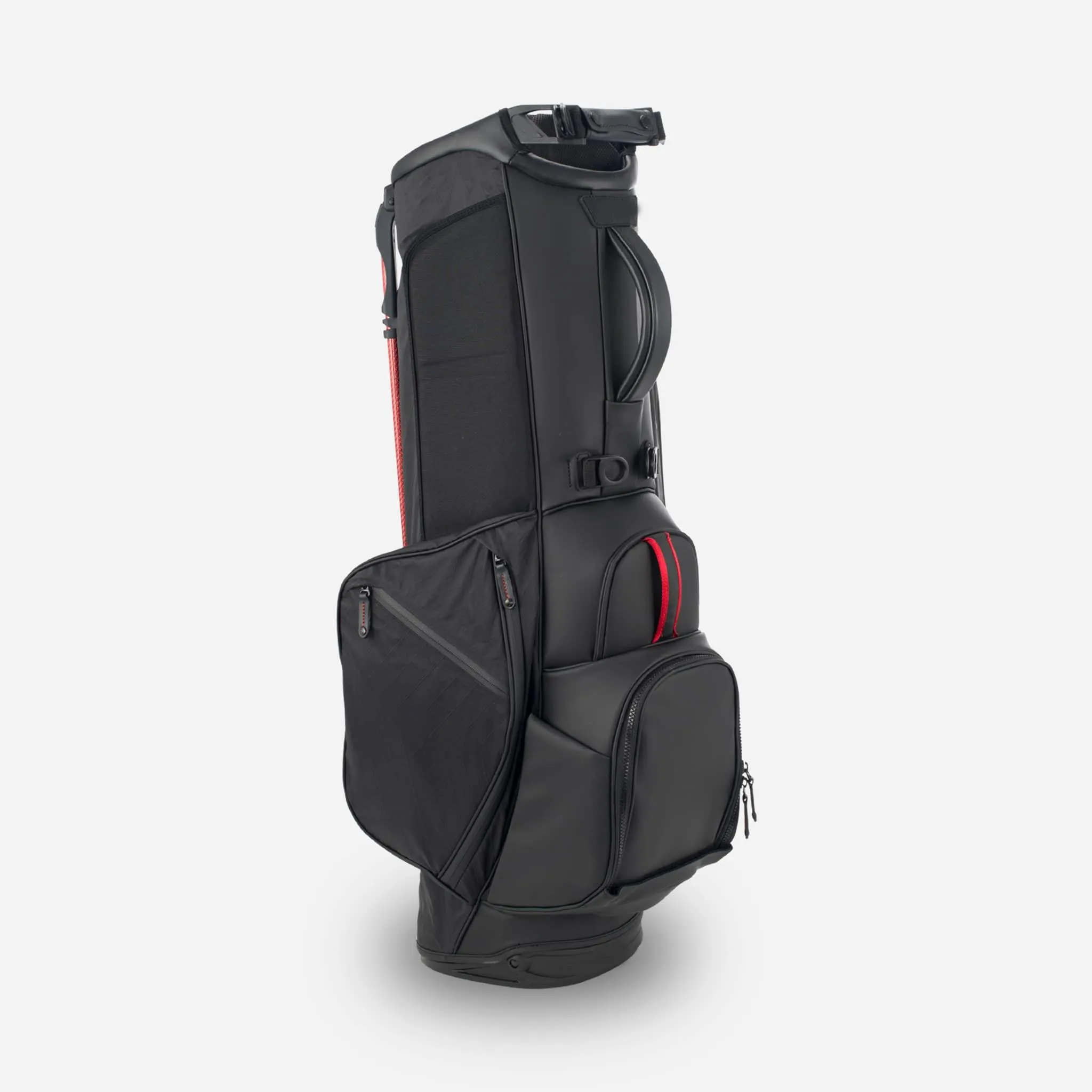
Different brands approach dimensional design with varying philosophies that reflect their target market positioning. Premium brands tend toward slightly larger dimensions at each bag type category, incorporating more generous padding, additional pockets, and fuller profiles that communicate luxury and abundance to the buyer. Value-oriented brands often compress dimensions slightly to reduce material costs and create lighter products that appeal to price-sensitive buyers. This means that a stand bag from Brand A might measure 36 inches tall with a 12-inch base, while Brand B's comparable stand bag measures 35 inches tall with an 11-inch base, despite both being marketed in the same category at similar price points. These differences are typically small enough not to affect functionality but create meaningful variations in weight, feel, and perceived quality that influence buyer satisfaction.
Manufacturing Tolerance Standards
Golf bag manufacturing involves flexible materials, stitched construction, and multiple assembly steps that introduce natural dimensional variation between individual units. Industry-standard manufacturing tolerances for golf bags are plus or minus 0.5 inches on linear dimensions and plus or minus 2 ounces on weight, meaning that two bags from the same production run may differ by up to one inch in any measurement. Our factory maintains tighter tolerances than industry standard at plus or minus 0.25 inches on critical dimensions through precision cutting templates, consistent assembly procedures, and dimensional inspection at multiple production checkpoints. Brands sourcing from multiple factories should establish clear dimensional specifications with tolerance ranges and conduct incoming quality inspection to ensure consistency across production sources.
How Size Impacts Manufacturing Cost
Understanding the relationship between bag dimensions and manufacturing cost provides essential context for both consumers evaluating value propositions and brand managers making specification decisions that directly affect product margins and retail pricing. Every incremental increase in bag size translates to measurable increases in material consumption, labor time, and production complexity.
Material Cost Proportions
The primary material cost driver in golf bag manufacturing is exterior fabric, which scales directly with the bag's surface area. Increasing bag height by one inch adds approximately 4 to 6 percent to fabric consumption depending on the bag's width, while increasing base circumference by one inch adds 3 to 5 percent. Divider system materials scale with both bag height and top diameter, with full-length 14-way dividers in a large-diameter cart bag requiring substantially more material than a 5-way system in a compact stand bag. The foam padding, zipper length, strap material, and structural reinforcement components all scale proportionally with bag dimensions, creating a cumulative cost impact that makes larger bags meaningfully more expensive to produce. Our production data indicates that the material cost difference between a compact Sunday bag and a full-size tour staff bag is approximately 12 to 18 dollars per unit at our production volumes, representing a significant cost factor that must be reflected in retail pricing.
Labor and Assembly Complexity
Larger bags require more assembly steps, more stitch operations, and more complex handling during production, increasing labor costs proportionally. A Sunday bag requires approximately 45 to 60 minutes of assembly labor, while a stand bag requires 90 to 120 minutes, a cart bag requires 120 to 150 minutes, and a tour staff bag requires 180 to 240 minutes of skilled assembly labor. These labor differences reflect not only the greater number of components and stitch operations in larger bags but also the increased handling difficulty of managing larger, heavier workpieces through the assembly process. Automation helps reduce labor costs in cutting and some sewing operations, but the complex three-dimensional assembly of golf bags remains labor-intensive, making dimensional decisions among the most impactful cost factors in the entire product development process.
Complete Unit Conversion Reference Table
For international readers and brand managers working with global supply chains, the following table provides complete dimensional specifications in both imperial and metric units, enabling accurate comparison and specification regardless of measurement system preference.
| Bag Type | Height (cm) | Top Diameter (cm) | Base Width (cm) | Base Depth (cm) | Weight (kg) | Volume (L) |
|---|---|---|---|---|---|---|
| Sunday/Carry Bag | 86-91 | 20-25 | 23-28 | 18-23 | 0.7-1.4 | 12-18 |
| Stand Bag | 89-94 | 23-28 | 25-30 | 20-25 | 1.4-2.3 | 18-28 |
| Cart Bag | 89-94 | 28-33 | 30-36 | 25-30 | 2.3-3.6 | 28-40 |
| Hybrid Bag | 89-94 | 25-30 | 28-33 | 23-28 | 1.8-2.7 | 22-34 |
| Tour Staff Bag | 97-102 | 30-36 | 33-41 | 28-36 | 3.6-5.4 | 40-60 |
| Travel Case | 132-142 | 33-38 | 33-38 | 30-36 | 3.2-8.2 | 80-120 |
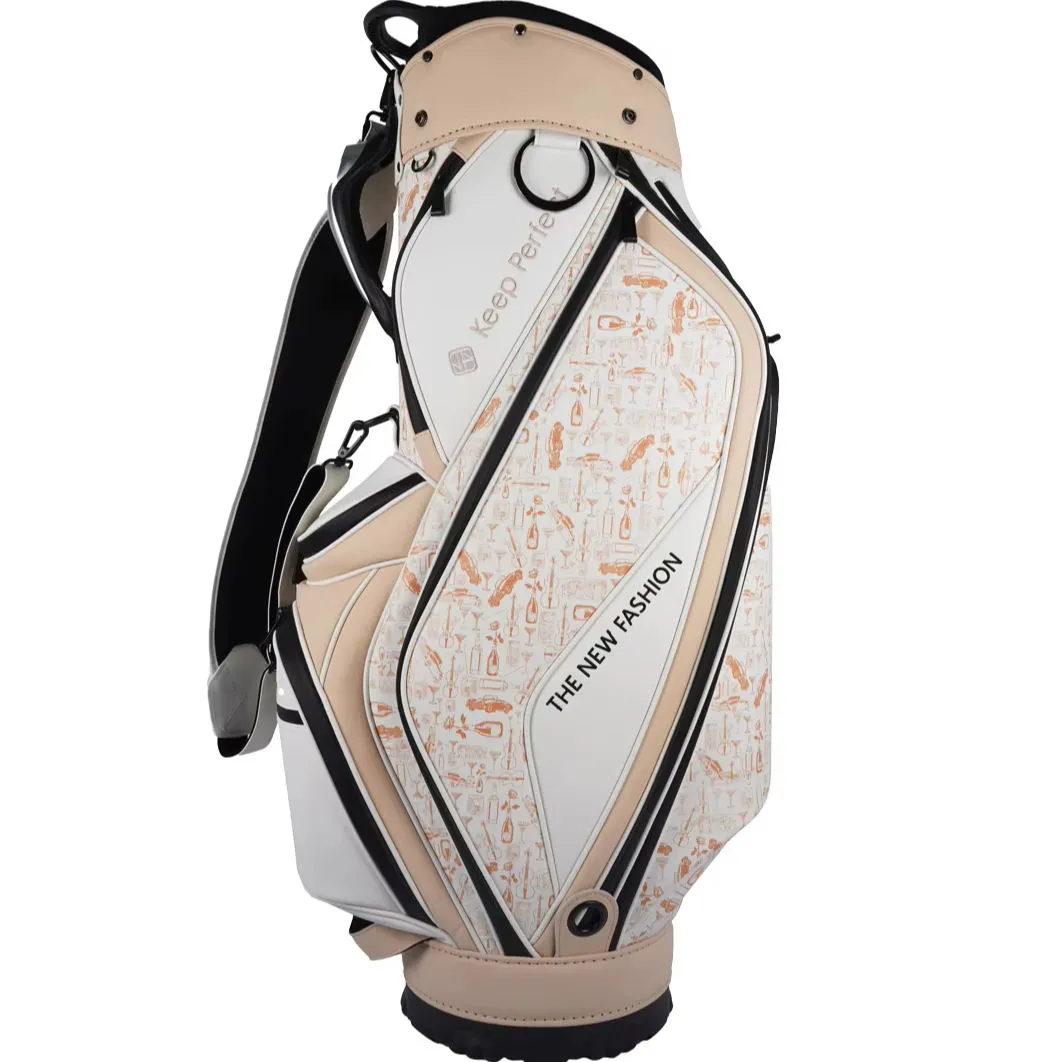
The volume metric in liters provides an additional comparison dimension that captures the three-dimensional storage capacity of each bag type, combining height, width, and depth into a single comparable figure. Sunday bags at 12 to 18 liters offer minimal storage suitable for clubs and basic accessories, while tour staff bags at 40 to 60 liters provide substantial storage that accommodates extensive accessory collections, multiple clothing layers, and personal items for a full tournament day. Travel cases at 80 to 120 liters dwarf all playing bag categories, reflecting their purpose of encasing an entire loaded bag with room for protective padding and additional travel accessories. Understanding these volumetric differences helps golfers and brand managers make precise comparisons between bag models that may have different dimensional proportions but similar overall storage capacity.
Dimensional specification is one of the most impactful decisions in golf bag product development, influencing cost, performance, market positioning, and user satisfaction simultaneously. Our engineering team works with brand clients to optimize dimensional specifications that balance these competing factors for each product category and target market segment. Whether you are developing a lightweight stand bag for the walking golfer segment or a premium cart bag for the cart-riding market, precise dimensional design informed by manufacturing expertise and user research creates products that resonate with their intended customers and deliver measurable competitive advantages. Contact us through our contact page or WhatsApp at +8617750020688 to discuss dimensional specifications for your golf bag project.
Ready to Start Your Custom Golf Bag Project?
Partner with a BSCI & ISO 9001:2015 certified factory producing 200,000+ premium golf bags annually. MOQ just 100 pieces.
Get a Free Quote TodayFrequently Asked Questions
What are the standard dimensions of a golf bag?
Standard golf bag dimensions vary by type: stand bags measure approximately 36 inches tall by 10 to 12 inches in top diameter, cart bags are 36 inches tall by 11 to 13 inches, carry bags are 34 to 36 inches tall by 8 to 10 inches, and tour staff bags reach 38 to 40 inches tall by 12 to 14 inches in top diameter.
How much does a full-size golf bag weigh?
Empty golf bag weights vary significantly by type: carry bags weigh 1.5 to 3 pounds, stand bags 3 to 5 pounds, cart bags 5 to 8 pounds, hybrid bags 4 to 6 pounds, and tour staff bags 8 to 12 pounds. When loaded with 14 clubs, balls, and accessories, total weight ranges from 15 to 35 pounds depending on bag type and equipment carried.
What size golf bag fits on a push cart?
Most push carts accommodate stand bags and most carry bags with top diameters between 8 and 12 inches. Bags with oversized bases or excessive lower pockets may interfere with push cart strap systems. Stand bags with a base diameter of 10 to 11 inches provide the most universal push cart compatibility.
Does golf bag size affect airline travel?
Golf bag size determines travel case requirements and airline compliance. Standard golf bags fit inside travel cases with maximum dimensions of approximately 56 by 14 by 14 inches, staying within the 115 linear inch limit for most airlines. Oversized tour staff bags may require larger travel cases.
How does bag size impact manufacturing cost?
Larger golf bags require more fabric, more foam padding, longer zippers, more divider material, and additional structural components, directly increasing material costs. The cost difference between a compact carry bag and a full-size cart bag is typically 8 to 15 dollars in materials alone.
What is the best golf bag size for walking golfers?
Walking golfers benefit most from stand bags with heights of 35 to 36 inches and top diameters of 9 to 11 inches, providing a balance between adequate club capacity and manageable weight. Compact stand bags that reduce dimensions can save 200 to 400 grams without sacrificing 14-club capacity.
Can tall golfers use standard-size golf bags?
Tall golfers can use standard-size golf bags, but they should ensure their clubs have appropriate shaft lengths for their height. Standard bags accommodate clubs up to 46 inches, which covers most adult golfers. Extra-long clubs may protrude from standard bags and benefit from bags with taller profiles.