Golf Bag Import Guide USA 2026: Customs, Tariffs, HS Code & Compliance
Step-by-step for importers, distributors & brands: golf bag HS code, tariffs, customs clearance workflow, document checklist, landed cost model, and 2026 compliance risks.
Last updated: April 2026
This is a practical, buyer-focused guide for importing golf bags into the United States. The goal is simple: help you clear customs once, avoid unnecessary duties and delays, and move inventory to your warehouse faster.
.webp)
Looking for export-ready SKUs to quote today? Start here: Wholesale Golf Stand Bags.
30-Second Value (What You Get)
- How to think about golf bag HS/HTS codes and duty risks
- A step-by-step US customs clearance workflow (what happens and what can go wrong)
- A buyer-friendly document checklist you can copy into your RFQ
- A simple landed cost model so you can price your bag correctly
Quick Navigation
- HS/HTS Code for Golf Bags (USA)
- Customs Clearance Process (End-to-End)
- Required Documents Checklist
- Landed Cost Calculator (Simple)
- Common Holds & How to Avoid Them
- 2026 Notes: Compliance & Risk Signals
- Port Differences + Section 321
- Real-World Hold Example
- Download Templates + Get Help
HS/HTS Code for Golf Bags (USA)
The HTS code determines the duty rate, additional duties (if applicable), and the way your goods are described on entry. Golf bags are commonly classified under heading 4202 (travel goods, bags, and similar containers). The correct subheading depends on the outer surface material and construction.
Important: Always confirm the final HTS classification with a licensed customs broker. Use the examples below as a practical starting point for planning and RFQs — then validate the exact 10-digit code and the current duty rate before you ship.
| Category | Example 10-digit HTS | Outer Surface | Example Duty Reference | When It Fits | Notes |
|---|---|---|---|---|---|
| Golf bags (leather) | 4202.91.10.00 | Leather / composition leather | General duty shown as 4.5% (verify current rate) | Premium leather outer surface | Material wording must match reality: “PU leather” is not “genuine leather”. |
| Golf bags (textile) | 4202.92.3030 | Textile (nylon / man-made fiber) | Ruling example: 20% ad valorem (verify current rate) | Golf bag with outer surface of textile materials | Keep invoice wording consistent across invoice, packing list, and broker entry. |
| Golf bags (plastic sheeting) | 4202.92.4500 | Plastic sheeting / vinyl | Ruling example: 20% ad valorem (verify current rate) | Golf bag with outer surface of plastic sheeting | For coated fabrics, confirm whether CBP treats it as textile or plastic sheeting. |
Reference (classification example): ruling NY 867763 shows golf bag examples classified to 4202.92.3030 (nylon) and 4202.92.4500 (vinyl) with a 20% duty rate at the time of the ruling. Always verify the current rate before shipment: NY 867763.
Where to verify in 2026: confirm the current rates and notes in the official USITC HTS, then confirm the correct code with your licensed broker before shipment.
How to Choose the Right Code (Simple Decision Tree)
- Start from the product: golf bag / travel goods typically points you to heading 4202.
- Decide the outer surface material (what CBP will treat as the outer surface): textile vs leather/composition leather.
- Confirm subheading by textile type (man-made vs other) and any coating/construction rules.
- Lock your description: keep invoice wording consistent across invoice, packing list, and broker entry.
Tariffs, Additional Duties, and “Surprise Costs”
Beyond base duty, importers may face additional costs depending on origin, program eligibility, and compliance status. A broker will confirm your final duty structure, but your sourcing team should plan for:
- Base duty (HTS-driven)
- Additional duties (policy-dependent, origin-dependent)
- Customs fees (broker handling, entry fees)
- Exam fees if selected for inspection
Section 301 (China origin): CBP notes that Section 301 additional duties apply to products of China and are based on country of origin (not country of export). Always verify if your final HTS code is subject to Section 301 and whether any exclusions apply before you ship: CBP Section 301 FAQ.
US Customs Clearance Process (End-to-End)
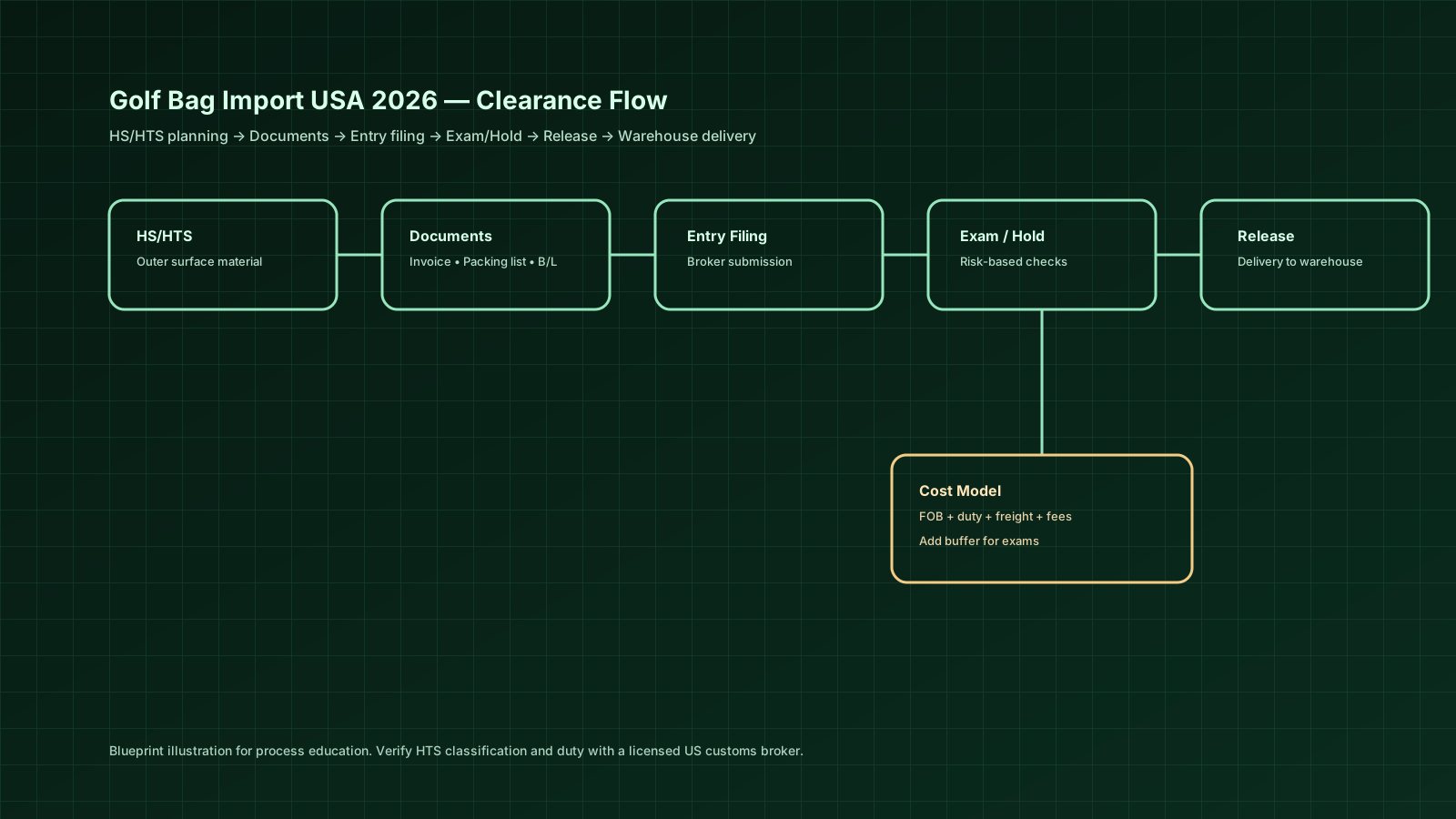
Below is the typical workflow. If you understand these checkpoints, you can prevent most delays before your shipment even leaves the factory.
Step 1 — Importer readiness (who is the importer of record?)
- Confirm importer of record, consignee, and broker details
- Align Incoterms (FOB/CIF/DDP) and who pays which fees
Step 2 — Document preparation (before departure)
- Commercial invoice, packing list, B/L or AWB
- Material and labeling statements (if required)
- Brand authorization if you are importing branded goods
Step 3 — Entry filing (broker submission)
- Broker files entry with product description, HTS, value, origin
- Errors here cause the most delays later
Step 4 — Examination / holds (random or risk-based)
- Documentation review, physical exam, labeling/material checks
- Respond fast: clear photos, complete documents, clear explanations
Step 5 — Release and delivery
- Duties and fees paid, cargo released
- Delivery to warehouse, carton count + damage inspection
Step 6 — Post-entry discipline (what professionals do)
- Keep documentation organized for audits and disputes
- Maintain product spec and material evidence for future orders
Required Documents Checklist (Copy/Paste)
Use this table when requesting quotes. It makes your project look professional and reduces the chance of customs delays.
| Document | Who Provides It | Common Mistake | Buyer Tip |
|---|---|---|---|
| Commercial Invoice | Supplier | Vague description / wrong HTS wording | Require exact item description + materials |
| Packing List | Supplier | Carton totals don’t match | Confirm carton count, net/gross weight |
| Bill of Lading / AWB | Forwarder | Consignee name mismatch | Match consignee/importer exactly |
| Certificate of Origin | Supplier/Chamber | Missing or incorrect origin info | Align with invoice and packing list |
| Brand Authorization | Brand owner (if needed) | Importing branded goods without proof | Prepare a letter + trademark evidence |
| Quality / Material Evidence | Supplier + labs | No proof for material claims | Keep reports ready for risk-based exams |
Landed Cost Calculator (Simple)
Most first-time importers price using FOB only. That is risky. Use this simplified model for budgeting and quoting.
- FOB total = unit price × quantity
- Duty estimate = customs value × duty rate (plus any applicable additional duties)
- Logistics = ocean/air + destination fees + delivery
- Inspection & risk = third-party inspection + possible exam costs (buffer)
- Landed cost = FOB + duty + logistics + buffer
Quick Estimator
Use the calculator below for a fast landed-cost sanity check, then confirm with your customs broker for the final entry value and duty structure.
Common Holds & How to Avoid Them
- Low declaration / value mismatch: use consistent pricing, keep payment records
- Misclassification: match HTS to outer surface material and construction
- Brand/IP risk: do not ship counterfeit or confusingly similar branding
- Material compliance gaps: be ready to prove material claims
- Labeling inconsistencies: keep labeling consistent with invoice and product spec
2026 Notes: Compliance & Risk Signals
Import compliance changes over time. The safest operational habit is to treat this guide as a checklist and re-confirm key points with your broker whenever you change: supplier, materials, branding, or shipping terms.
- CBP risk-based exams: speed depends on clarity and document readiness
- Textile/leather claims: ensure material wording matches actual composition
- Packaging and labeling: keep your supply chain evidence organized
Port Differences + Section 321 (What Importers Ask in Practice)
Los Angeles/Long Beach vs New York/New Jersey (Practical Considerations)
- Transit + congestion patterns: they change seasonally; plan buffer time for launches.
- Drayage and warehouse proximity: can be a bigger cost driver than duty for bulky goods.
- Exams are risk-based: focus on document consistency and evidence readiness rather than trying to “pick a port to avoid exams”.
Section 321 (De Minimis) — When It Helps
Section 321 is commonly discussed because it can allow duty-free entry for eligible shipments under $800 to a single person on a single day, subject to rules and enforcement. It is usually not a fit for bulk golf bag inventory shipments, but it can matter for samples and some small direct-to-consumer flows. Confirm your exact use case with your broker.
Real-World Hold Example (What Caused the Delay)
Case: “Travel bag” description + missing material wording
An importer described the goods as “travel bags” without stating the outer surface material and used inconsistent carton totals across documents. The broker requested clarification, which delayed filing and triggered additional back-and-forth. The fix was simple: reissue the invoice with consistent wording (including outer surface material), correct the packing list totals, and provide clear product photos to support the entry description.
Download Templates + Get Help
Free download: US Golf Bag Clearance Document Template Pack (invoice wording, packing list checklist, and a broker Q&A sheet).
Need help aligning product spec + shipping plan? Email cco@junyuanbags.com or use the contact form.
- Browse product categories (stand bags, cart bags, staff bags, travel covers)
- Request a quote (fastest path)
- FAQ: MOQ, production time, certifications
- Related: 3D Printed Golf Bag Parts Guide
About the author: Sarah Williams — supply chain editor focusing on import documentation, Incoterms, and practical compliance checklists for sports bags.
.webp)
.webp)