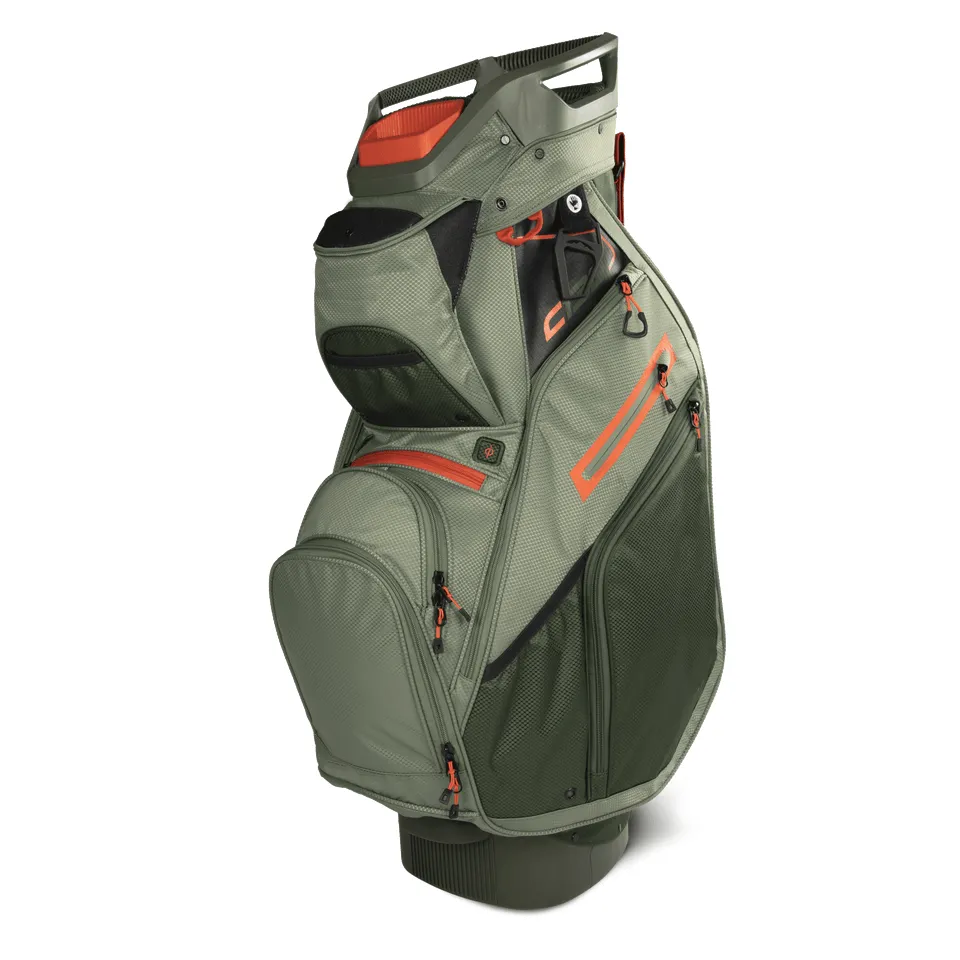
Golf Bag Sustainability: Eco-Friendly Manufacturing Trends
The rise of sustainable golf bag options — recycled materials, responsible sourcing, and consumer demand.
Executive Summary
Use this article as a reference you can share internally — with procurement, product, and operations — to align decisions and reduce avoidable mistakes.
This page is designed to be scannable and actionable: tables, checklists, and short sections that answer the questions buyers actually ask.
Sustainability in Golf Bag Manufacturing
Sustainability has moved from a niche concern to a mainstream market requirement, particularly in European and premium US market segments. Golf bag brands that ignore sustainability risk losing relevance with increasingly environmentally conscious consumers and retail buyers. Here's what sustainability means in golf bag manufacturing.
Material Innovation
Recycled Polyester (rPET): Fabric made from recycled plastic bottles. Each golf bag uses approximately 15-25 recycled bottles worth of material. rPET costs 10-20% more than virgin polyester but meets consumer expectations and often qualifies for retailer sustainability programs. Quality is equivalent to virgin material.
Recycled Nylon: More expensive than recycled polyester (20-30% premium) but offers superior durability. Recycled nylon comes from pre-consumer waste (fabric scraps) or post-consumer sources (fishing nets, carpet). ECONYL is the leading brand, requiring less energy to produce than virgin nylon.
Bio-Based Materials: Emerging alternatives including bio-based TPU (replacing petroleum-based TPU), plant-based leather alternatives (mushroom leather, cactus leather), and natural fiber composites. Currently 20-50% more expensive than conventional materials with limited supply chains.
Manufacturing Process Sustainability
Water Reduction: Dyeing and finishing processes are water-intensive. Solution-dyed fabrics (color added to fiber before weaving) use 90% less water than traditional piece dyeing. Bluesign and OEKO-TEX STeP certifications verify responsible water management.
Energy Efficiency: Factories with solar installations, heat recovery systems, and efficient equipment reduce carbon footprint. ISO 14001 certification indicates systematic environmental management.
Chemical Management: REACH compliance (EU) and ZDHC (Zero Discharge of Hazardous Chemicals) certification verify responsible chemical management. Factory MRSL (Manufacturing Restricted Substances List) compliance is increasingly required by major brands.
End-of-Life Considerations
Recyclability: Golf bags made from single-material constructions (all polyester) are more recyclable than multi-material bags (polyester + leather + metal hardware). Design for disassembly is an emerging approach.
Warranty and Repair: Extended warranties and repair services reduce replacement rate. Brands offering repair services report 15-20% higher customer retention.
Circular Economy Programs: Some brands accept old bags for recycling or repurposing. Titleist's recycling program for golf balls has been extended to bags by several manufacturers.
Key Takeaways
- Recycled materials (rPET) are the most accessible sustainability step—10-20% cost premium
- Solution-dyed fabrics eliminate water-intensive dyeing processes
- REACH compliance and ZDHC certification verify responsible manufacturing
- Warranty and repair programs reduce environmental impact while building brand loyalty
Timeline Planning (Sampling → Production → Shipping)
Most buyers underestimate the approval cycle. This timeline helps you plan backwards from your launch date.
| Stage | Typical Duration | What You Approve |
|---|---|---|
| Tech pack + render | 3–7 days | Dimensions, layout, logo placements |
| Prototype sample | 10–20 days | Structure and pocket usability |
| Pre-production sample | 10–15 days | Materials, colors, branding finish |
| Mass production | 25–45 days | QC plan and photo checkpoints |
| Shipping | 7–45 days | Incoterms, destination requirements |
Quality & Testing Checklist (Buyer-Friendly)
Use this checklist to align factory QC with your brand standards. It reduces disputes and prevents “sample vs bulk” gaps.
| Area | What to Check | Practical Acceptance Criteria |
|---|---|---|
| Stitching | Seams, stress points, bartacks | No loose threads; reinforced points on straps and pocket corners |
| Zippers | Slider smoothness, tape alignment | Opens smoothly under load; no zipper waves |
| Stand mechanism | Deploy/retract consistency | Deploys cleanly; stable angle; no binding noise |
| Top & dividers | Club insertion, divider stability | No collapse; clean edges; consistent spacing |
| Branding | Logo placement and size | Matches approved placement map |
Common Mistakes (And How to Avoid Them)
- Vague descriptions: Replace “bag” with material + intended use + construction notes.
- Late approvals: Approve key items early (materials/colors/labels) to prevent schedule slips.
- No verification: Ask for photos, test notes, and documented checkpoints before shipment.
FAQ
Q: What information should I prepare before requesting a quote?
A: Bag type, quantity, target market, target price range, branding method, and timeline.
Q: What reduces back-and-forth the most?
A: One clear brief with reference photos and written requirements.
Next Step
If you want a fast, accurate quote, send your bag type, quantity, and destination requirements to cco@junyuanbags.com (WhatsApp: +8617750020688).
.webp)