Professional Stand Bag Buyer's Guide 2025
Complete guide to stand bags: weight analysis, stand mechanisms, divider systems, and professional recommendations.
Executive Summary
Use this article as a reference you can share internally — with procurement, product, and operations — to align decisions and reduce avoidable mistakes.
This page is designed to be scannable and actionable: tables, checklists, and short sections that answer the questions buyers actually ask.
Understanding Stand Bags: The Essential Walking Golfer's Companion
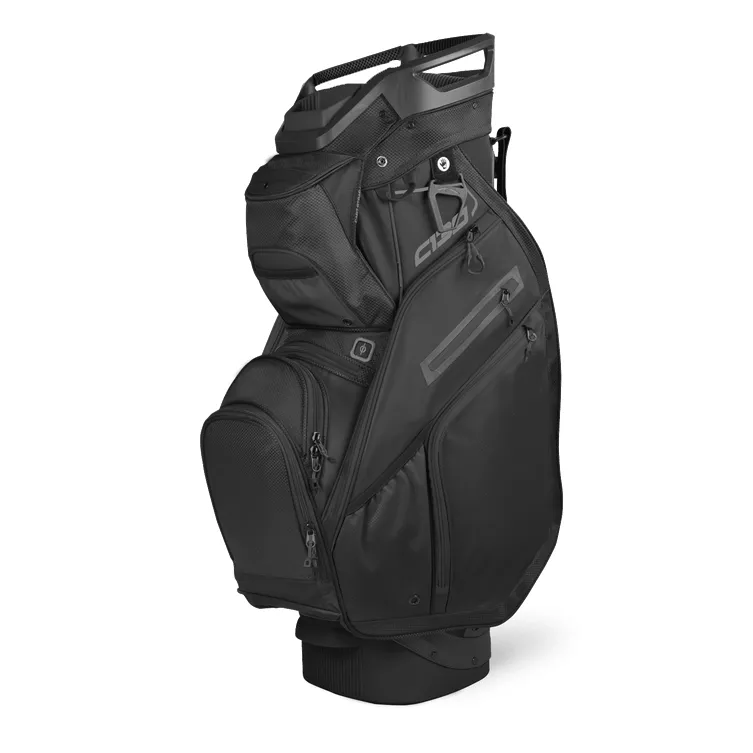
Stand bags represent the evolution of golf bag design optimized for the walking golfer. Unlike cart bags designed for golf cart use, stand bags incorporate mechanical stand systems, lightweight construction, and comfortable carry features that make walking 18 holes manageable. Understanding the technical details helps procurement professionals specify products that meet market demands.
Weight: The Critical Specification
Weight is the primary differentiator for stand bags, directly impacting golfer comfort during 18-hole rounds:
Weight Categories
- Ultra-lightweight (under 2 kg) – Designed for serious walkers, competition players. Minimal features, premium materials. Target: serious golfers who walk exclusively.
- Lightweight (2-3 kg) – The mainstream category. Balance of weight and features. Best seller category for specialty golf retailers.
- Standard (3-4.5 kg) – Full-featured bags that sacrifice some weight for storage and durability. Growing category as "lightweight" claims have been diluted by marketing.
Weight Engineering
Reducing weight while maintaining structural integrity requires sophisticated engineering:
- Tubing selection – 6061-T6 aluminum provides excellent strength-to-weight ratio (tensile strength: 310 MPa, yield strength: 276 MPa)
- Material denier optimization – Using heavier denier only where needed, lighter materials elsewhere
- Hardware minimization – Streamlined hardware, plastic替代金属 where appropriate
- Structural foam – High-density EVA (45-55 kg/m³) replaces heavier structural elements
Stand Mechanism Engineering
The stand mechanism is the defining technical feature of stand bags. Understanding the engineering helps evaluate quality:
Mechanism Types
- Automatic spring-loaded – Most common. Deploys when bag is set down, retracts when lifted. Reliable, proven technology.
- Push-button release – User-deploys legs manually with button release. More control but requires two-hand operation.
- Fiberglass legs – Cost-effective alternative to aluminum. Lower weight but reduced durability.
Testing Standards
Quality mechanisms should pass:
- Cycle testing – 500+ deployments without failure (industry standard)
- Load testing – 25+ kg bag weight capacity without mechanism failure
- Corrosion testing – Salt spray testing per ASTM B117 (48+ hours without red rust)
- 角度稳定性 – 40-45° deployment angle for optimal bag stability
Divider System Specifications
Dividers protect clubs and simplify organization:
Divider Configurations
- 4-way top – Basic organization, adequate for most players. Common in lightweight bags.
- 5-way top – Adds separation for woods. Popular mid-range option.
- 6-way top – Full wood/hybrid separation. Standard for premium bags.
- 14-way full-length – Individual club slots, maximum organization. Cart bag feature now appearing in premium stand bags.
Dividers vs. Tubes
Full-length individual tubes (each club in its own sleeve) offer superior club protection but add weight. Panel dividers (fabric walls) are lighter but allow club contact.
Storage and Organization
Despite lightweight focus, modern stand bags offer substantial storage:
- Volume range – 20-30 liters typical
- Pocket count – 4-8 pockets standard; waterproof Valuables pocket increasingly common
- Pocket sizing – Large apparel pockets (12-15" diameter),fleece-lined pocket for valuables
- Accessories – Towel ring, umbrella holder, ball marker slot, insulated cooler pocket
Strap System Design
Comfortable carry systems are essential for 18-hole walks:
Strap Configurations
- Single strap – Traditional design. Simple, lightweight. Adequate for 9-hole use.
- Dual straps – Distributes weight across both shoulders. Essential for 18-hole walking. Converts to single strap mode.
- Contoured padded straps – Ergonomic design follows shoulder contours. Premium positioning.
- Active suspension – Advanced designs with pivoting connections that move with body motion. Emerging technology.
Water Resistance Requirements
Walking golfers face variable weather conditions:
- Base material water resistance – PU coating with 1500mm+ hydrostatic head minimum
- Seam sealing – Taped or welded seams essential for full weather protection
- Waterproof pockets – Fleece-lined valuables pocket should be waterproof-lined
- Stand leg boots – Rubber feet prevent water wicking up leg channels
Professional Recommendations by Segment
Budget Category (Under $100)
Acceptable quality for entry-level or occasional use. Typical specifications: 3+ kg weight, 600D-840D materials, 4-5 way dividers, basic strap system. Avoid expecting premium features at this price.
Mid-Market ($100-200)
The sweet spot for quality/price balance. Target: 2.5-3 kg, 840D-1200D materials, 6-way dividers, dual padded straps, good water resistance.
Premium Category ($200-350)
Serious golfer focus. Target: sub-2.5 kg, premium materials (1680D, waterproof zippers), ergonomic straps, full weather protection.
Professional Tour-Level ($350+)
Tour players and serious competitors. Target: sub-2 kg, premium materials, carbon fiber or titanium hardware, advanced strap systems.
FAQ: Stand Bags
Q: How much weight savings justifies premium pricing?
A: In our testing, each 0.5 kg reduction provides noticeable comfort improvement during 18-hole walks. The difference between 2 kg and 3 kg is significant; 1.5 kg and 2 kg difference is noticeable but less dramatic.
Q: What's the realistic lifespan of a stand bag?
A: With reasonable care, expect 3-5 years of regular use. Stand mechanism typically wears first. UV exposure accelerates material degradation. Bags used daily year-round may need replacement after 2-3 years.
Q: Are full-length individual dividers worth the weight penalty?
A: For serious golfers who travel frequently or value club protection, yes. The 150-200g weight penalty is reasonable. For casual golfers, panel dividers offer adequate protection with better value.
Key Takeaways
- Stand bags require balancing weight optimization with feature completeness
- Stand mechanism quality varies significantly—verify cycle testing specifications
- Strap system is often undervalued—dual padded straps essential for 18-hole use
- Water resistance should match your target market's climate conditions
- Premium pricing is justified primarily by weight reduction and material quality
Supplier Scoring Sheet (Use This Before You Send a Deposit)
| Category | What to Verify | Score (1–5) |
|---|---|---|
| Samples | Stitching consistency, structure, finishing | — |
| Materials | Ability to provide swatches and alternatives | — |
| Communication | Speed + clarity + proactive problem spotting | — |
| Compliance | BSCI/ISO evidence; audit transparency | — |
| Risk control | QC process, photo reports, 3rd-party inspection acceptance | — |
Timeline Planning (Sampling → Production → Shipping)
Most buyers underestimate the approval cycle. This timeline helps you plan backwards from your launch date.
| Stage | Typical Duration | What You Approve |
|---|---|---|
| Tech pack + render | 3–7 days | Dimensions, layout, logo placements |
| Prototype sample | 10–20 days | Structure and pocket usability |
| Pre-production sample | 10–15 days | Materials, colors, branding finish |
| Mass production | 25–45 days | QC plan and photo checkpoints |
| Shipping | 7–45 days | Incoterms, destination requirements |
Quality & Testing Checklist (Buyer-Friendly)
Use this checklist to align factory QC with your brand standards. It reduces disputes and prevents “sample vs bulk” gaps.
| Area | What to Check | Practical Acceptance Criteria |
|---|---|---|
| Stitching | Seams, stress points, bartacks | No loose threads; reinforced points on straps and pocket corners |
| Zippers | Slider smoothness, tape alignment | Opens smoothly under load; no zipper waves |
| Stand mechanism | Deploy/retract consistency | Deploys cleanly; stable angle; no binding noise |
| Top & dividers | Club insertion, divider stability | No collapse; clean edges; consistent spacing |
| Branding | Logo placement and size | Matches approved placement map |
Common Mistakes (And How to Avoid Them)
- Vague descriptions: Replace “bag” with material + intended use + construction notes.
- Late approvals: Approve key items early (materials/colors/labels) to prevent schedule slips.
- No verification: Ask for photos, test notes, and documented checkpoints before shipment.
FAQ
Q: What information should I prepare before requesting a quote?
A: Bag type, quantity, target market, target price range, branding method, and timeline.
Q: What reduces back-and-forth the most?
A: One clear brief with reference photos and written requirements.
Next Step
If you want a fast, accurate quote, send your bag type, quantity, and destination requirements to cco@junyuanbags.com (WhatsApp: +8617750020688).
.webp)
.webp)